 Aula· Spain, city by city
Aragón
Albarracín
«Albarracín conserva casas medievales de color rojo.»Albarracín preserves red medieval houses.
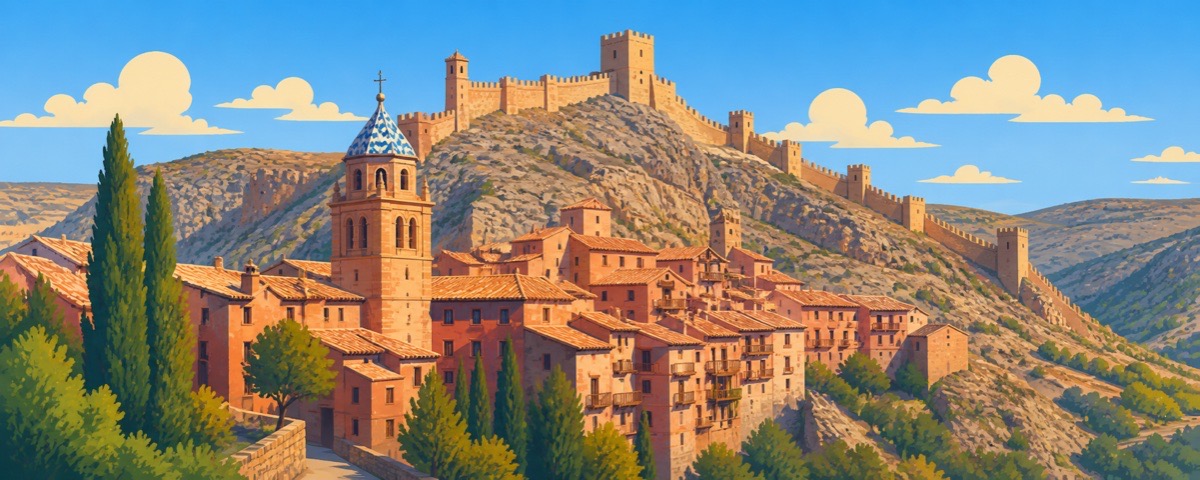
Albarracín is a town of just over a thousand inhabitants in the mountains of the Teruel province, clinging to a bend in the Guadalaviar river. Its houses are red due to the mountain gypsum used for plastering, and the walls climb the ridge above the town, where the river is not enough to defend it.
Did you know
It was a kingdom of its own.
In the Middle Ages, Albarracín was the capital of a tiny independent kingdom (taifa) ruled by an autonomous Berber family.
How they talk in Albarracín
«Ródeno» is an important local word: it indicates the reddish sandstone rock that colours the landscape of the sierra. «Albarracinense» is the demonym used for people and heritage of the area.
charrar
To speak; to chat. Used in Aragonese speech to converse or talk, also in derivatives like «charrada».
Everyday life in Albarracín
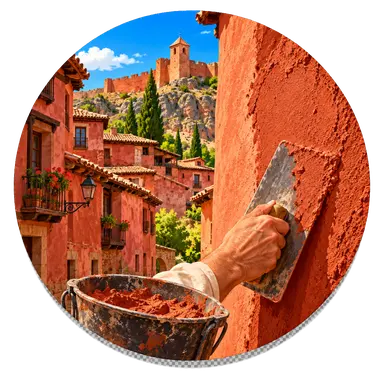
The houses in «rojo albarracín» colour
The plaster is made with the red plaster of the area, and by law it continues to be used: the colour of the town comes from the earth it stands on, not from a facade choice.
«Las casas son de yeso rojo.» — The houses are made of red plaster.
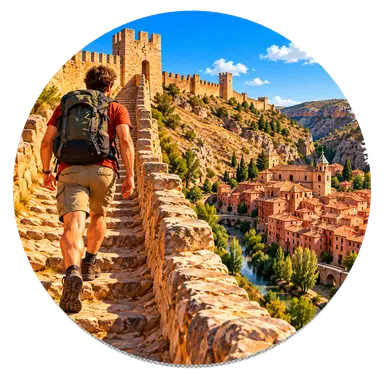
The «muralla» on the ridge
The wall runs along the ridge above the houses and can be walked on foot: you climb steeply, arrive at the top and see the town enclosed within the bend of the river.
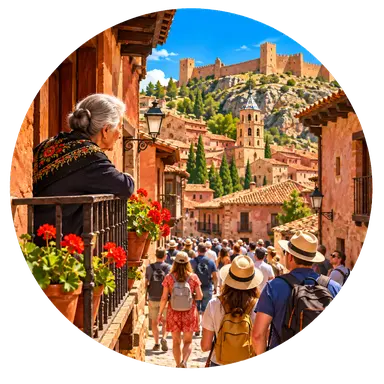
Fifteen hundred inhabitants and many visitors
The town is very small and in high season receives many more people than live there: those who live here do their shopping in Teruel, forty minutes away, and in winter the streets are empty.
What to eat in Albarracín
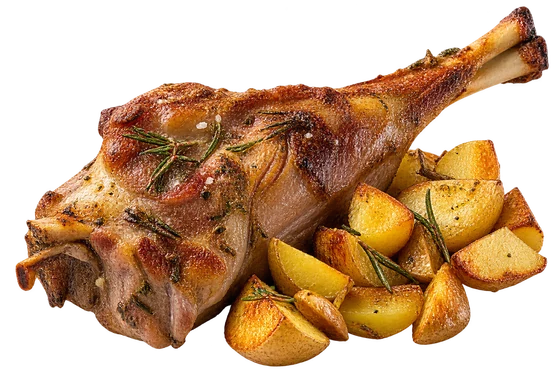
Ternasco de Aragón
Young lamb from the sierra, roasted with salt, lard and white wine.
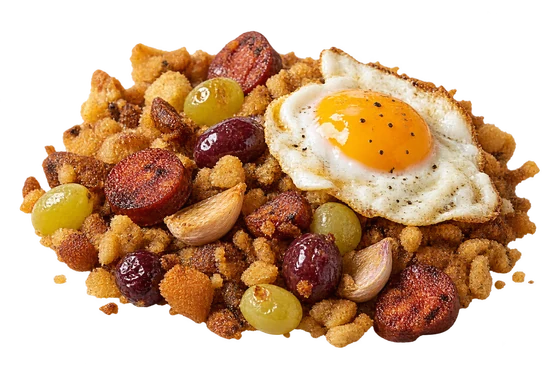
Migas aragonesas
Bread crumbled and sautéed with garlic, grapes and chorizo, the dish of the mountains.
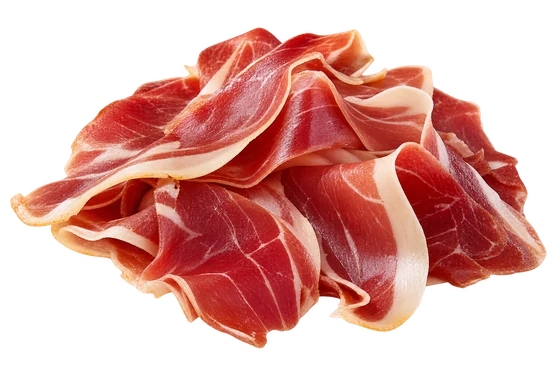
Jamón de Teruel
Ham cured at more than eight hundred metres, with the star engraved on the rind.
Festivals in Albarracín
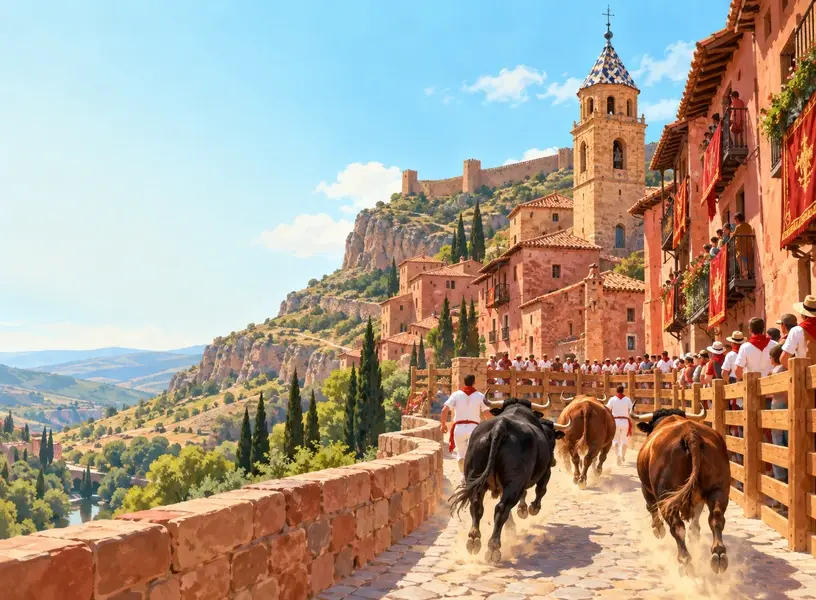
Santa María y Santo Cristo de la Vega
mid-September
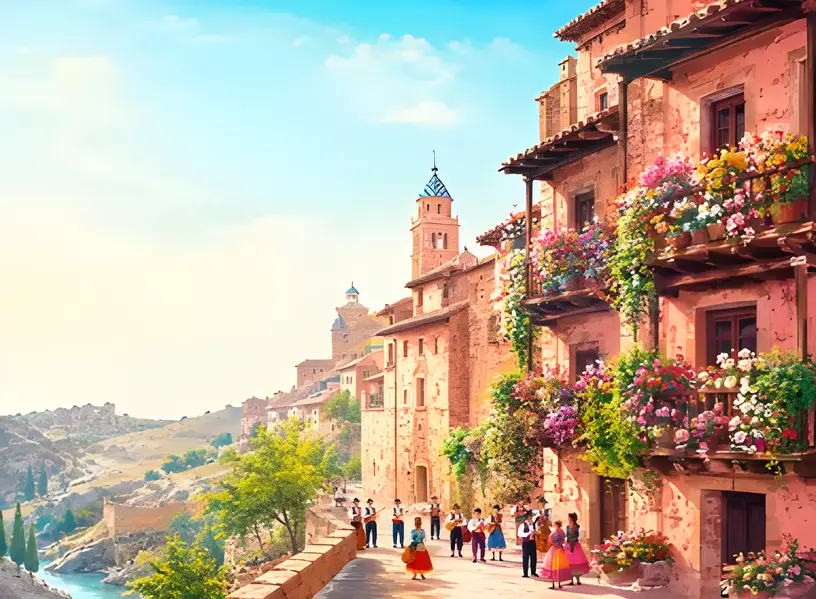
Wooden «talanqueras» are set up in the square and the encierro runs between the red houses.
Los Mayos
the night of 30 April
You go around the town singing under the girls' balconies: a round that goes on until dawn.
What to see in Albarracín
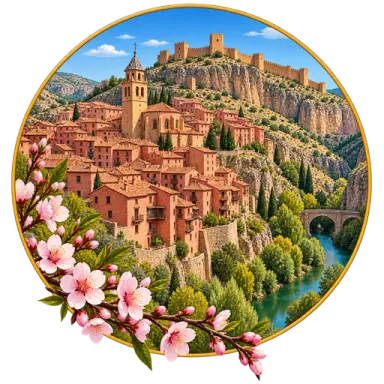
The pink town
The houses of red plaster on the bend of the Guadalaviar, clinging to the rock.
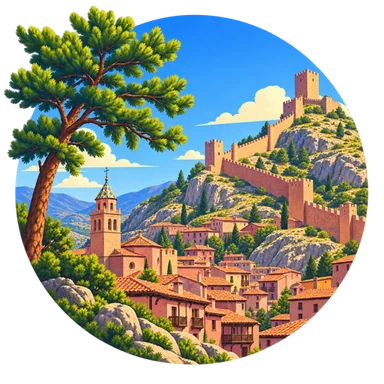
Murallas de Albarracín
The walls that climb up the ridge of the mountain, above the town.
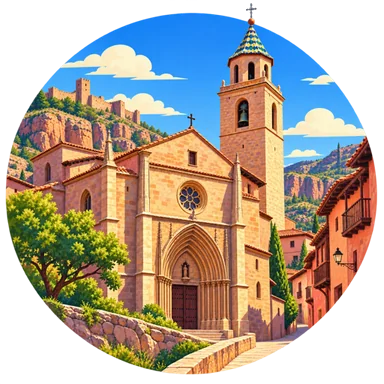
Catedral del Salvador
The small cathedral on the high point of the town, with the Flemish tapestries in the museum.
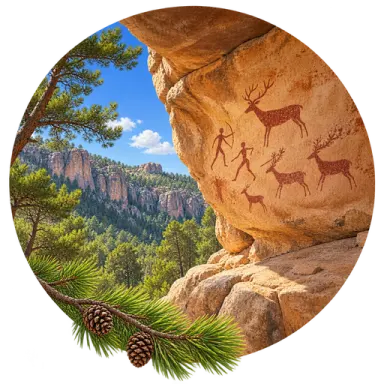
Pinturas rupestres
The Levantine rock paintings in the rock shelters around the town.
Where Albarracín comes from
The pink town on the bend of the river
11th century
The Banu Razin
The Berber family that gives the town its name: «al-Banu Razin» becomes Albarracín.
1170–1284
The lordship
For a century it is an independent lordship, neither Aragonese nor Castilian.
1284
To Aragon
Pedro III annexes it: from there it becomes a frontier city of the kingdom.
20th century → today
The preserved town
The decline leaves it intact: in the twentieth century it is declared a national monument.
Want to learn Spanish by travelling across Spain?
In Aula every lesson is a city lighting up on the map — Albarracín is one of them. Two hundred lessons from A1 to C2, free, starting from your level.
Start from Albarracín →