 Aula· Spain, city by city
Aragón
Calatayud
«Calatayud destaca por sus castillos y ruinas árabes.»Calatayud stands out for its castles and Arab ruins.
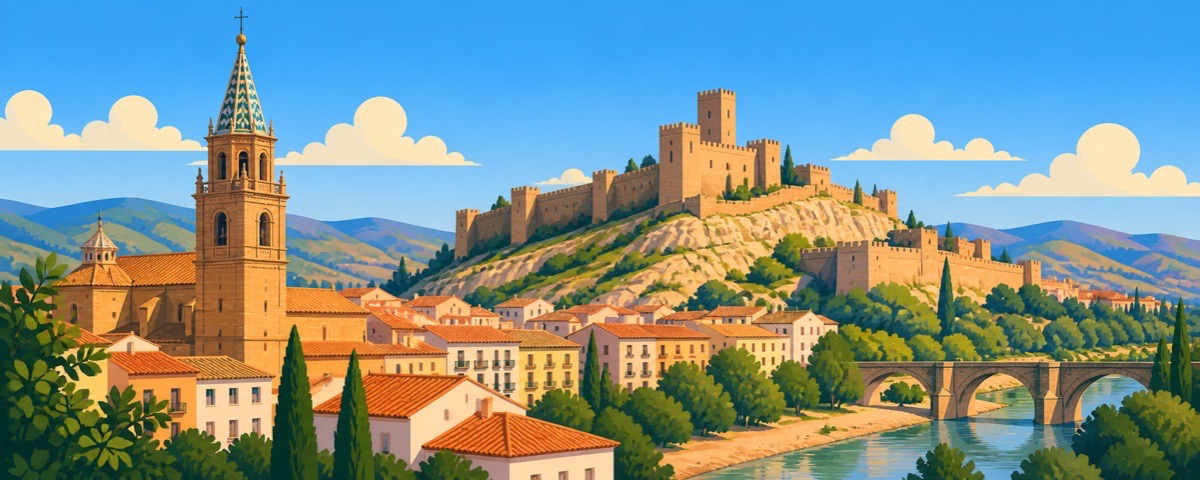
Calatayud is in the Jalón valley, halfway between Zaragoza and Madrid, beneath a system of five interconnected Muslim castles. The name comes from one of them, the castle of Ayyub, and the city preserves Mudéjar towers and churches built of brick and ceramic.
Did you know
The name is Ayyub's castle.
The name Calatayud comes from the Arabic 'Qalat Ayyub', which means Ayyub's castle, founded in the 8th century.
How they talk in Calatayud
«Bilbilitano» is the traditional demonym, derived from the Roman Bilbilis. «Jalón» appears often because the river and the valley define vineyards, orchards, and communication routes.
charrar
To speak; to chat. Used in Aragonese speech to converse or talk, also in derivatives like «charrada».
Everyday life in Calatayud
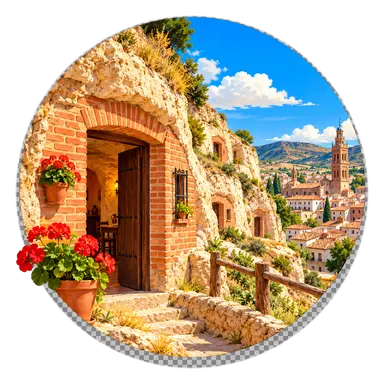
The «casas cueva» in the hill
Above the town there are houses carved into the gypsum, some still inhabited, with a brick facade and the rest inside the rock: they keep cool in summer and warm in winter.
«Estas casas están excavadas en la roca.» — These houses are carved into the rock.
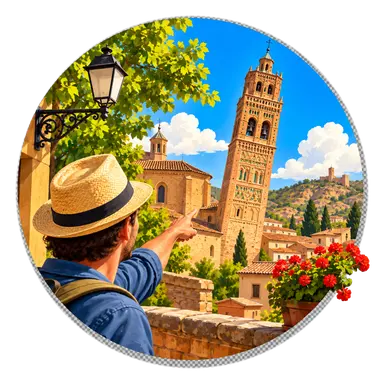
The leaning brick towers
The Mudéjar bell towers are inclined and you can see it with the naked eye: the one at San Andrés has been crooked for centuries and in town it is pointed out as one would point out a sound monument.
«La torre está inclinada.» — The tower is inclined.
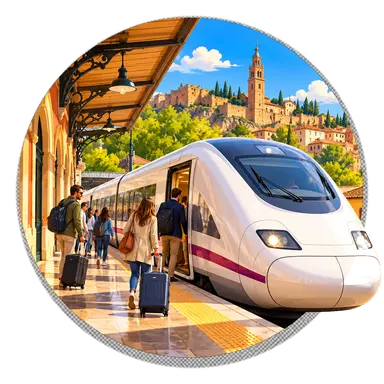
The train that always stops
On the Madrid-Barcelona line, Calatayud is one of the few intermediate stops for high-speed rail: in an hour you are in Zaragoza or Madrid, and the station is the economic engine of the place.
What to eat in Calatayud
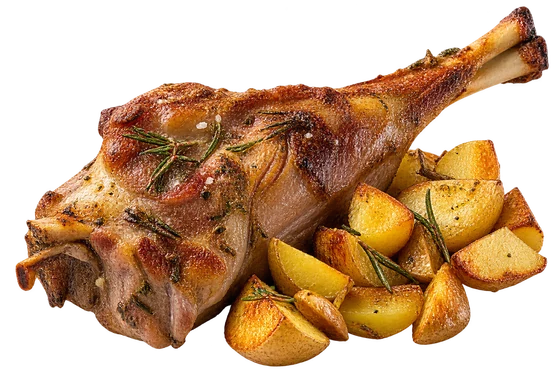
Ternasco de Aragón
Young lamb roasted in the oven, with salt and lard.
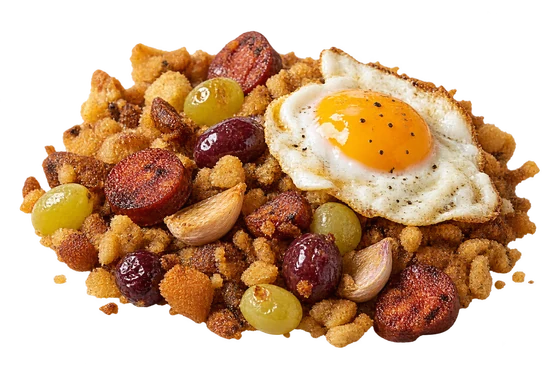
Migas aragonesas
Breadcrumbs sautéed with garlic, grapes, and chorizo, until they separate into grains.
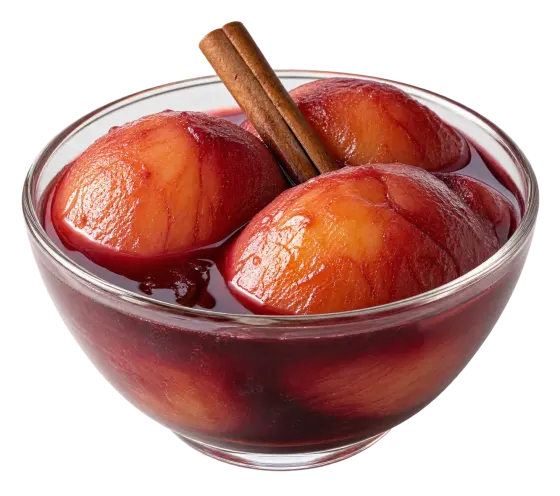
Melocotón con vino
Peaches peeled and placed in red wine with sugar and cinnamon: eaten cold, with a spoon.
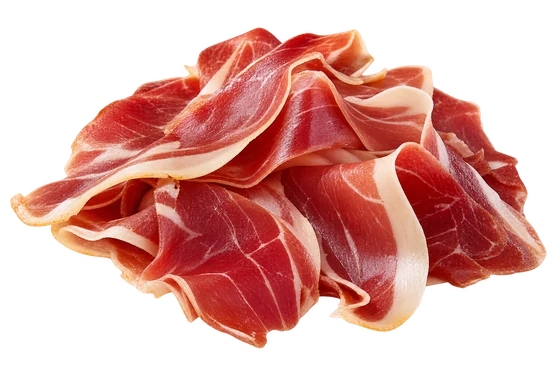
Jamón de Teruel
Ham cured in the mountains, sliced thinly.
Festivals in Calatayud
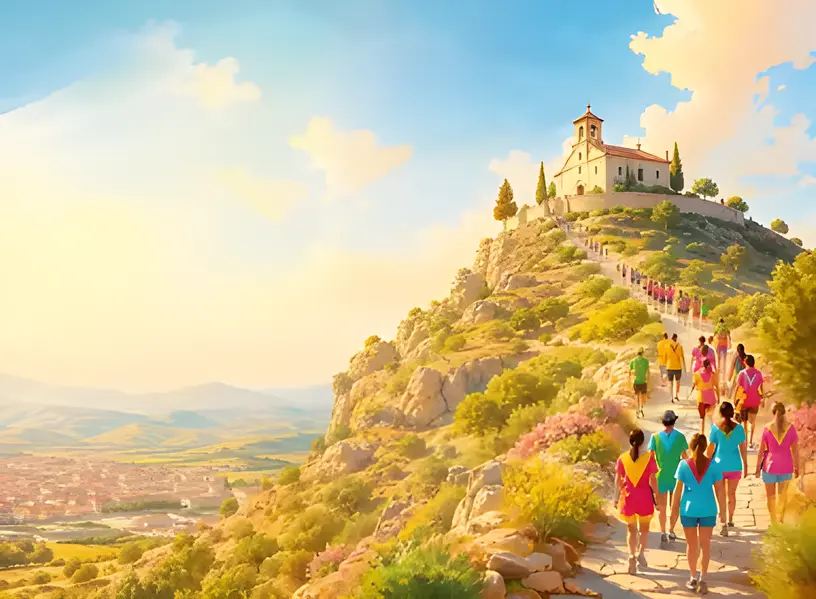
Fiestas de San Roque
from 13 to 16 August
The peñas with their scarves go up in a pilgrimage to the hermitage, and the town takes to the streets for a week.
What to see in Calatayud
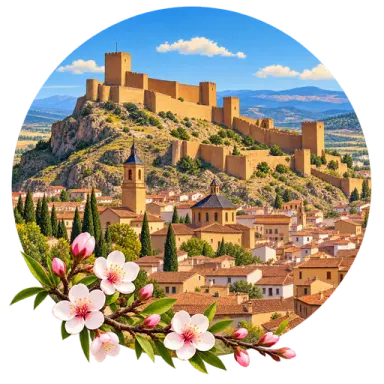
Castillo de Ayyub
Five connected castles on the hills above the city: the oldest Muslim military complex in Spain.
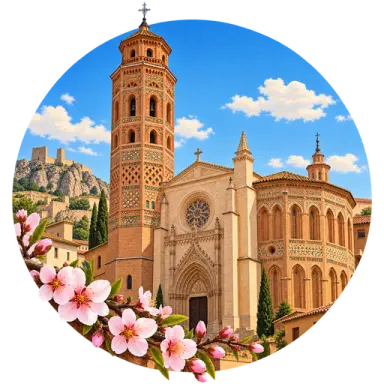
Colegiata de Santa María
Mudéjar church with an octagonal tower and a Plateresque portal fitted in front.
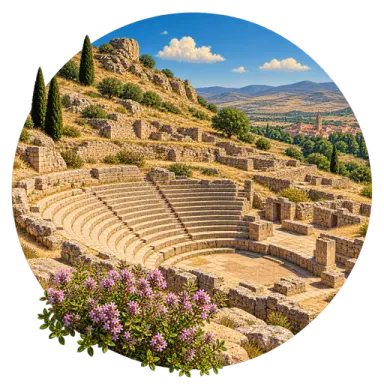
Bilbilis
The Roman city on the terraces carved into the side of the hill, where Martial was born.
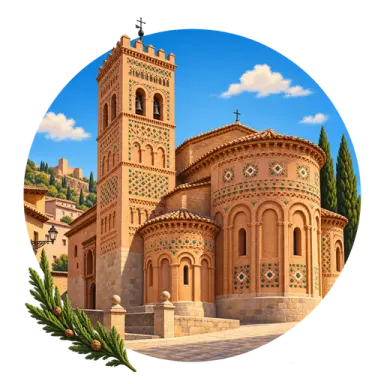
San Pedro de los Francos
Mudéjar church with a leaning tower, cut shorter so it would not fall.
Where Calatayud comes from
The castle of Ayyub
Roman era
Bilbilis
The Roman city a few kilometres away, where the poet Martial was born.
716
Qal'at Ayyub
The castle of Ayyub, from which the name comes: it is the oldest Muslim military facility remaining in Spain.
1120
The conquest
Alfonso I the Battler takes it for Aragon.
16th century
The Mudéjar
Towers and churches of brick and ceramic, made by the remaining Muslim craftsmen.
Want to learn Spanish by travelling across Spain?
In Aula every lesson is a city lighting up on the map — Calatayud is one of them. Two hundred lessons from A1 to C2, free, starting from your level.
Start from Calatayud →