 Aula· Spain, city by city
Aragón
Fraga
«Fraga es muy famosa por sus ricos higos y frutas.»Fraga is very famous for its delicious figs and fruit.
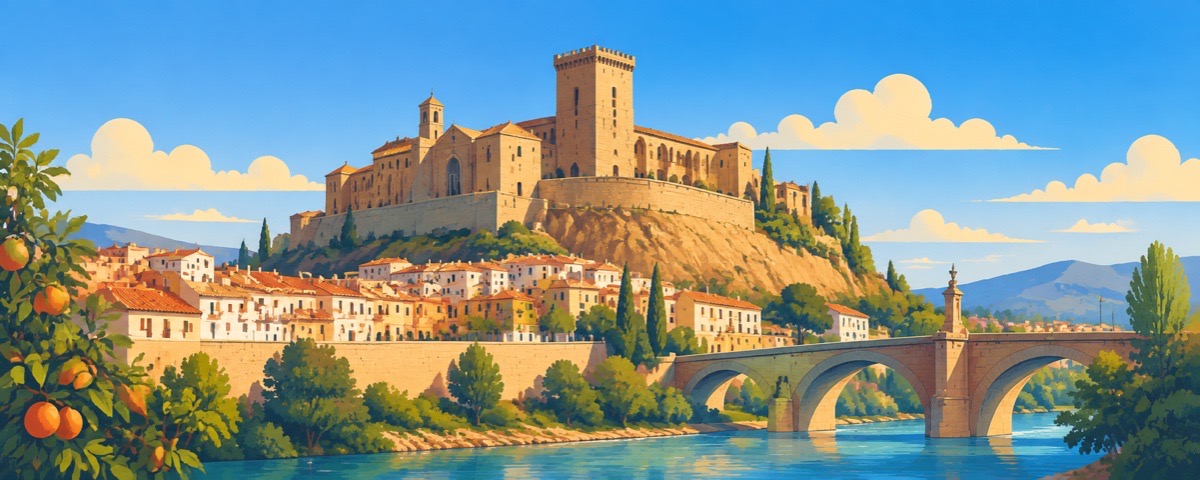
Fraga is situated on the Cinca river, in the far east of Aragon, a few kilometres from the border with Catalonia. Its old town is built in tiers on the slope descending to the river, with alleys that are almost entirely staircases, while the surrounding countryside is one of Spain's great orchards.
Did you know
Cela passed through and wrote about it.
Nobel Prize-winning writer Camilo José Cela described Fraga in his book 'Viaje a la Alcarria' as a land of passage.
How they talk in Fraga
The Catalan of the Franja is spoken here along with Castilian; «Fraga» coexists with Catalan forms and pronunciations in daily life. «Franja» is the term used for the eastern Aragonese area of Catalan language.
charrar
To speak; to chat. Used in Aragonese speech to converse or talk, also in derivatives like «charrada».
Everyday life in Fraga
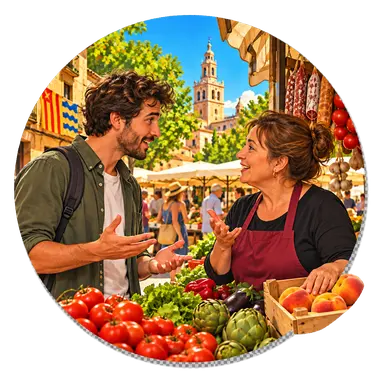
The «fragatino» that is not Castilian
A variety of Catalan with its own words is spoken here, and it is used in the family: those who arrive from Zaragoza do not understand everything, and in shops people switch from one language to another without thinking.
«Aquí se habla fragatino.» — Fragatino is spoken here.
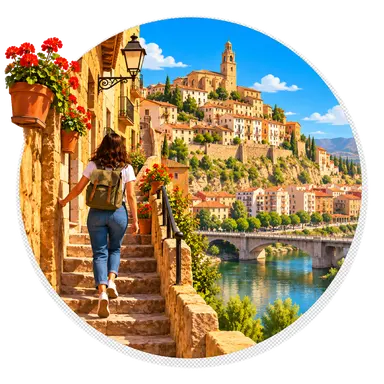
The town vertically above the river
The historic centre rises in steps on the bank of the Cinca, with houses one above the other and alleyways that are staircases: the new part is down below, on flat ground, and you shuttle between the two.
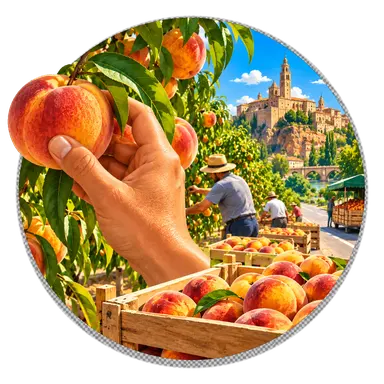
The Fraga peach in July
The peaches from here have a designation of origin and in season they are sold along the road, in crates. The harvest employs thousands of seasonal workers.
«En julio se recoge el melocotón.» — In July, the peach is harvested.
What to eat in Fraga
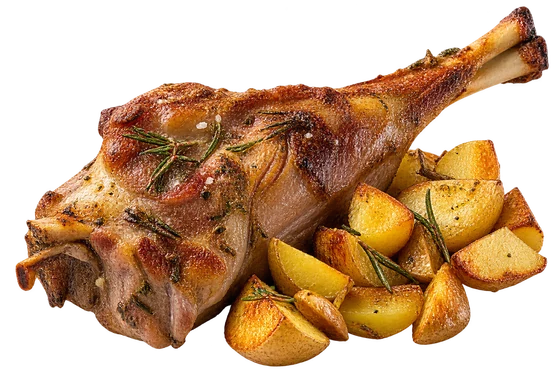
Ternasco de Aragón
Young lamb roasted with salt, lard, and white wine.
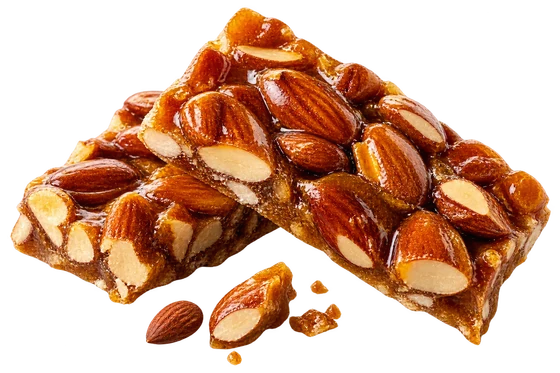
Guirlache
Almond and caramel brittle, in tablets that are broken into pieces.
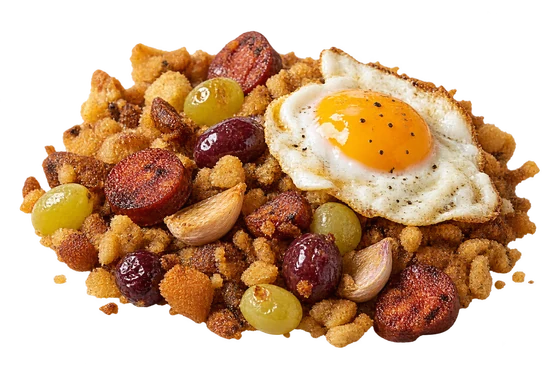
Migas aragonesas
Breadcrumbs sautéed with garlic, grapes, and chorizo.
Festivals in Fraga
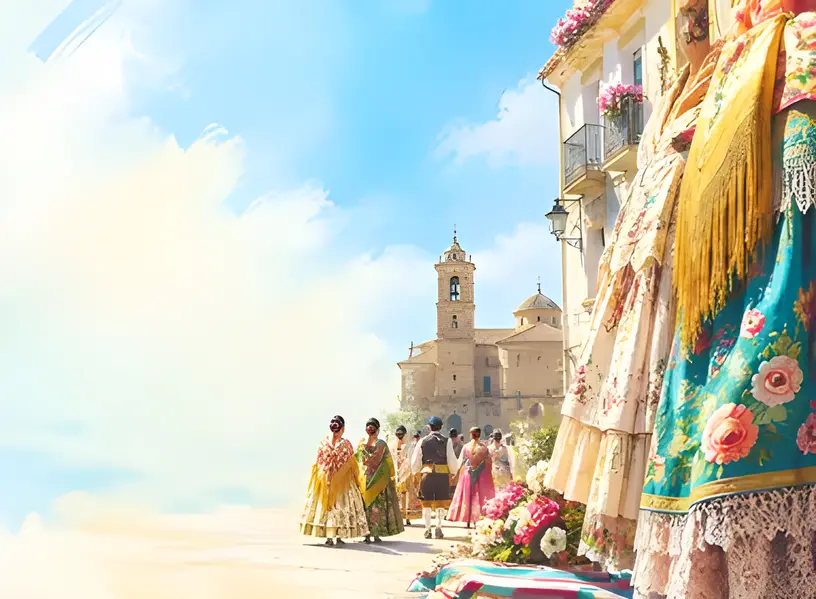
Día de la Faldeta
in April
Women go out with the «faldeta», the traditional costume that is passed down in the family, and there is a parade through the old town.
What to see in Fraga
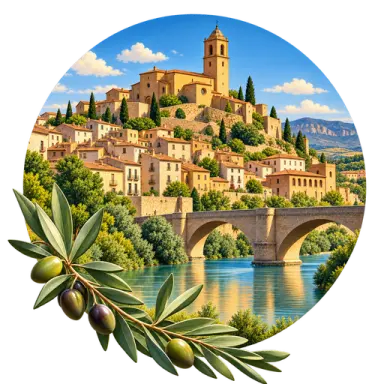
Casco antiguo
The stepped houses on the side that descends to the Cinca, with alleyways on stairs.
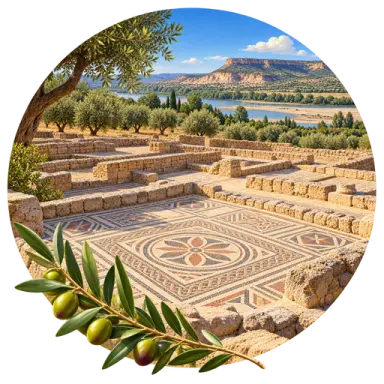
Villa Fortunatus
Roman villa with geometric mosaics and the remains of a paleo-Christian basilica.
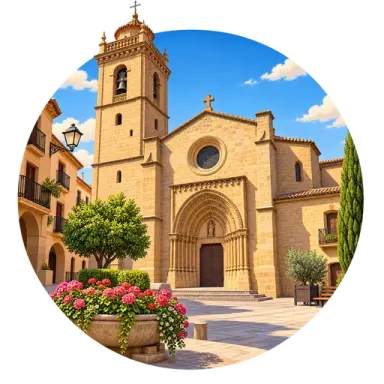
Iglesia de San Pedro
The Romanesque church at the top of the old town, with the tower that dominates the river.
Where Fraga comes from
The stepped houses on the river
Roman era
Gallica Flavia
Roman settlement on the Cinca; a few kilometres away is the villa of Fortunatus.
1149
The conquest
Ramón Berenguer IV takes it after two sieges: in the first, in 1134, Alfonso I died there.
16th–19th century
The old town
The houses crowd in steps on the side that descends to the river.
20th century → today
The fruit
Irrigation makes the area one of the great orchards of Spain.
Want to learn Spanish by travelling across Spain?
In Aula every lesson is a city lighting up on the map — Fraga is one of them. Two hundred lessons from A1 to C2, free, starting from your level.
Start from Fraga →