 Aula· Spain, city by city
Asturias
Gijón
«Gijón tiene la gran playa de San Lorenzo.»Gijón has the large San Lorenzo beach.
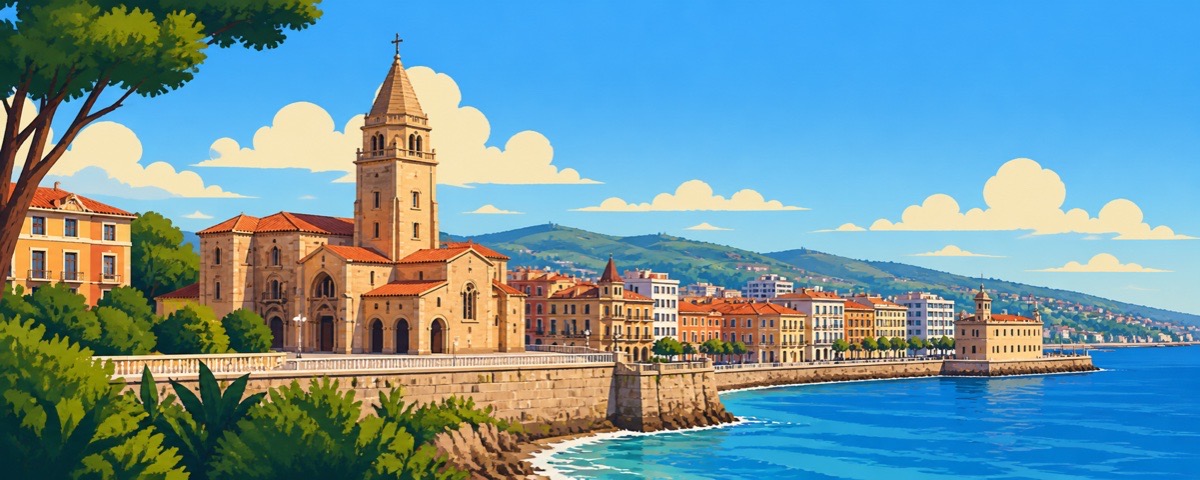
Gijón is the most populous city in Asturias and lies on the central coast of the region, around a headland that encloses two bays. It began as a Roman settlement on that point, grew with the port and coal, and since the nineties has completely rebuilt its entire seafront.
Did you know
A sculpture that plays with wind
The 'Elogio del Horizonte' sculpture by Chillida, located on the headland, emits a curious resonant sound with the wind and the waves.
How they talk in Gijón
«Xixón» is the Asturian name of the city. «Guaje», «prestoso» and «culín» appear in local speech even when the conversation is mainly in Castilian.
prestar
To cause pleasure or satisfaction. Daily use in constructions like «présta-me/prestóme» to say that something is liked or has given pleasure.
Everyday life in Gijón

The «Semana Negra» in July
A crime fiction festival that lasts ten days and takes place in the middle of a fair with rides: books are presented next to the shooting range, and fifty thousand people go there every day.
«La Semana Negra es en julio.» — The Semana Negra is in July.
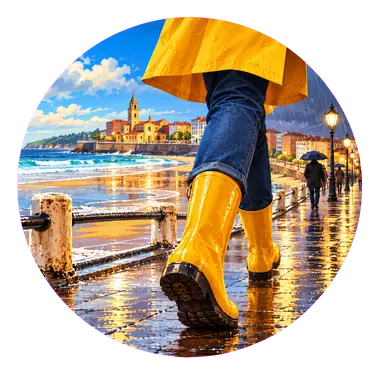
San Lorenzo all year round
The beach in the middle of the city has a wall-promenade a kilometre and a half long, and people walk there even in winter in the rain. The tide uncovers and covers it twice a day.
«Damos un paseo por el muro.» — Let's take a walk along the wall.
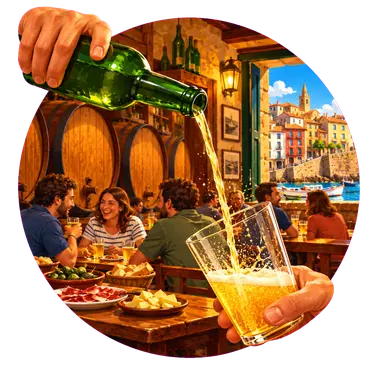
The sidrerías of Cimavilla
The old fishing neighbourhood on the promontory is full of sidrerías with the barrels on display: you eat at long tables, and dishes are shared without asking.
«¿Nos escancias otra botella?» — Will you pour us another bottle?
What to eat in Gijón
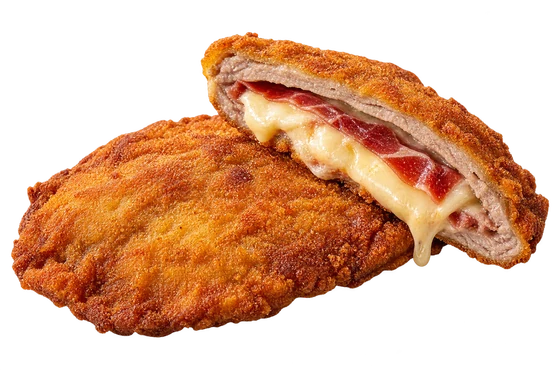
Cachopo
Two slices of veal with ham and cheese inside, breaded and fried. One is enough for two.
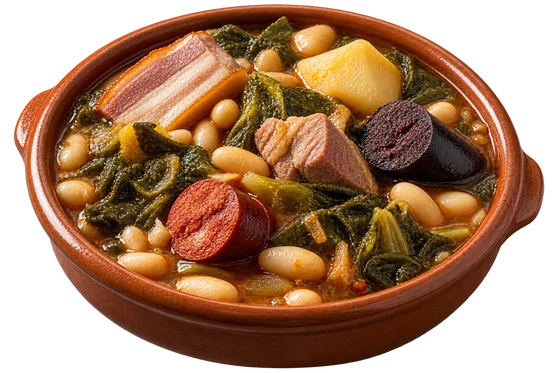
Pote asturiano
Thick soup of cabbage, potatoes, beans and pork meats, slow-cooked.
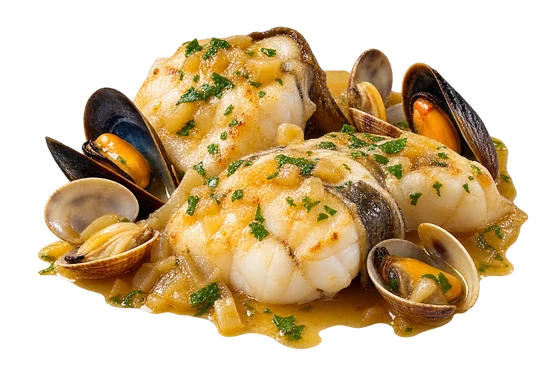
Pixín a la sidra
Monkfish cooked in sidra with onion, in an earthenware pot.
Festivals in Gijón
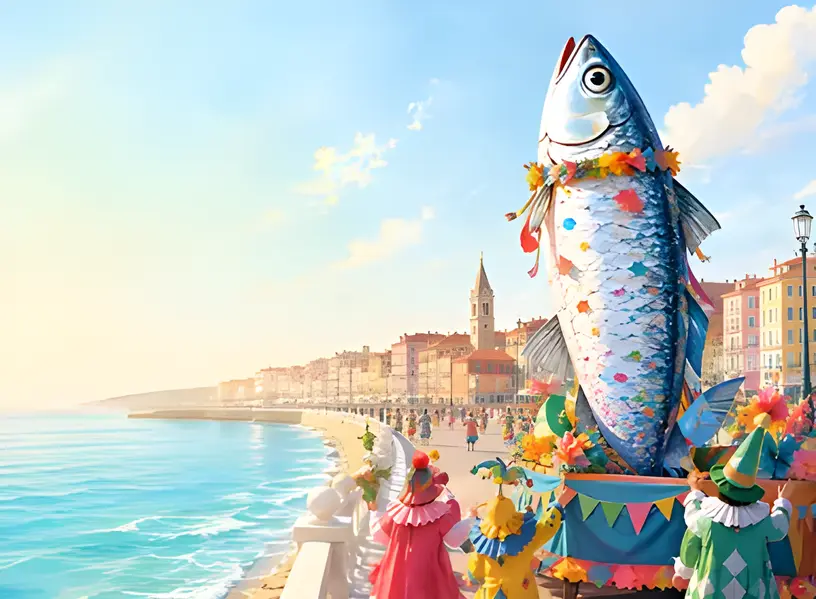
Antroxu
between February and March
The Asturian carnival: parades, «charangas» and the funeral of the sardine, with the city dressed up for three days.
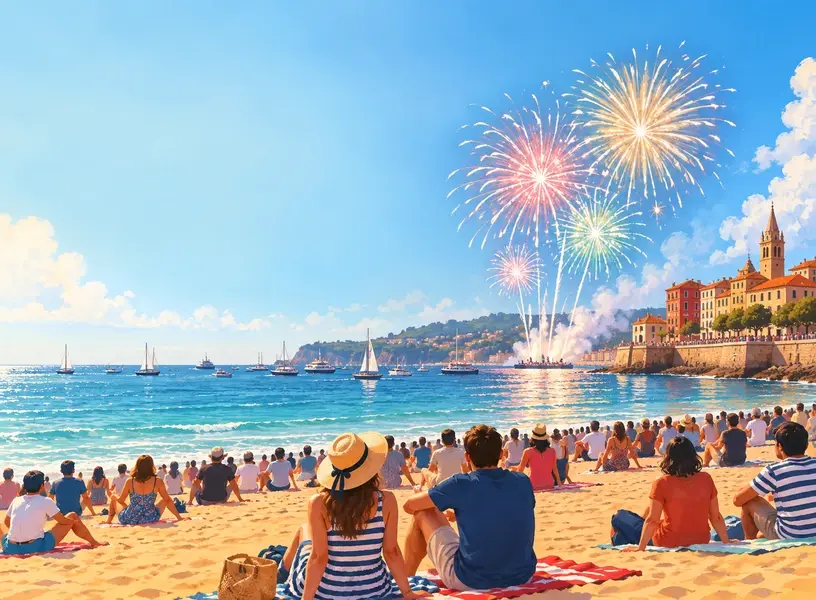
Semana Grande y Fiestas de Begoña
the week around 15 August
The fireworks are fired from the sea and watched from the beach of San Lorenzo, with the whole city sitting on the sand.
What to see in Gijón
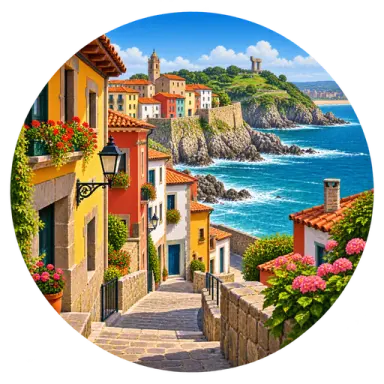
Cimadevilla
The neighbourhood on the promontory, where the city was born: low houses, alleyways and the sea on three sides.
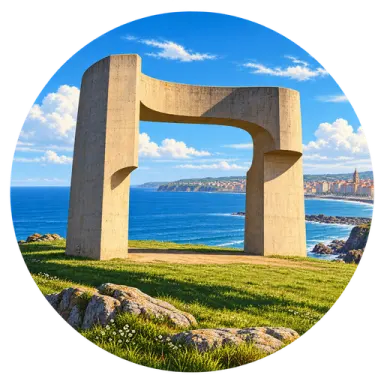
Elogio del Horizonte
Chillida's sculpture at the top of the promontory: standing in the centre you can hear the sea amplified.
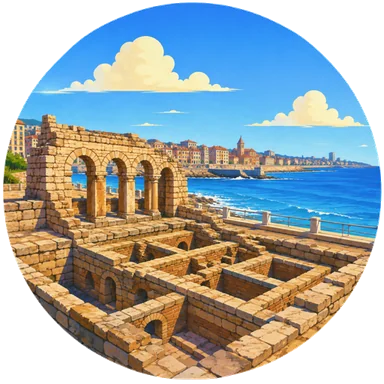
Termas romanas de Campo Valdés
The Roman baths under the church square, with the floors and the pools.
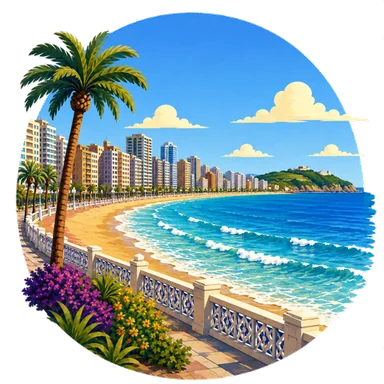
Playa de San Lorenzo
The kilometre and a half of beach in the middle of the city, with the wall that closes it off.
Where Gijón comes from
A promontory, the baths and the port
Roman era
Gigia
Settlement on the promontory of Cimadevilla, with the baths and the walls.
14th century
The villa
The fishing town is born around the natural port below the promontory.
19th–20th century
Industry
Coal from the valleys leaves from here: the port and the steelworks make the city.
1990 → today
Reconversion
With the factories closed, the seafront is redone and Cimadevilla restored.
Born here: Jovellanos, politician and writer.
Want to learn Spanish by travelling across Spain?
In Aula every lesson is a city lighting up on the map — Gijón is one of them. Two hundred lessons from A1 to C2, free, starting from your level.
Start from Gijón →