 Aula· Spain, city by city
Asturias
Langreo
«Langreo tiene un interesante museo de la minería.»Langreo has an interesting mining museum.
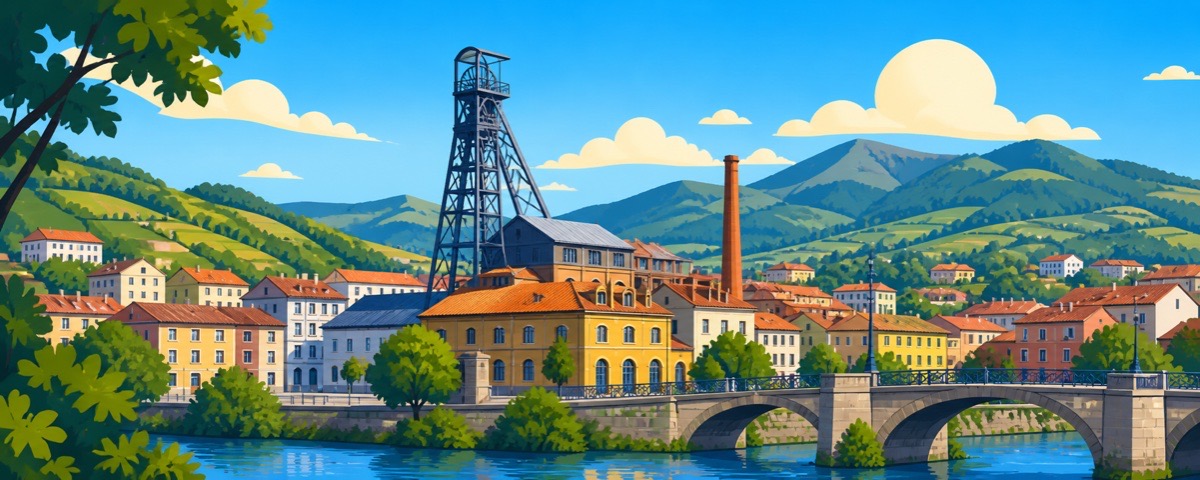
Langreo is in the Nalón valley, the heart of the Asturian coal basin. The region's first railway started from here in 1852, built to carry coal to the port of Gijón, and the headframes of the closed shafts remain standing all along the valley.
Did you know
You really go down the mine
In Langreo, visitors can put on a miner's helmet and actually go underground into the real Pozu Sotón mine.
How they talk in Langreo
«Pozo» here often indicates a mine shaft and appears in the names of industrial sites. «Guaje» and «prestoso» belong to the daily Asturian lexicon.
prestar
To cause pleasure or satisfaction. Daily use in constructions like «présta-me/prestóme» to say that something is liked or has given pleasure.
Everyday life in Langreo
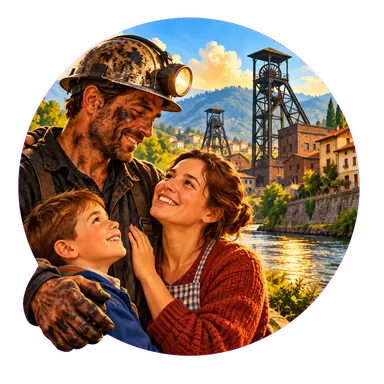
The «cuencas mineras»
Langreo is the heart of the coal valley, and the headframes of the shafts are still standing along the river: many houses look out onto a closed shaft, and in the family there is almost always a miner.
«Casi todas las familias tuvieron un minero.» — Almost all families have had a miner.
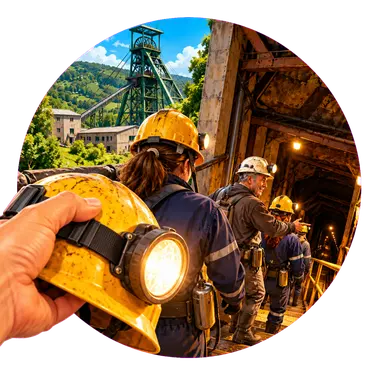
The museum inside the real shaft
In the pozo Sotón you go down to six hundred metres with mining equipment, accompanied by former miners: it lasts five hours, and mostly Asturians go there.
«Se baja de verdad, con el casco.» — You go down for real, with the helmet.

The narrow train along the river
The old narrow-gauge line connects the towns of the valley one after the other: it passes through the houses, it is slow, and it is still taken to go to Gijón.
What to eat in Langreo

Arroz con leche
Rice slow-cooked in milk with lemon and cinnamon, with burnt sugar on top.

Carbayones
Pastry filled with almond and egg yolk, with icing on top, born in Oviedo.
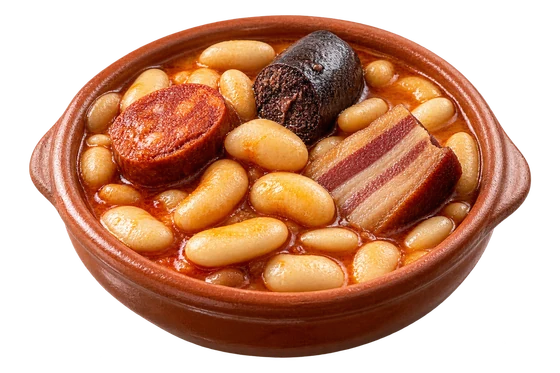
Fabada asturiana
Large white beans slow-cooked with chorizo, morcilla and lacón.
Festivals in Langreo
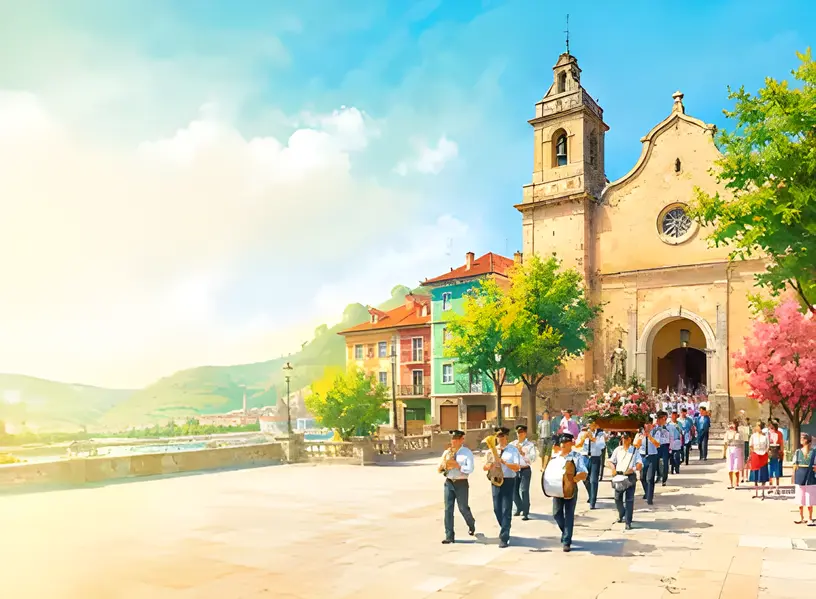
Fiestas de Santiago de Sama
around 25 July
The festival of the mining neighbourhood: the jira in the countryside and the bands that go around Sama.
What to see in Langreo
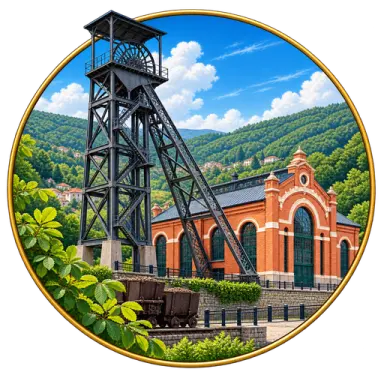
Pozo San Luis
The mine shaft preserved in its entirety, with the headframe, the machines and the bathhouse.
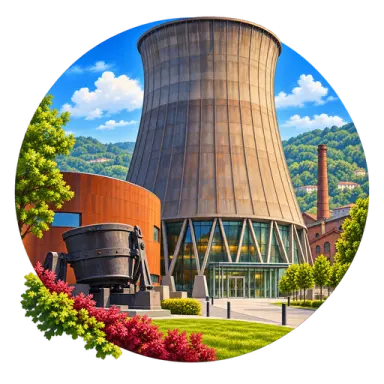
Museo de la Siderurgia
The steel museum inside the old cooling tower of the factory.

Valle del Nalón
The valley of the mines, with the headframes sprouting between the houses and the woods.
Where Langreo comes from
The first railway in Asturias, for coal
Middle Ages
The villages
Agricultural nuclei scattered along the Nalón, each with its own church.
1852
The railway
The Langreo-Gijón line opens, the first railway in Asturias: it was used to take coal to the port.
20th century
The shafts
The mines and the steel industry fill the valley: the landscape becomes that of the headframes.
1990 → today
After coal
With the shafts closed, the headframes remain standing as museums and as a sign.
Want to learn Spanish by travelling across Spain?
In Aula every lesson is a city lighting up on the map — Langreo is one of them. Two hundred lessons from A1 to C2, free, starting from your level.
Start from Langreo →