 Aula· Spain, city by city
Asturias
Llanes
«Llanes es conocida por sus hermosas playas y acantilados.»Llanes is known for its beautiful beaches and cliffs.
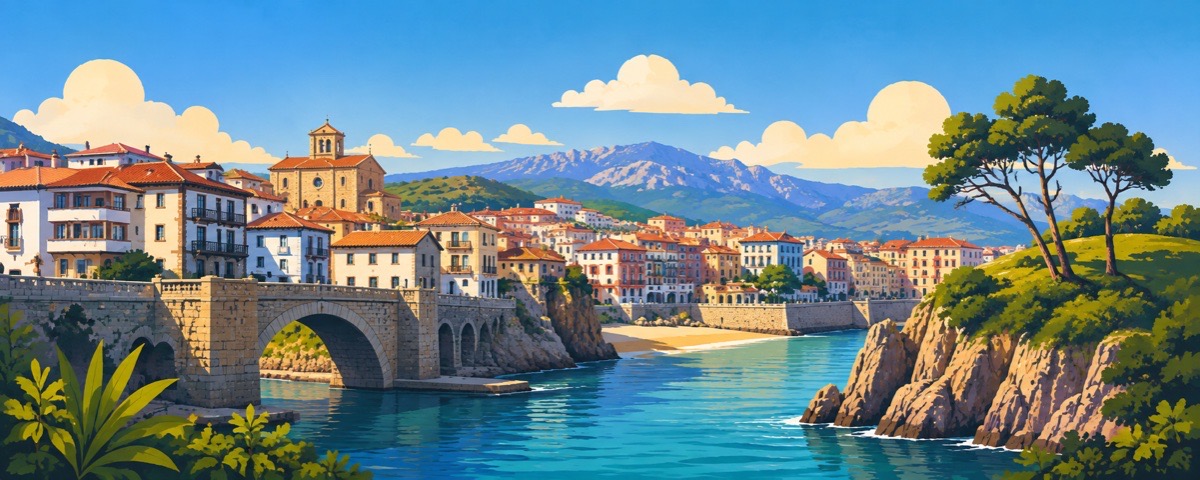
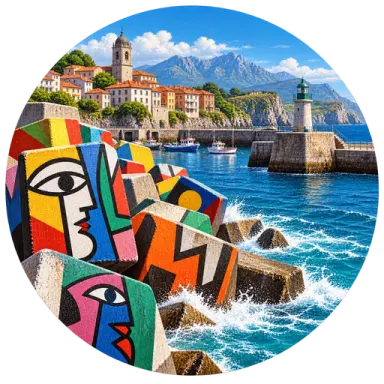
Llanes is on the eastern coast of Asturias, between the sea and the Picos de Europa, with about thirty beaches in its territory. It preserves medieval walls and the houses of emigrants who returned from America, and on the pier, the breakwater blocks have been painted one by one.
Did you know
A beach in the middle of a meadow
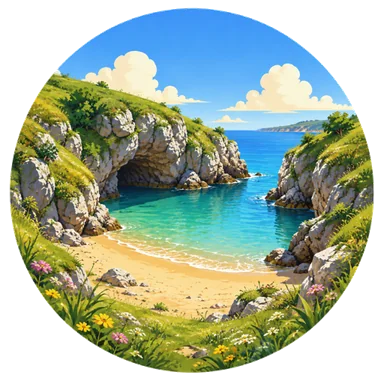
Gulpiyuri beach is a tiny pool of saltwater in the middle of a green meadow, a hundred metres away from the sea.
How they talk in Llanes
«Pixín» is the Asturian name for monkfish and «andarica» refers to the crab called velvet crab in other areas. «Indiano» describes emigrants who returned rich from the Americas and their villas.
prestar
To cause pleasure or satisfaction. Daily use in constructions like «présta-me/prestóme» to say that something is liked or has given pleasure.
Everyday life in Llanes
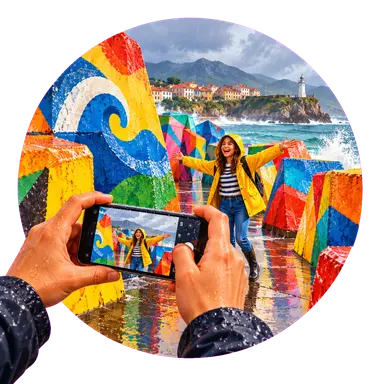
The «cubos de la memoria» on the pier
The concrete blocks of the breakwater are painted in bright colours by a Basque artist: you walk among them as if inside a painting, and you take photos even in the rain.
«Los cubos están pintados a mano.» — The cubes are painted by hand.
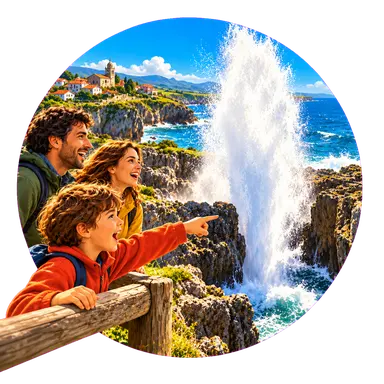
The «bufones» that blow
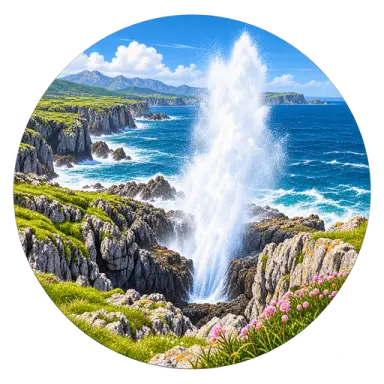
In certain parts of the cliff the sea enters natural chimneys and shoots jets of water tens of metres high, with a roar: it only happens with a rough sea, and the llaniscos know when to go and see them.
«Con mar gruesa los bufones soplan.» — With a rough sea the bufones blow.

The 30 beaches of a single municipality
Llanes has dozens of coves within its territory, some reachable only on foot: each has its regulars, and in August people divide themselves up by family habit.
What to eat in Llanes
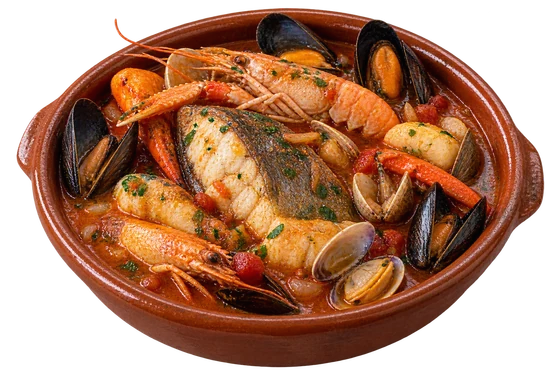
Caldereta de pescado
Rockfish soup with potatoes and peppers, cooked in a cauldron on the boats.
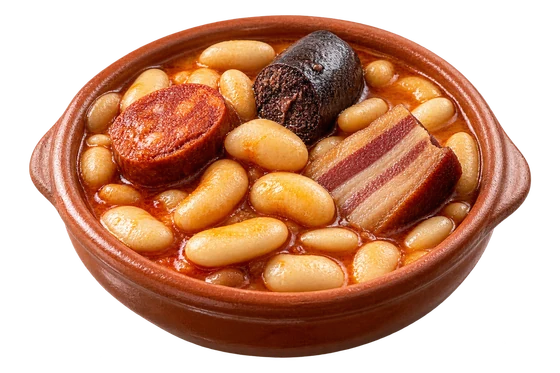
Fabada asturiana
Large white beans cooked slowly with chorizo, morcilla and lacón.
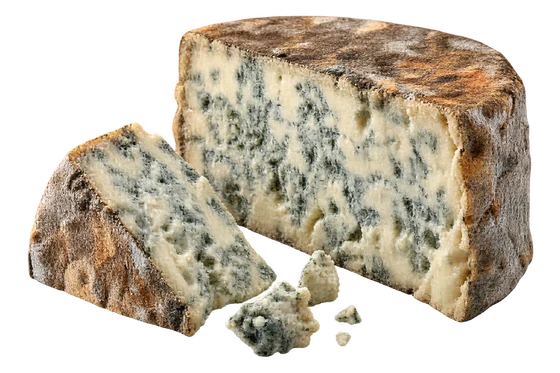
Queso Cabrales
Blue cheese aged in the caves of the Picos de Europa, strong and creamy.
Festivals in Llanes
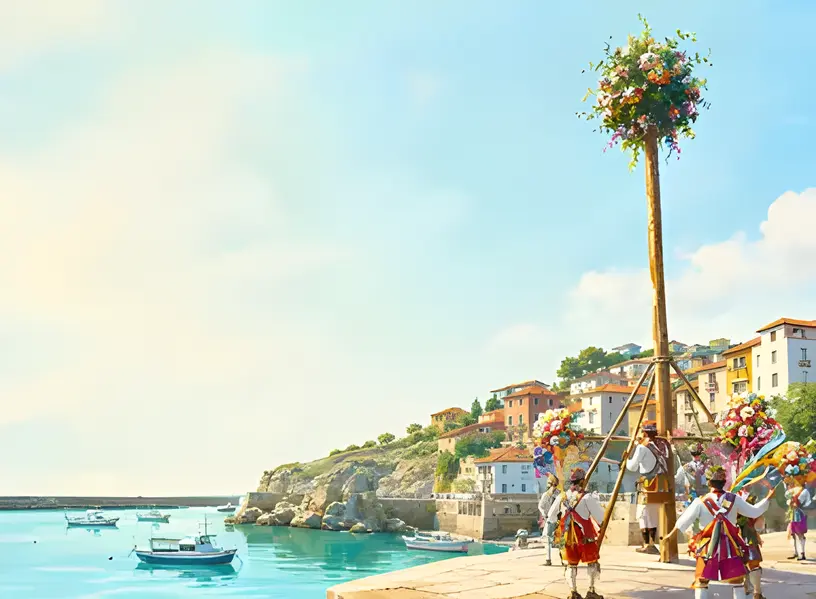
La Magdalena
22 July
The ramos come out, the scaffolding of bread and flowers carried on shoulders, and the porruanos in costume open the procession.
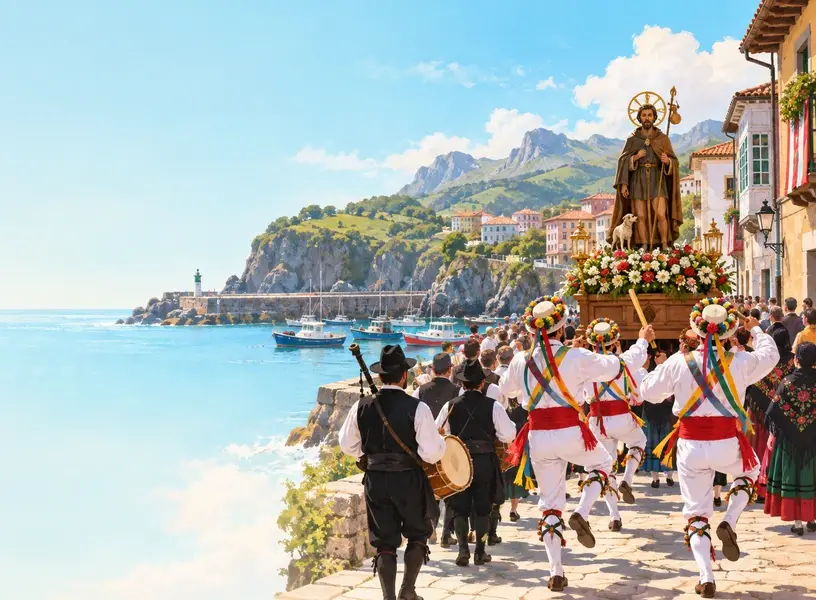
San Roque
16 August
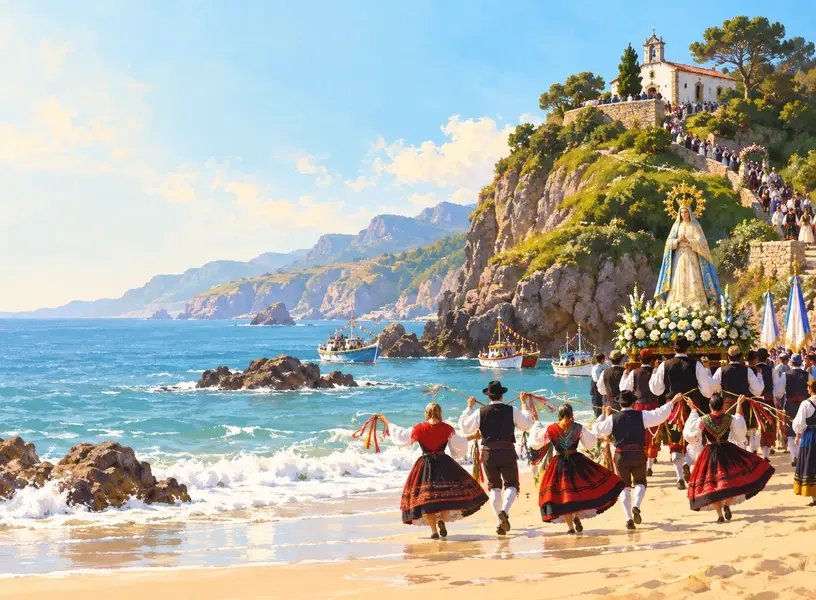
The San Roque banner crosses the town and the danzantes dance in front of the saint, in front of the port.
La Guía
8 September
The Virgin descends from the hermitage on the promontory, and the dance is performed first by the seashore.
What to see in Llanes
Cubos de la Memoria
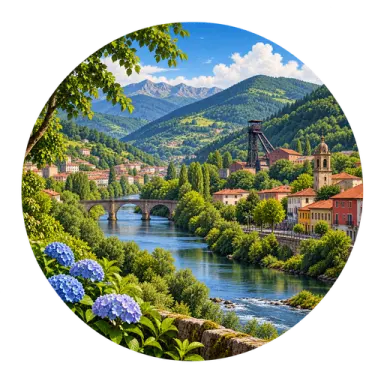
The concrete blocks of the breakwater painted by Agustín Ibarrola, one by one.
Bufones de Pría
Natural chimneys in the cliff from which the sea, when it is rough, shoots water out to twenty metres.
Playa de Gulpiyuri
A beach in the middle of a meadow, a hundred metres from the sea, filled by water that passes underground.
Basílica de Santa María
The Gothic church inside the walls, with the portal and the Flemish altarpiece.
Where Llanes comes from
A beach in the middle of a meadow
1206
The fuero
Alfonso IX grants it the fuero: the walled town on the port is born.
15th–17th century
The «indianos»
Those who return rich from America build colonial houses around the town.
19th century
The port
It lives on fishing and preserves; the railway connects it to the rest of the coast.
2001
The Cubos
Ibarrola paints the breakwater blocks: the pier becomes a work of art.
Want to learn Spanish by travelling across Spain?
In Aula every lesson is a city lighting up on the map — Llanes is one of them. Two hundred lessons from A1 to C2, free, starting from your level.
Start from Llanes →