 Aula· Spain, city by city
Baleares
Alcúdia
«Alcúdia tiene murallas medievales muy bien conservadas.»Alcúdia has very well-preserved medieval walls.
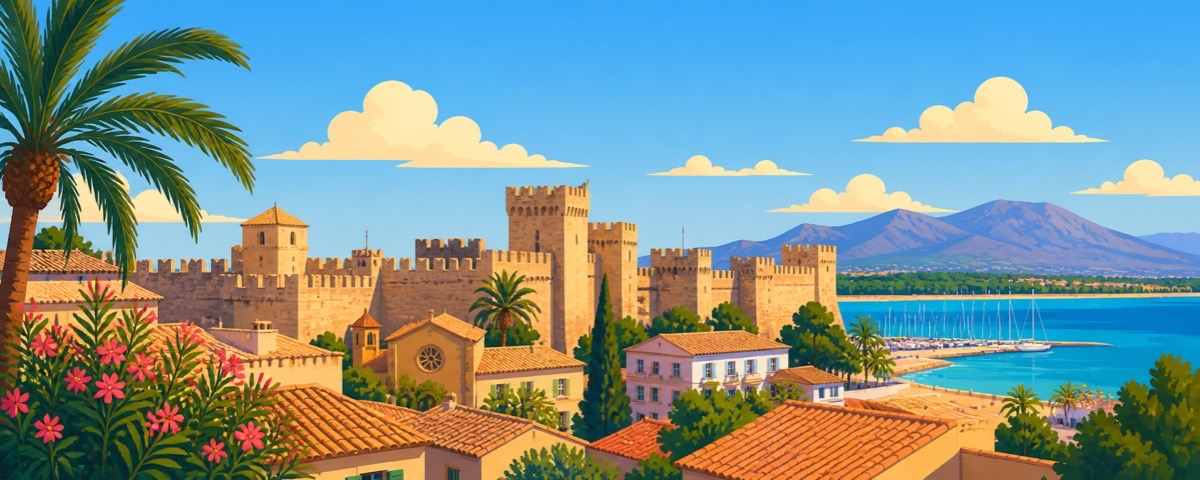
Alcúdia is on the isthmus that separates the two large bays of northern Majorca, where the Romans founded the city of Pollentia. The old town is still enclosed by its medieval walls, while kilometres of beach and the Albufera wetland extend towards the port.
Did you know
You can walk along the walls.
The medieval walls of Alcúdia can be walked along in their entirety, offering a spectacular view over the city rooftops.
How they talk in Alcúdia
«Alcúdia» preserves a name of Arabic origin linked to the idea of a hill or height. The local Majorcan uses «sa», «es» and «ses» in traditional speech.
idò
Then; so; well. Conjunction and discourse marker very common in Balearic Catalan, used to connect or introduce a response.
Everyday life in Alcúdia
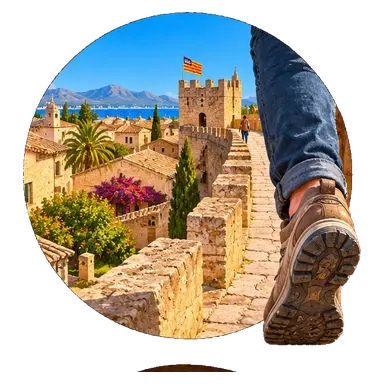
La «murada» si gira a piedi
The historic centre is still closed by an entire medieval wall, and you can walk on it: you go around the town from above, looking into the courtyards of the houses.
«Se puede andar por encima de la muralla.» — You can walk on top of the wall.
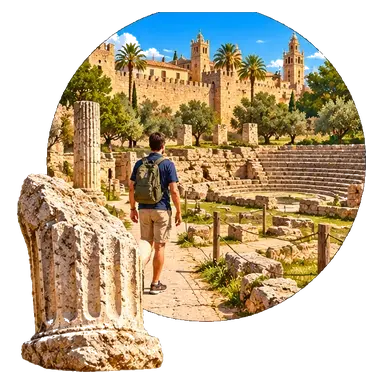
Il romano «Pollentia» dietro alle case
The remains of the Roman city, with the theatre carved into the rock, are just outside the walls: you pass through it when walking towards the port.
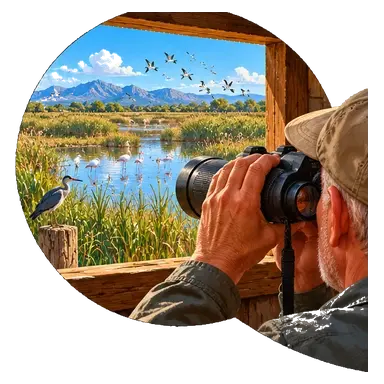
S'Albufera coi binocoli
The largest wetland in the Balearic Islands is a stone's throw away, with observation towers and paths: bird enthusiasts come here from all over Europe, and residents come to walk in the morning.
What to eat in Alcúdia
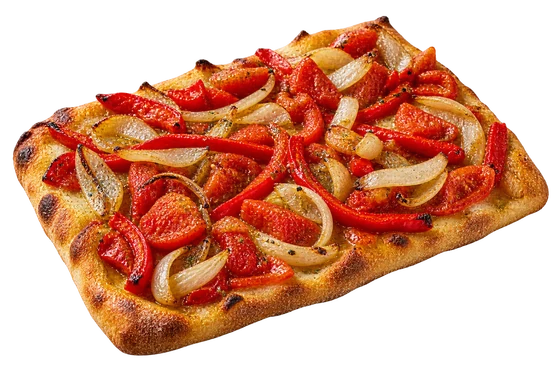
Coca de trampó
Thin flatbread with raw diced tomato, onion and pepper on top, baked in the oven.
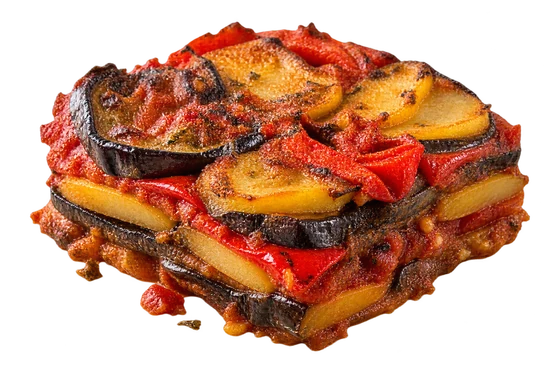
Tumbet
Potatoes, aubergines and peppers fried in layers, with tomato sauce on top and finished in the oven.
Festivals in Alcúdia
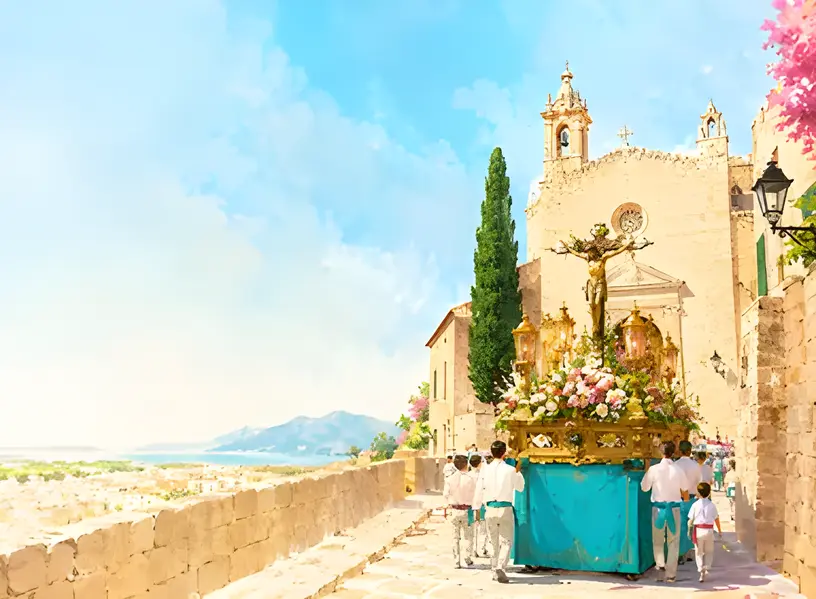
Triennal del Sant Crist
every three years, in July
The Christ only leaves the church of Sant Jaume once every three years, and for that day the town fills with people who have returned on purpose.
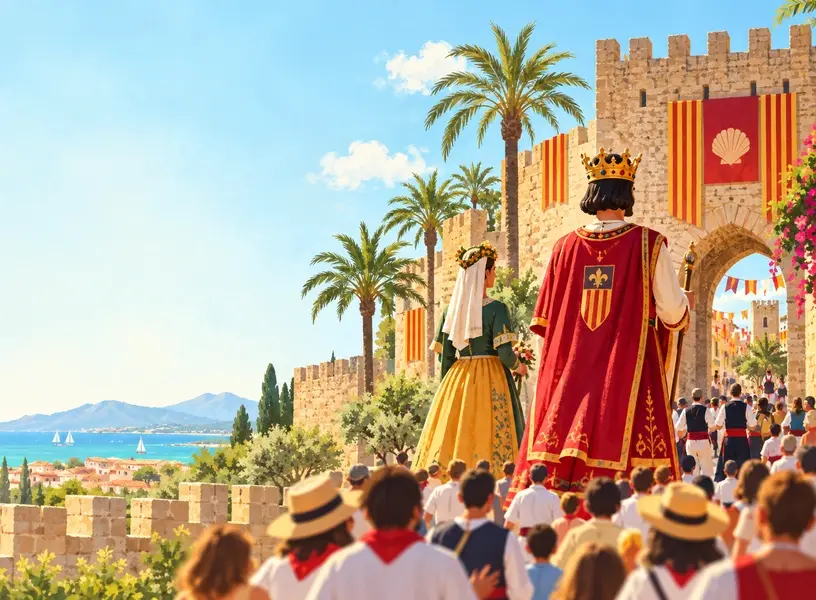
Festes de Sant Jaume
around 25 July
The giants go around inside the medieval walls, and the festival ends with fireworks in front of the city gate.
What to see in Alcúdia
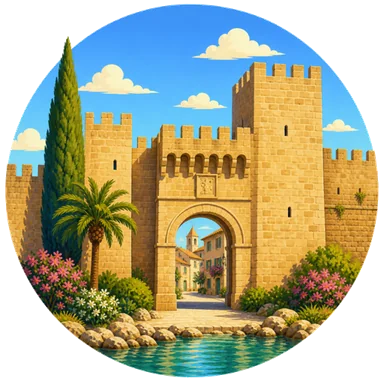
Murallas de Alcúdia
The complete circuit of the medieval walls, which you can walk all the way along the walkway.
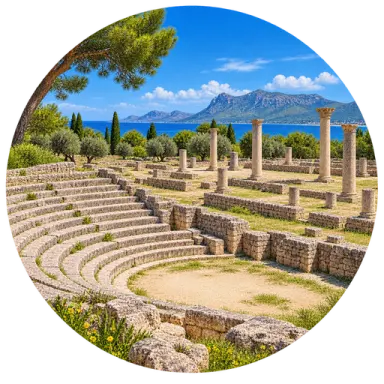
Pollentia
The Roman city with the theatre carved into the rock, the smallest in Spain.
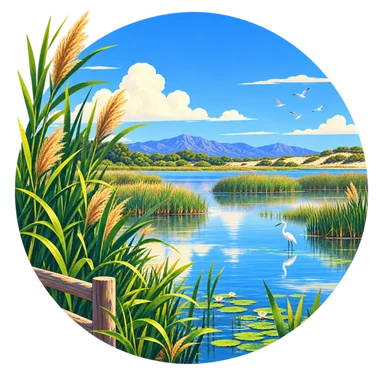
S'Albufera
The largest wetland in the Balearic Islands, with more than three hundred species of birds.
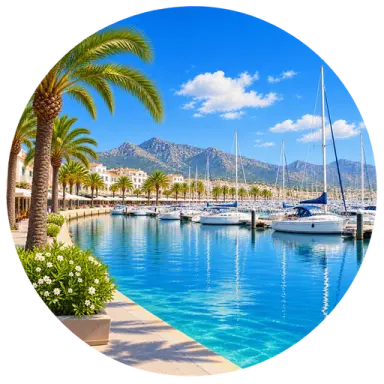
Port d'Alcúdia
The port and the kilometres of beach in the bay, with the Tuesday market.
Where Alcúdia comes from
«The hill», in Arabic
123 BC
Pollentia
The Romans found the city on the isthmus between the two bays: the theatre and the forum are theirs.
10th century
Al-Qudya
The Arabic name means «the hill», and it is the one that has remained.
14th century
The walls
The wall that still encloses the old town is built.
20th century → today
Tourism
The kilometres of beach in the bay change the economy of the north of the island.
Want to learn Spanish by travelling across Spain?
In Aula every lesson is a city lighting up on the map — Alcúdia is one of them. Two hundred lessons from A1 to C2, free, starting from your level.
Start from Alcúdia →