 Aula· Spain, city by city
Baleares
Calvià
«Calvià tiene muchas playas y hoteles para turistas.»Calvià has many beaches and hotels for tourists.
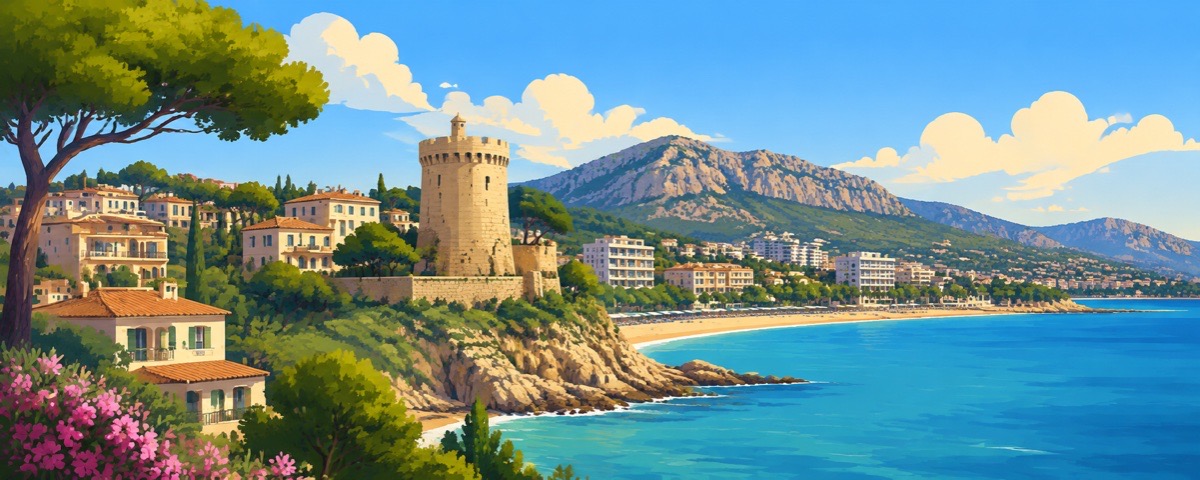
Calvià occupies the south-western corner of Majorca, with a coastline made up of bays and pine-covered headlands. In 1229, James I landed here to conquer the island, and since the 1960s, mass tourism has transformed its coast, with Magaluf and Palmanova.
Did you know
James I landed here in 1229.
In 1229, King James I of Aragon landed in the municipal territory of Calvià to begin the conquest of Majorca.
How they talk in Calvià
Traditional Mallorcan uses the article «sa/es» and the official name of the municipality is in Catalan. «Possessió» indicates a large Mallorcan rural estate and often appears in inland place names.
idò
Then; so; well. Conjunction and discourse marker very common in Balearic Catalan, used to connect or introduce a response.
Everyday life in Calvià
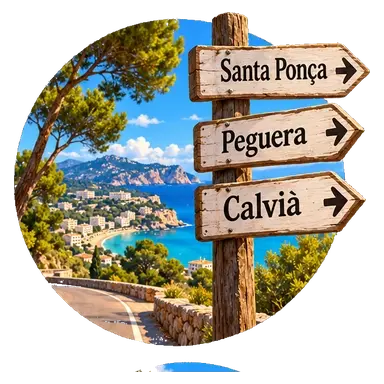
The municipality spread across many towns
Calvià is not a single town but a dozen different nuclei along the coast and inland, each with its own life: people say they are from Santa Ponça or Peguera, almost never «from Calvià».
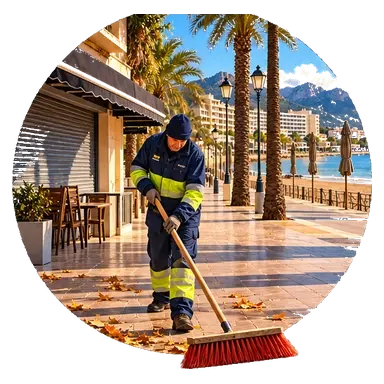
The empty winters
Many hotels and restaurants close from November to March and the coastal towns empty out: those who remain work on maintenance, and traffic is halved overnight.
«En invierno está casi todo cerrado.» — In winter almost everything is closed.
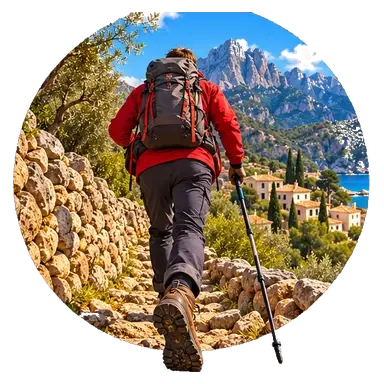
The «Serra de Tramuntana» behind
The mountain begins immediately behind the coast and the dry stone paths start from the towns: people walk in winter, when it is cool, and that is what the residents do.
What to eat in Calvià
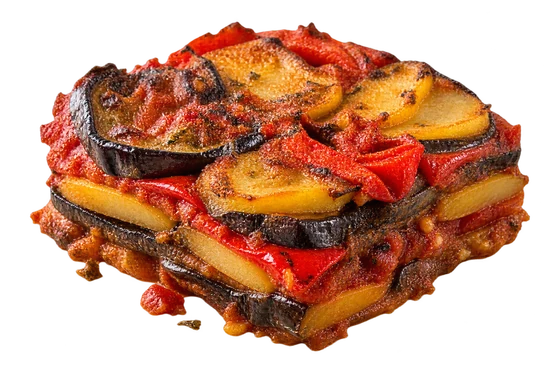
Tumbet
Potatoes, aubergines and peppers fried in layers with tomato sauce, baked in the oven.
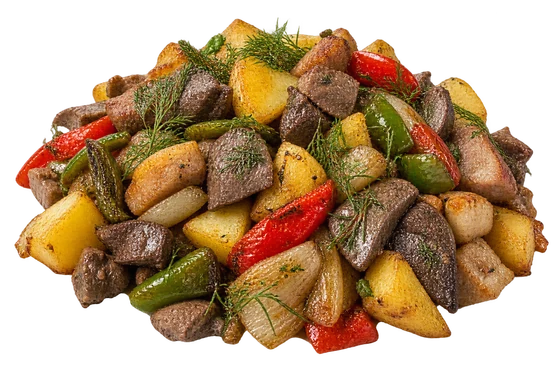
Frito mallorquín
Offal, potatoes and peppers sautéed in a pan with fennel.
Festivals in Calvià
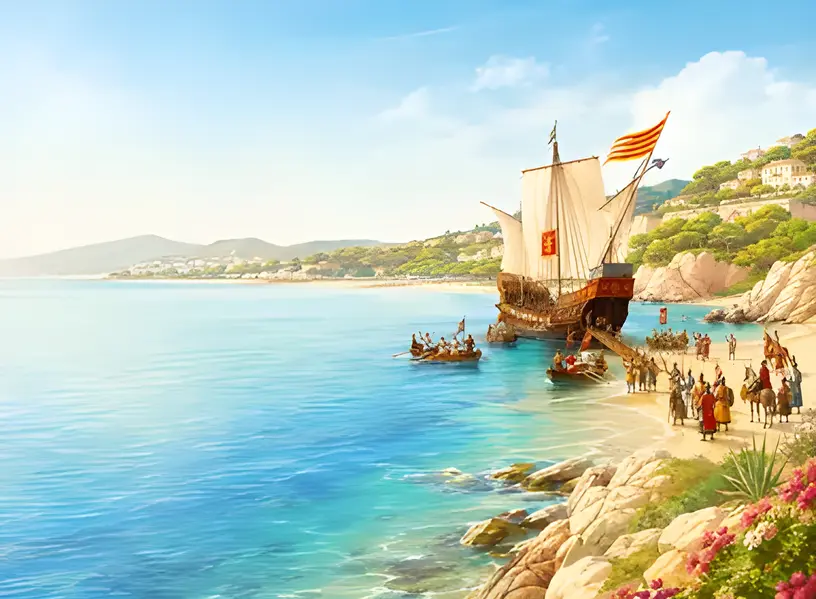
Festes del Rei En Jaume
the beginning of September
The landing of 1229 is re-enacted on the beach of Santa Ponça, with Moors and Christians facing each other on the water.
What to see in Calvià
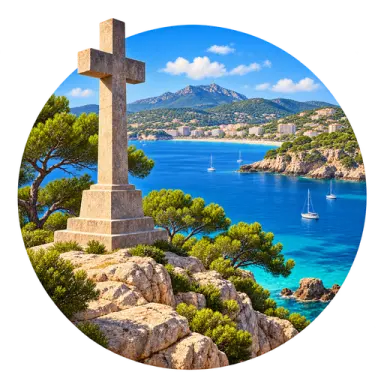
Creu de Santa Ponça
The stone cross on the promontory where James I landed in 1229.
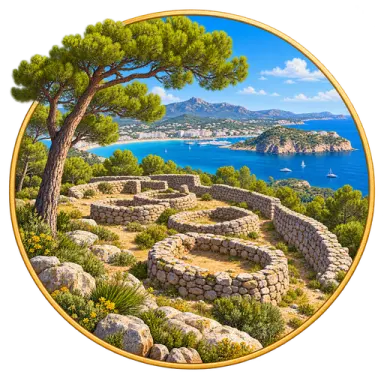
Puig de sa Morisca
The archaeological park on the hill, with Talayotic remains and views over the bays.
Església de Sant Joan Baptista
The neo-Gothic church of the old town, high above the coast.
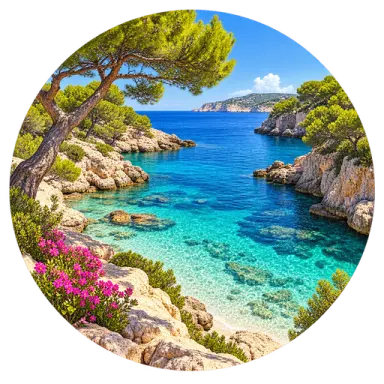
Cales de Calvià
The coves between Palmanova and Portals, enclosed between pines and rock.
Where Calvià comes from
Where James I set foot on the island
Talayotic era
Sa Morisca
A fortified settlement on the hill above the bay.
1229
The landing
James I lands at Santa Ponça with the fleet: the conquest of Majorca begins here.
16th–18th century
The towers
Watchtowers are built against pirates, along the entire coast.
1960 → today
Tourism
Magaluf and Palmanova change the municipality in twenty years: from an agricultural town to a built-up coast.
Want to learn Spanish by travelling across Spain?
In Aula every lesson is a city lighting up on the map — Calvià is one of them. Two hundred lessons from A1 to C2, free, starting from your level.
Start from Calvià →