 Aula· Spain, city by city
Baleares
Ibiza
«Ibiza es famosa por sus discotecas y fiestas nocturnas.»Ibiza is famous for its nightclubs and night parties.
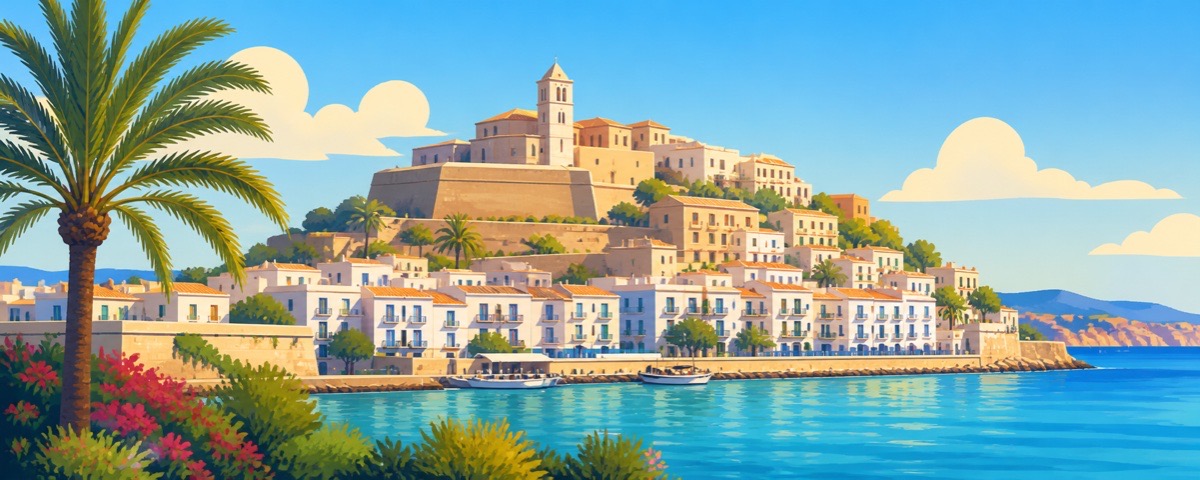
Ibiza is the capital of the island of the same name and occupies its south-eastern side, around a natural harbour. The upper town, enclosed by Renaissance walls built against the Turks, sits on a hill overlooking the sea, while the fishermen's quarters and the port extend below.
Did you know
Walls designed by the fortifier of Antwerp.
The imposing Renaissance walls that protect Dalt Vila were designed by the same Italian engineer who fortified Antwerp.
How they talk in Ibiza
The local Catalan is called «eivissenc» and uses the 'salat' articles «sa», «es», «ses» in many traditional forms. «Eivissa» is the Catalan name of the island and the city.
idò
Then; so; well. Conjunction and discourse marker very common in Balearic Catalan, used to connect or introduce a response.
Everyday life in Ibiza
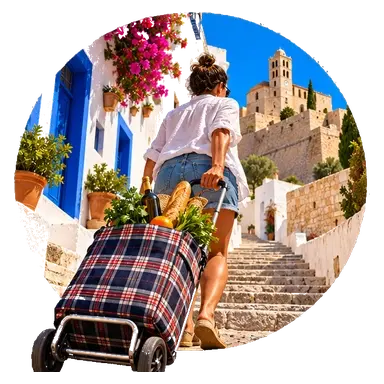
The «Dalt Vila» uphill
The old city inside the walls is only toured on foot, and to bring shopping home there are ramps and stairs: those who live up there count the steps and use a trolley.
«Se sube andando, no hay coches.» — You go up on foot, there are no cars.
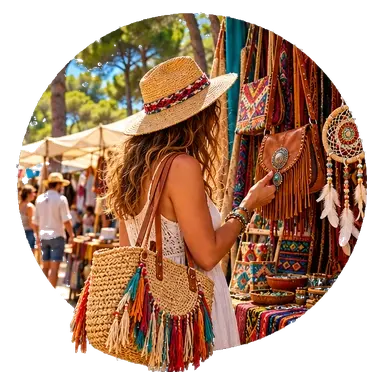
The Wednesday «Hippy Market»
The Punta Arabí market has been going on since 1973 and remains one of the island's rituals: you go even in winter, when there are more residents than visitors.
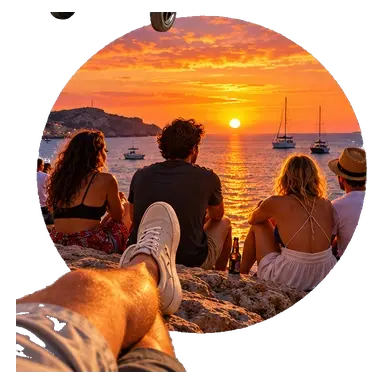
The sunset is watched in a group
In Sant Antoni people sit on the rocks in front of the setting sun and stay silent until it disappears. It is a daily habit, not an event: you arrive an hour early to get a spot.
«Vamos a ver la puesta de sol.» — We are going to watch the sunset.
What to eat in Ibiza
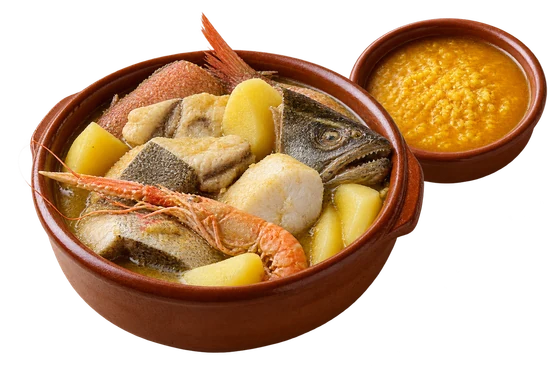
Bullit de peix
Boiled fish and potatoes served with alioli; then rice is made with the broth, which comes later.
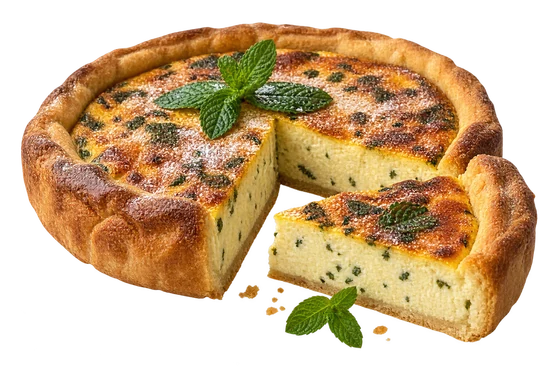
Flaó
Fresh cheese and mint cake, with aniseed pastry: the island's Easter dessert.
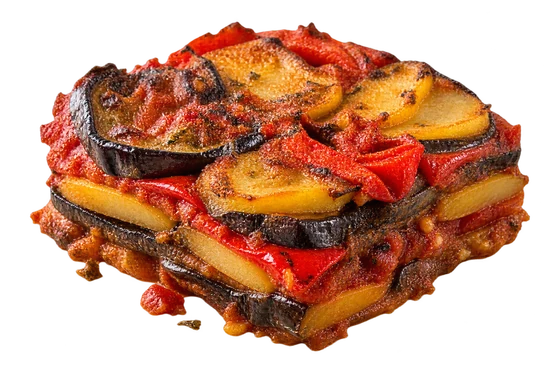
Tumbet
Fried potatoes, aubergines and peppers in layers, with tomato sauce on top.
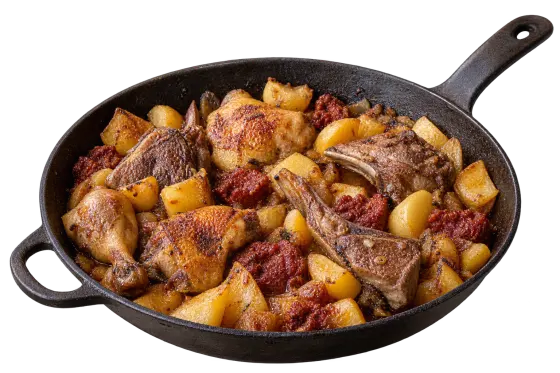
Sofrit pagès
Lamb and chicken meat with potatoes and sobrassada, cooked slowly in a single pan.
Festivals in Ibiza
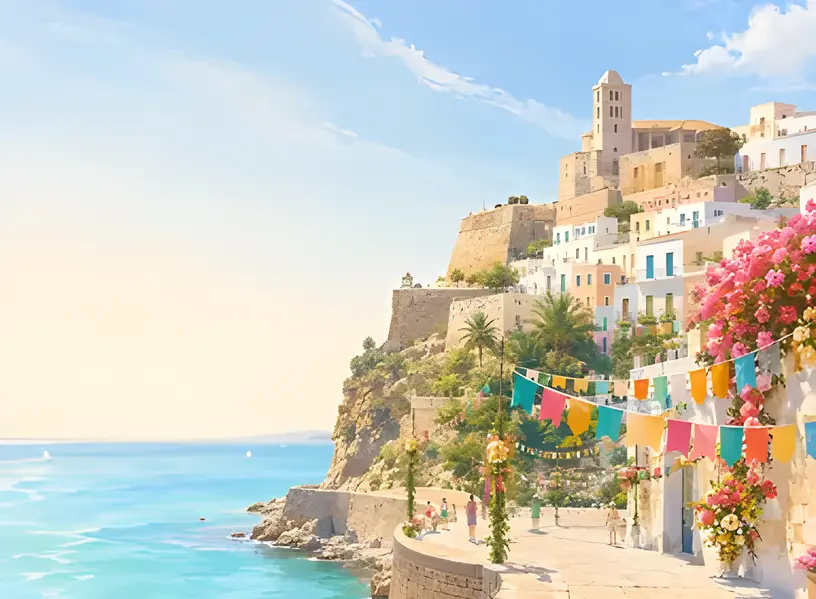
Festes de la Terra
between the end of July and mid-August
The island's festival, not the locals': Dalt Vila fills with traditional music and local people.
What to see in Ibiza
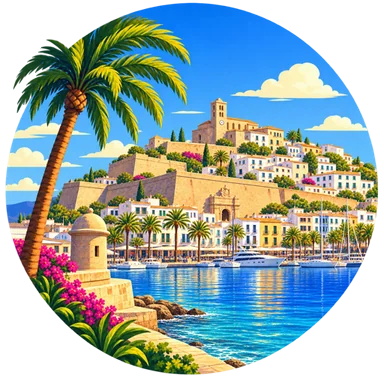
Dalt Vila
The upper city enclosed by Renaissance walls, among the best preserved in the whole Mediterranean.
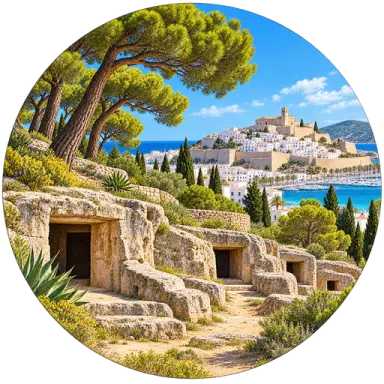
Puig des Molins
The largest Phoenician-Punic necropolis preserved in the world: three thousand chambers under the hill.
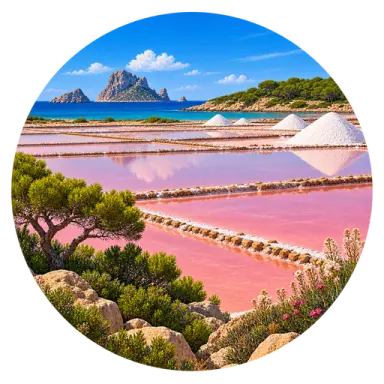
Ses Salines
The salt pans still in production, with flamingos and posidonia underwater.
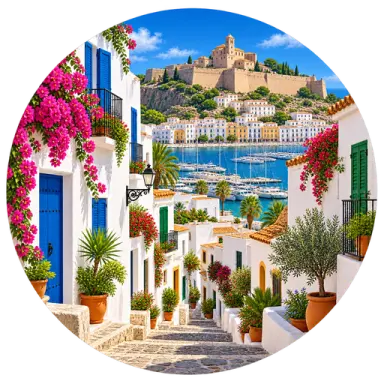
Sa Penya i la Marina
The fishermen's quarters below the walls, with white houses overhanging the port.
Where Ibiza comes from
The name comes from an Egyptian god
654 BC
Ibossim
The Carthaginians found the city: the name comes from Bes, the god who protected the home.
Punic era
The necropolis
Puig des Molins becomes the island's cemetery: thousands of chambers carved into the hill.
1235
The conquest
James I takes it; the Christian walls rise above the Punic ones.
16th century
Dalt Vila
Philip II has the Renaissance walls built to stop the Turks.
Want to learn Spanish by travelling across Spain?
In Aula every lesson is a city lighting up on the map — Ibiza is one of them. Two hundred lessons from A1 to C2, free, starting from your level.
Start from Ibiza →