 Aula· Spain, city by city
Baleares
Palma
«Palma tiene la gran catedral gótica junto al mar.»Palma has the great Gothic cathedral by the sea.
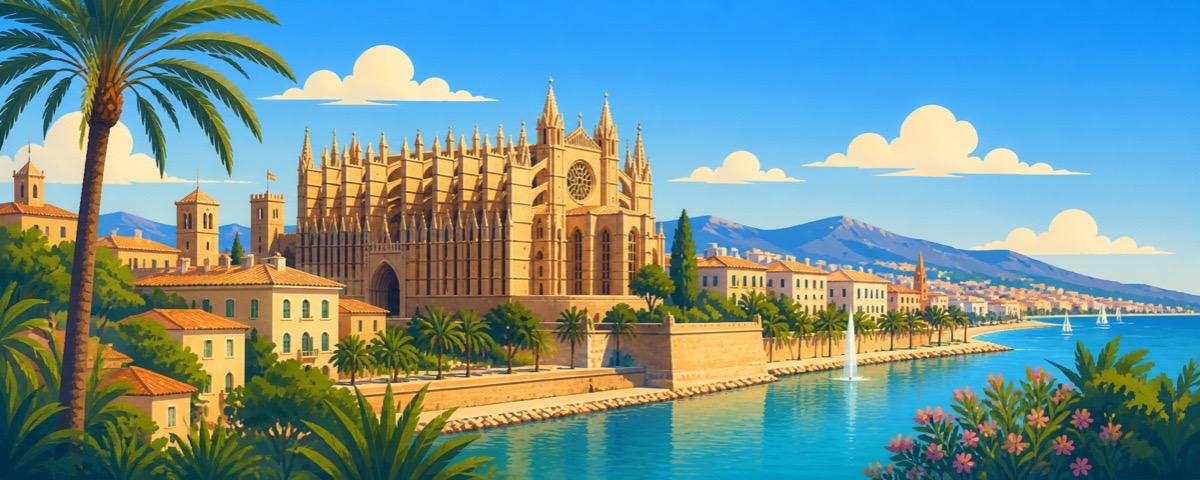
Palma is the capital of the Balearic Islands and sits on a bay open to the south of the island of Majorca. The centre preserves the layout of alleys from the Muslim city, with the Gothic cathedral built on the seafront in place of the mosque, while the city has expanded around it, growing with the tourism of the last seventy years.
Did you know
One of the world's largest rose windows.
Palma Cathedral possesses one of the largest Gothic rose windows in the world, known as the Gothic eye.
How they talk in Palma
The Majorcan Catalan dialect uses the articles «es», «sa», «ses» in traditional speech, for example «sa plaça». «Al·lot» means boy and «moix» cat, two very recognisable Balearic words.
idò
Then; so; well. Conjunction and discourse marker very common in Balearic Catalan, used to connect or introduce a response.
Everyday life in Palma
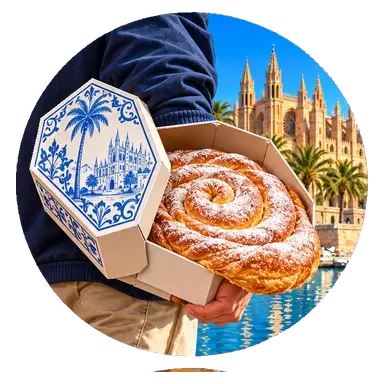
The «ensaïmada» on Sundays
The spiral of leavened dough baked with lard is bought in an octagonal cardboard box and taken to other people's homes: on Sunday mornings you see the boxes under people's arms all over the city.
«Una ensaïmada de cabello de ángel, por favor.» — An ensaïmada with pumpkin jam, please.
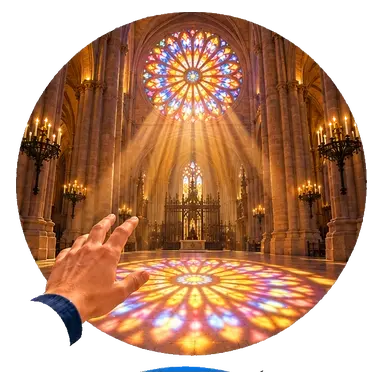
The «espectacle del 8» in the Seu
Twice a year, at dawn in early February and November, the sun passes through the large rose window and projects its design exactly under the opposite one: people enter at eight in the morning to see it.
«El sol pasa por el rosetón.» — The sun passes through the rose window.
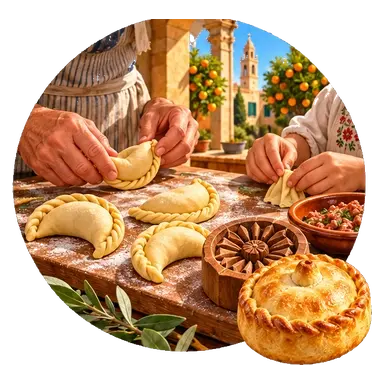
The «cocarrois» and «panades» at Easter
Holy Week is spent making little pies filled with vegetables and meat at home, and exchanging them among relatives. It is something done as a family, using a wooden mould.
«En Pascua se hacen panades.» — At Easter, panades are made.
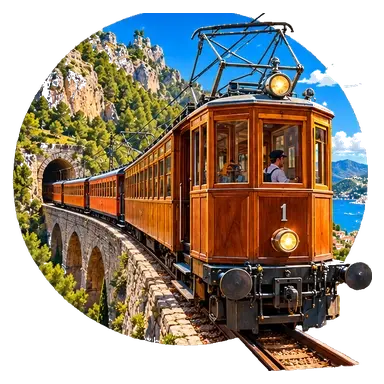
The wooden tram to Sóller
A 1912 train with wooden carriages and brass fittings leaves from the centre, crossing the mountain through thirteen tunnels. It is not an organised trip: it is a line you take like any other train.
«El tren de Sóller es de madera.» — The Sóller train is made of wood.
What to eat in Palma
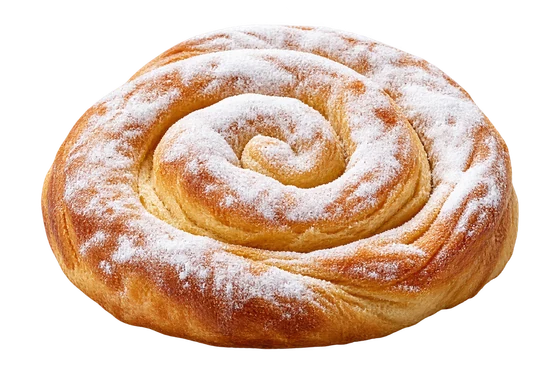
Ensaïmada
Spiral of leavened dough with lard, fluffy and dusted with icing sugar. It is bought in an octagonal box.
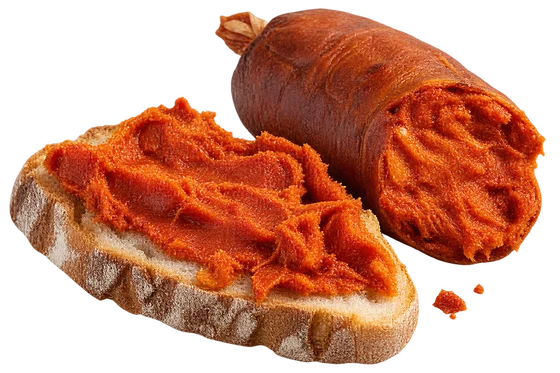
Sobrassada
Soft cured pork sausage with paprika, which is spread on bread instead of being sliced.
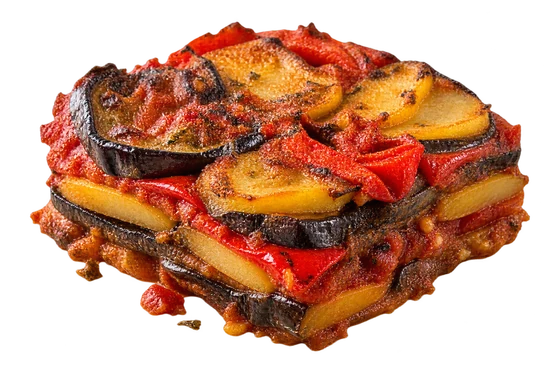
Tumbet
Potatoes, aubergines and peppers fried in layers with tomato sauce on top, baked in the oven.
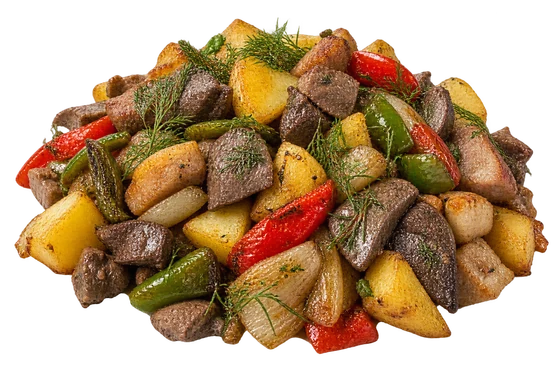
Frit mallorquí
Offal, potatoes, peppers and fennel sautéed together in a pan, rich in spices.
Festivals in Palma
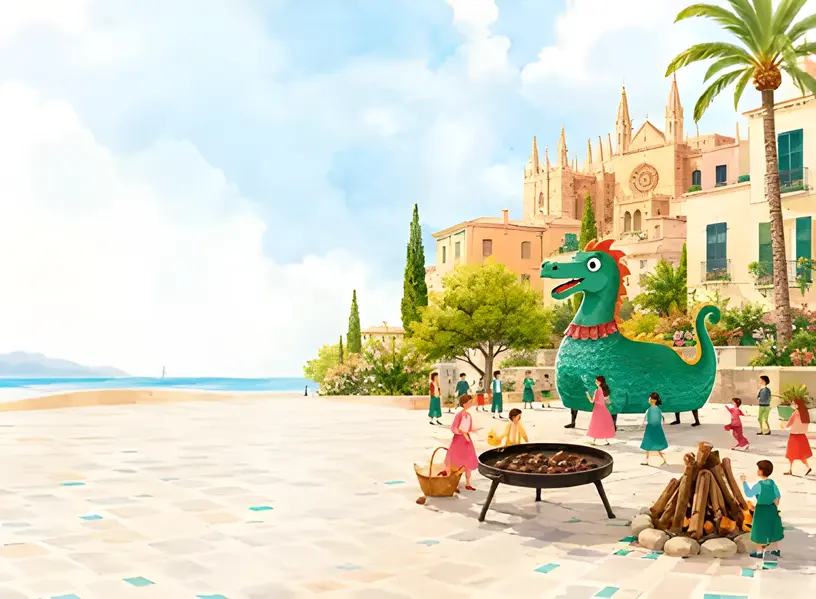
Festes de Sant Sebastià
around 20 January
«Foguerons» are lit in the squares, sobrassada is roasted on the fire and music is played outdoors in the middle of winter.
What to see in Palma
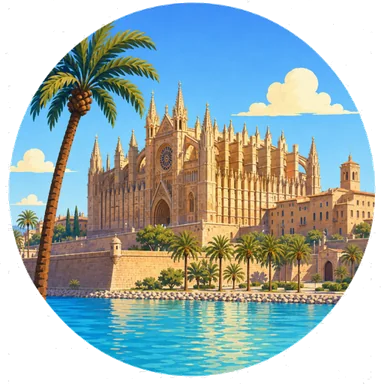
Catedral de Mallorca
The Gothic cathedral overlooking the sea, with the largest rose window in Gothic architecture and an intervention by Gaudí inside.
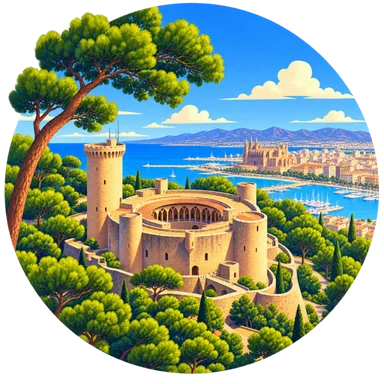
Castell de Bellver
14th-century Gothic castle with a circular floor plan, on the hill above the city.
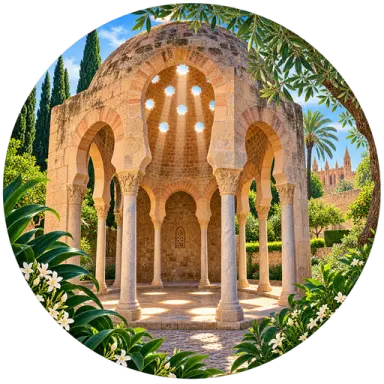
Banys Àrabs
A domed room with twelve skylights: it is almost all that remains of the Arab city.
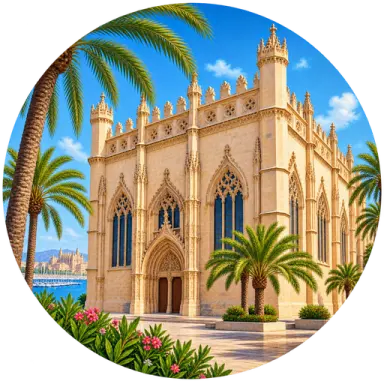
Llotja de Palma
The 15th-century merchants' exchange, with twisted columns that rise and open without a capital.
Where Palma comes from
Five names in two thousand years
123 BC
Palmaria
Consul Quintus Caecilius Metellus conquered the island and founded the city on the harbour.
902–1229
Madina Mayurqa
Muslim capital of the island: the Arab baths and the layout of the alleys date from then.
1229
The conquest
James I of Aragon took it and began the cathedral over the mosque.
20th century → today
Palma
Tourism since the fifties has changed it: today almost all the traffic of the islands passes through here.
Born here: Ramon Llull, philosopher and writer.
Want to learn Spanish by travelling across Spain?
In Aula every lesson is a city lighting up on the map — Palma is one of them. Two hundred lessons from A1 to C2, free, starting from your level.
Start from Palma →