 Aula· Spain, city by city
Canarias
Arrecife
«Arrecife tiene un castillo histórico junto al puerto principal.»Arrecife has a historic castle next to the main port.
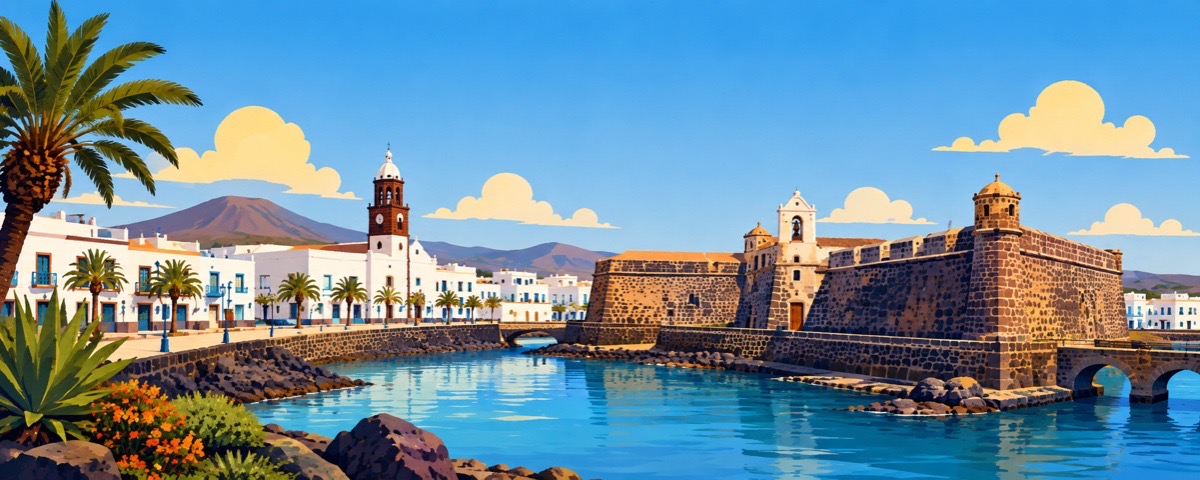
Arrecife is the capital of Lanzarote and is located on the east coast of the island, protected by a barrier of reefs that gives it its name. It only became the capital in 1852, when the centre of the island shifted from the interior to the port, and it preserves two fortresses built against pirate raids.
Did you know
A sea lagoon in town.
The Charco de San Ginés is a natural seawater lagoon in the heart of the city, often referred to as the little Venice of Lanzarote.
How they talk in Arrecife
The Canarian uses «guagua», «papa» and «ustedes»; the «seseo» is general. «Jable» refers to the light sands carried by the wind and often appears in the landscape lexicon of Lanzarote.
guagua
Bus or coach for collective transport. Normally used for urban and interurban buses and, by extension, for school or tourist coaches.
Everyday life in Arrecife
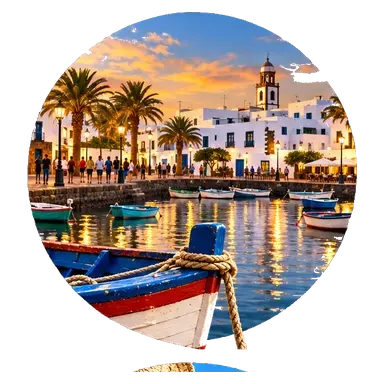
El Charco de San Ginés
The saltwater lagoon in the middle of the city is surrounded by white houses and colourful boats: you can walk around it in the evening, and the tide empties and fills it twice a day.
«Damos la vuelta al Charco.» — Let's walk around the Charco.
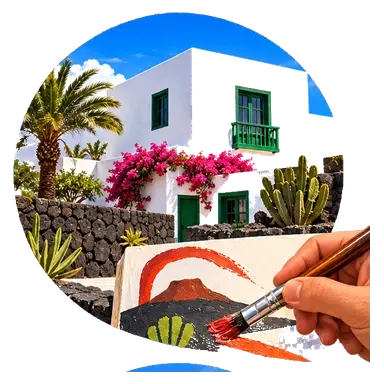
Manrique designed the island
The houses do not exceed two floors and there are no advertising billboards: it was César Manrique who imposed these rules, and in Lanzarote they continue to be respected.
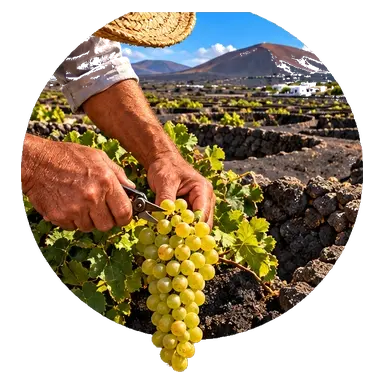
Vineyards in volcanic cinder holes
In La Geria, vines grow inside hollows dug into the volcanic ash, protected by semi-circular stone walls: harvesting is done by hand, one plant at a time, and the wine is drunk fresh.
«Las viñas crecen en hoyos.» — The vines grow inside the holes.
What to eat in Arrecife
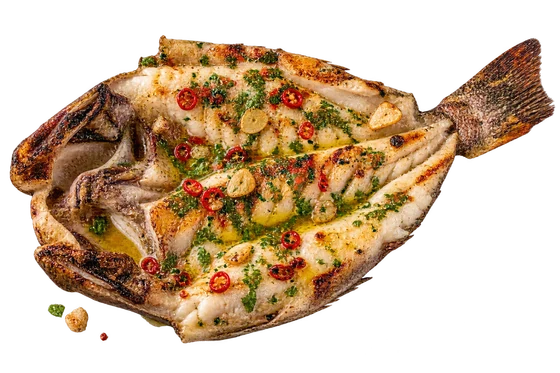
Cherne a la espalda
Grouper butterflied and grilled, with garlic and paprika on top.
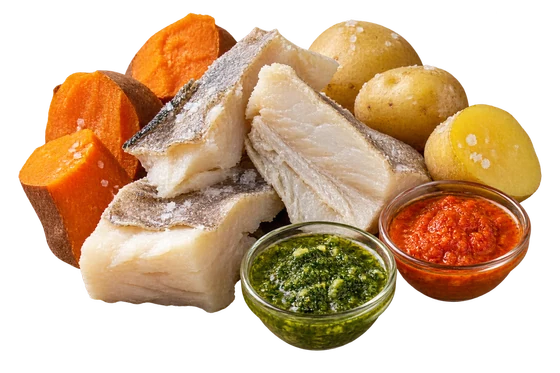
Sancocho canario
Salted fish with boiled potatoes and sweet potatoes, served with gofio escaldado and mojo.
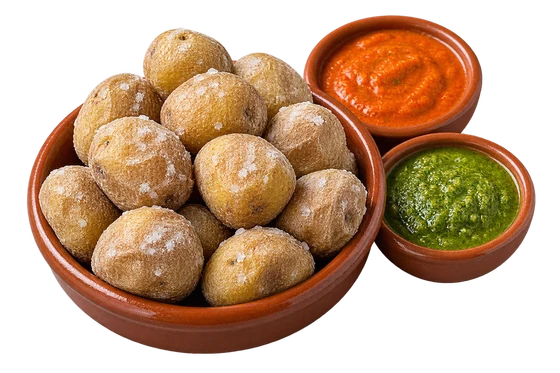
Papas arrugadas con mojo
Potatoes boiled in very salty water, with wrinkled skin and mojo.
Festivals in Arrecife
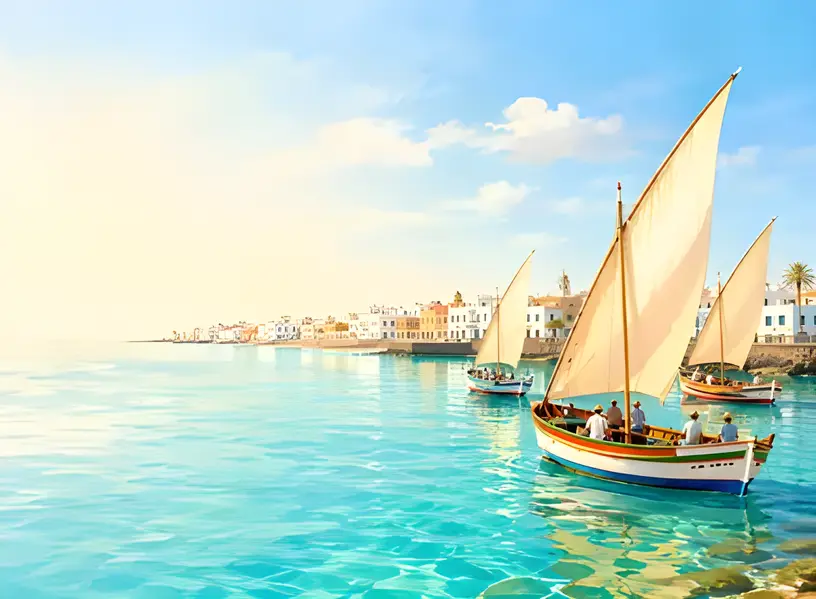
Fiestas de San Ginés
around 25 August
You walk around the Charco with the illuminated boats, and the patron saint leaves the church that overlooks the lagoon.
What to see in Arrecife
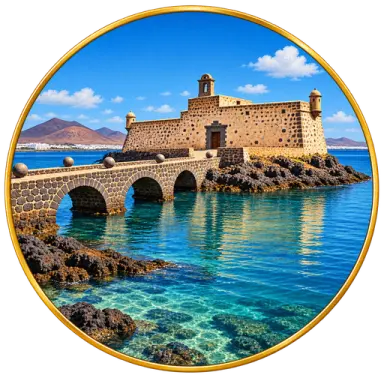
Castillo de San Gabriel
The castle on a small island in front of the city, connected by two bridges, one of which is a drawbridge.
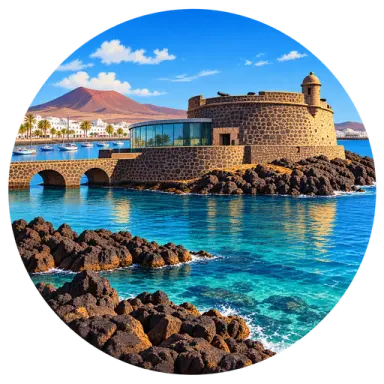
Castillo de San José
A fortress against pirates that Manrique transformed into a contemporary art museum.
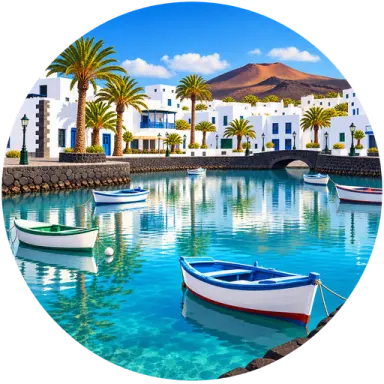
Charco de San Ginés
A saltwater lagoon inside the city, with colourful boats and white houses all around.
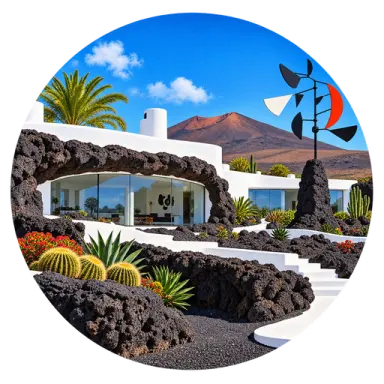
Fundación César Manrique
The house that Manrique built for himself inside five bubbles left by lava.
Where Arrecife comes from
The name means «reef»
15th century
The landing
It began as a fishing landing protected by rocks: «arrecife» actually means reef.
16th–18th century
The pirates
The castles of San Gabriel and San José were built against raids.
1852
The capital
It became the capital of Lanzarote, replacing Teguise, which was inland.
20th century
César Manrique
The island's artist imposed the rules that saved its landscape: no billboards, no high buildings.
Want to learn Spanish by travelling across Spain?
In Aula every lesson is a city lighting up on the map — Arrecife is one of them. Two hundred lessons from A1 to C2, free, starting from your level.
Start from Arrecife →