 Aula· Spain, city by city
Canarias
La Laguna
«La Laguna es una ciudad colonial declarada patrimonio de la humanidad.»La Laguna is a colonial city declared a World Heritage site.
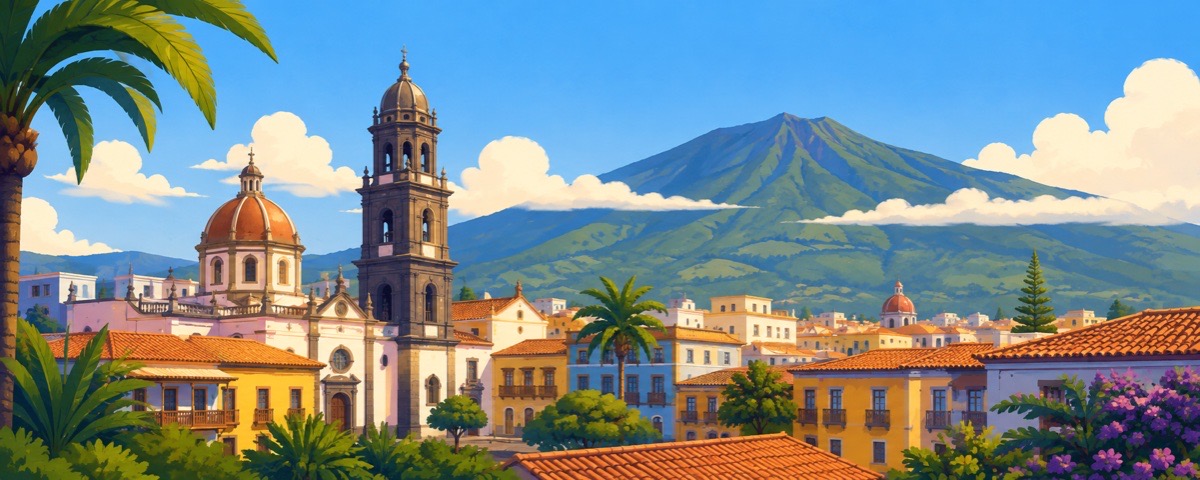
San Cristóbal de La Laguna is located in an inland basin of Tenerife, at an altitude of five hundred metres and a few kilometres from Santa Cruz. It was the island's first capital and the first Spanish colonial city designed without walls: its grid layout was later adopted in cities across America.
Did you know
The model for American cities.
Its 16th-century urban plan served as a model for the construction of many colonial cities in the Americas.
How they talk in La Laguna
The Canarian uses «ustedes», «guagua» and «papa» as in the rest of the archipelago. The presence of the Universidad de La Laguna also brings a student lexicon that is very recognisable in the centre.
guagua
Bus or coach for collective transport. Normally used for urban and interurban buses and, by extension, for school or tourist coaches.
Everyday life in La Laguna
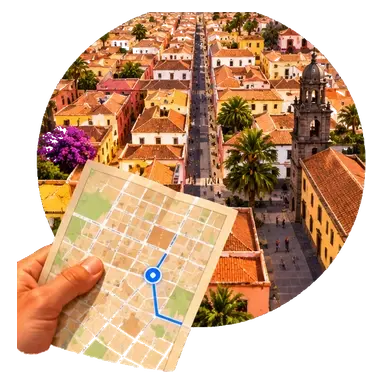
The grid centre
The streets from the 1500s are straight and at right angles: it was the first Spanish city designed without walls, and this layout was later copied in American cities. You can find your way around without a map.
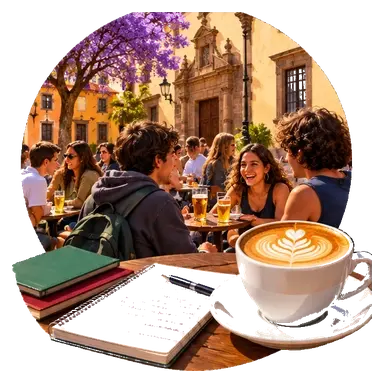
The university fills the bars
With more than twenty thousand students, the city lives by the academic calendar: in September it fills up and in July it empties, and rental prices follow the same curve.
«En septiembre vuelven los estudiantes.» — In September the students return.
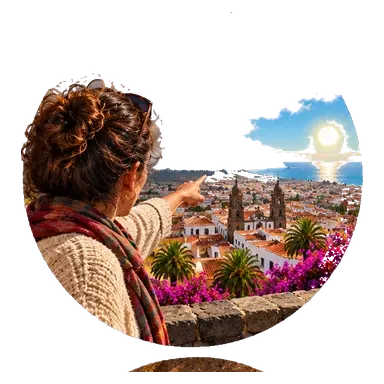
The «panza de burro»
Low clouds remain stationary over the city for days, grey and without rain: here they are called this, «donkey's belly», and five kilometres further down there is sun.
«Hoy hay panza de burro.» — Today there is donkey's belly.
What to eat in La Laguna
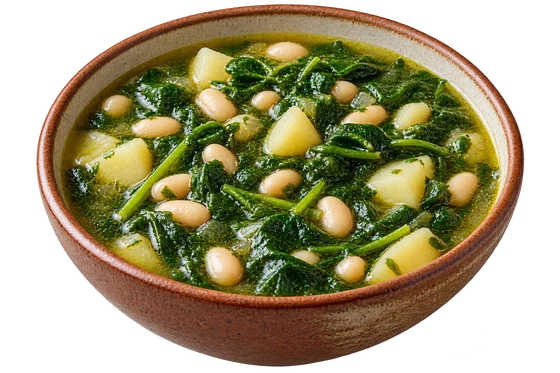
Potaje de berros
Thick soup of watercress, potatoes, beans and corn on the cob, served with gofio on the side.
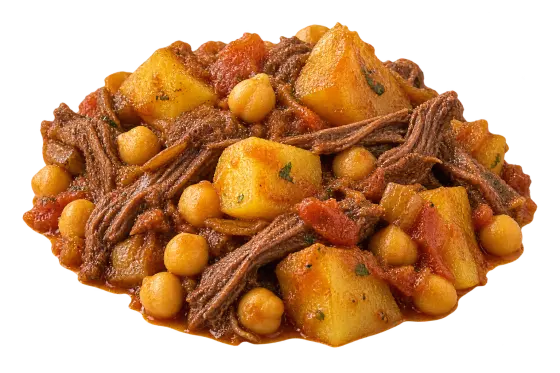
Ropa vieja
Meat and chickpeas left over from the stew, sautéed with fried potatoes, onion and peppers.
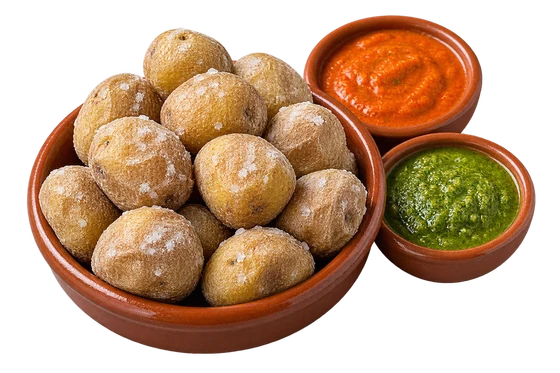
Papas arrugadas con mojo
Small potatoes boiled in very salty water until the skin wrinkles, with mojo.
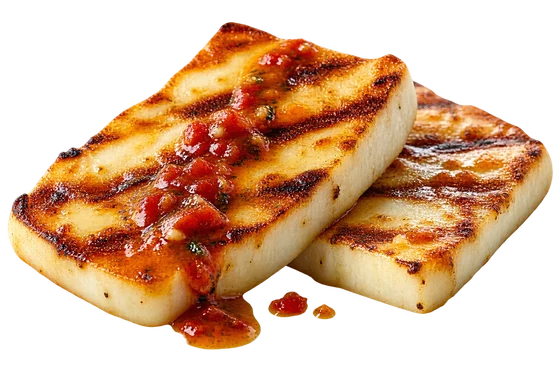
Queso asado
Fresh goat's cheese cut thick and grilled, with mojo or palm honey.
Festivals in La Laguna
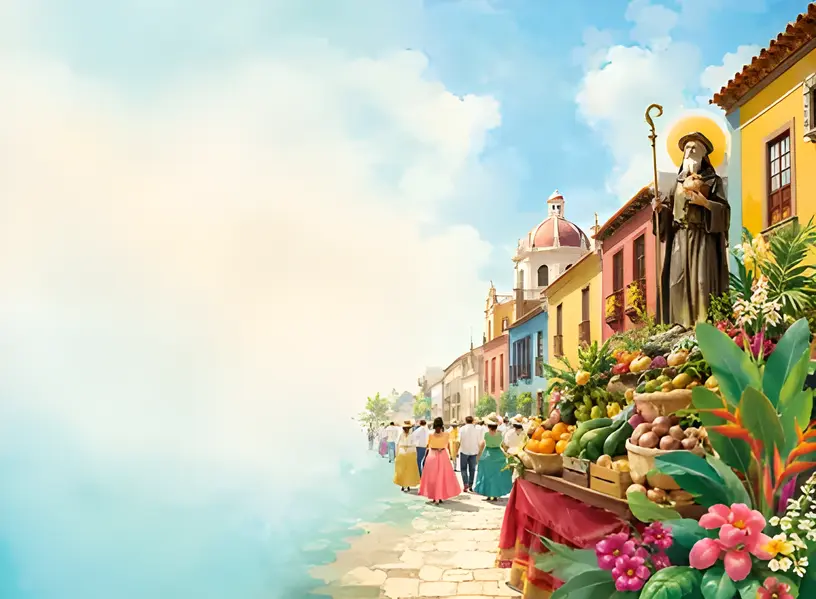
Romería de San Benito Abad
the first Sunday of July
The largest romería in the Canaries: ox-drawn carts, island costumes and local produce offered along the way.
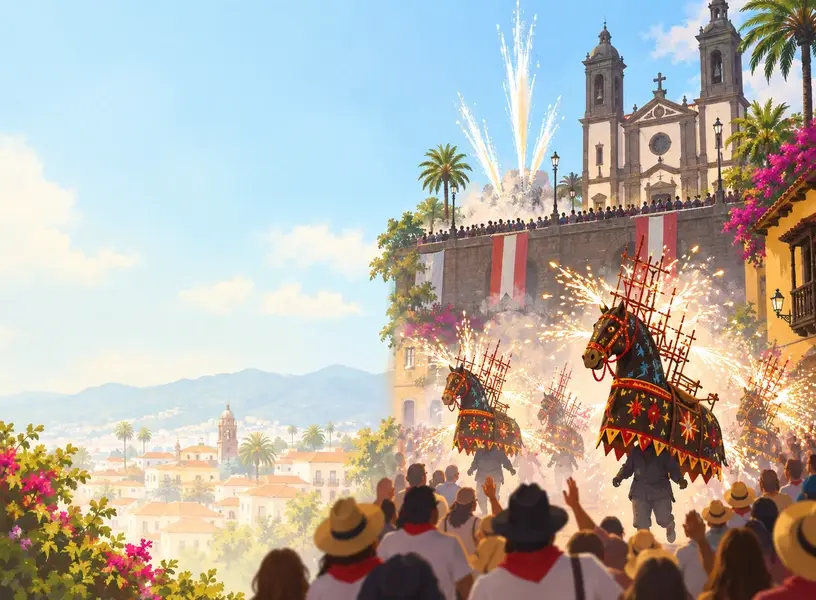
Fiestas del Cristo
14 September
The «caballitos de fuego» run through the crowd firing sparks, and fireworks are launched from the bridge in front of the sanctuary.
What to see in La Laguna
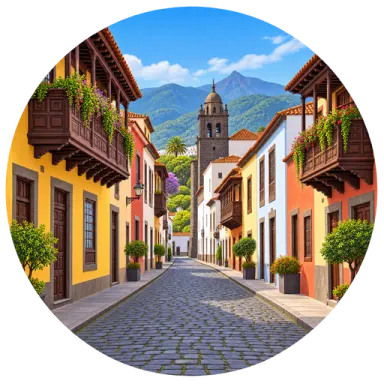
Casco histórico
The grid layout drawn in 1496 with a compass, and without walls: it was the model for Spanish cities in America.
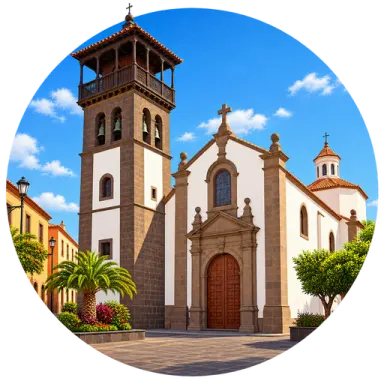
Iglesia de la Concepción
The oldest church on the island, with the tower that is the symbol of the city.
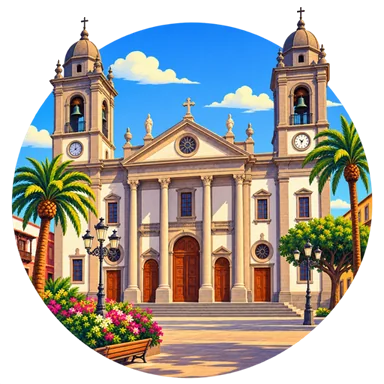
Catedral de La Laguna
The neoclassical cathedral with the dome rebuilt in concrete in the 20th century.
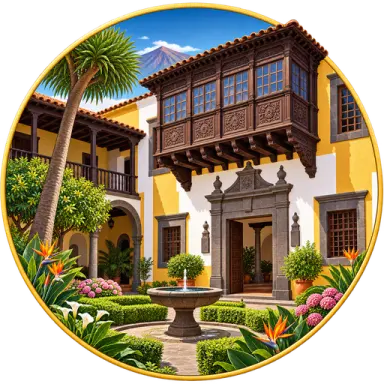
Casa Lercaro
A 16th-century Canarian house that became a history museum, with a patio and wooden balconies.
Where La Laguna comes from
The first colonial city without walls
1496
The foundation
Alonso Fernández de Lugo laid it out after the conquest of Tenerife: in a grid, and without walls.
16th–18th century
The capital
Capital of the island and episcopal seat: its layout was copied in America.
1723
The lost capital
The capital moved to Santa Cruz, which has the port.
1999
The recognition
The centre became a World Heritage site as the first example of an unfortified colonial city.
Want to learn Spanish by travelling across Spain?
In Aula every lesson is a city lighting up on the map — La Laguna is one of them. Two hundred lessons from A1 to C2, free, starting from your level.
Start from La Laguna →