 Aula· Spain, city by city
Canarias
Puerto del Rosario
«Puerto del Rosario tiene muchas esculturas de hierro al aire libre.»Puerto del Rosario has many outdoor iron sculptures.
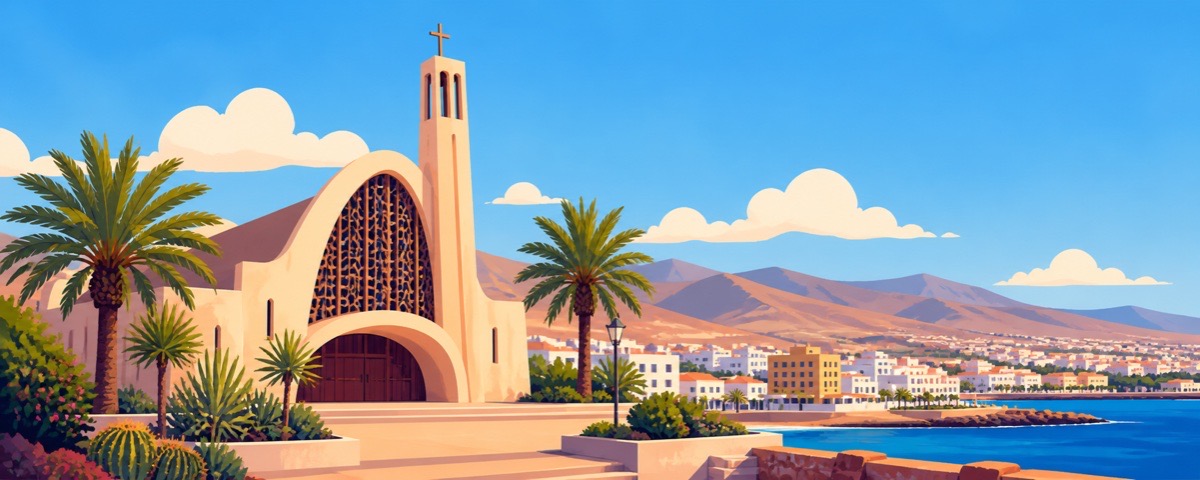
Puerto del Rosario is the capital of Fuerteventura and is located on the east coast of the island, in a dry and windy area. It was called Puerto de Cabras, 'port of the goats', until 1956, and today it is known for the more than one hundred outdoor sculptures scattered throughout its streets.
Did you know
Unamuno was exiled here.
The famous writer Miguel de Unamuno was exiled here in 1924 due to his criticism of the dictatorship of Primo de Rivera.
How they talk in Puerto del Rosario
«Majorero» refers to people and products from Fuerteventura, especially the cheese. The local Canarian uses «guagua», «papa» and «ustedes» as in the rest of the archipelago.
guagua
Bus or coach for collective transport. Normally used for urban and interurban buses and, by extension, for school or tourist coaches.
Everyday life in Puerto del Rosario
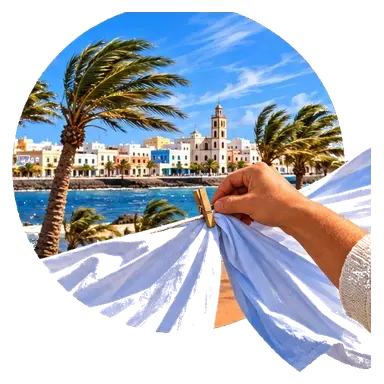
The «alisio» never stops
Fuerteventura is the windiest island, and the wind here is a constant part of the day: you hang out the laundry and it dries in half an hour, and windows are secured with a bar.
«Aquí el viento no para nunca.» — The wind never stops here.
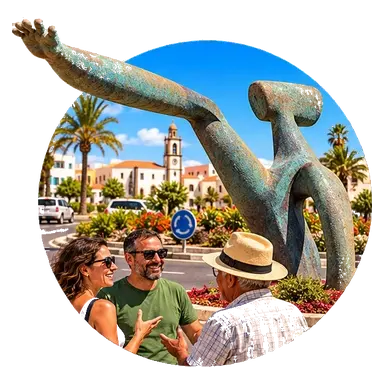
A hundred sculptures in the middle of the streets
The city has more than a hundred outdoor sculptures on roundabouts, in squares and on pavements: people live among them, and they have become the way to arrange a meeting.
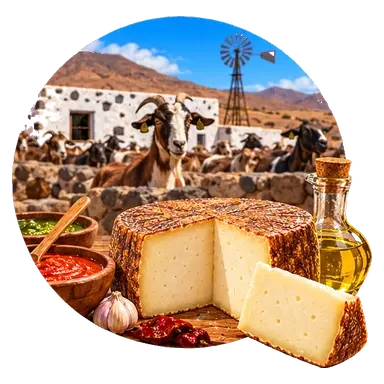
The «majorero» on the table
The island's goat's cheese has a designation of origin and is eaten with mojo: goats outnumber people, and the cheese is bought directly from the dairies.
«Un queso majorero, por favor.» — A majorero cheese, please.
What to eat in Puerto del Rosario
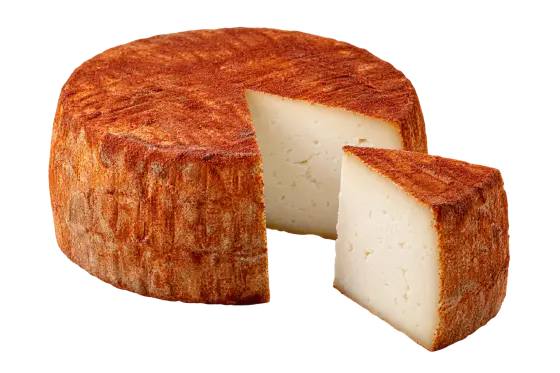
Queso majorero
Goat's cheese from the island, with a rind rubbed with gofio or paprika: it has its own designation.
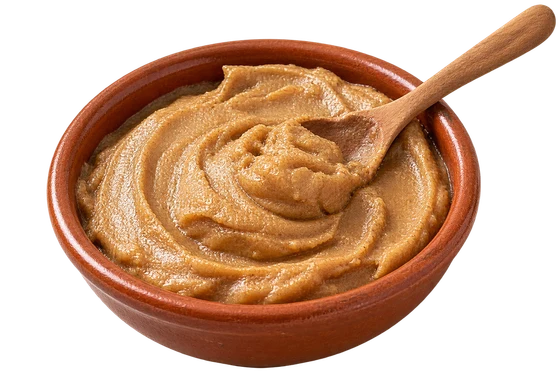
Gofio escaldado
Toasted cereal flour mixed with hot fish broth, eaten with a spoon or bread.
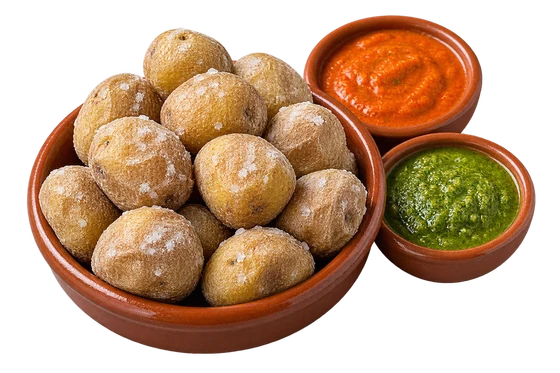
Papas arrugadas con mojo
Potatoes boiled in very salty water, with spicy red or green mojo.
Festivals in Puerto del Rosario
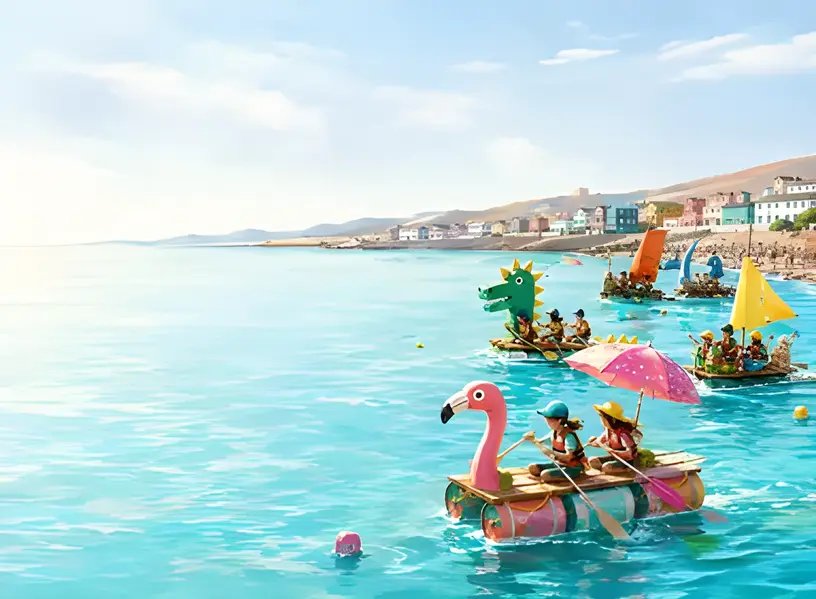
Regata de Achipencos
in October
Boats are built with whatever is found — bins, planks, canisters — and raced in the port: whoever floats wins.
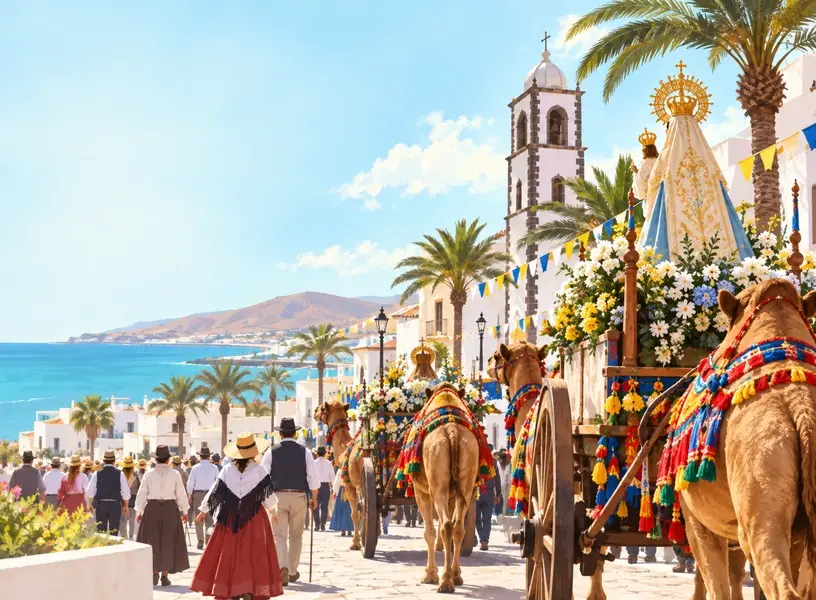
Fiestas de Nuestra Señora del Rosario
the days before 7 October
The patron saint goes out in a romería, and carriages pulled by camels cross the town.
What to see in Puerto del Rosario
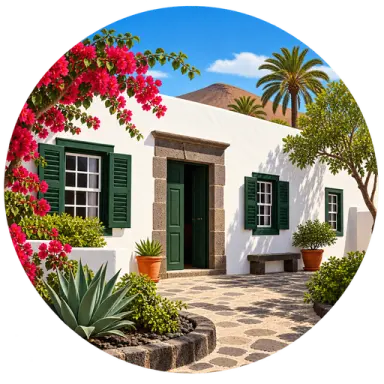
Casa Museo Unamuno
The boarding house where the writer lived in exile in 1924, which remains with his furniture.
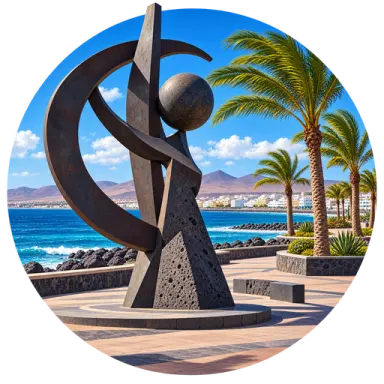
Parque Escultórico
More than a hundred outdoor sculptures on the city streets, almost all made of island stone.
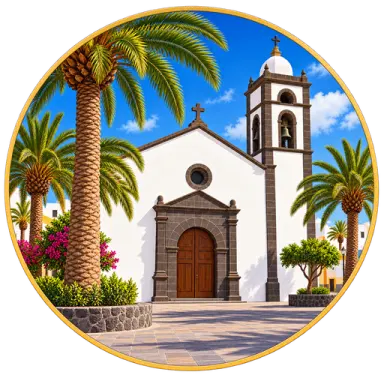
Iglesia de Nuestra Señora del Rosario
The white church in the centre, with a wooden ceiling and a low tower.
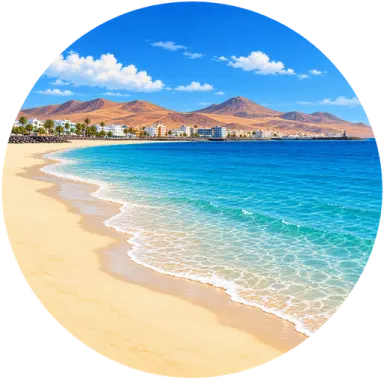
Playa Blanca
The light sand beach south of the city, with constant wind and the island of Lobos in the distance.
Where Puerto del Rosario comes from
It was called the "port of goats"
18th century
Puerto de Cabras
It was founded as a landing place where goats were brought to drink: hence the name.
1860
The capital
It became the capital of Fuerteventura, replacing Betancuria, which was inland.
1924
Unamuno
Miguel de Unamuno was exiled here by the dictatorship: he stayed for four months and wrote about it.
1956
The new name
It changed its name to Puerto del Rosario: "port of goats" seemed too little for a capital.
Want to learn Spanish by travelling across Spain?
In Aula every lesson is a city lighting up on the map — Puerto del Rosario is one of them. Two hundred lessons from A1 to C2, free, starting from your level.
Start from Puerto del Rosario →