 Aula· Spain, city by city
Canarias
Santa Cruz
«Santa Cruz de Tenerife celebra un carnaval muy famoso en febrero.»Santa Cruz de Tenerife celebrates a very famous carnival in February.
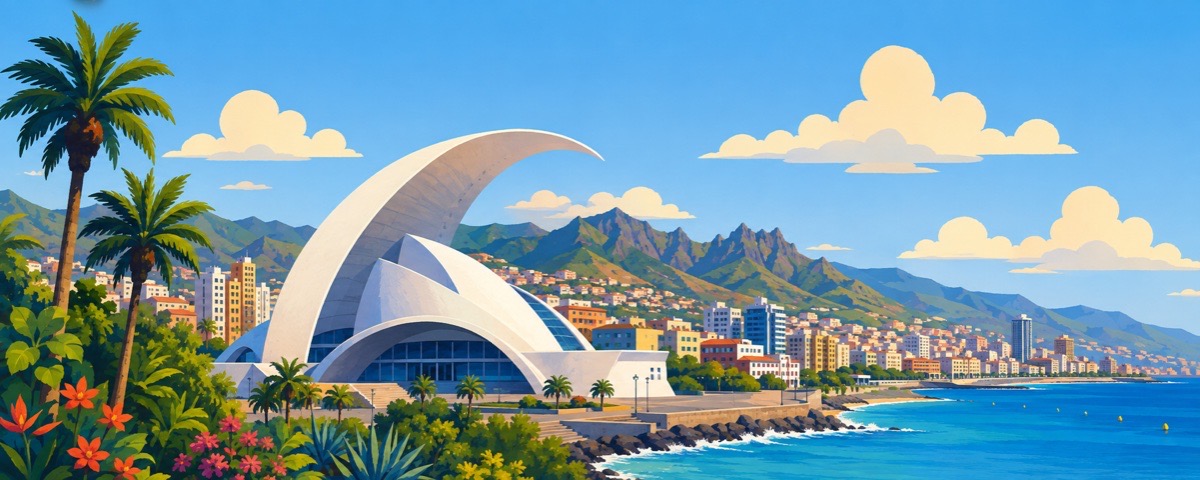
Santa Cruz de Tenerife is the capital of the western province of the Canary Islands and shares the regional capital status with Las Palmas. It overlooks a natural harbour at the foot of the Anaga massif and has developed starting from the pier, with the modern part rising up the hillsides behind it.
Did you know
Sand brought from the Sahara.
The golden sand of Las Teresitas beach was imported directly from the Sahara Desert in the seventies.
How they talk in Santa Cruz
«Guagua», «papa», «millo» and «ustedes» are normal elements of everyday Canarian. The «seseo» is generalised and the final «s» can be aspirated or weakened.
guagua
Bus or coach for collective transport. Normally used for urban and interurban buses and, by extension, for school or tourist coaches.
Everyday life in Santa Cruz
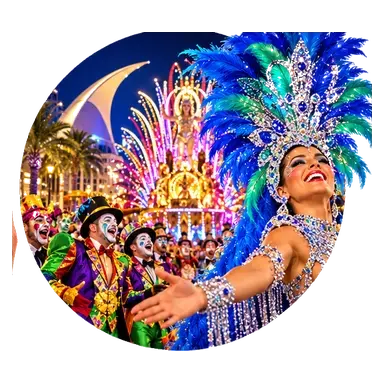
The biggest carnival after Rio
For two weeks the city fills with performers, and on the night of the parade hundreds of thousands of people come out in costume. The murgas sing satirical lyrics written about the past year.
«¿De qué te disfrazas?» — What are you dressing up as?
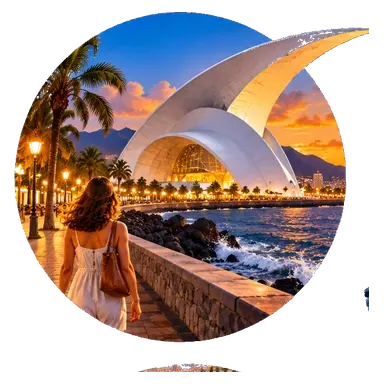
The «Auditorio» above the ocean
The white Calatrava building with the wing that detaches stands by the sea, and people walk past it in the evening. It has become the symbol with which the city presents itself.
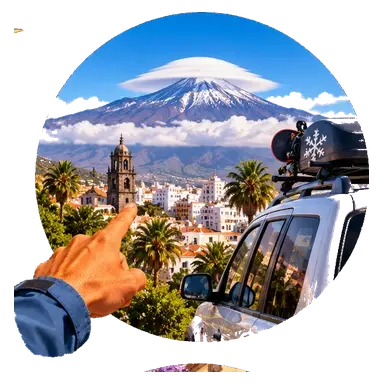
The Teide as a clock of the weather
The mountain can be seen from half the city, and you can tell what the weather will be like from its cloud cap. When it snows at the top, the tinerfeños drive up to see it.
«El Teide tiene nieve.» — The Teide has snow.
What to eat in Santa Cruz
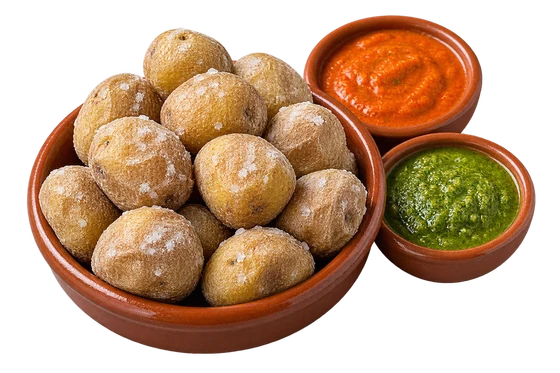
Papas arrugadas con mojo
Potatoes boiled in very salty water until they wrinkle, with spicy red or green mojo.
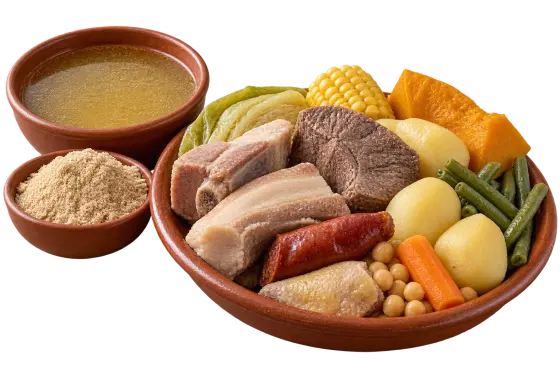
Puchero canario
A stew of seven meats and seven vegetables, served with the broth on the side and gofio.
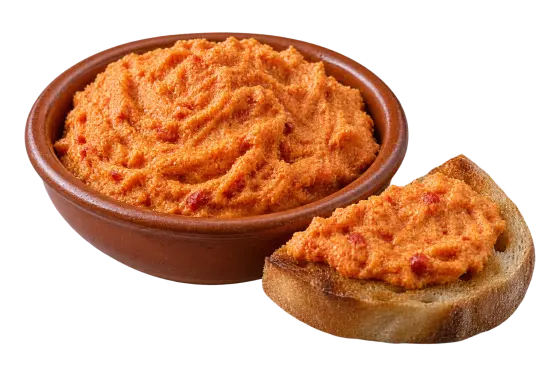
Almogrote
A cream of aged cheese, dried pepper, garlic and oil, to spread on toasted bread.
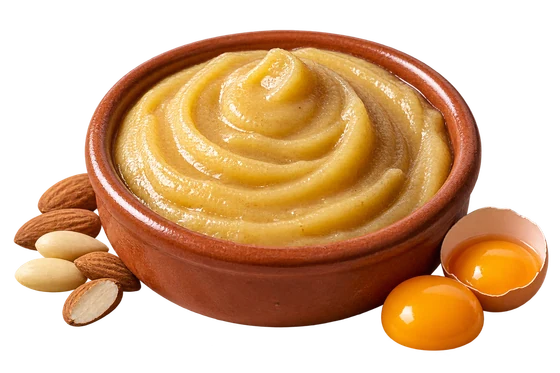
Bienmesabe
A thick cream of ground almonds, egg yolk, sugar and lemon, eaten with a spoon or on ice cream.
Festivals in Santa Cruz
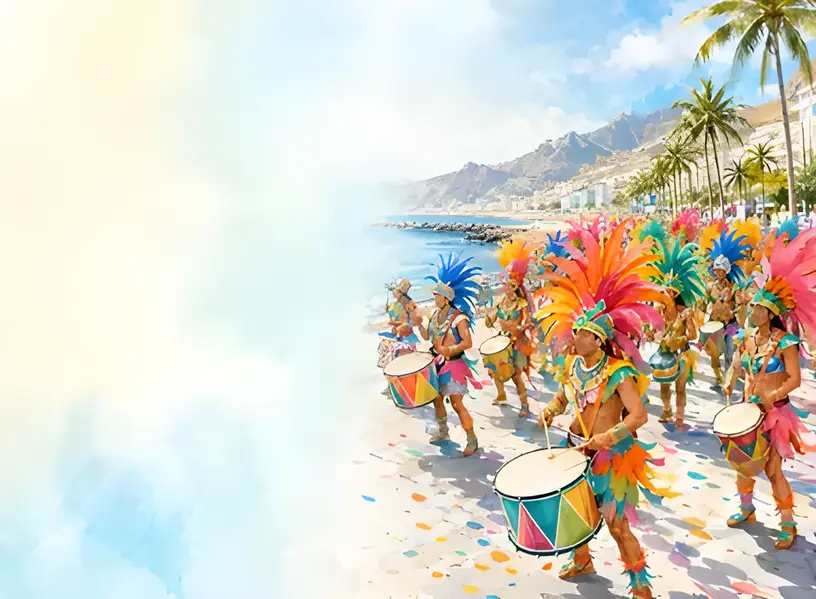
Carnaval de Santa Cruz de Tenerife
between February and March
The queen parades in a costume four metres high and as heavy as she is, supported by a structure on wheels.
What to see in Santa Cruz
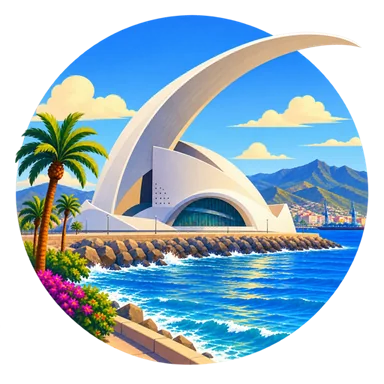
Auditorio de Tenerife
The Calatrava building from 2003, with the white crest suspended above the hall.
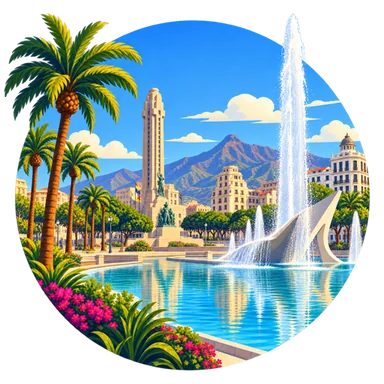
Plaza de España
The square on the port, with the saltwater lake by Herzog & de Meuron and the ruins of the castle underneath.
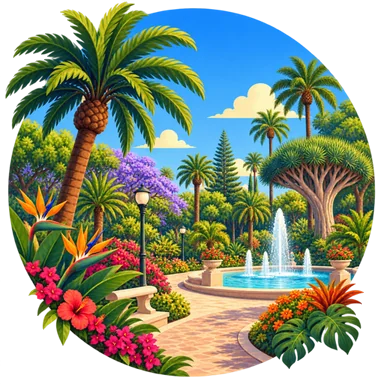
Parque García Sanabria
The city's large park, full of sculptures left over from the 1973 exhibition.
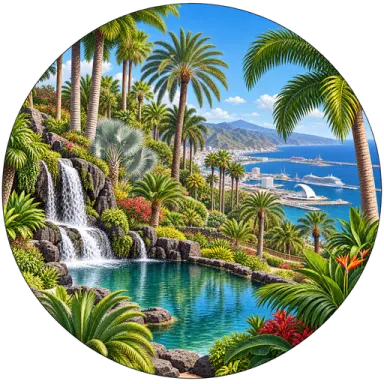
Palmetum
The largest palm garden in Europe, built on top of the city's old landfill.
Where Santa Cruz comes from
A cross planted on the beach
1494
The landing
Alonso Fernández de Lugo landed and planted a cross on the beach: hence the city's name.
18th century
The port
It became the island's main port and overtook La Laguna, which was the capital.
1797
Nelson
The city repelled the British attack: Nelson lost his right arm there.
1833 → today
The capital
Provincial capital; today it shares the role of capital of the islands with Las Palmas.
Want to learn Spanish by travelling across Spain?
In Aula every lesson is a city lighting up on the map — Santa Cruz is one of them. Two hundred lessons from A1 to C2, free, starting from your level.
Start from Santa Cruz →