 Aula· Spain, city by city
Canarias
Telde
«Telde produce quesos artesanales muy conocidos en toda la isla.»Telde produces artisanal cheeses that are well known throughout the island.
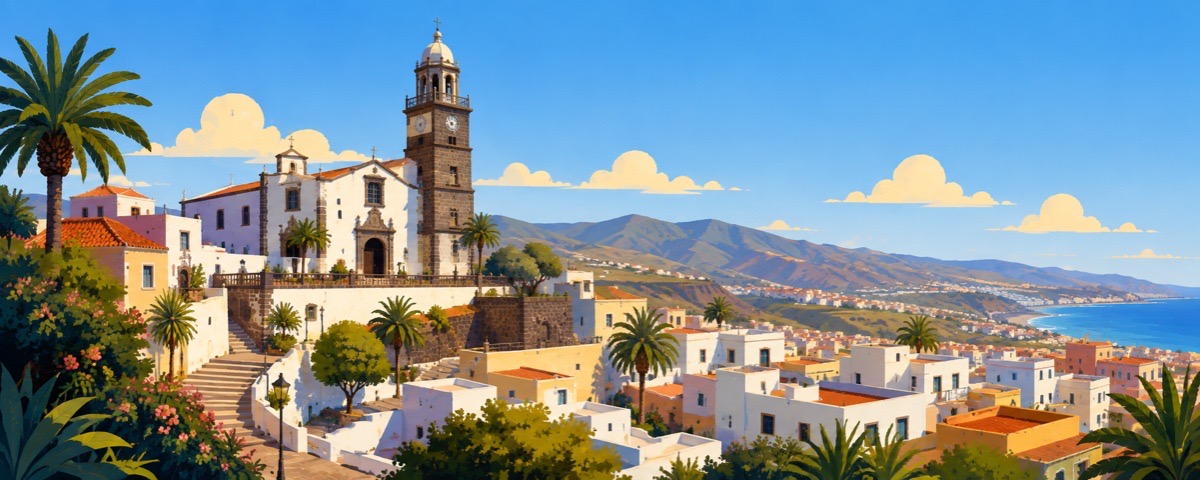
Telde is the second largest municipality in Gran Canaria by population and is located on the east coast of the island, about fifteen kilometres from Las Palmas. Before the conquest, it was the capital of one of the two kingdoms into which the island was divided, and it preserves two historic districts that grew around its churches.
Did you know
A Christ made of corn paste.
Inside the basilica is a precious Christ made of corn paste, created by the indigenous Tarascan people in Mexico in the 16th century.
How they talk in Telde
«Guagua», «papa» and «ustedes» belong to everyday speech. The «seseo» and the aspiration of the final «s» are normal in informal contexts.
guagua
Bus or coach for collective transport. Normally used for urban and interurban buses and, by extension, for school or tourist coaches.
Everyday life in Telde
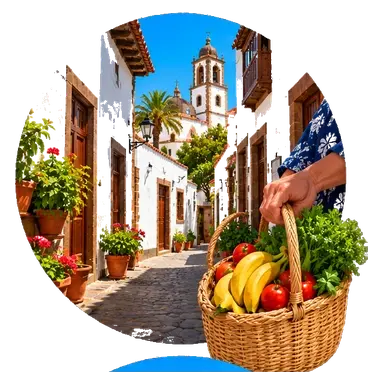
The white «San Juan» district
The old centre has low whitewashed houses, wooden doorways and narrow streets where you walk in the shade: families live here, it is not a museum, and courtyards can be glimpsed through open doors.
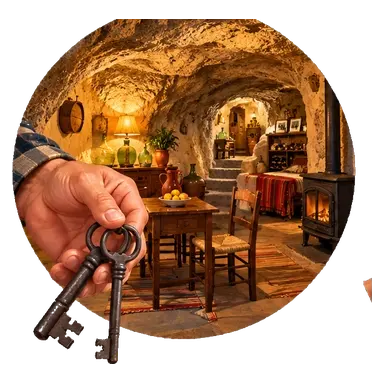
The «cueva» houses still in use
In the Barrios area there are dwellings carved into the tuff, some still inhabited and others turned into cellars and storerooms. They stay cool in summer without air conditioning.
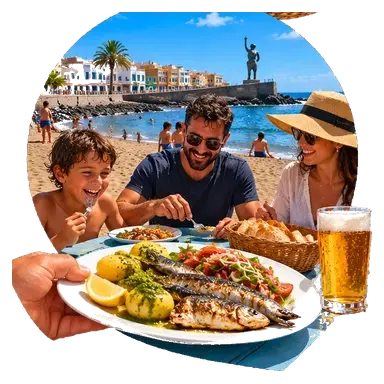
Melenara beach on Sundays
The people of Telde go to eat fish in the kiosks by the sea and spend the afternoon there: you book a table in the morning, and eat with your feet in the sand.
«Comemos pescado en Melenara.» — We eat fish in Melenara.
What to eat in Telde
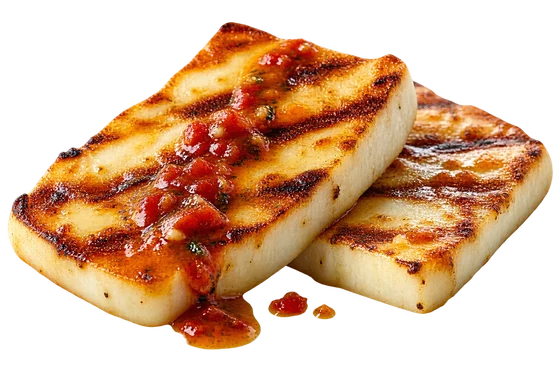
Queso asado
Goat's cheese cut thick and seared on the griddle, with mojo verde or palm honey.
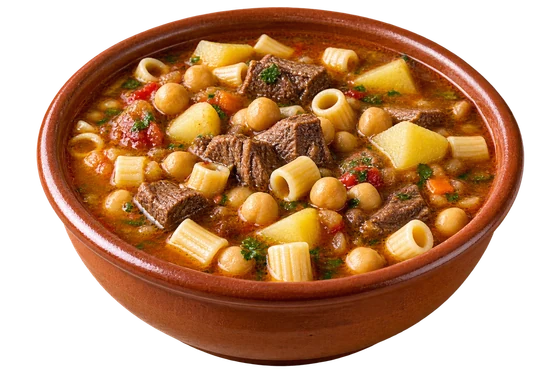
Rancho canario
Thick soup with large pasta, chickpeas, potatoes and meat, with paprika.
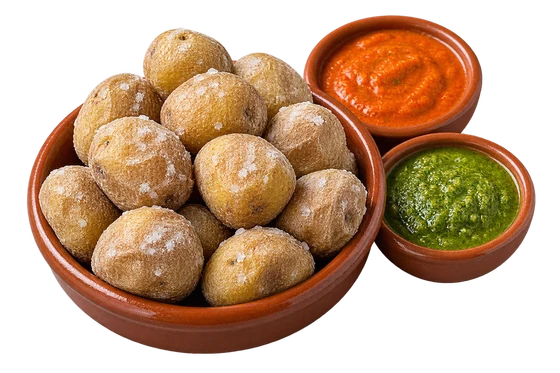
Papas arrugadas con mojo
Potatoes boiled in salted water until they wrinkle, with red or green mojo.
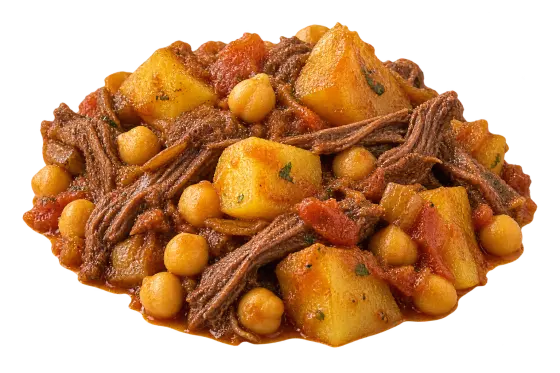
Ropa vieja
Meat and chickpeas from the stew, sautéed with fried potatoes, onion and peppers.
Festivals in Telde
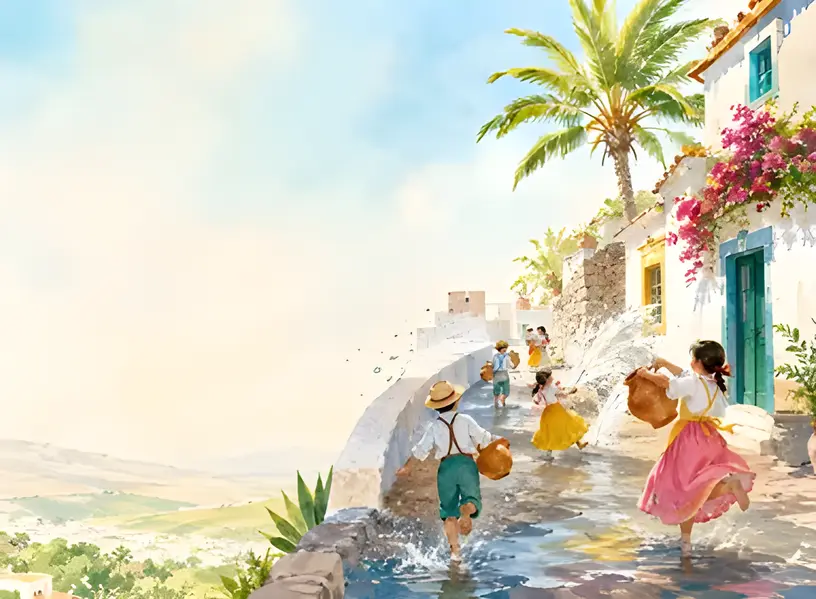
Traída del Agua de Lomo Magullo
in August
Water is brought down from the mountain and poured over anyone passing by: after an hour, no one is dry.
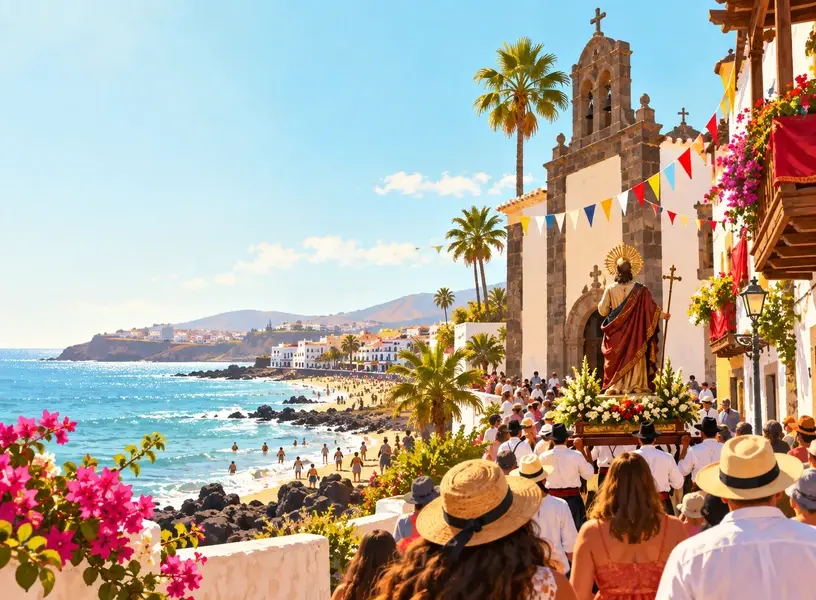
Fiestas de San Juan Bautista
around 24 June
The old district fills with people and at night bonfires are lit on the beach of Melenara.
What to see in Telde
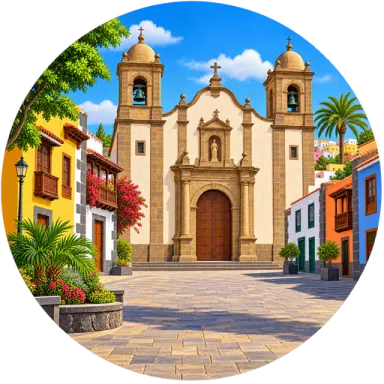
Barrio de San Juan
The founding district, with the basilica where there is a Christ made of corn dough.
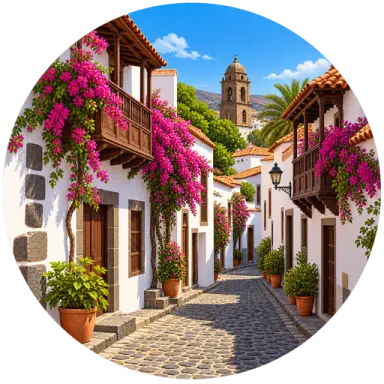
Barrio de San Francisco
The seventeenth-century district of white houses and narrow alleys, which grew around the convent.
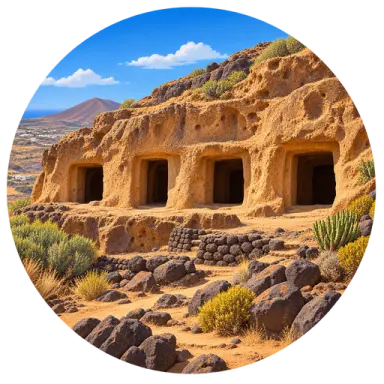
Cuatro Puertas
An aboriginal cave with four openings carved into the tuff, wider than a man.
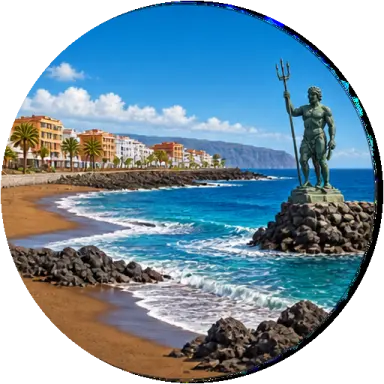
Playa de Melenara
The beach of dark volcanic sand, with fish restaurants on the promenade.
Where Telde comes from
One of the two Guanche kingdoms of the island
Before 1483
La guanartemía
Telde was one of the two kingdoms into which Gran Canaria was divided, with its own king.
1483
The conquest
It falls with the rest of the island; the district of San Juan is born around the church.
16th century
Sugar
Sugar cane brings wealth to the area, with the labour of slaves.
20th century → today
The city
It becomes the second municipality of the island by population.
Want to learn Spanish by travelling across Spain?
In Aula every lesson is a city lighting up on the map — Telde is one of them. Two hundred lessons from A1 to C2, free, starting from your level.
Start from Telde →