 Aula· Spain, city by city
Cantabria
Camargo
«Camargo alberga el aeropuerto principal de la región de Cantabria.»Camargo houses the main airport of the Cantabria region.
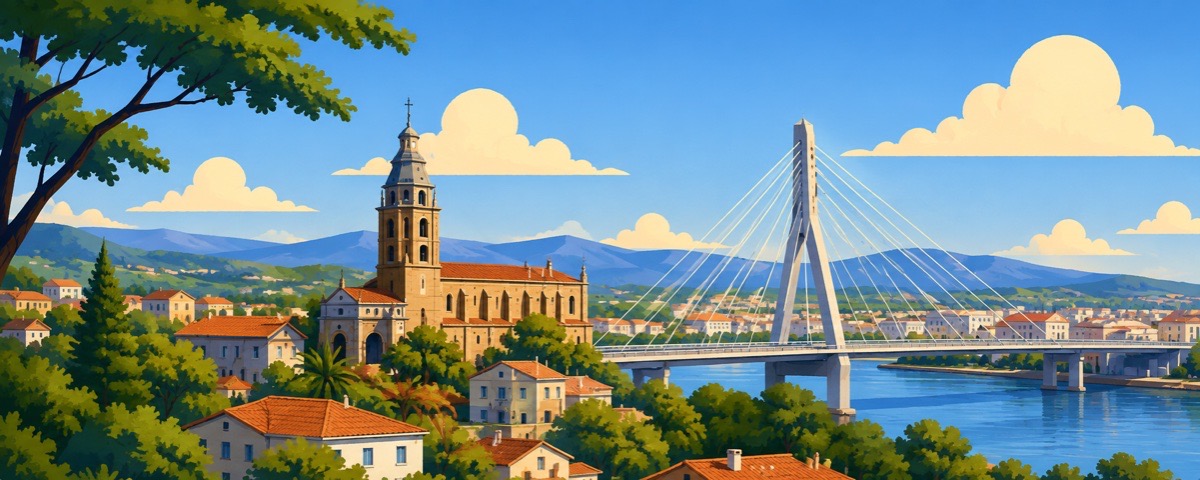
Camargo borders Santander on the bay and includes the region's airport. It is a municipality made up of several villages that grew around a wetland area, and within its territory is the Cueva del Pendo, one of the Cantabrian painted caves recognised alongside that of Altamira.
Did you know
Paintings from twenty thousand years ago.
Extraordinary Palaeolithic cave paintings dating back over 20,000 years were discovered in the El Pendo cave.
How they talk in Camargo
«Camargués» is the demonym and «tierruca» is an affectionate term used in Cantabria for one's own land. The diminutive «-uco/-uca» is a recognizable regional lexical trait.
pindio / pindia
Very steep or inclined. Used especially for an ascent, a road, or terrain with a sharp incline: «una cuesta muy pindia».
Everyday life in Camargo
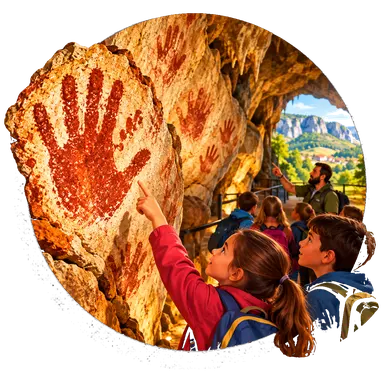
The cave with painted hands
At El Pendo there are paintings from twenty thousand years ago, and the cave is visited with a limited number of people: it is a few minutes from the houses, and local schools go there on field trips.
«Las pinturas tienen veinte mil años.» — The paintings are twenty thousand years old.
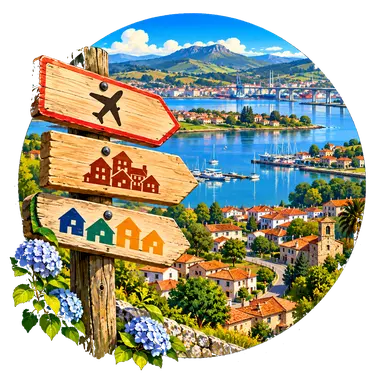
The municipality of ten villages
Camargo does not have one centre but a series of nuclei attached to each other around the bay: people say they are from Maliaño or Muriedas, and the name of the municipality is used only for mail.

The warehouses around the bay
The industrial and logistics zone of Santander is here, and trucks pass through it all day: many local families work in the warehouses and workshops.
What to eat in Camargo

Corbatas de Unquera
Tie-shaped puff pastries with almonds and sugar, which are made in the province.
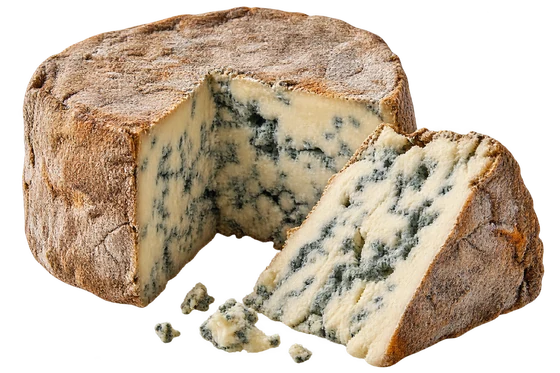
Queso Picón
Blue cheese aged in the caves of the Picos de Europa, wrapped in leaves.

Rabas
Strips of squid floured and fried, served in a paper cone.
Festivals in Camargo
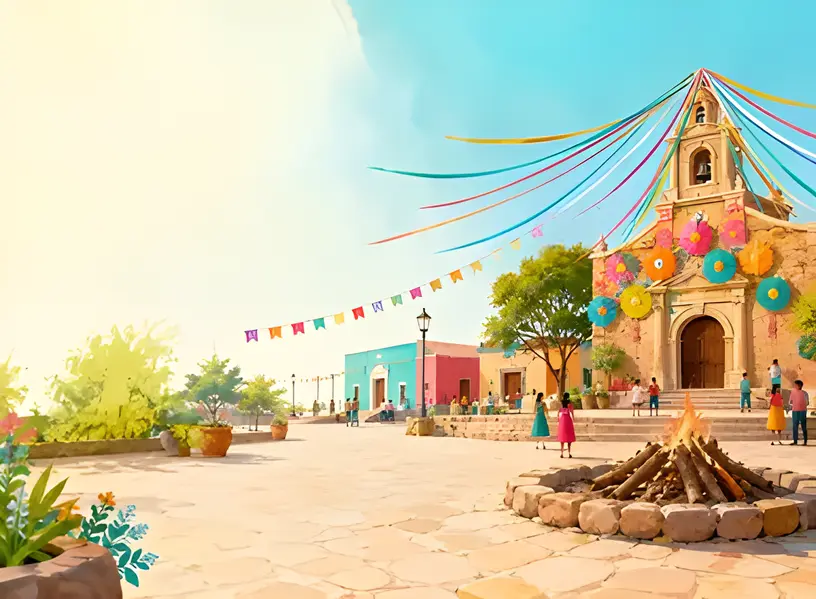
Fiestas de San Juan
around 24 June
The bonfires of the shortest night, and the next day the pilgrimage in the valley.
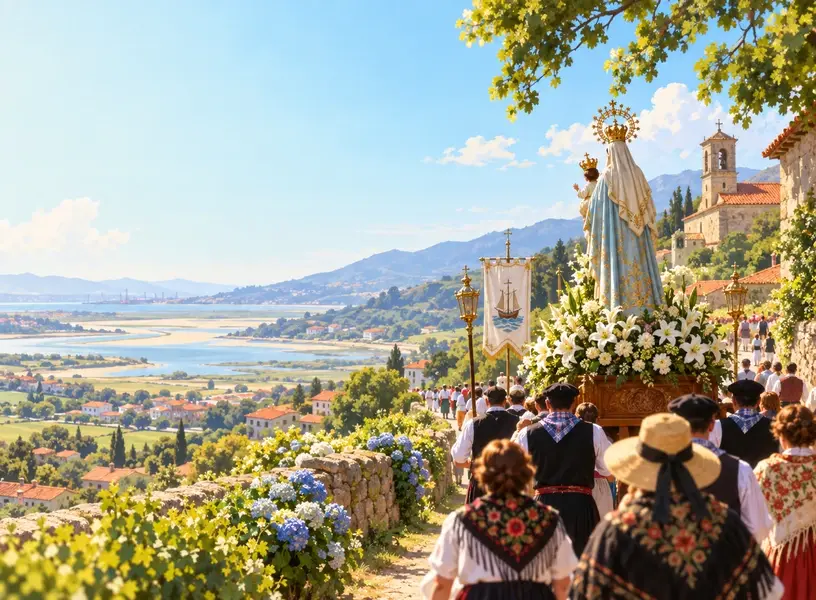
Fiestas del Carmen
around 16 July
The pilgrimage carries the Virgin through the valley, in a municipality made of ten villages that meet that day.
What to see in Camargo
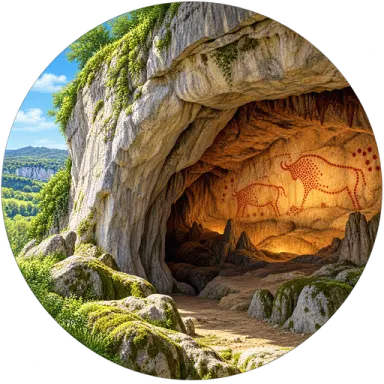
Cueva del Pendo
A cave with a frieze of figures painted in red, about twenty thousand years old.
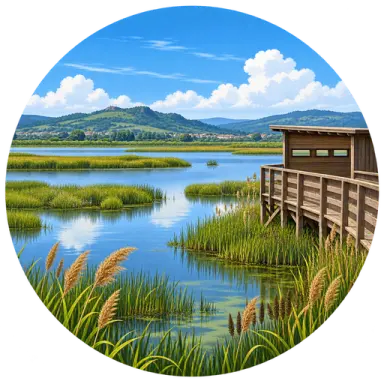
Marisma de Alday
The recovered wetland inside the city, with birds and paths.
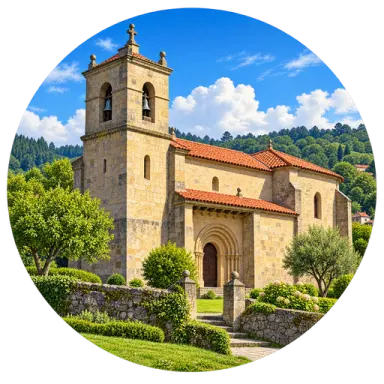
Iglesia de San Juan Bautista
The Romanesque church of Maliaño, the oldest in the municipality.
Where Camargo comes from
A painted cave under the city
Prehistory
The Cueva del Pendo
A cave with paintings from twenty thousand years ago, inside the municipality's territory.
Middle Ages
The villages
The scattered nuclei around the marshland are born, each with its own church.
20th century
Industry
The factories of the Bay of Santander and then the airport make the municipality grow.
Today
The belt
It is one of the most populous municipalities in the region, joined to Santander.
Want to learn Spanish by travelling across Spain?
In Aula every lesson is a city lighting up on the map — Camargo is one of them. Two hundred lessons from A1 to C2, free, starting from your level.
Start from Camargo →