 Aula· Spain, city by city
Cantabria
Santillana
«Santillana del Mar conserva impresionantes torres medievales de piedra.»Santillana del Mar preserves impressive medieval stone towers.
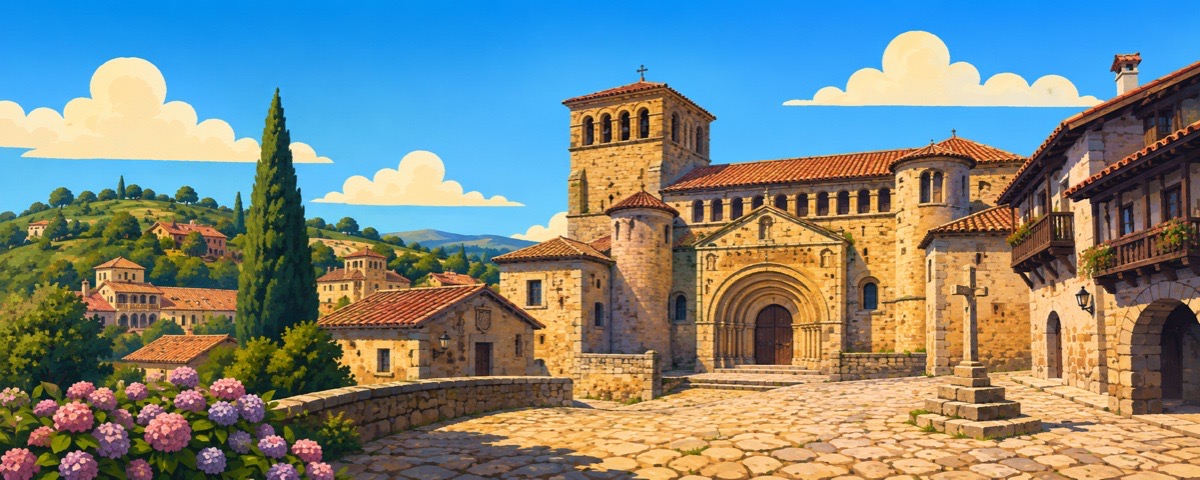
Santillana del Mar is a village of a few hundred inhabitants on the western coast of Cantabria, two kilometres from the Altamira cave. Its two cobbled streets are lined with mansions bearing coats of arms, and it is called the town of the three lies: it is not holy (santa), it is not flat (llana), and it has no sea (mar).
Did you know
The town of three lies.
It is called the 'town of three lies' because, according to the popular saying, it is not holy, it is not flat, and it has no sea.
How they talk in Santillana
«La villa de las tres mentiras» is the traditional nickname: it is said that Santillana del Mar is not holy, nor flat (llana), nor does it have the sea in its immediate geographical name. «Tierruca» is the affectionate regional term for Cantabria.
pindio / pindia
Very steep or inclined. Used especially for an ascent, a road, or terrain with a sharp incline: «una cuesta muy pindia».
Everyday life in Santillana
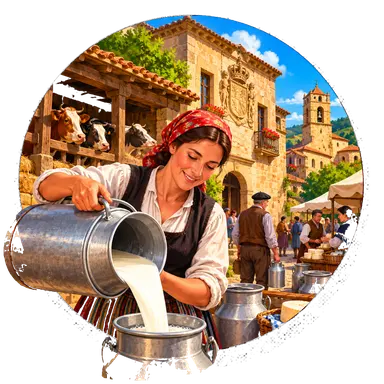
The «cuadras» behind the palaces with the coat of arms
The medieval village is still agricultural: behind the palaces with the coats of arms there are stables, and in the morning you can hear the sound of the animals. Freshly milked milk is sold in the centre.
«Detrás de las casas hay vacas.» — Behind the houses there are cows.
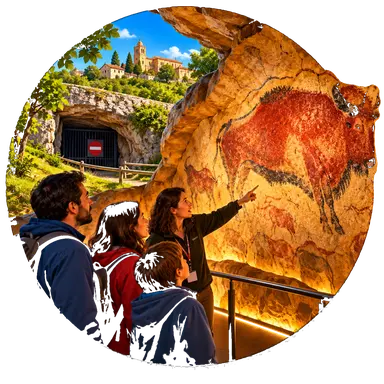
Altamira can be seen in copy
The original cave has been closed for decades to protect the paintings, and next to it is the exact reproduction: you enter there, and only a very few people drawn by lot see the real one.
«La cueva de verdad está cerrada.» — The real cave is closed.
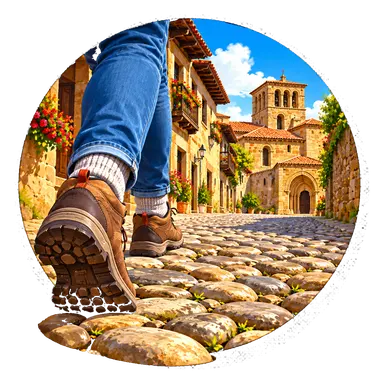
The paving of «cantos rodados»
The paving is all made of round river stones and cars do not pass: walking is uncomfortable, and those who live there have suitable shoes.
What to eat in Santillana
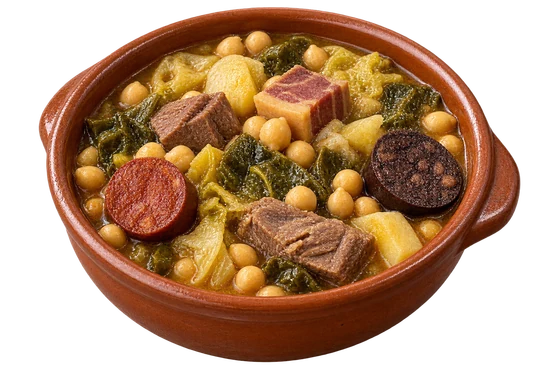
Cocido lebaniego
Small chickpeas from Liébana with cabbage, potatoes and meats, served in three courses.
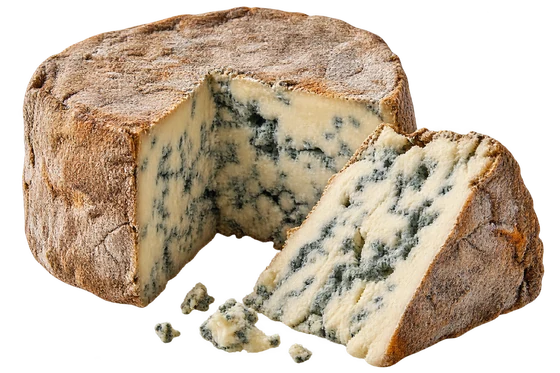
Queso Picón
Blue cheese aged in the caves of the Picos de Europa, wrapped in maple leaves.
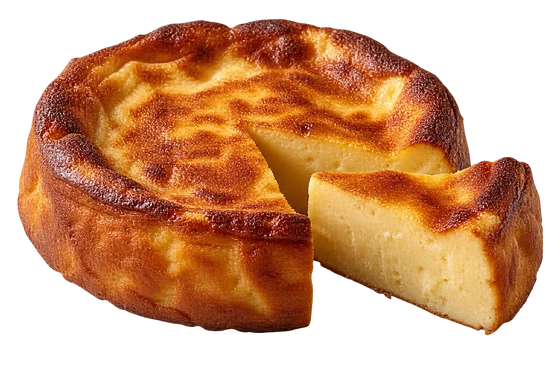
Quesada pasiega
Dense sweet made of curdled milk, butter and lemon, baked in a low tin.
Festivals in Santillana
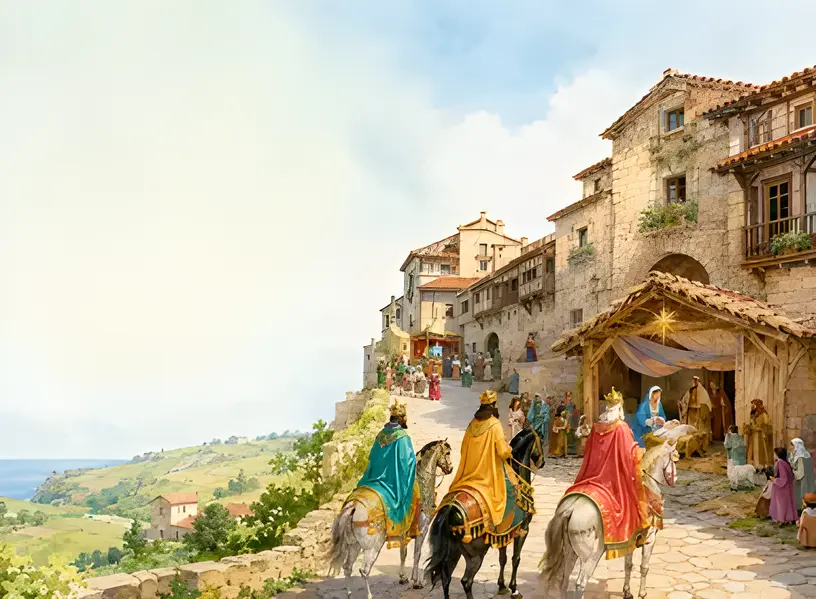
Auto Sacramental y Cabalgata de Reyes
January 5th
The medieval village becomes Bethlehem: half the town acts, and the Three Wise Men arrive among the stone houses by torchlight.
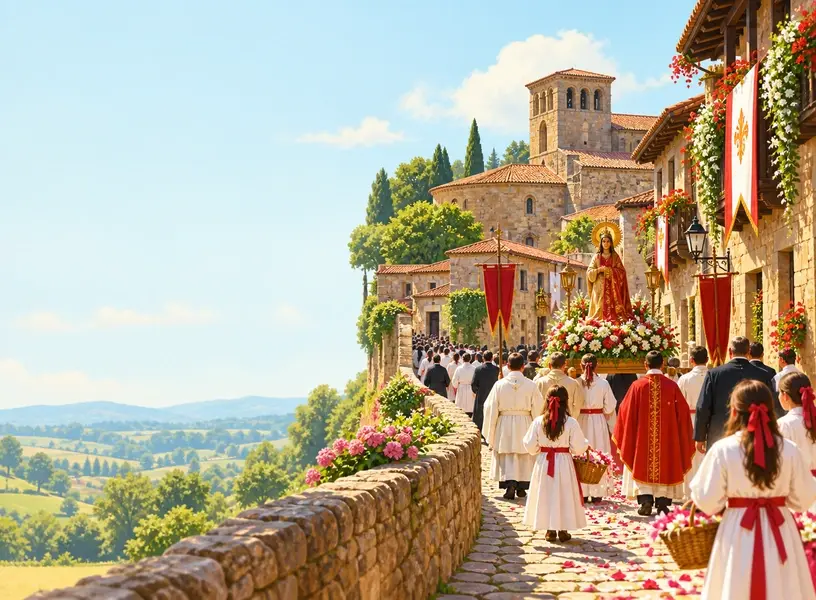
Fiestas de Santa Juliana
June 28th
The procession goes around the two paved streets of the village, which for one day return to its inhabitants and not to the tourists.
What to see in Santillana
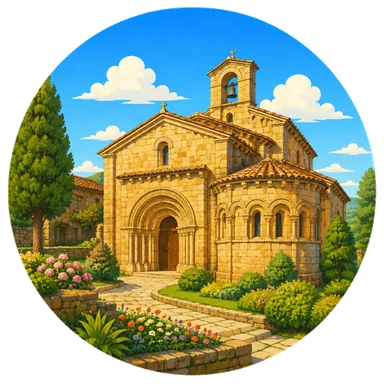
Colegiata de Santa Juliana
The Romanesque church from which the town took its name, with the cloister with sculpted capitals.
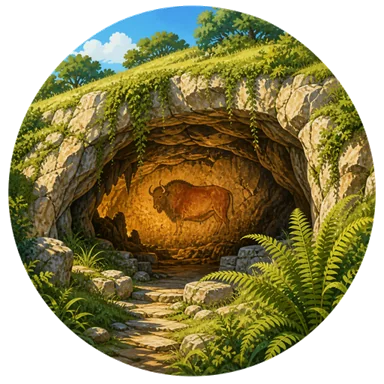
Cuevas de Altamira
The exact copy of the cave with the fourteen-thousand-year-old paintings, built next to the original.
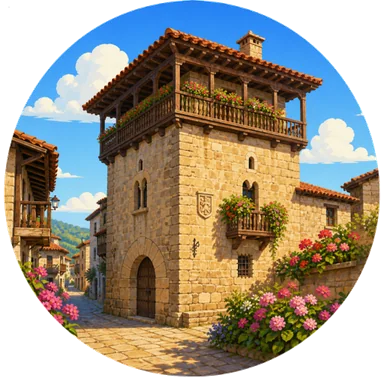
Torre de Don Borja
Medieval tower-house on the square, today the seat of a cultural foundation.
Where Santillana comes from
The village of the three lies
9th century
The monastery
Born around the monastery that guards the relics of Saint Juliana: from «Sant Juliana» comes Santillana.
12th century
The collegiate church
The Romanesque church with the cloister is built, the heart of the village.
15th–18th century
The palaces
Noble families build houses with coats of arms along the two streets.
1879
Altamira
Cave paintings are discovered in the cave two kilometres from the village.
Want to learn Spanish by travelling across Spain?
In Aula every lesson is a city lighting up on the map — Santillana is one of them. Two hundred lessons from A1 to C2, free, starting from your level.
Start from Santillana →