 Aula· Spain, city by city
Cantabria
Santoña
«Santoña es famosa por la producción tradicional de anchoas en aceite.»Santoña is famous for the traditional production of anchovies in oil.
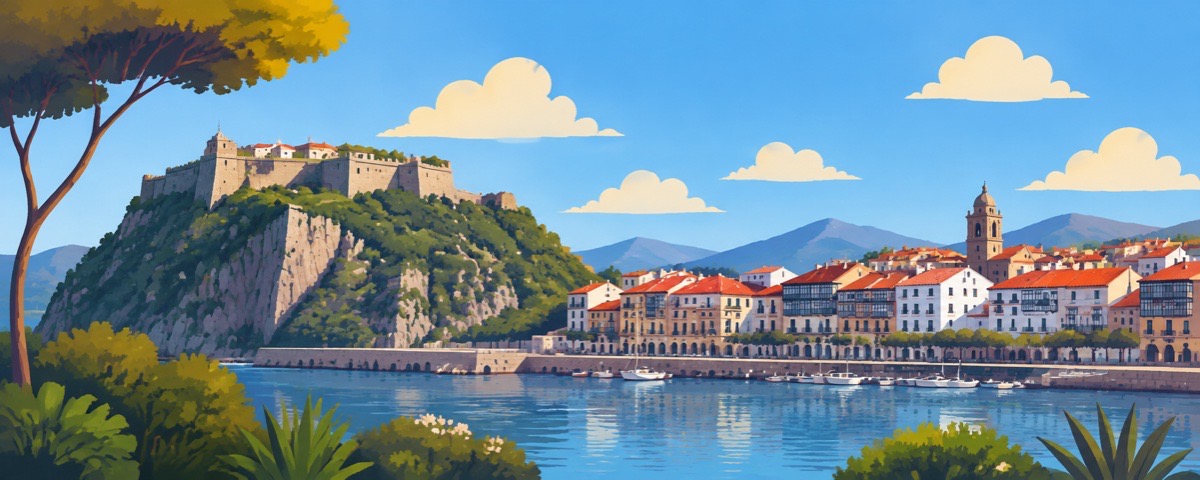
Santoña sits on a peninsula enclosed by Mount Buciero, opposite Laredo, at the mouth of a bay. It is the Spanish centre for anchovy processing, a method brought here by Sicilian salters at the end of the 19th century and still done today by cleaning the fish by hand, one by one.
Did you know
Seven hundred steps to the lighthouse.
To reach the Faro del Caballo on foot, you must walk down a staircase overlooking the sea with over 700 steps.
How they talk in Santoña
«Anchoa» here does not simply indicate a fish: it recalls an entire local canning industry. «Costera» is the term used for fishing seasons, especially for bonito and anchovy.
pindio / pindia
Very steep or inclined. Used especially for an ascent, a road, or terrain with a sharp incline: «una cuesta muy pindia».
Everyday life in Santoña
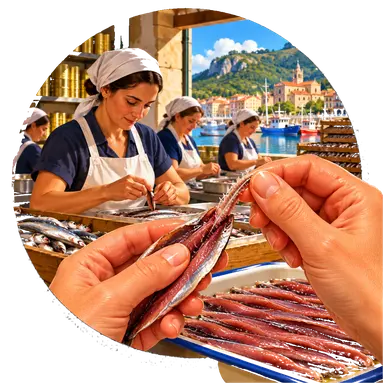
The anchovy is cleaned by hand
In the town's canning factories, women open, clean and arrange the anchovies one by one, by hand: it is a job that is learned when young and that provides work for a good part of the town.
«Las anchoas se limpian a mano.» — The anchovies are cleaned by hand.
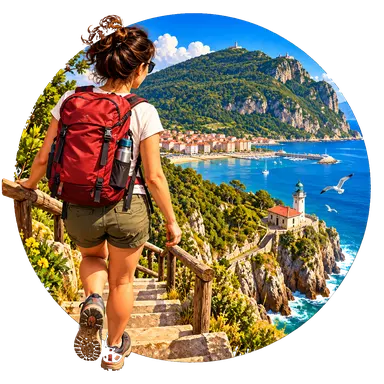
The «Monte Buciero» behind
The wooded headland closes the town and has paths to the lighthouses: the Caballo one is reached by going down six hundred and eighty-two steps, and then they must be climbed back up.
«Son setecientos escalones.» — There are seven hundred steps.
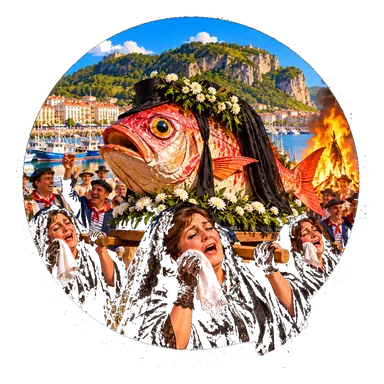
The carnival with the «Besugo»
The maritime carnival ends with the trial and funeral of a fish, carried in procession with mourners who cry: people drink and laugh, and it concludes by burning it.
What to eat in Santoña
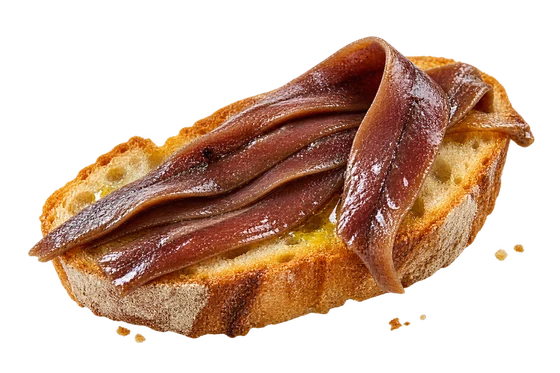
Anchoas de Santoña
Anchovies salted for months and then cleaned by hand one by one, preserved in oil.
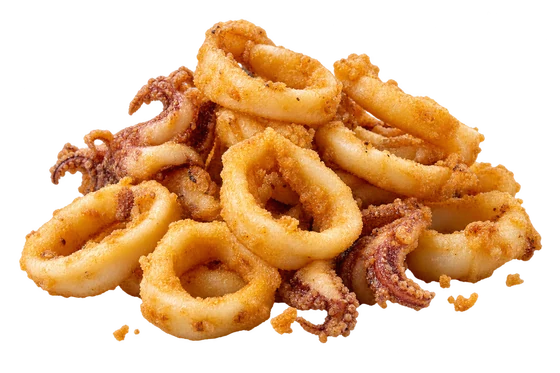
Rabas
Strips of squid, floured and fried, in a paper cone with lemon.
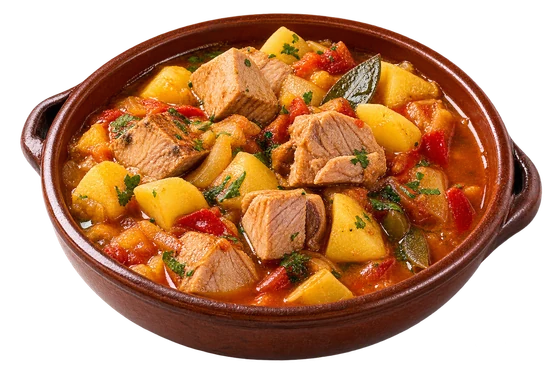
Marmita
Bonito soup with potatoes and pepper, born on the boats.
Festivals in Santoña
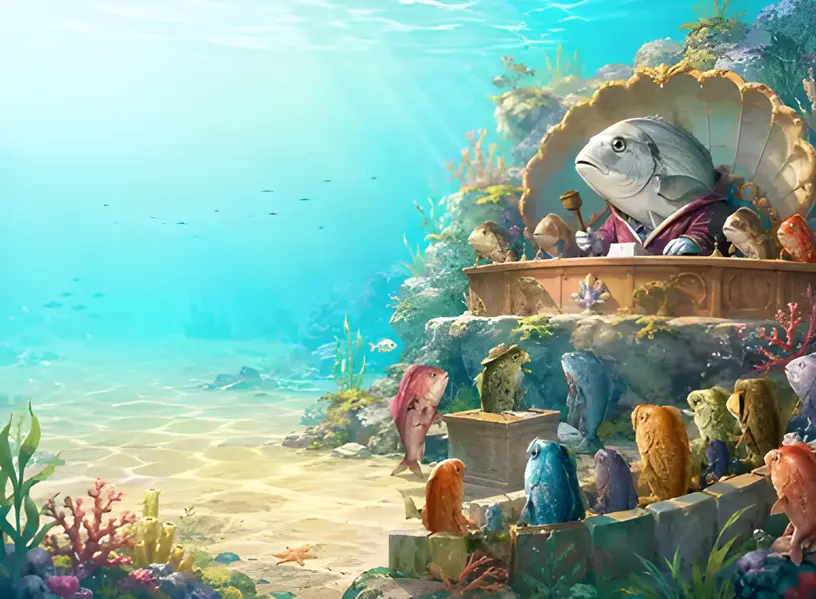
Carnaval de Santoña
between February and March
The «Juicio en el Fondo del Mar» is celebrated: the fish put the mermaid on trial, and the town dresses up as the seabed.
What to see in Santoña
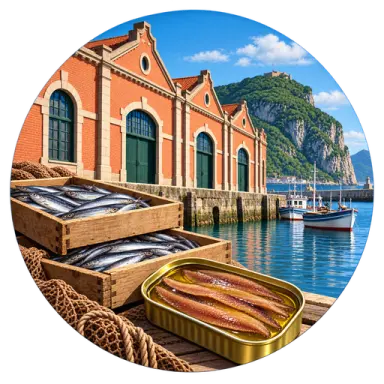
Las fábricas de anchoas
The factories where anchovies are still cleaned by hand, one by one, as the Sicilians taught.
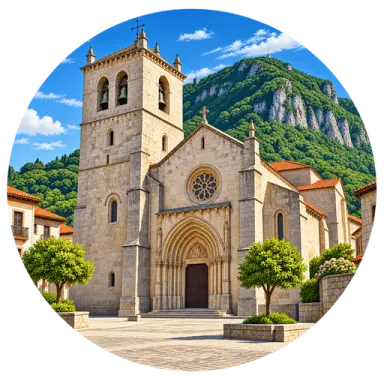
Iglesia de Santa María del Puerto
The Romanesque and Gothic church from which the town was born, on the port.
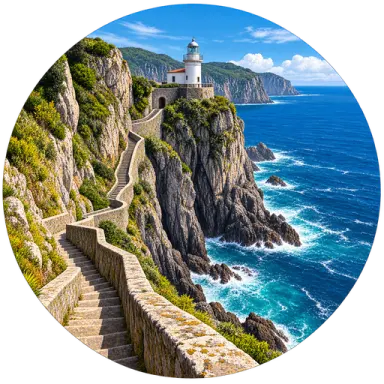
Faro del Caballo
A lighthouse below the cliff, which you reach by going down six hundred and eighty-two steps.
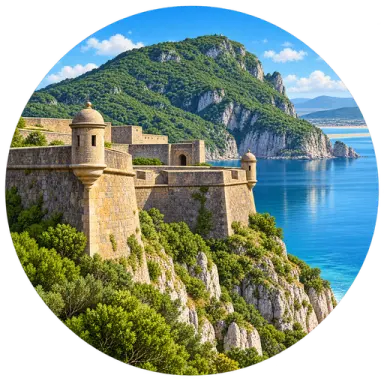
Fuerte de San Martín
The fort on the port, built in the 18th century and used until the Napoleonic wars.
Where Santoña comes from
The anchovies were taught by the Sicilians
11th century
The monastery
Born around the monastery of Santa María del Puerto, on the natural port.
16th century
The shipyards
Santoña's shipyards build ships for the crown.
circa 1880
The anchovies
Sicilian salters arrive here and teach the method: the industry that still supports the town is born.
20th century → today
The factories
Santoña's anchovy preserves are sold all over the world.
Want to learn Spanish by travelling across Spain?
In Aula every lesson is a city lighting up on the map — Santoña is one of them. Two hundred lessons from A1 to C2, free, starting from your level.
Start from Santoña →