 Aula· Spain, city by city
Castilla-La Mancha
Albacete
«Albacete produce famosas navajas artesanales con mango decorado.»Albacete produces famous handmade knives with decorated handles.
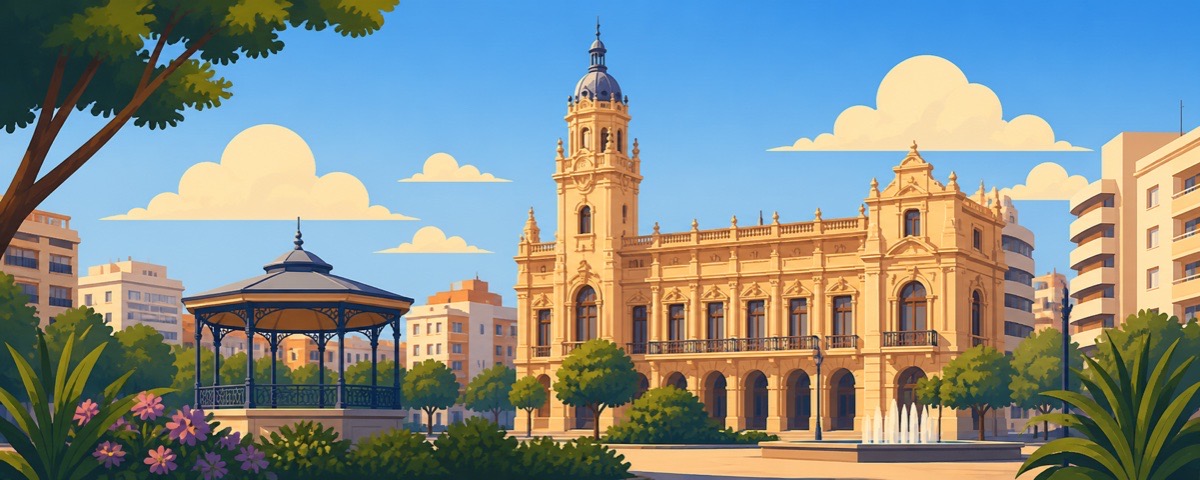
Albacete is the capital of the largest province in Castile-La Mancha, in the middle of an open plain halfway between Madrid and the Mediterranean. It does not have a monumental historic centre: it grew in the 19th century around its fair and the railway, and lives on agriculture, trade, and the cutlery that bears its name.
Did you know
The knife fair, for centuries.
Every September, it hosts one of the oldest fairs in Spain, where traditional handmade knives are sold.
How they talk in Albacete
Castilian is relatively close to the standard, but «navaja» and «cuchillería» have a concrete cultural weight here. «Gazpachos» in the plural is another useful false friend: in Albacete, it is the hot manchego dish.
ea
Yes; sure; alright, in addition to general hortatory values. In Manchego speech it can confirm what the interlocutor has said or conclude a decision; the precise value depends on the intonation.
Everyday life in Albacete
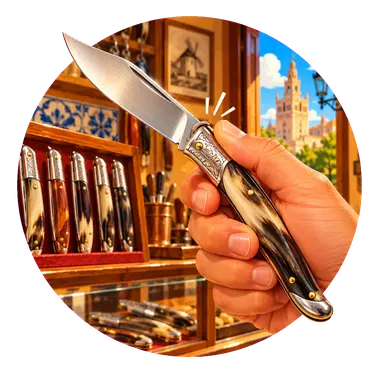
The «navaja» is still made here
Albacete has been manufacturing flick knives for five centuries, and in the cutlery shops in the centre you can see entire rows of them: they are opened to hear the click, which is how a knife is judged here.
«Ábrela, a ver cómo suena.» — Open it, let's see how it sounds.
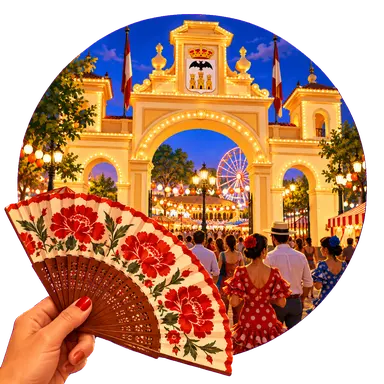
The nine days of the «Feria»
From 7 to 17 September, the city moves inside a circular enclosure that everyone calls «La Sartén», the frying pan. You enter under an illuminated arch and leave at dawn: offices work half-time during those days.
«Nos vemos en la Sartén.» — See you at the Sartén.
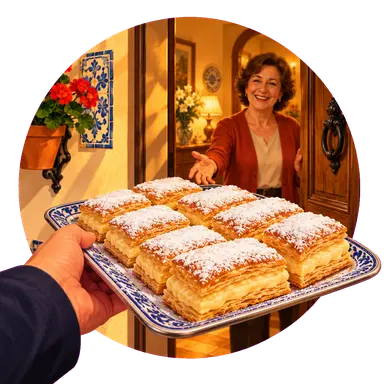
The «miguelitos» after dinner
Rectangles of puff pastry filled with cream and covered in icing sugar: they are bought in trays to take to other people's houses. They come from La Roda, twenty kilometres to the north, and everyone here has them.
«Llévate una bandeja de miguelitos.» — Take a tray of miguelitos with you.
What to eat in Albacete
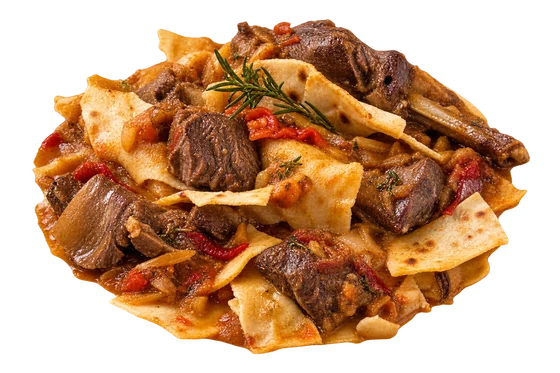
Gazpachos manchegos
Nothing to do with cold gazpacho: it is unleavened flatbread broken up and cooked in broth with game meat.
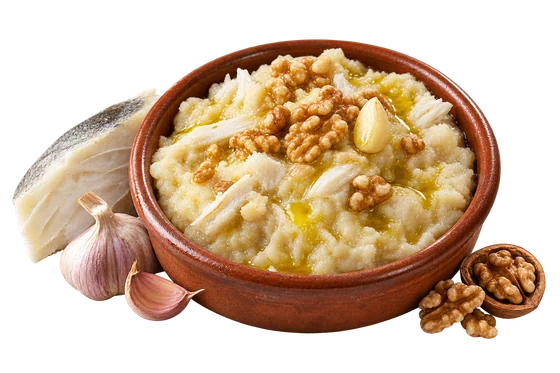
Atascaburras
Salt cod, potatoes, garlic and oil crushed together in a mortar to make a cream, with walnuts on top.
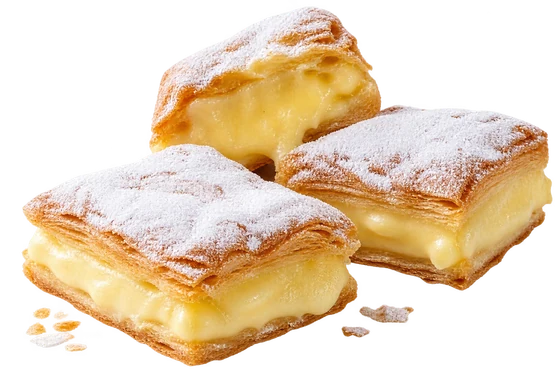
Miguelitos
Squares of puff pastry filled with cream and dusted with icing sugar, born in La Roda nearby.
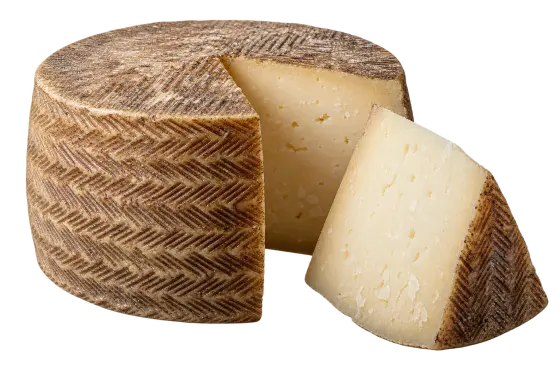
Queso manchego
Manchega sheep's cheese with a herringbone rind; here it is also eaten fried or in oil.
Festivals in Albacete
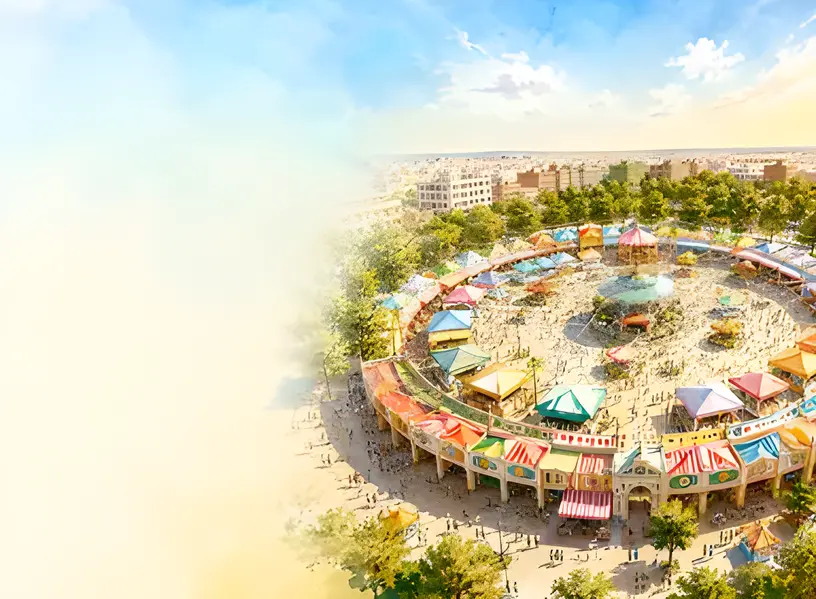
Feria de Albacete
from 7 to 17 September
You enter through the Puerta de Hierros into the circular enclosure that everyone calls «the frying pan», and leave at dawn for ten days in a row.
What to see in Albacete
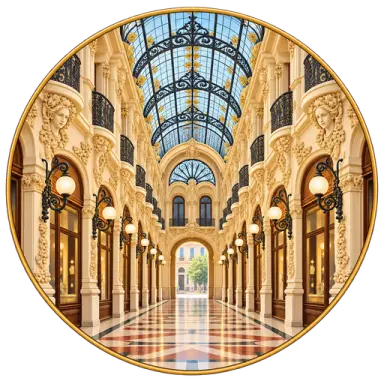
Pasaje de Lodares
A covered shopping arcade from 1925, with a glass vault and wrought iron, between two streets in the centre.
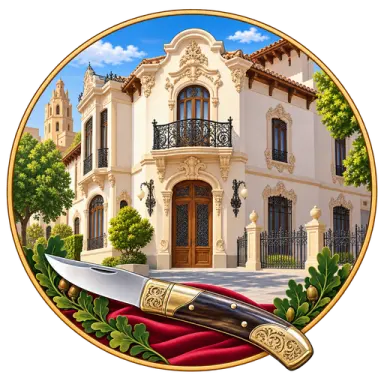
Museo de la Cuchillería
The knife museum, in the Casa del Hortelano, with tiny and damascened blades.
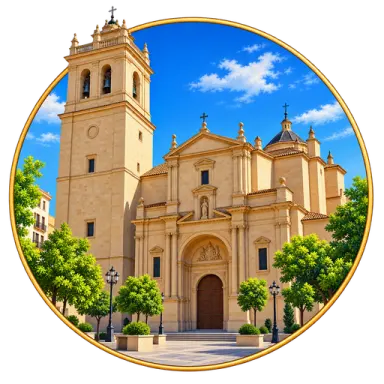
Catedral de San Juan Bautista
Started in the 16th century and finished in the 20th: inside there are four centuries of interrupted work.

Parque Abelardo Sánchez
The city's large park, from the 19th century, with tall trees and the provincial museum inside.
Where Albacete comes from
The name means «the plain»
Iberian era
Villages of the plain
Iberian settlements scattered in a transit area between the Meseta and the Levante.
8th–13th century
Al-Basit
The Arabic name means «the plain»: it was an agricultural village, not a city.
1265
The conquest
It passed to Castile and remained a market and fair town for centuries.
1833 → today
Albacete
The fair first and the railway later made it grow: it became a provincial capital.
Want to learn Spanish by travelling across Spain?
In Aula every lesson is a city lighting up on the map — Albacete is one of them. Two hundred lessons from A1 to C2, free, starting from your level.
Start from Albacete →