 Aula· Spain, city by city
Castilla-La Mancha
Cuenca
«Cuenca es conocida por sus famosas casas colgadas sobre el abismo.»Cuenca is known for its famous houses hanging over the abyss.
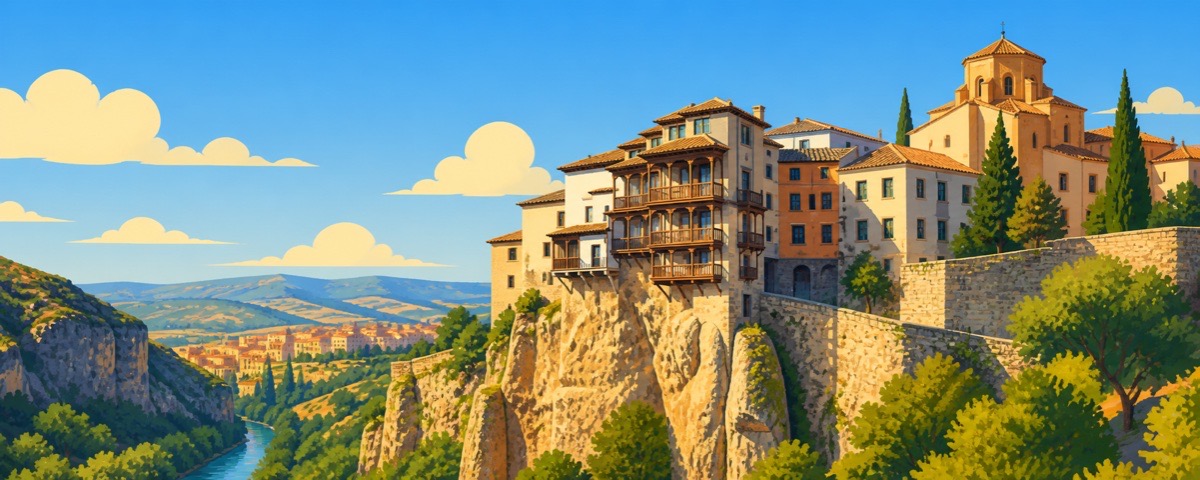
Cuenca stands on a rocky spur wedged between the Júcar and Huécar gorges, at an altitude of almost a thousand metres. The old city is built vertically, with houses overlooking the void and the cathedral at the top, while the modern part has spread out down in the valley, where the terrain allowed it.
Did you know
Houses hanging over the ravine.
Its houses suspended in the void almost seem to defy the laws of physics above the ravine.
How they talk in Cuenca
«Hoz» is an indispensable word here: it indicates the gorges carved by the Huécar and Júcar rivers that define the city's shape. «Resolí» is the traditional liqueur based on coffee, anise and spices.
ea
Yes; sure; alright, in addition to general hortatory values. In Manchego speech it can confirm what the interlocutor has said or conclude a decision; the precise value depends on the intonation.
Everyday life in Cuenca
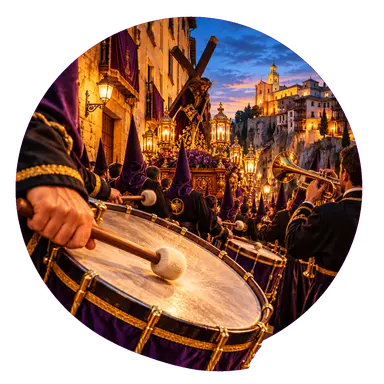
The «Turbas» at dawn on Friday
At half past five on Good Friday, thousands of drums and trumpets accompany the Christ through the uphill streets, in a racket that is called «la juerga de las Turbas» here. It is a procession that does not ask for contemplation: it asks for noise.
«Las Turbas salen a las cinco y media.» — The Turbas come out at half past five.
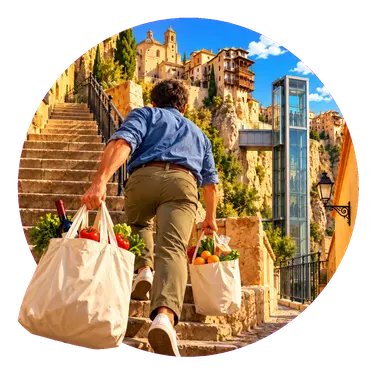
One hundred metres of elevation gain
Between the lower part and the historic centre there are more than one hundred metres of elevation gain: you go up with stairs, public lifts and streets that look like walls. Those who live high up do their shopping thinking about how much it weighs.
«¿Subimos andando o en ascensor?» — Shall we go up walking or by lift?
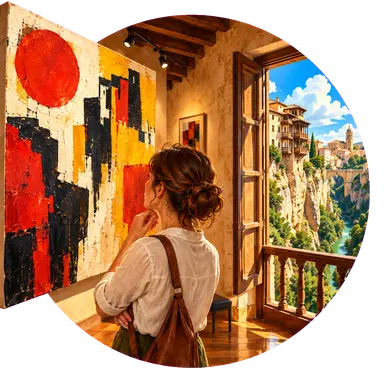
Abstract art inside the «Casas Colgadas»
In the houses hanging over the ravine there is a museum of Spanish abstract painting open since 1966: you look at the paintings and, from the windows, the void below. Locals take visitors there.
What to eat in Cuenca
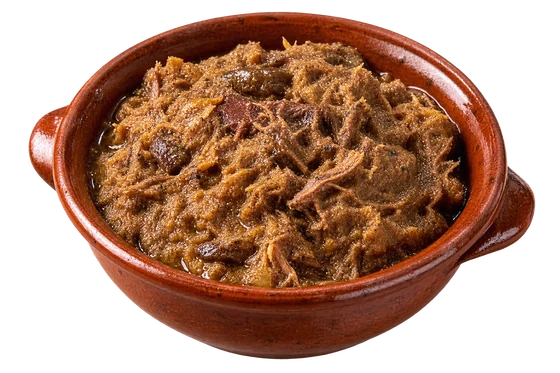
Morteruelo
Hot and dense pâté of game meat crushed with spices and liver, to spread on bread.
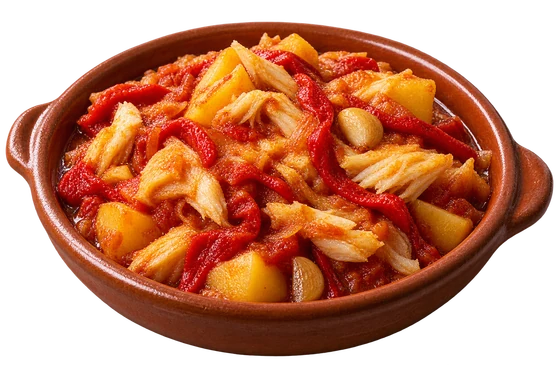
Ajoarriero
Shredded salt cod whipped with potatoes, garlic and oil to make a cream.
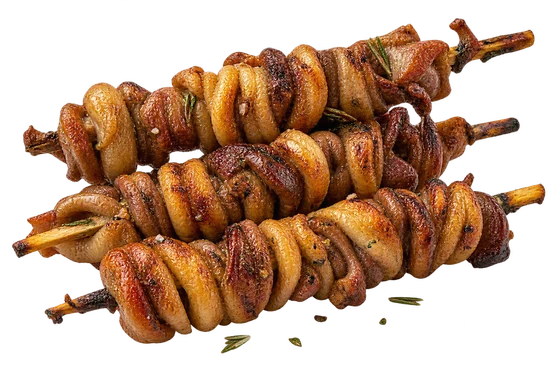
Zarajos
Lamb intestines rolled on two vine shoots and roasted, crispy on the outside.
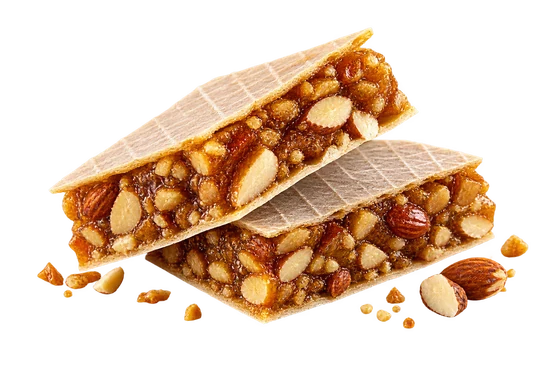
Alajú
Sweet made of honey, almonds and breadcrumbs closed between two wafers, of Arab origin.
Festivals in Cuenca
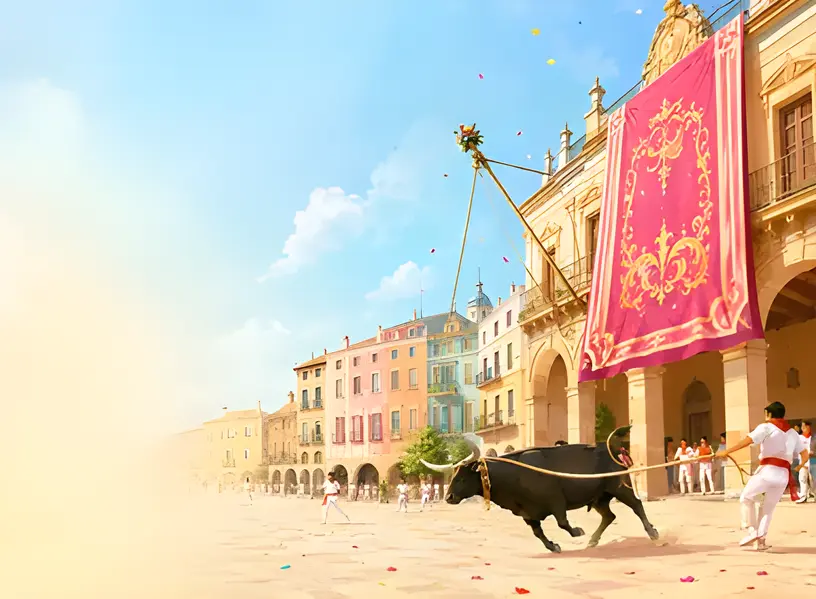
Fiestas de San Mateo
from 18 to 21 September
The «vaquillas» run in the square at the top, among the hanging houses, and the peñas take to the streets in their uniforms.
What to see in Cuenca
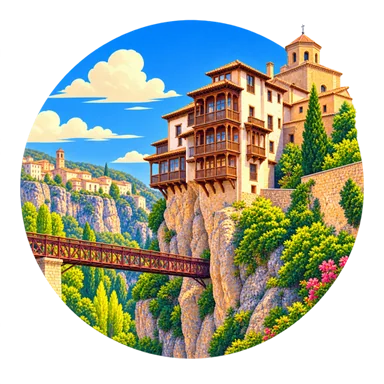
Casas Colgadas
15th-century houses with wooden balconies suspended in the void above the Huécar gorge.
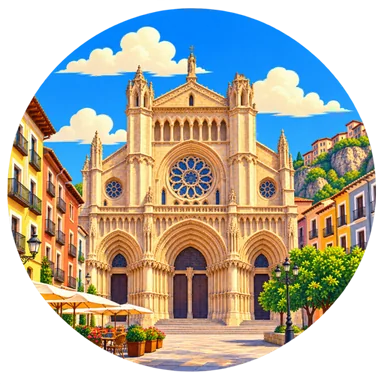
Catedral de Cuenca
Cathedral started in 1182, the only Gothic-Norman one in Spain.
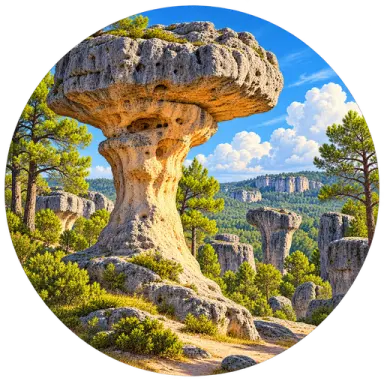
Ciudad Encantada
A forest of limestone rocks eroded into shapes that look like mushrooms, ships and animals, twenty-five kilometres away.
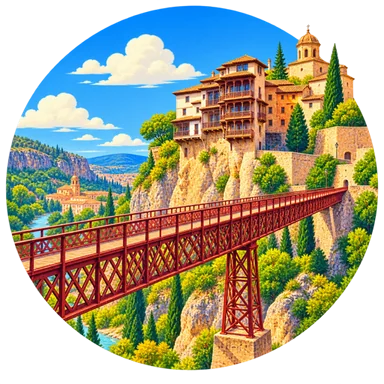
Puente de San Pablo
1902 iron bridge over the gorge, with a wooden plank floor and sixty metres of void below.
Where Cuenca comes from
A city balanced between two gorges
Roman era
Valeria and Segóbriga
The Roman cities in the area are elsewhere: here there was only rock between two rivers.
8th–12th century
Qunka
Muslim fortress built on the spur, defended by the two gorges instead of walls.
1177
The conquest
Alfonso VIII took it after a nine-month siege and brought the bishopric here.
16th century → today
Cuenca
Wool made it rich, then it declined; in the 20th century, abstract painters rediscovered it.
Want to learn Spanish by travelling across Spain?
In Aula every lesson is a city lighting up on the map — Cuenca is one of them. Two hundred lessons from A1 to C2, free, starting from your level.
Start from Cuenca →