 Aula· Spain, city by city
Castilla-La Mancha
Talavera
«Talavera de la Reina produce cerámica tradicional pintada a mano.»Talavera de la Reina produces traditional hand-painted ceramics.
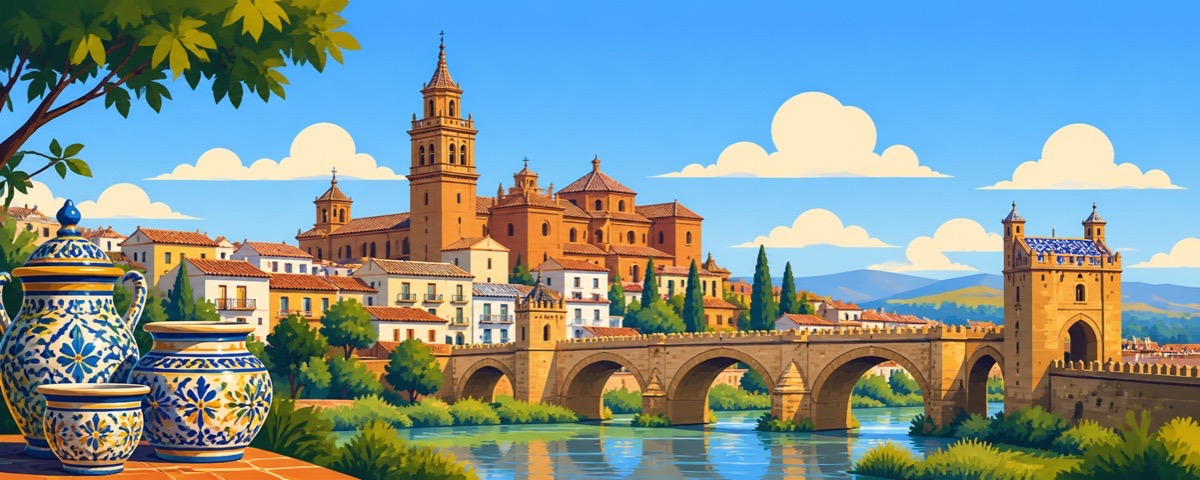
Talavera de la Reina is the most populous city in the province of Toledo after the capital, on the right bank of the Tagus in an area of irrigated vegetable gardens. It is known for its ceramics, produced here since the 16th century, which do not stay in museums but appear on fountains, benches and signs throughout the centre.
Did you know
A basilica dressed in ceramics.
The outer walls of the local basilica are entirely covered in famous blue and yellow ceramic tiles.
How they talk in Talavera
«Cerámica de Talavera» is an expression with almost identity-defining value and indicates a decorative tradition recognisable by blues, greens, yellows and figurative motifs. The local Castilian is close to the central Manchego variety.
ea
Yes; sure; alright, in addition to general hortatory values. In Manchego speech it can confirm what the interlocutor has said or conclude a decision; the precise value depends on the intonation.
Everyday life in Talavera
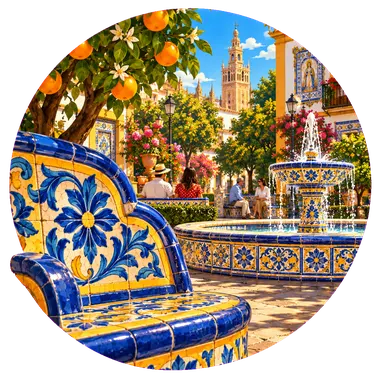
The city is tiled
Benches, fountains, facades, street signs: the blue and yellow ceramics of Talavera are everywhere, made here for five centuries. The Prado gardens are an open-air museum of tiles.
«Los bancos son de cerámica.» — The benches are made of ceramic.
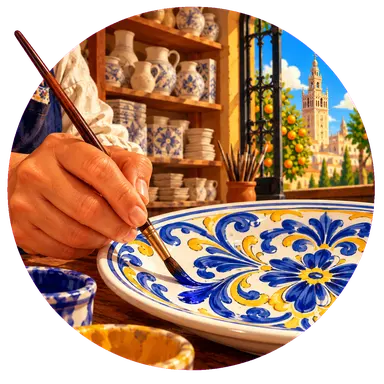
The «talleres» with the ox-hair brush
In the ceramic factories, you can go in and see them painting by hand, piece by piece, with an ox-hair brush. It is a trade that is learned as a boy and that many families have at home.
«Todo esto está pintado a mano.» — All of this is hand-painted.
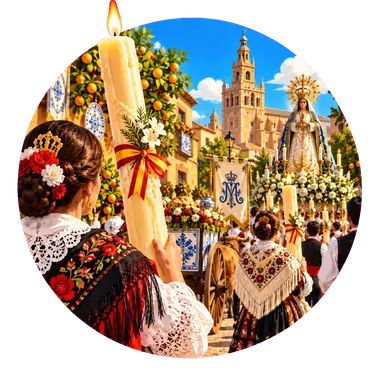
The «Mondas» in March
A festival that has its roots in a pre-Roman rite: candles are offered to the Virgen del Prado and floats and costumes from nearby towns parade. It is declared of national tourist interest.
What to eat in Talavera
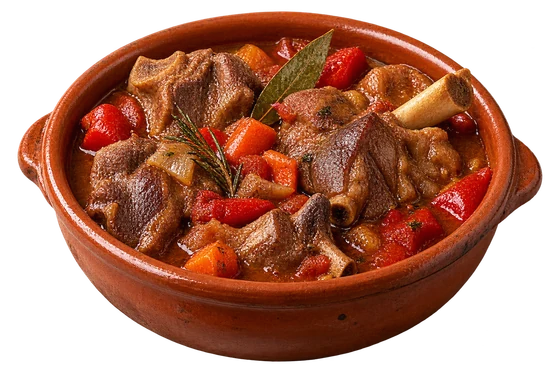
Caldereta de cordero
Lamb stewed with dried peppers, garlic and wine, cooked slowly in a cauldron.
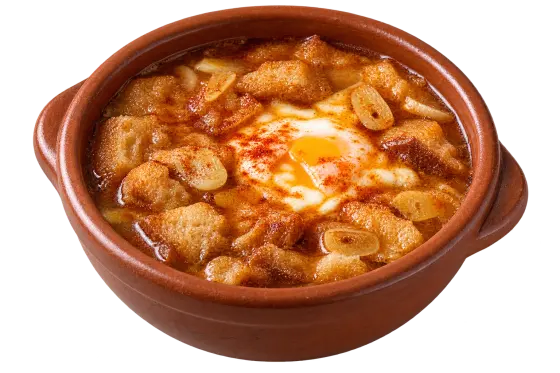
Sopa de ajo
Stale bread, garlic, paprika and broth, with an egg cracked inside at the last moment.
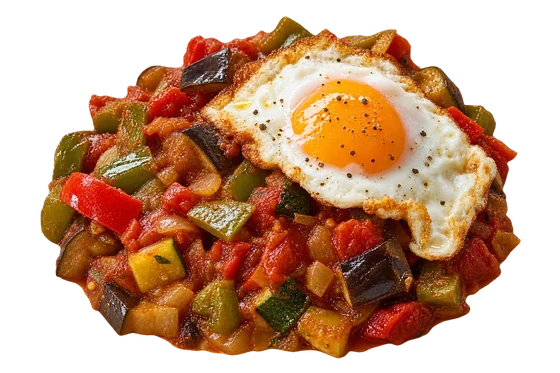
Pisto manchego
Peppers, tomato and courgettes stewed slowly in oil, with an egg on top.
Festivals in Talavera
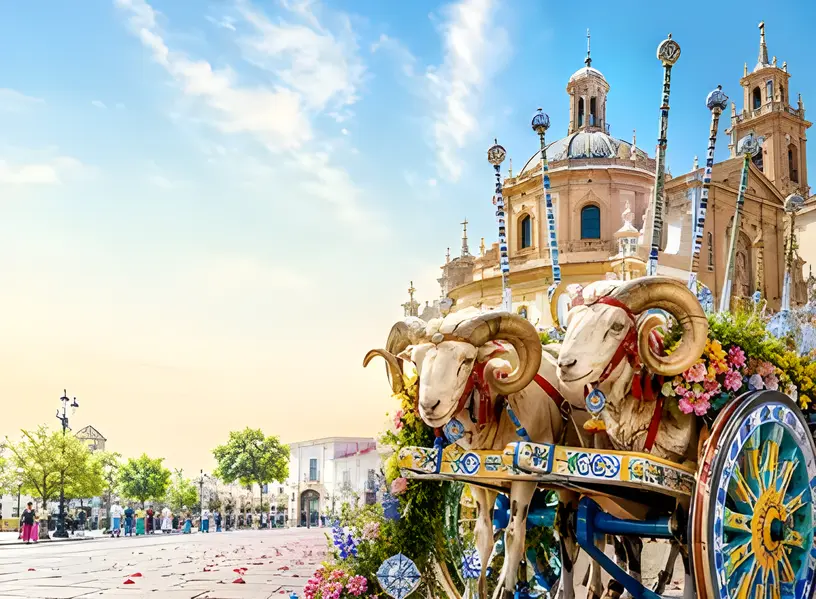
Las Mondas
the Saturday after Easter
A rite that comes from before the Romans: a decorated ram is offered to the Virgen del Prado, and nearby towns parade with their floats.
What to see in Talavera
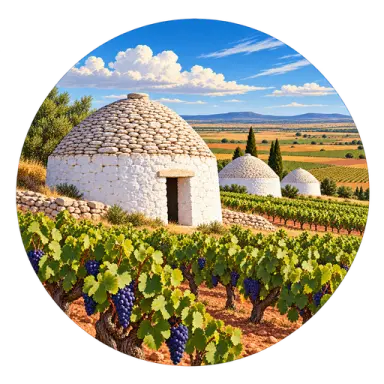
Murallas de Talavera
The Andalusian walls of the 9th-10th centuries, with eight of the seventeen documented «albarrana» towers.
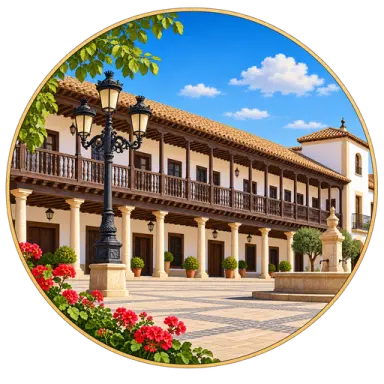
Basílica de Nuestra Señora del Prado
Sanctuary with walls covered in «azulejos» from floor to ceiling, from the 16th to the 20th century.
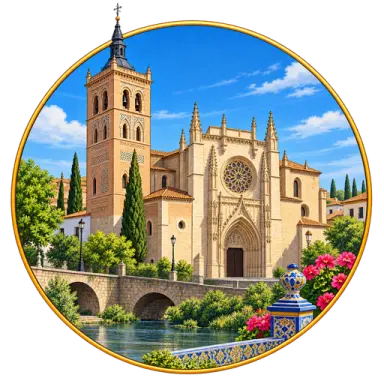
Colegiata de Santa María la Mayor
Gothic church, a national monument since 1931, with ceramics incorporated into the altarpieces.
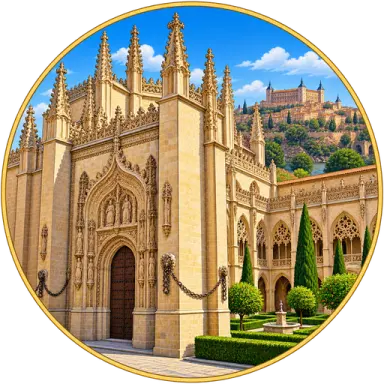
Museo Ruiz de Luna
The museum of Talavera ceramics, with original kilns and productions from the 16th to the 20th century.
Where Talavera comes from
The city of ceramics
Roman era
Caesarobriga
Roman municipality on the banks of the Tagus, along the road that led to Mérida.
8th–11th century
Talabira
Muslim fortified city: the walls with detached towers are from that time.
1083
The conquest
Alfonso VI takes it; it then passes to the queens of Castile, and from there «de la Reina».
16th century → today
Ceramics
Ceramic workshops make it known throughout Europe; Ruiz de Luna relaunches it in the 20th century.
Want to learn Spanish by travelling across Spain?
In Aula every lesson is a city lighting up on the map — Talavera is one of them. Two hundred lessons from A1 to C2, free, starting from your level.
Start from Talavera →