 Aula· Spain, city by city
Castilla-La Mancha
Toledo
«Toledo es famosa por sus espadas de acero y cuchillos.»Toledo is famous for its steel swords and knives.
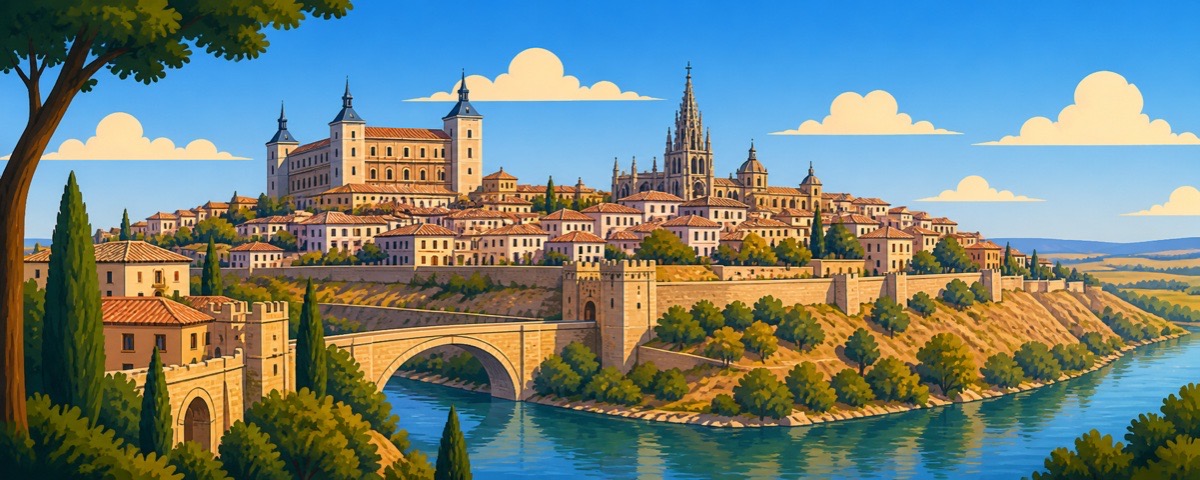
Toledo stands on a hill enclosed on three sides by a bend in the Tagus river, seventy kilometres from Madrid. It was the capital of the Visigothic kingdom and then the capital of Spain until 1561, and in its centre, the Gothic cathedral, medieval synagogues, and buildings left from the Islamic period stand side by side.
Did you know
The city of three cultures.
It is known as the City of the Three Cultures because Christians, Jews, and Muslims lived there together for centuries.
How they talk in Toledo
Toledan Castilian is close to the central standard, but terms related to craftsmanship such as «damasquinado» appear in the traditional lexicon. «Mazapán» here indicates a historical production linked to convents and patisseries, not an occasional Christmas sweet.
ea
Yes; sure; alright, in addition to general hortatory values. In Manchego speech it can confirm what the interlocutor has said or conclude a decision; the precise value depends on the intonation.
Everyday life in Toledo
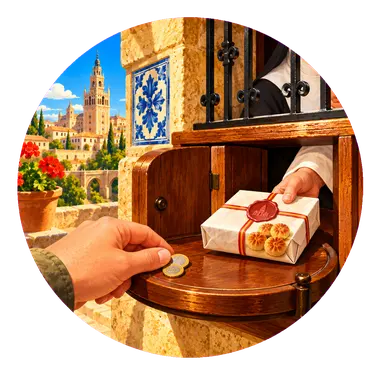
The nuns sell the «mazapán»
In some convents in the centre there is a wooden revolving tray that turns in the wall: you place the money, the tray rotates and returns with the mazapán. You don't see who gives it to you, and you speak through a grate.
«¿Tienen mazapán de las monjas?» — Do you have the nuns' marzipan?
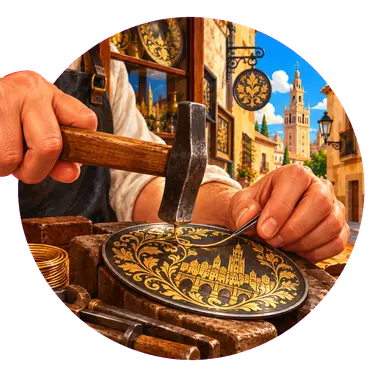
The «damasquinado» behind the shop window
In the shops in the centre you can see the craftsman who engraves the black steel and hammers gold wire into it, one at a time. They work facing the street, and you can stop to watch as much as you like.
«¿Esto está hecho a mano?» — Is this handmade?
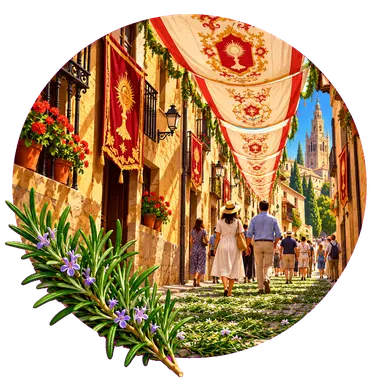
The «toldos» above the streets
For Corpus Christi, the streets of the centre are covered with awnings and the pavement is covered with rosemary and thyme: you walk in the shade, on the green, and the smell remains for days.
«Han puesto los toldos para el Corpus.» — They have put up the awnings for Corpus.
What to eat in Toledo
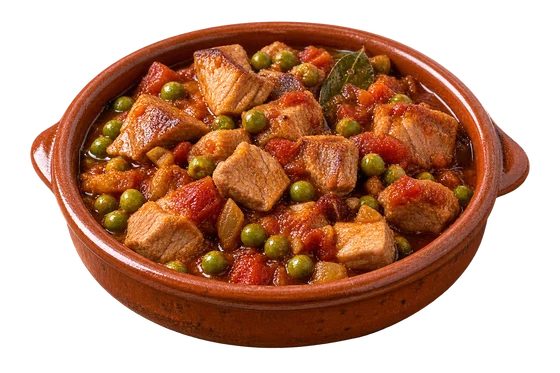
Carcamusas
Pork stew with tomato, peas and spices, served boiling hot in a small earthenware casserole.
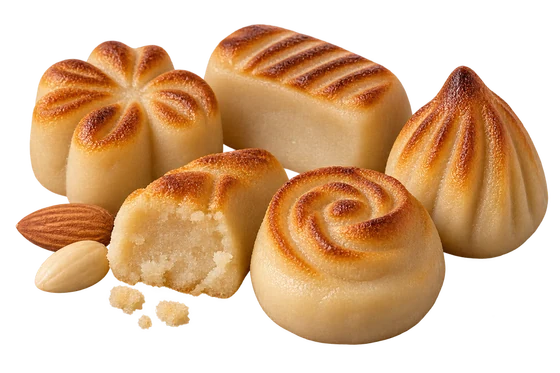
Mazapán de Toledo
Almonds and sugar worked by hand, in figures or filled with candied egg yolk. It has been made here since the Middle Ages.
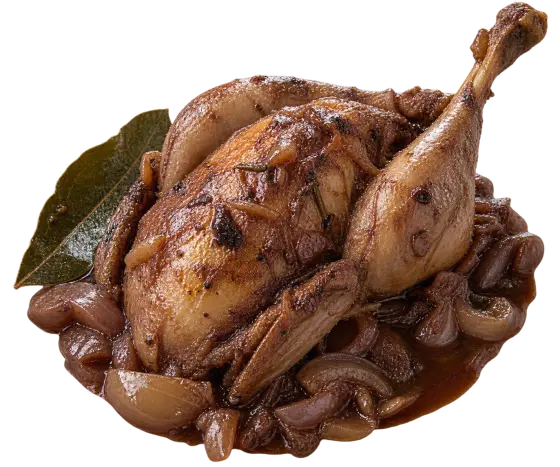
Perdiz estofada
Partridge stewed with wine, bay leaf and onion, cooked slowly for hours.
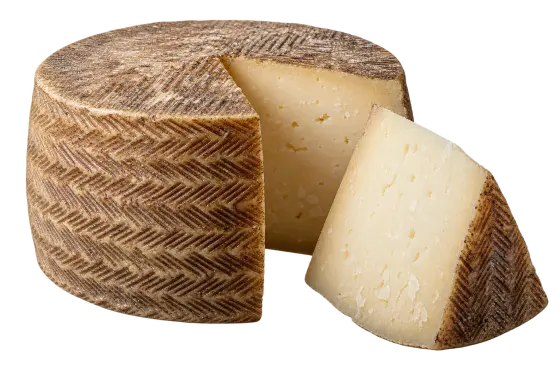
Queso manchego
Manchega sheep, wheat-ear crust, aged from three months to a year.
Festivals in Toledo
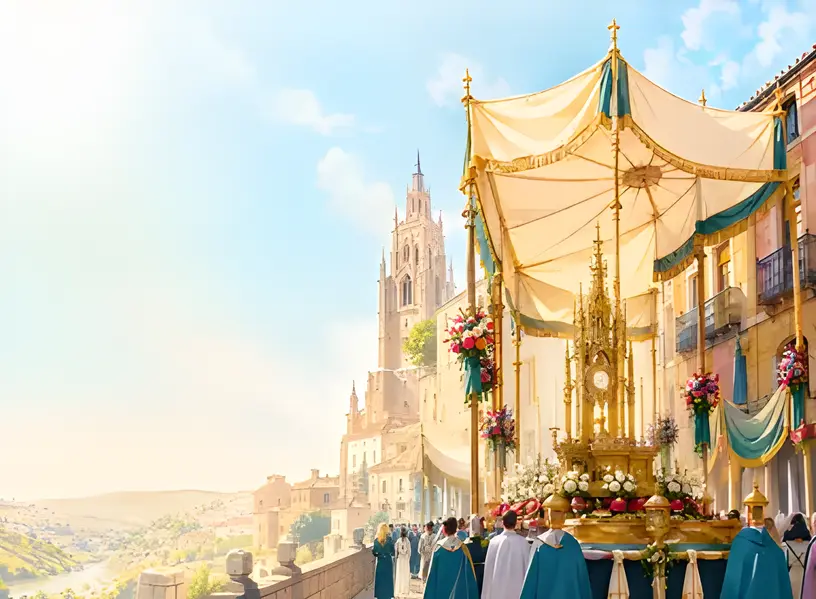
Corpus Christi
between May and June, sixty days after Easter
The streets are covered with awnings and rosemary, and the silver monstrance of Arfe, three metres high, passes by.
What to see in Toledo
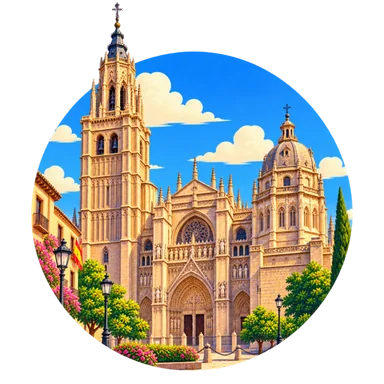
Catedral Primada
Gothic cathedral begun in 1226, with five naves and a high altarpiece that reaches the vault.
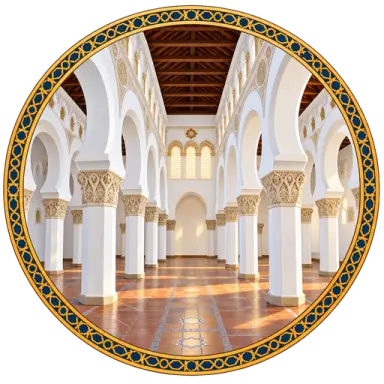
Sinagoga de Santa María la Blanca
12th-century synagogue with five rows of white arches on octagonal pillars. It was a synagogue, then a church.
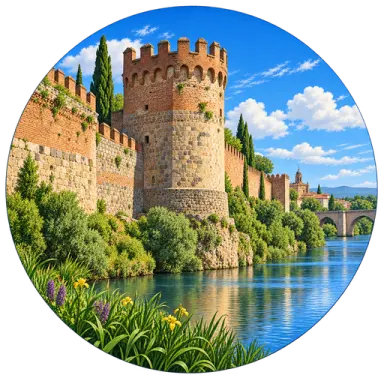
Monasterio de San Juan de los Reyes
Isabelline Gothic monastery commissioned by the Catholic Monarchs, with the chains of the prisoners hanging outside.
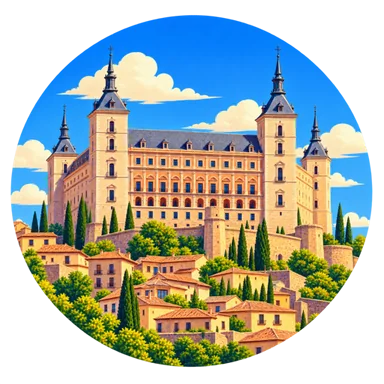
Alcázar
The square fortress on the highest point, with four different facades and four courtyards.
Where Toledo comes from
Three peoples, one hill on the river
Iron Age
Toletum carpetana
Oppidum of the Carpetani on a bend of the Tagus, closed by water on three sides.
192 BC
Toletum
Taken by the Romans: it becomes a municipality and a hub of roads between the Meseta and the south.
507–711
Visigothic capital
Seat of the Visigothic kingdom of Spain and of the councils that made its laws.
711–1085
Tulaytula
Muslim frontier city, with large Jewish and Christian communities alongside the Arab one.
1085 → 1561
Toledo
Alfonso VI conquers it; it remains the capital of Spain until Philip II moves the court to Madrid.
Born here: Garcilaso de la Vega, poet.
Want to learn Spanish by travelling across Spain?
In Aula every lesson is a city lighting up on the map — Toledo is one of them. Two hundred lessons from A1 to C2, free, starting from your level.
Start from Toledo →