 Aula· Spain, city by city
Castilla y León
Aranda de Duero
«Aranda de Duero produce un excelente vino tinto.»Aranda de Duero produces an excellent red wine.
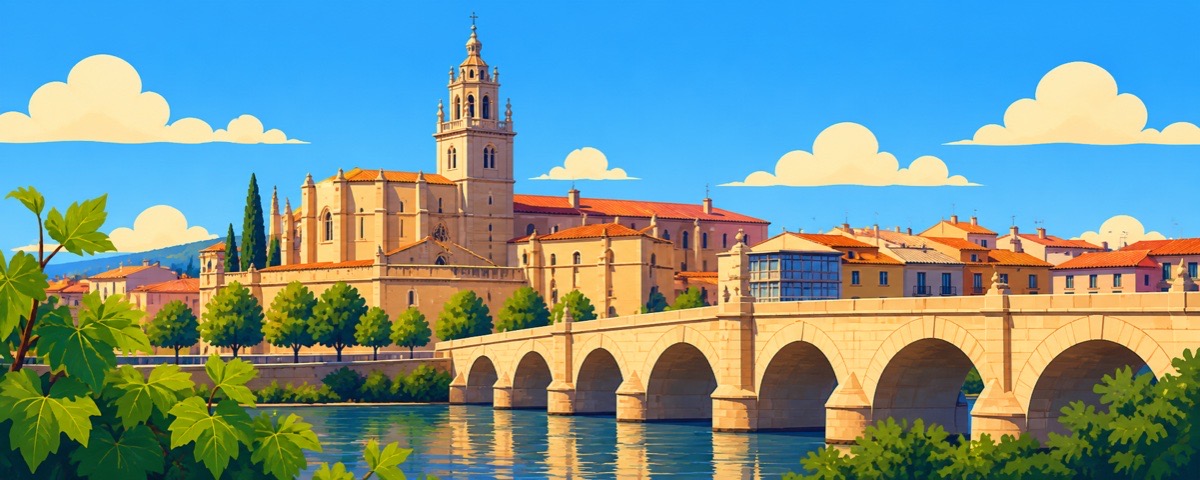
Aranda de Duero stands on the bank of the Duero, in the south of the province of Burgos, and is the centre of the Ribera del Duero denomination. Under its old town run seven kilometres of cellars dug by hand in the sixteenth century, at a depth of twelve metres, to store wine.
Did you know
Seven kilometres of underground cellars.
The subsoil of the historic centre is crossed by over 7 kilometres of underground cellars dug in the Middle Ages.
How they talk in Aranda de Duero
«Bodega» here can mean the traditional underground cellar, not just the modern winery. «Ribera» is an everyday word that immediately refers to the Ribera del Duero designation.
Everyday life in Aranda de Duero
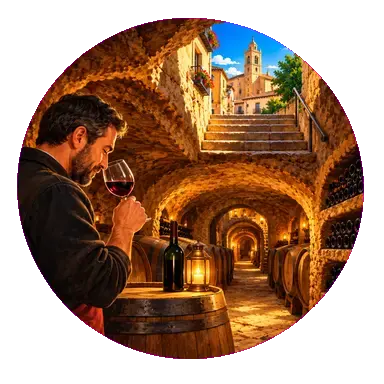
Seven kilometres of «bodegas» under the city
Under Aranda there is a network of seven kilometres of medieval tunnels, dug to store wine: almost every old house has one, and some can be visited.
«La bodega está debajo de casa.» — The cellar is under the house.

«Lechazo» in the wood-fired oven
Suckling lamb is cooked in recently discovered clay ovens, in clay dishes with a finger of water: you have to book the day before, because only a few fit in each batch.
«Hay que encargarlo el día antes.» — You have to order it the day before.
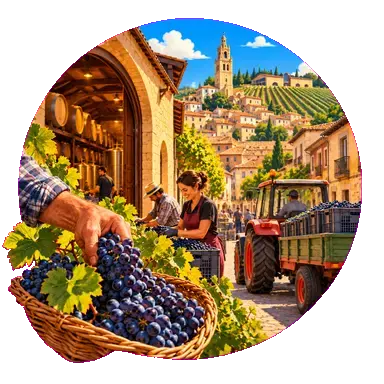
The «Ribera del Duero» all around
The wineries of the designation surround the town and can be visited all year round: many inhabitants work there, and in September the grape harvest fills the streets with tractors.
What to eat in Aranda de Duero
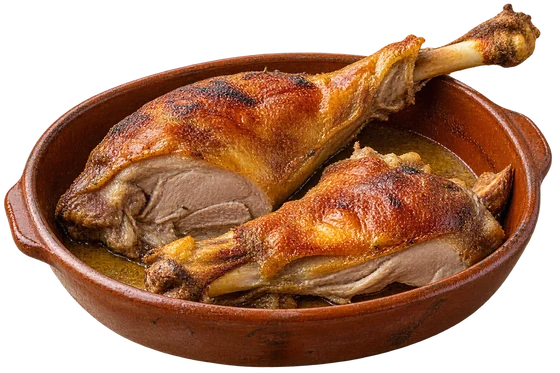
Lechazo asado
Suckling lamb cooked in a wood-fired oven inside a clay dish: here it is the local speciality.
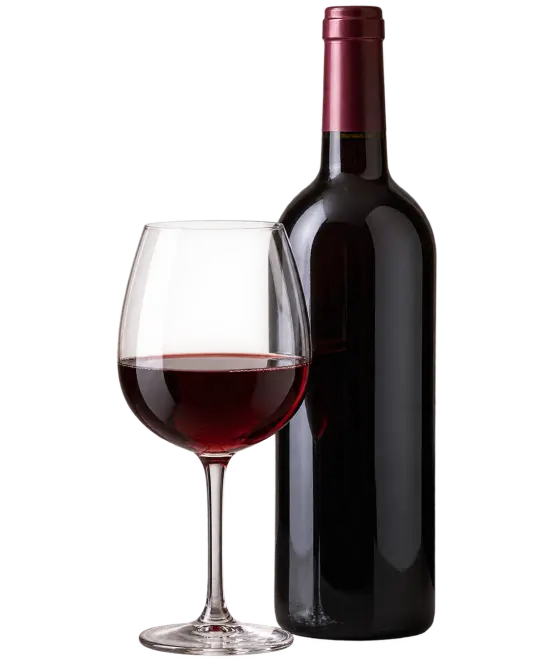
Vino Ribera del Duero
Tempranillo red from the vineyards along the river: dark, full-bodied.
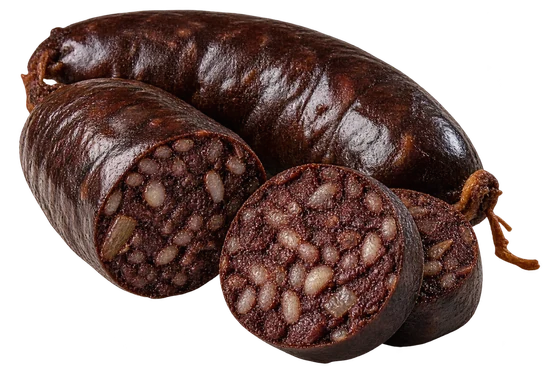
Morcilla de Burgos
Blood sausage with rice, sliced and fried in a pan.
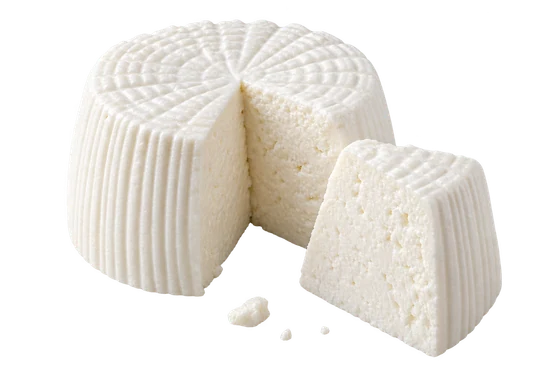
Queso de Burgos
Fresh sheep's cheese, white and sweet, with honey.
Festivals in Aranda de Duero
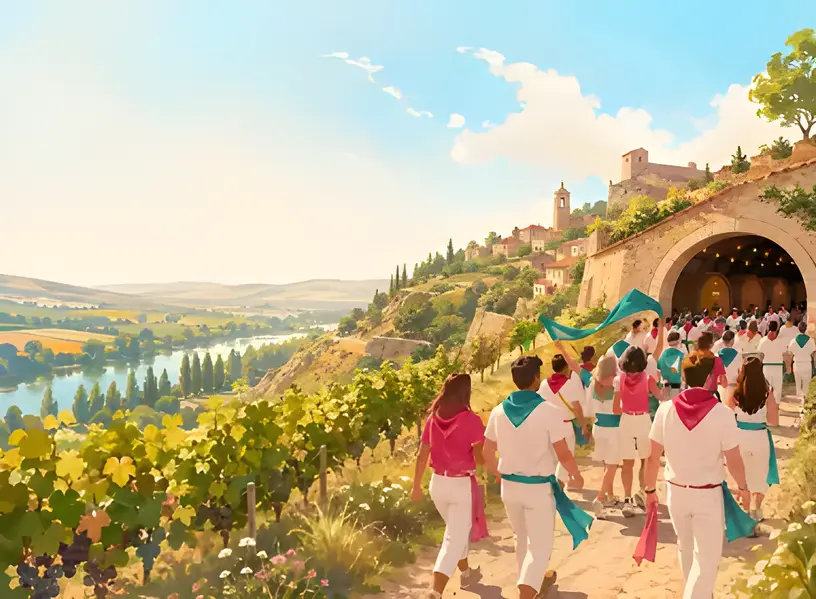
Bajada de las Peñas
in September
The peñas go down to the square all together, each with its own shirt, and from there the Ribera del Duero spends a week in the street.
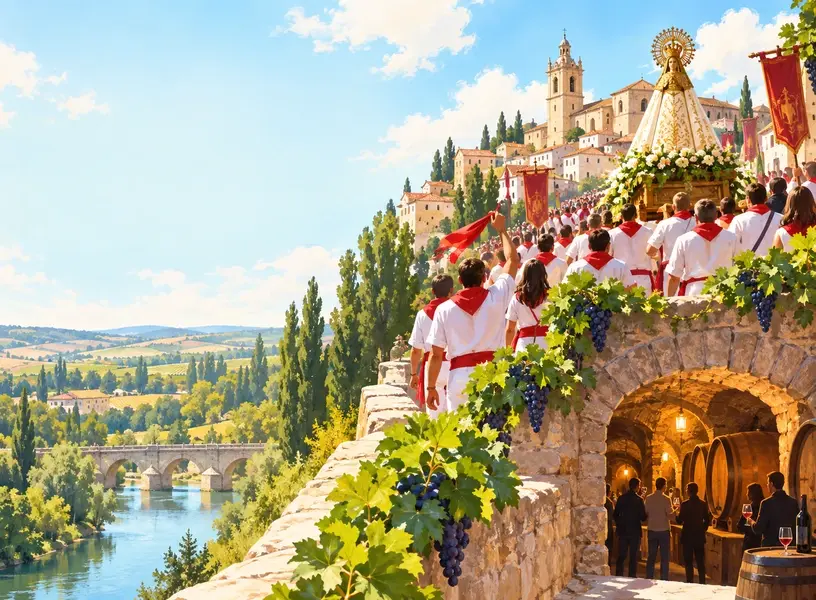
Fiestas de la Virgen de las Viñas
in September
The «bajada de las peñas» opens the week, and people drink Ribera wine in the cellars under the city.
What to see in Aranda de Duero
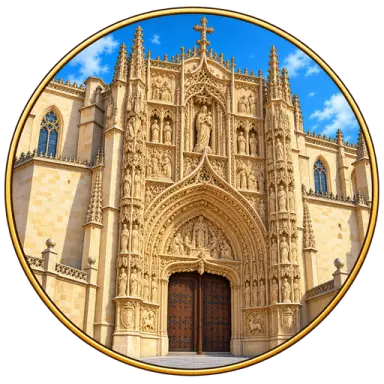
Iglesia de Santa María
The façade is a stone altarpiece, sculpted by Simón de Colonia, the one from Burgos Cathedral.
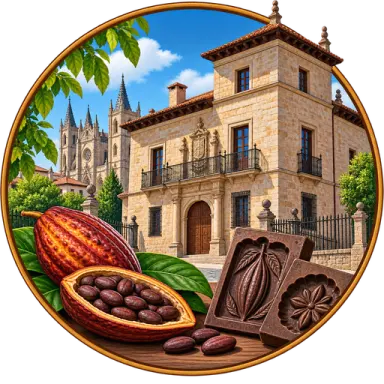
Bodegas subterráneas
Seven kilometres of tunnels twelve metres below the town, dug by hand in the sixteenth century.
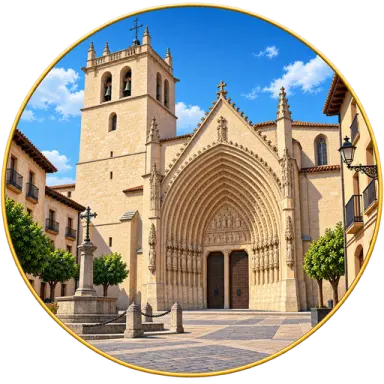
Iglesia de San Juan
The Gothic church where the council of 1473 was held, today a museum of sacred art.
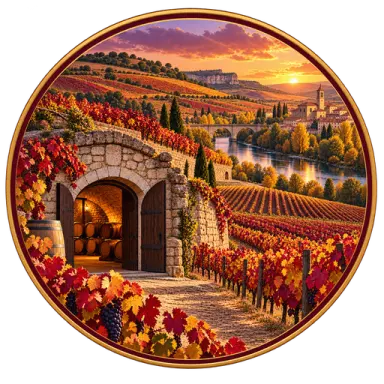
Ribera del Duero
The Tempranillo vineyards along the river, with dozens of wineries that can be visited.
Where Aranda de Duero comes from
Seven kilometres of cellars under your feet
10th century
The village
It was born on the bank of the Duero, in a land repopulated after centuries of being a frontier.
1473
The council
The Council of Aranda is held there, which reforms the Castilian clergy.
16th century
The cellars
Seven kilometres of tunnels are dug under the town to keep the wine cool.
1982 → today
Ribera del Duero
The designation of origin is born, and Aranda becomes its centre.
Want to learn Spanish by travelling across Spain?
In Aula every lesson is a city lighting up on the map — Aranda de Duero is one of them. Two hundred lessons from A1 to C2, free, starting from your level.
Start from Aranda de Duero →