 Aula· Spain, city by city
Castilla y León
Ávila
«Ávila está rodeada por una muralla medieval completa.»Ávila is surrounded by a complete medieval wall.
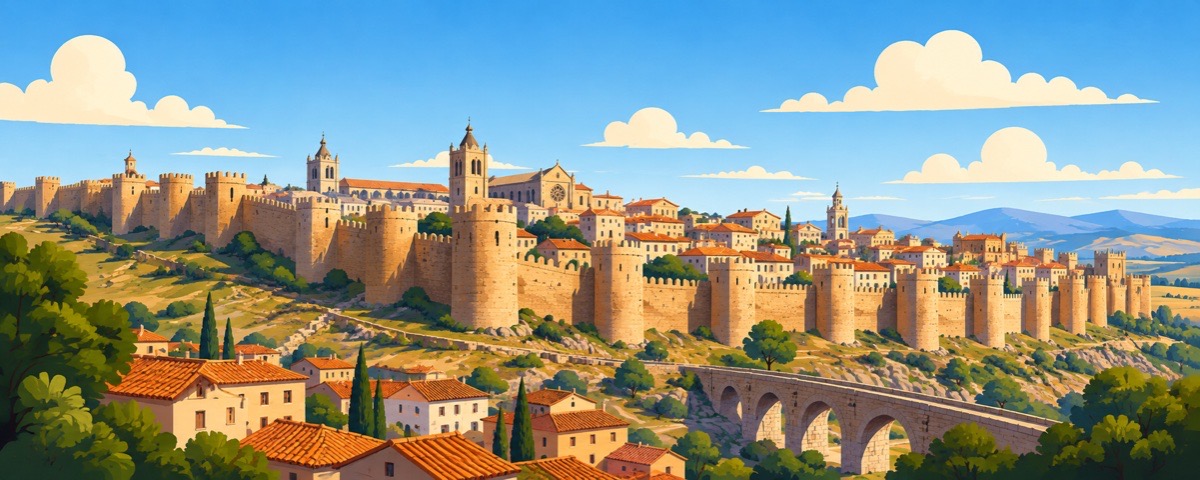
Ávila is the highest provincial capital in Spain, at one thousand one hundred and thirty metres, on the plateau north of the Sierra de Gredos. It is surrounded by a medieval wall two and a half kilometres long with eighty-eight towers, which has remained intact to this day, and inside those walls Saint Teresa was born in 1515.
Did you know
Eighty-eight towers you can walk.
Its medieval walls, over 2.5 kilometres long, boast 88 semicircular towers that can be visited.
How they talk in Ávila
«Abulense» is the demonym you will hear most often for people and products from the city. «Yemas» here is not just «yolks»: it refers to the egg yolk and sugar sweet associated with Santa Teresa.
Everyday life in Ávila
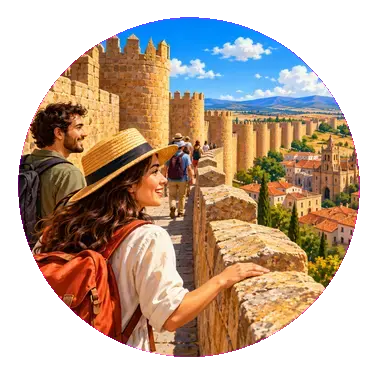
The «muralla» with 88 towers
Two and a half kilometres of intact medieval wall, with eighty-eight towers: you go up with a ticket and walk above the city, and that is what you do when someone comes to visit you.
«Se anda por encima de la muralla.» — You walk on top of the walls.
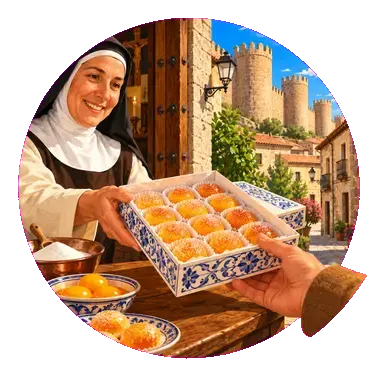
The nuns' «yemas»
Egg yolk and sugar, in soft little balls sold in boxes: they are bought in convents and pastry shops in the centre, and are taken as a gift outside the city.
«Una caja de yemas, por favor.» — A box of yemas, please.
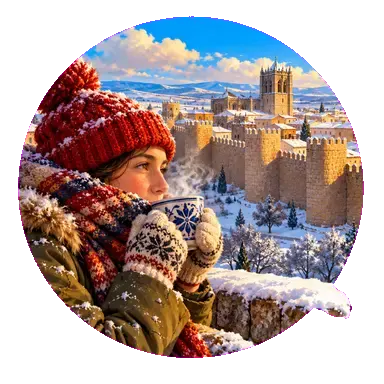
The coldest city in Spain
At 1,130 metres, Ávila is the highest provincial capital in the country: winters are long, below zero for weeks, and this dictates the schedules and clothing.
«Aquí el invierno es largo.» — Here the winter is long.
What to eat in Ávila
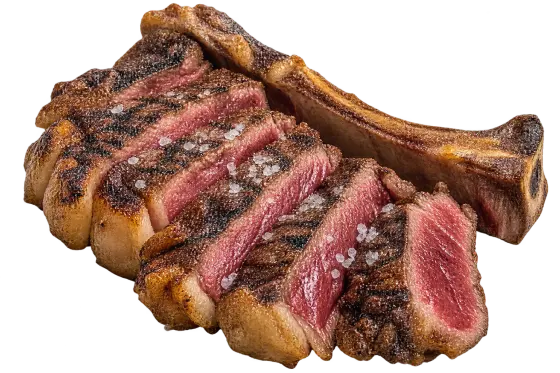
Chuletón de Ávila
Avileño beef rib steak two fingers thick, cooked over embers and served rare.
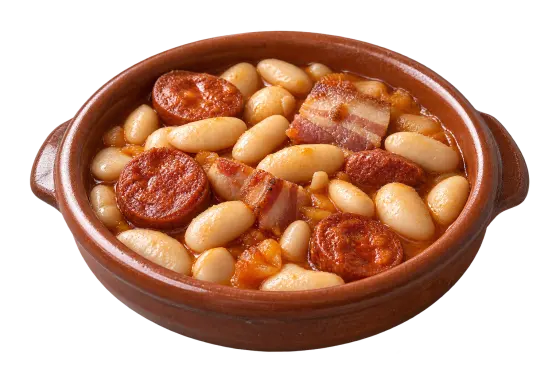
Judías de El Barco
Large white beans with thin skins, cooked with chorizo and bacon.
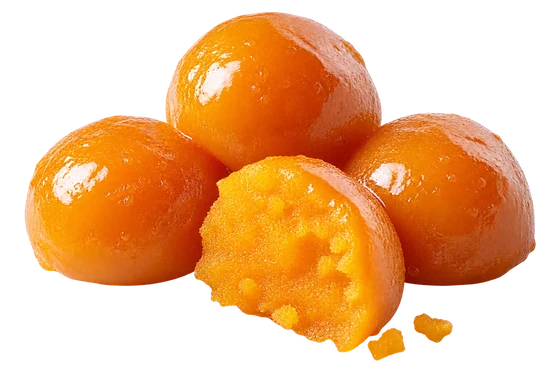
Yemas de Santa Teresa
Small balls of egg yolk and sugar cooked in a bain-marie and rolled in icing sugar.
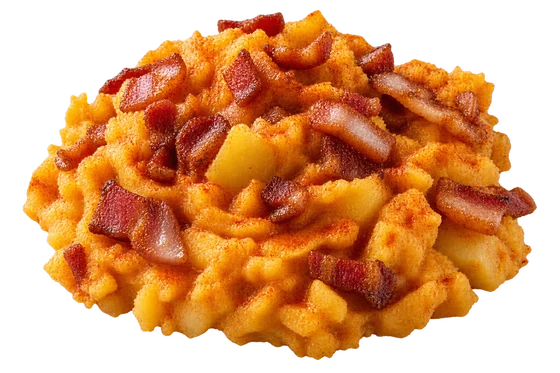
Patatas revolconas
Mashed potatoes with paprika and lard, with crispy «torreznos» on top.
Festivals in Ávila
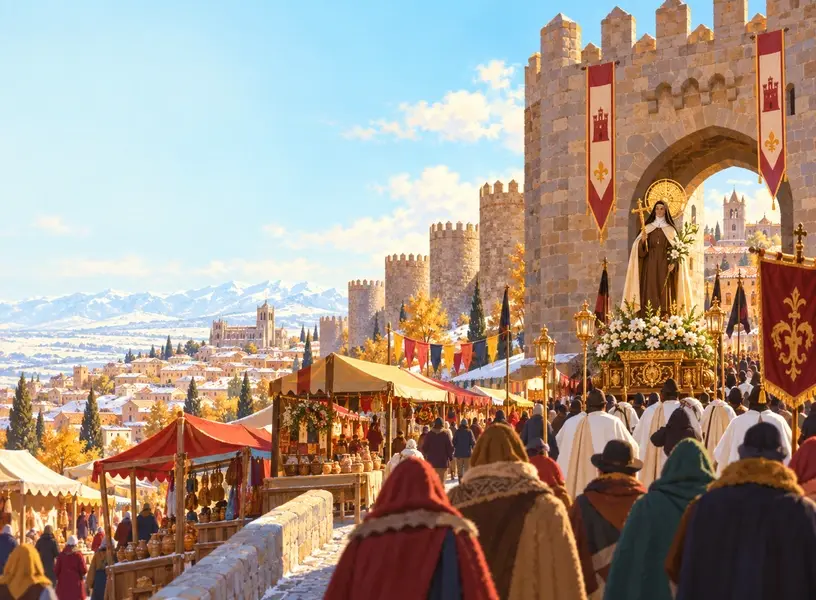
Fiestas de Santa Teresa
around 15 October
The saint leaves the walls in a procession, and the medieval market occupies the centre during the coldest week of autumn.
What to see in Ávila
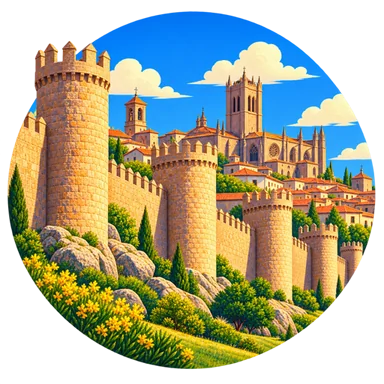
Murallas de Ávila
Two and a half kilometres of enclosed walls, with eighty-eight towers: not one is missing.
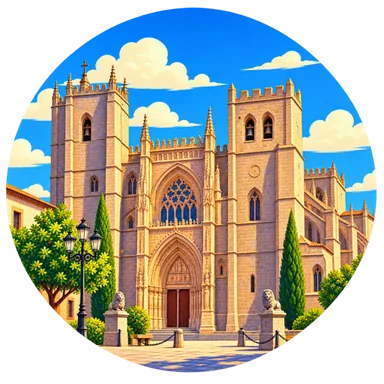
Catedral de Ávila
The cathedral whose apse is also a tower of the walls: it is both a church and a fortress.
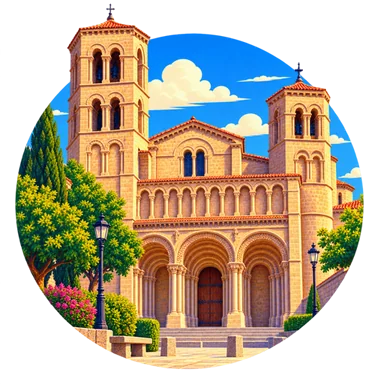
Basílica de San Vicente
Outside the walls, with one of the most beautiful Romanesque portals in Spain.
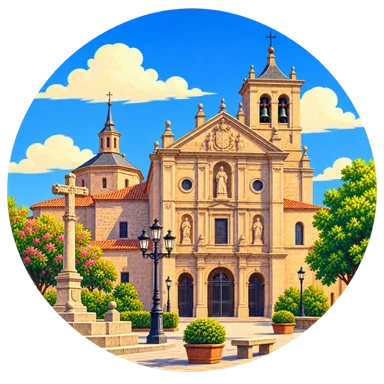
Convento de Santa Teresa
Built over the house where Teresa was born in 1515: her room has become a chapel.
Where Ávila comes from
The walls have not lost a single tower
Roman era
Óbila
Small settlement on the high plateau, at 1,130 metres.
1090
The walls
Raymond of Burgundy repopulates it and begins the city wall that can still be seen today.
1515
Teresa
Teresa de Cepeda y Ahumada is born, who will reform the Carmelites and become Saint Teresa of Ávila.
19th century → today
The high city
It remains a small provincial capital, the highest in Spain.
Born here: Teresa de Jesús, mystic and writer.
Want to learn Spanish by travelling across Spain?
In Aula every lesson is a city lighting up on the map — Ávila is one of them. Two hundred lessons from A1 to C2, free, starting from your level.
Start from Ávila →