 Aula· Spain, city by city
Castilla y León
Burgos
«Burgos es famosa por su impresionante catedral gótica.»Burgos is famous for its impressive Gothic cathedral.
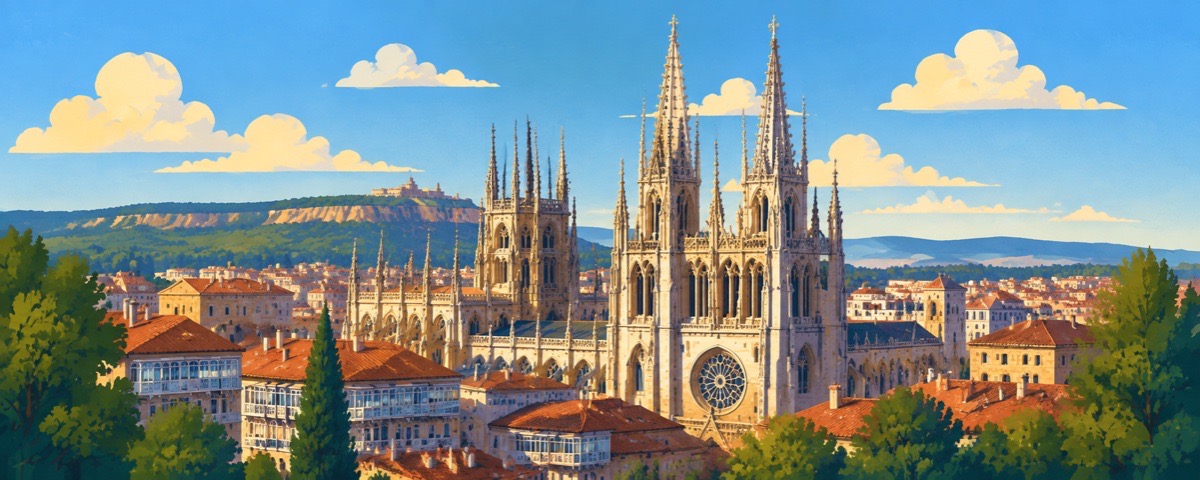
Burgos is on the banks of the Arlanzón, in the north of the Meseta, at an altitude of more than eight hundred metres. It was the capital of Castile and grew wealthy between the thirteenth and sixteenth centuries with the monopoly on wool exports to Flanders: from that wealth comes its Gothic cathedral, the most elaborate in Spain.
Did you know
The only standalone UNESCO Spanish cathedral
The cathedral of Burgos is the only one in Spain to be awarded the title of UNESCO World Heritage site on its own.
How they talk in Burgos
«Morcilla de arroz» here is not a secondary variant but the local model par excellence. The Camino de Santiago makes the vocabulary of «peregrinos», «albergues» and «credencial» common even in the life of the centre.
Everyday life in Burgos
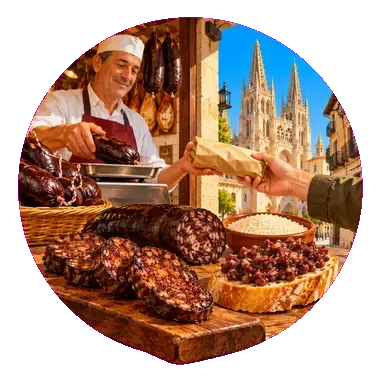
The «morcilla» with rice
The black pudding of Burgos is made with rice, not bread, and is eaten fried in slices or spread raw: it is bought in the butcher's shop by weight, and is the gift you bring from here.
«Media de morcilla, por favor.» — Half a kilo of morcilla, please.
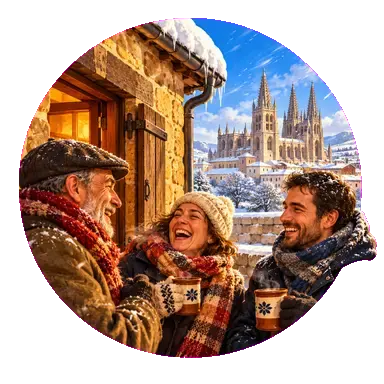
The cold that is spoken of in a proverb
At more than eight hundred metres, the winter is long and windy, and the people of Burgos say it laughing: «nueve meses de invierno y tres de infierno». Houses are built for that.
«Nueve meses de invierno y tres de infierno.» — Nine months of winter and three of hell.
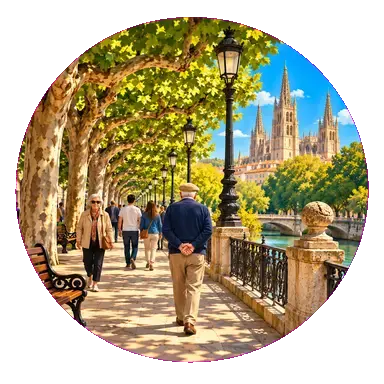
The «Espolón» for a walk
The tree-lined promenade along the river, with plane trees pruned into squares, is the place where people walk before lunch: there are those who have done it every day at the same time for decades.
«Damos el paseo antes de comer.» — We go for a walk before eating.
What to eat in Burgos
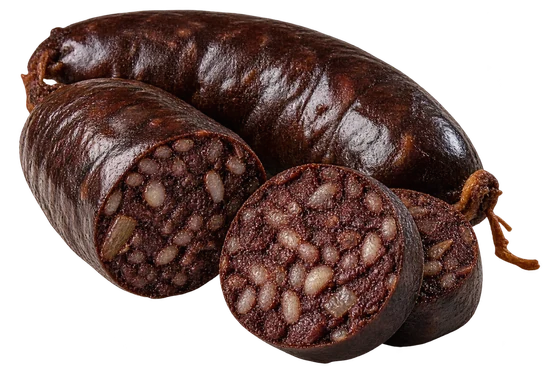
Morcilla de Burgos
Black pudding with rice inside, which is sliced and fried in a pan until it crumbles.
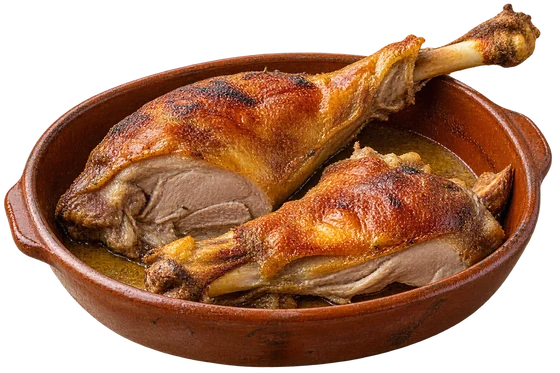
Lechazo asado
Milk-fed lamb cooked in a wood-fired oven in an earthenware dish, with water and salt and nothing else.
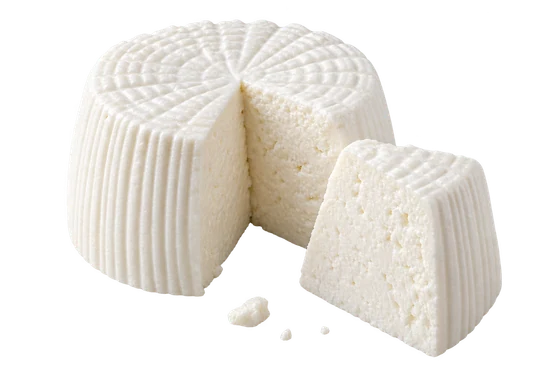
Queso de Burgos
Fresh sheep's milk cheese, white and unsalted, which is eaten with honey or walnuts.
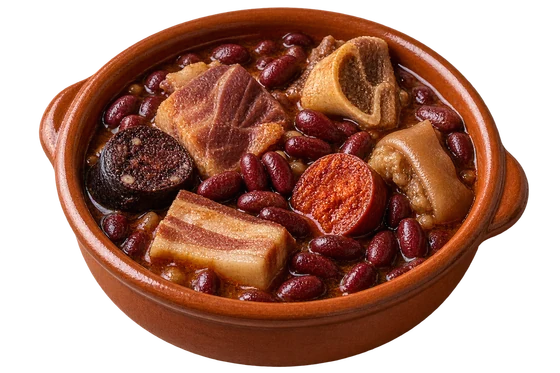
Olla podrida
Red beans from Ibeas cooked for a long time with parts of the pig: the province's winter dish.
Festivals in Burgos
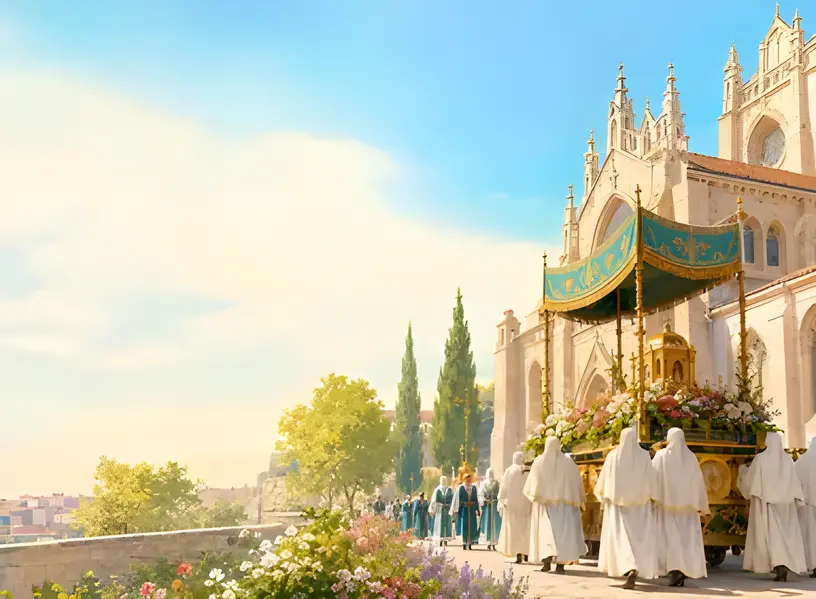
Curpillos
the Friday after Corpus Christi
People go out to the Las Huelgas monastery with the banner taken at Las Navas de Tolosa, and eat on the grass: it is the oldest festival in the city.
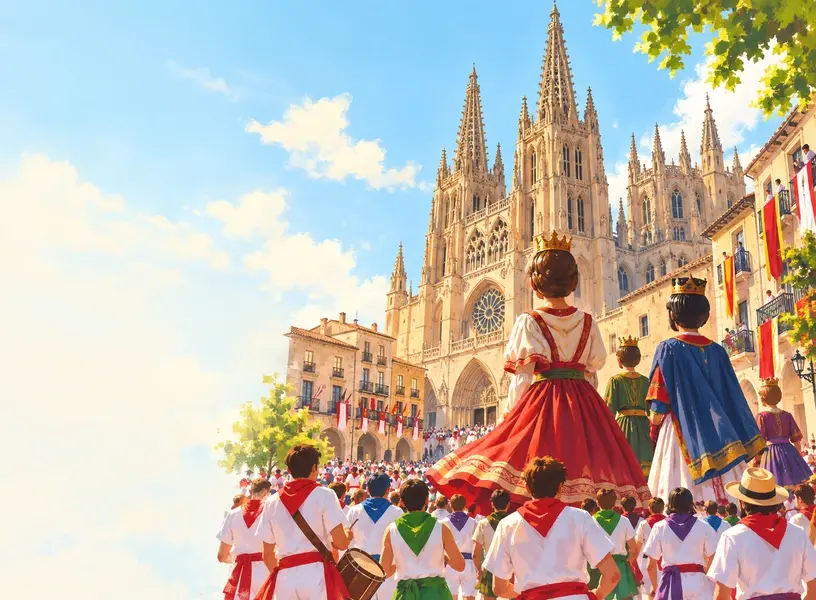
Fiestas de San Pedro y San Pablo
the week of 29 June
The «gigantillos» dance in the square and the peñas parade in their shirts: it is the week when the city finally warms up.
What to see in Burgos
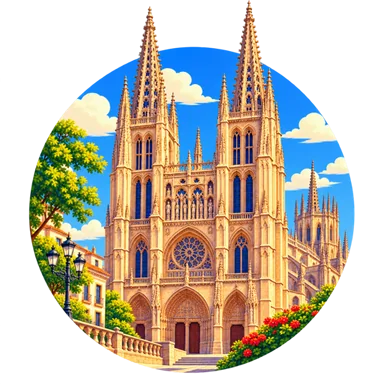
Catedral de Burgos
The only Spanish cathedral declared a World Heritage Site on its own, without the surrounding historic centre.
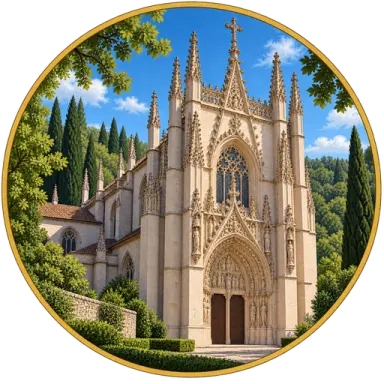
Cartuja de Miraflores
The monastery outside the city, with the star-shaped tomb of Isabella the Catholic's parents.
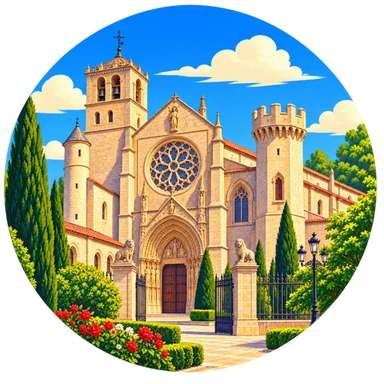
Monasterio de las Huelgas
The Cistercian monastery of the abbesses who answered only to the Pope.
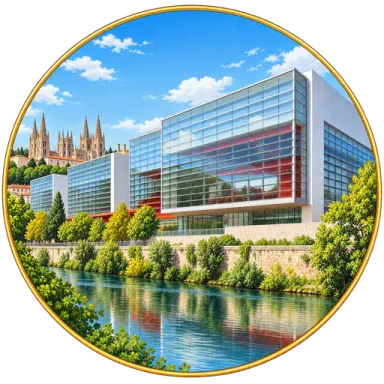
Museo de la Evolución Humana
The fossils of Atapuerca, the oldest in Europe, found twenty kilometres from here.
Where Burgos comes from
The capital of wool
884
The foundation
Diego Rodríguez Porcelos fortifies the hill to hold the border against the Muslims.
11th century
The capital
It becomes the capital of Castile; from here the Cid leaves for exile.
13th–16th century
Wool
The monopoly on wool exports to Flanders makes it very rich: the cathedral is born.
1936–1939
The war
It is the capital of Francoist Spain for the duration of the civil war.
Want to learn Spanish by travelling across Spain?
In Aula every lesson is a city lighting up on the map — Burgos is one of them. Two hundred lessons from A1 to C2, free, starting from your level.
Start from Burgos →