 Aula· Spain, city by city
Castilla y León
Soria
«Soria está muy cerca de las ruinas de Numancia.»Soria is very close to the ruins of Numantia.
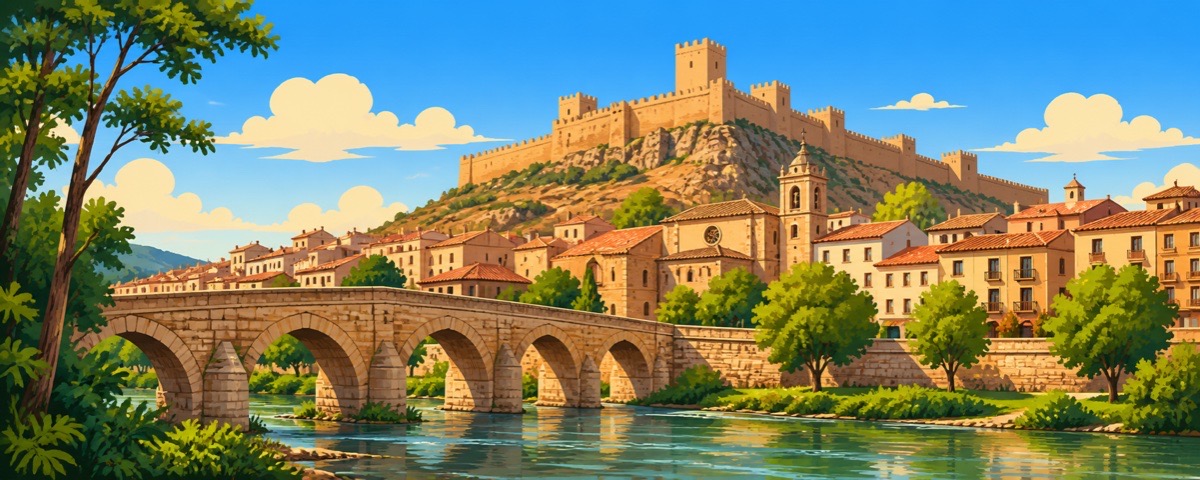
Soria is the least populated provincial capital in Spain, at the ford of the Duero at an altitude of one thousand metres, surrounded by pine forests. A few kilometres away are the ruins of Numantia, and the city is linked to Antonio Machado, who taught French there and wrote "Campos de Castilla".
Did you know
Among Europe's most empty provinces.
It is one of the least inhabited provinces in Europe, a true refuge of peace and untouched nature.
How they talk in Soria
«Torrezno» is an essential gastronomic word and has its own guarantee of origin in the province. The Sorian Castilian preserves pastoral lexicon linked to the tradition of transhumance.
Everyday life in Soria
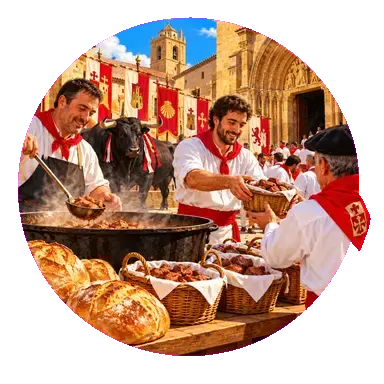
The «Sanjuanes» with bulls and bread
During the June festivals the twelve brotherhoods buy and cook the bull, and the meat is distributed to members in baskets: each cuadrilla has its own ritual, and you belong to one by family.
«¿De qué cuadrilla eres?» — Which cuadrilla are you from?
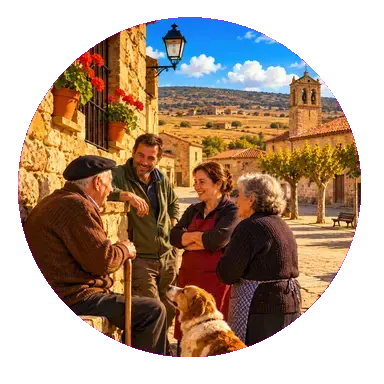
The «España vaciada» starts here
Soria has one of the lowest population densities in Europe, and in the city of forty thousand almost everyone knows each other: the surrounding villages have tens of inhabitants, not thousands.
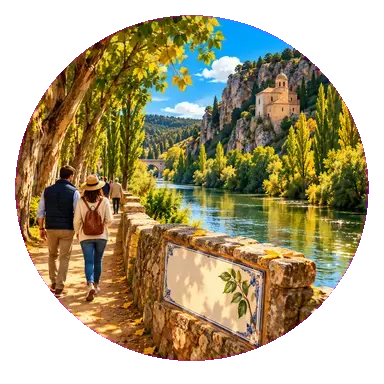
The «Duero» with Machado's poplars
The river passes under San Saturio with tree-lined banks, and Machado's verses are on plaques along the path: the walk to the hermitage is done on Sunday.
What to eat in Soria
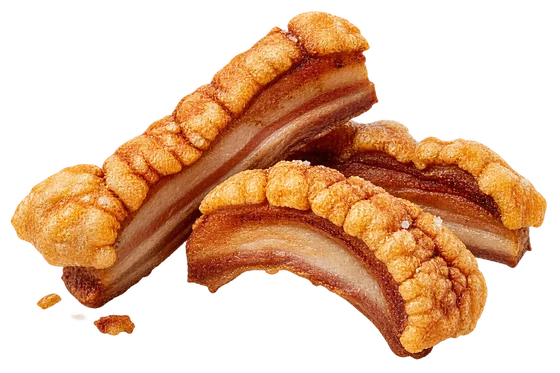
Torreznos de Soria
Cured pork rind fried until it puffs up and becomes like glass.
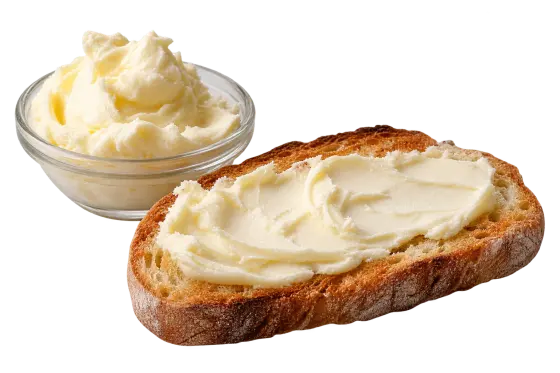
Mantequilla de Soria
Butter whipped with sugar, plain or sweet, which is spread on toasted bread.
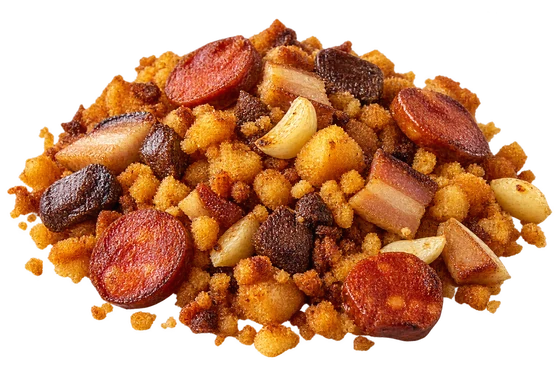
Migas de pastor
Stale bread soaked and sautéed with garlic and bacon until it crumbles.
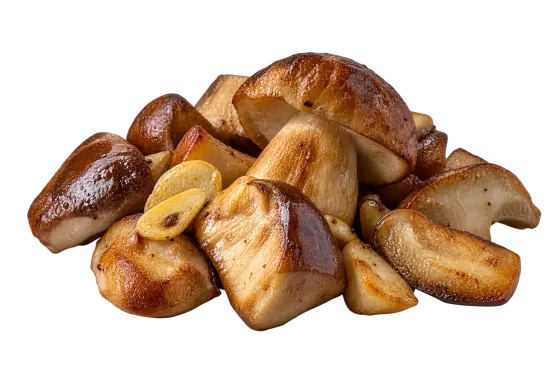
Setas de Soria
Mushrooms from the pine forests of the province, sautéed with garlic or put in meat.
Festivals in Soria
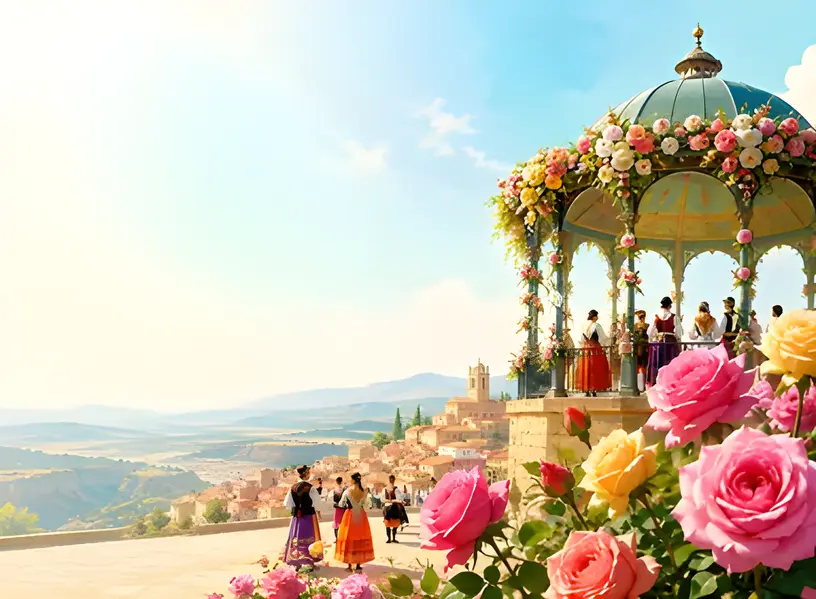
Fiestas de San Juan
the week after 24 June
The twelve «cuadrillas» buy and cook the bull, and in the Saca it is brought down from Valonsadero crossing the river.
What to see in Soria
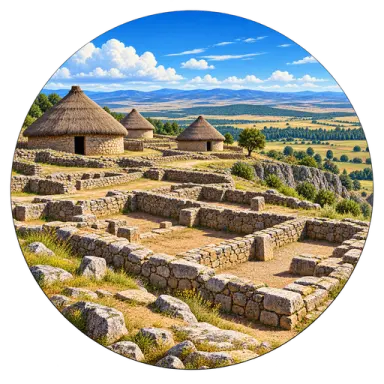
Numancia
The Celtiberian city that resisted Rome for twenty years and burned itself rather than surrender.
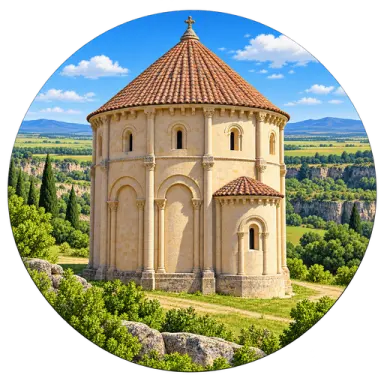
San Juan de Duero
A roofless cloister with four different types of arch, one per side, and two are Arab.
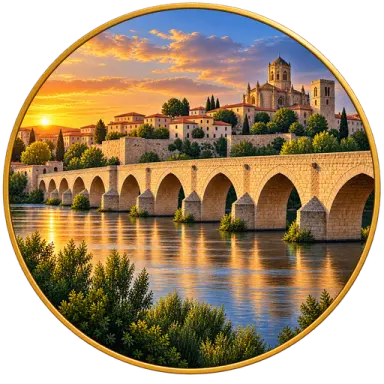
Concatedral de San Pedro
Gothic church with a Romanesque cloister, the only piece left of the ancient building.
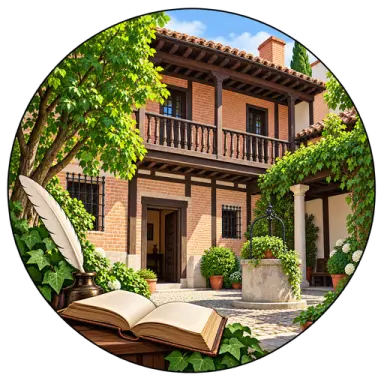
Alameda de Cervantes
The park that Machado walked through every day, with his poems engraved along the paths.
Where Soria comes from
Above the ruins of Numancia
2nd century BC
Numancia
Seven kilometres away, the Celtiberian city that resisted Rome for twenty years and finally set itself on fire.
12th century
The repopulation
Alfonso I of Aragon repopulates it at the ford of the Duero.
16th century
Wool
Transhumance and the Mesta make it rich; then the decline, lasting three centuries.
1907–1912
Machado
Antonio Machado teaches French there and writes «Campos de Castilla».
Want to learn Spanish by travelling across Spain?
In Aula every lesson is a city lighting up on the map — Soria is one of them. Two hundred lessons from A1 to C2, free, starting from your level.
Start from Soria →