 Aula· Spain, city by city
Cataluña
Badalona
«Badalona es una ciudad costera vecina de Barcelona con playa.»Badalona is a coastal city next to Barcelona with a beach.
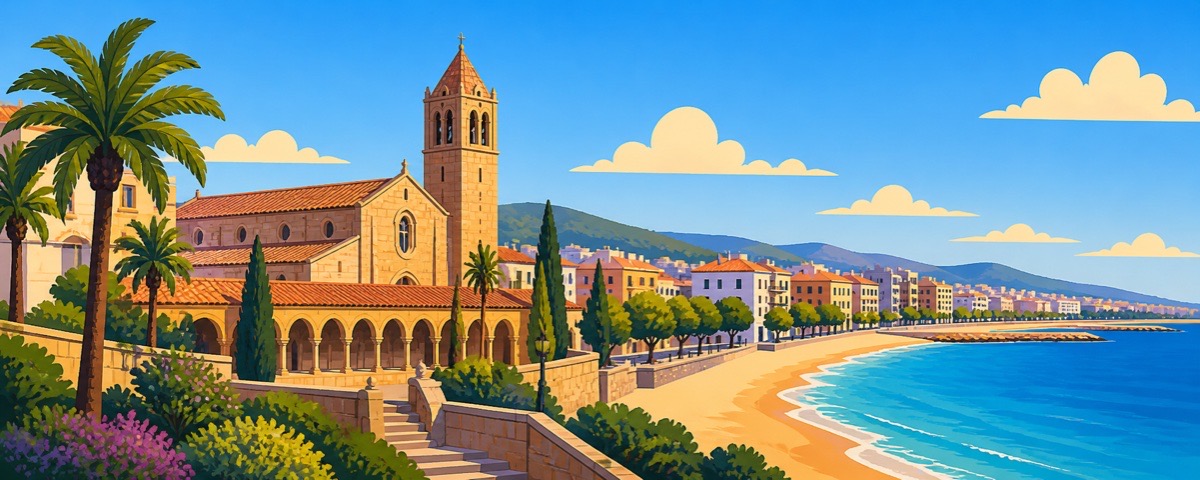
Badalona is located just north of Barcelona, of which it is now a continuation, with five kilometres of beach. It was the Roman city of Baetulo, whose remains—streets, thermal baths, and cellars—can be visited under the main square, and in the nineteenth century it became an industrial centre for glass and spirits.
Did you know
An oil pier turned into promenade.
The famous Pont del Petroli was originally a pier for unloading petroleum products before becoming a seaside promenade.
How they talk in Badalona
«Baetulo» is the Roman name that recurs in the city and in the museums. Catalan-Castilian bilingualism is very strong and often people switch languages within the same conversation.
déu-n'hi-do
Not bad; quite something; truly remarkable. Interjection or adverb to express surprise, admiration, importance, or a considerable quantity.
Everyday life in Badalona
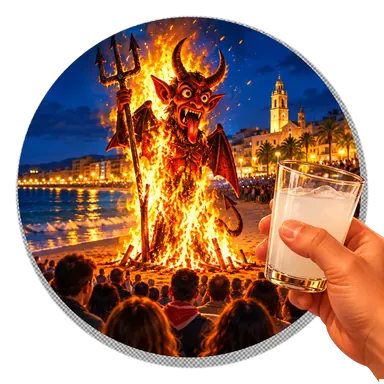
The «Cremà del Dimoni» on 10 May
On the night of Saint Anastasius, a statue of a devil is burned on the beach in front of tens of thousands of people, and while it burns, aniseed is drunk. It is the festival that the people of Badalona do not miss.
«El diablo se quema en la playa.» — The devil is burned on the beach.
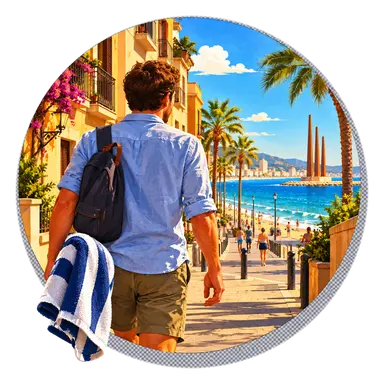
The «platja» behind the last street
The sea begins where the last street ends, and people go there for a swim after work. In summer the seafront is the city's living room, and you can get there on foot with your towel.
«Me bajo a la playa al salir de trabajar.» — I go down to the beach after work.
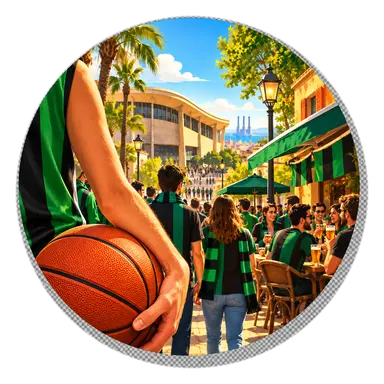
The «Joventut» at the Olímpic
The basketball team is one of the most successful in Spain and the arena is inside the city: on match nights the bars around it fill up with people in green and black.
What to eat in Badalona
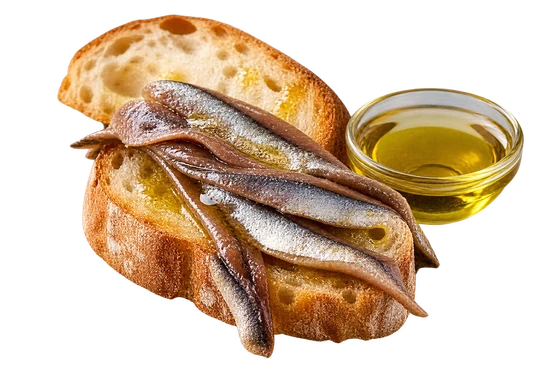
Anxoves de Cadaqués
Salted anchovies cleaned by hand, served with bread, oil and tomato.
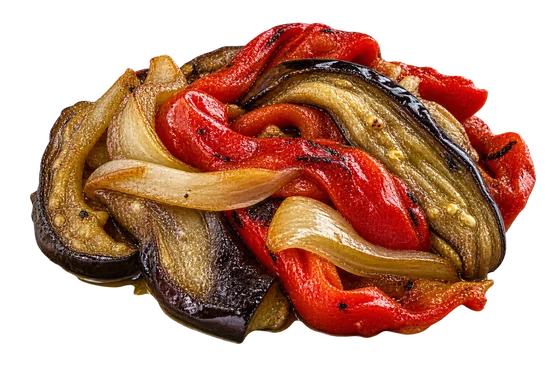
Escalivada
Peppers, aubergines and onions roasted whole, peeled by hand and dressed with oil.
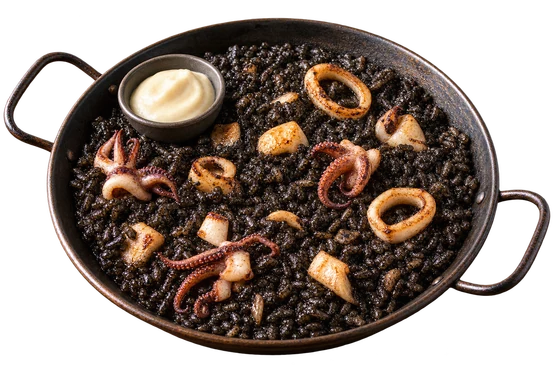
Arròs negre
Rice with squid ink, with alioli on the side.
Festivals in Badalona
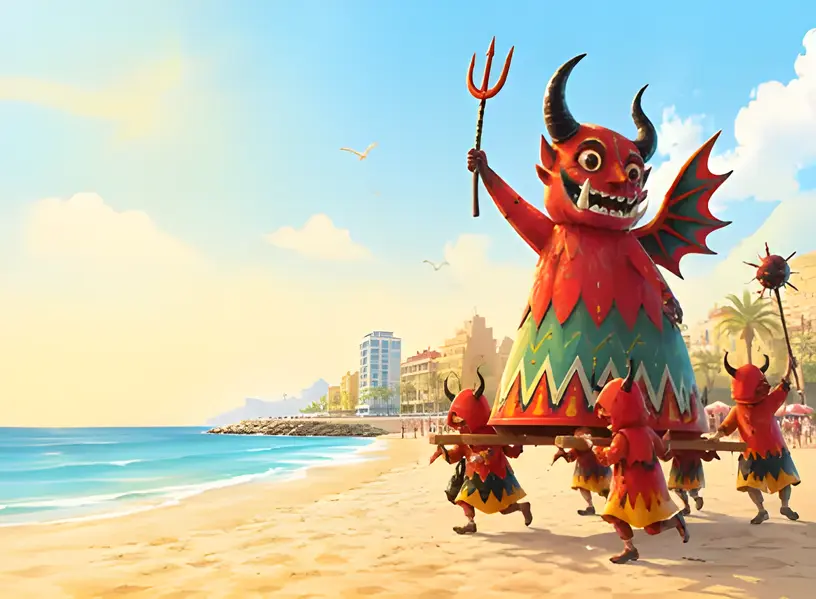
Cremada del Dimoni
10 May
At midnight a devil as tall as a house is burned on the beach, and the whole city watches from the seafront.
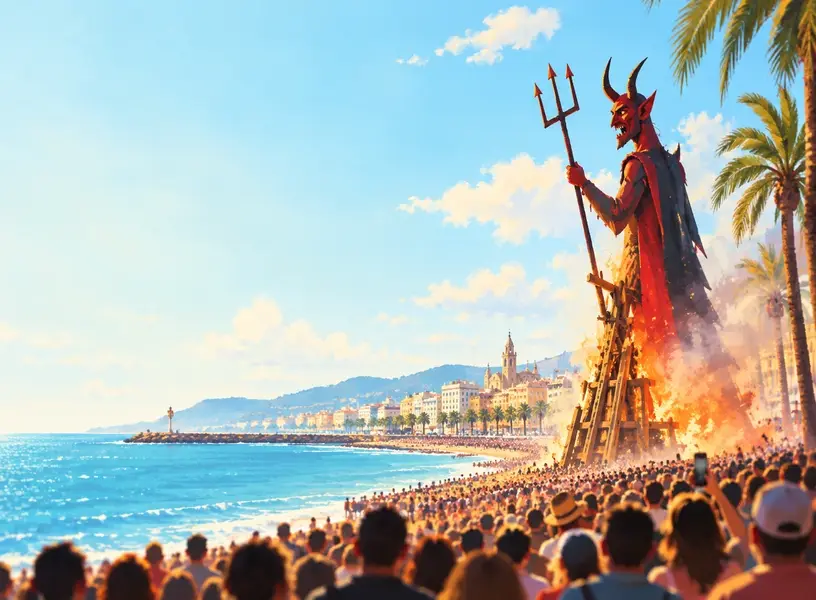
Festes de Maig
10 May
On the night of Saint Anastasius a devil several metres tall is burned on the beach, in front of tens of thousands of people.
What to see in Badalona
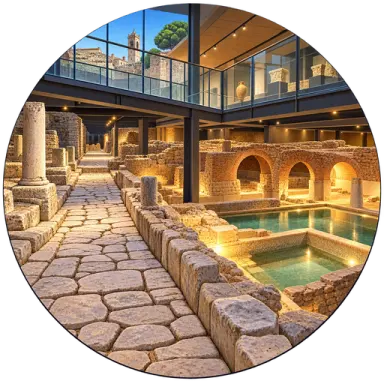
Museu de Badalona
Under the square there is an entire Roman city: streets, thermal baths and cellars, which you can walk through.
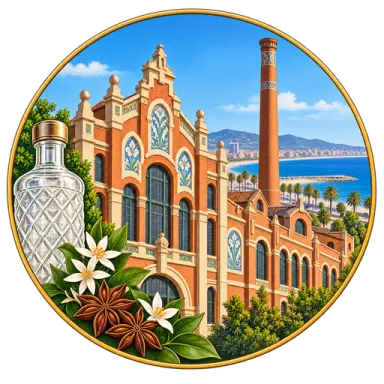
Fàbrica Anís del Mono
The 1870 modernist liquor factory, with the monkey on the label.
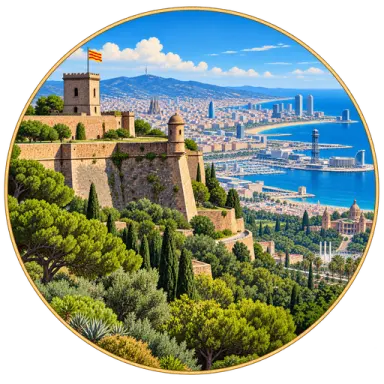
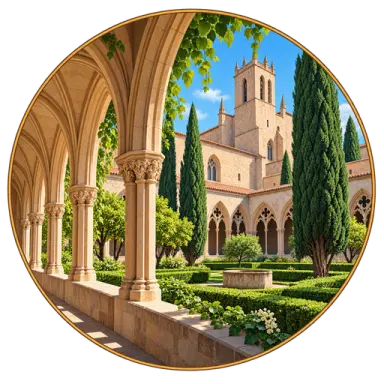
Monestir de Sant Jeroni de la Murtra
Gothic monastery in the valley above the city, where the Catholic Monarchs received Columbus.
Platja de Badalona
Five kilometres of city beach, with the pier and the promenade.
Where Badalona comes from
A Roman city under the square
100 BC
Baetulo
Roman city founded on the Via Augusta, with thermal baths and the decumanus.
Middle Ages
The village
The centre moves towards the hill; the memory of the Roman city is lost.
19th century
The industry
Glass, textiles and liquors: the Anís del Mono factory dates back to 1870.
1930 → today
The city
The growth of Barcelona joins it to the capital: today they are connected.
Want to learn Spanish by travelling across Spain?
In Aula every lesson is a city lighting up on the map — Badalona is one of them. Two hundred lessons from A1 to C2, free, starting from your level.
Start from Badalona →