 Aula· Spain, city by city
Cataluña
Barcelona
«Barcelona es famosa por la Sagrada Familia de Antoni Gaudí.»Barcelona is famous for the Sagrada Família by Antoni Gaudí.
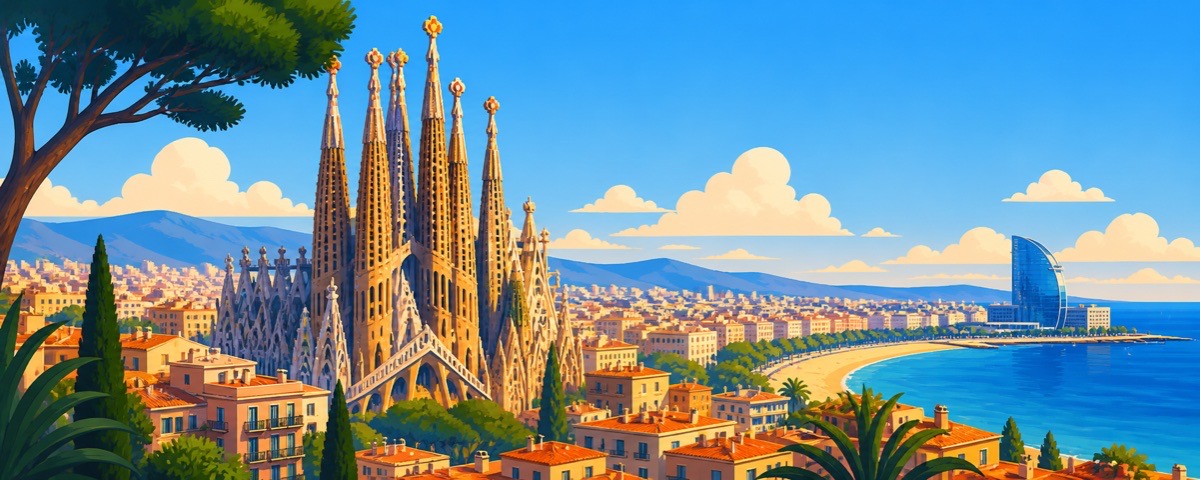
Barcelona is the capital of Catalonia and the second most populous Spanish city, squeezed between the sea and the hill of Montjuïc. The historic centre preserves the layout of the Roman colony from which it was born, while all around it extends the Eixample, the nineteenth-century grid by Cerdà where almost all the modernist buildings are located.
Did you know
Permit arrived 137 years late.
The Sagrada Família has only had regular building permits since 2019, issued by the municipality 137 years after work began.
How they talk in Barcelona
Catalan and Castilian are both everyday languages; «bon dia», «merci» and «adeu» are heard continuously. Barcelonese Catalan belongs to the eastern block and reduces many unstressed vowels, for example «Barcelona» sounds with more neutral vowels compared to the spelling.
déu-n'hi-do
Not bad; quite something; truly remarkable. Interjection or adverb to express surprise, admiration, importance, or a considerable quantity.
Everyday life in Barcelona
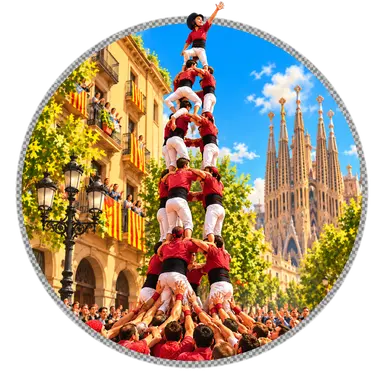
The «castellers» in the square
Neighbourhood groups build human towers of eight or nine storeys, and a child with a helmet climbs to the top. They practise in the gym all year round and assemble during street festivals, with people around acting as a base.
«¿Vamos a ver los castellers?» — Shall we go see the castellers?
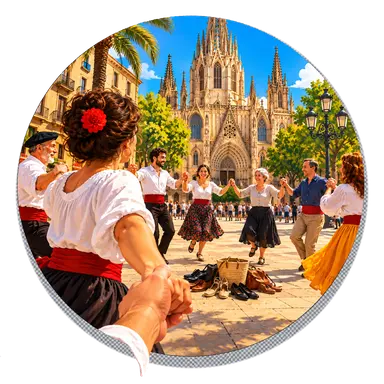
The «sardana» in front of the cathedral
On Sunday at noon people dance in a circle, holding hands, anyone can join between two people. Shoes and bags are placed in the centre of the circle, and the number of steps must be counted.
«¿Sabes bailar la sardana?» — Do you know how to dance the sardana?
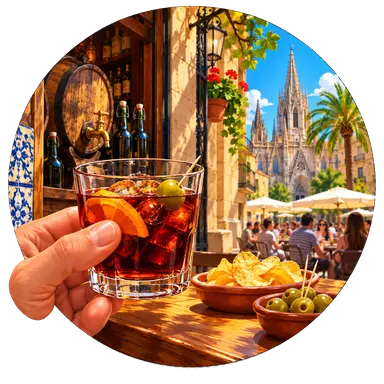
The «vermut» on Saturday at noon
Before lunch people go out to drink vermouth with crisps and olives, sitting outside. In the old neighbourhoods there are still bodegas that tap it from the barrel into reused glass bottles.
«Fem el vermut?» — Shall we have a vermut?
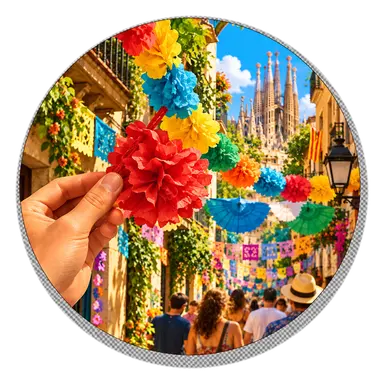
The «festes de barri» all summer
Each neighbourhood has its own festival week, with streets decorated by residents competing with each other: those in Gràcia, in August, cover entire blocks with handmade paper decorations.
«Este año Gràcia está increíble.» — This year Gràcia is incredible.
What to eat in Barcelona
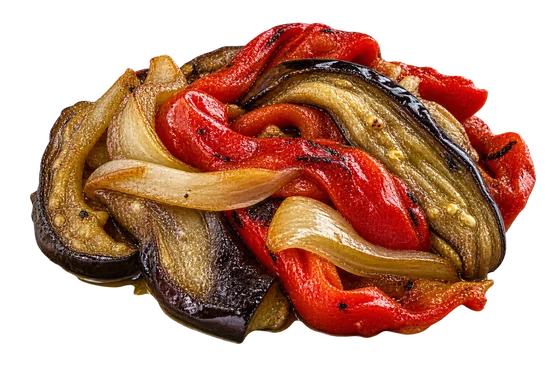
Escalivada
Peppers, aubergines and onions roasted whole on the embers, peeled by hand and dressed with oil.
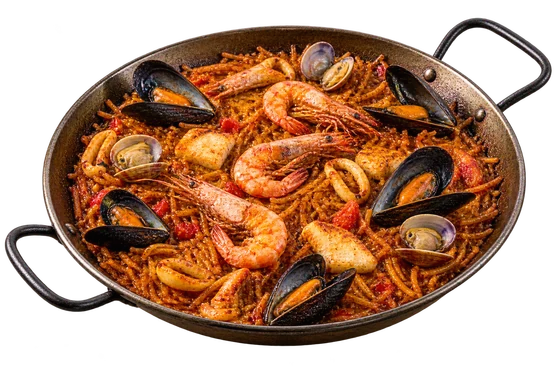
Fideuà
Like paella but with short vermicelli instead of rice, with fish and seafood.
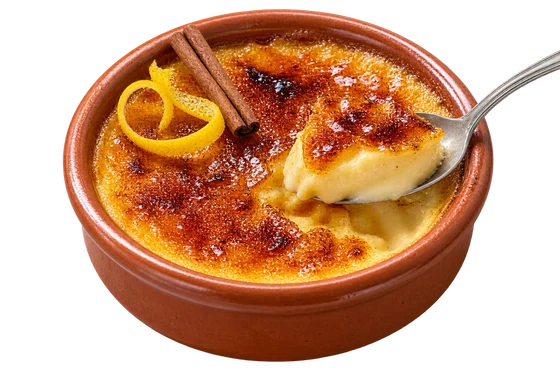
Crema catalana
Egg yolk and milk cream flavoured with lemon and cinnamon, with sugar burnt on top with an iron.
Festivals in Barcelona
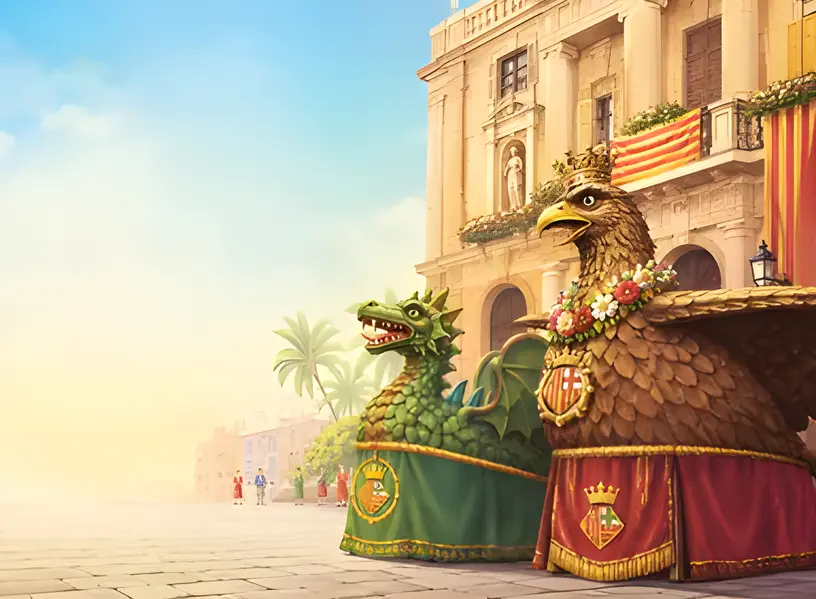
La Mercè
the days around 24 September
The city's big festival: the castellers climbing on each other, the giants, the «correfoc» of the devils with sparks, and the final fireworks on Barceloneta.
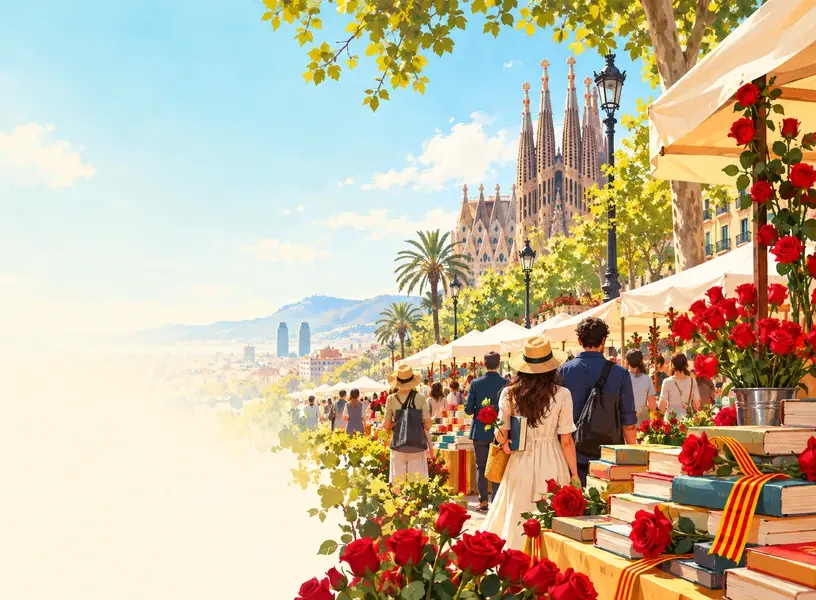
Diada de Sant Jordi
23 April
People give each other a rose and a book: the streets fill with stalls for a day.
What to see in Barcelona
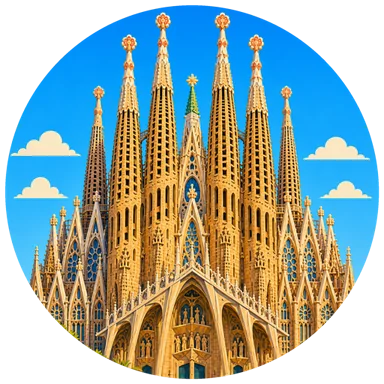
Sagrada Família
Gaudí's basilica, begun in 1882 and still under construction, with three facades from three different eras.
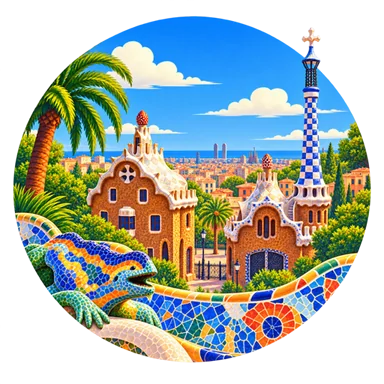
Park Güell
Gaudí's park on the hill, with the undulating bench covered in broken ceramic put back together.
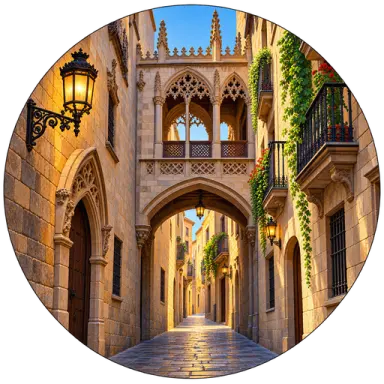
Barri Gòtic
The medieval quarter built over the plan of Roman Barcino.
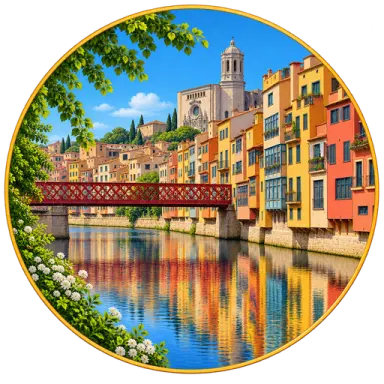
Montjuïc
The hill above the port, with the castle, the Miró Foundation and the magic fountain at its feet.
Where Barcelona comes from
From Roman colony to global city
1st century BC
Barcino
Roman colony founded under Augustus: the square plan of the Barri Gòtic is still its own.
8th–12th century
The county
It passes to the Muslims and then to the Franks; the county of Barcelona is born.
13th–15th century
The capital of the sea
Maritime capital of the crown of Aragon: the Drassanes and Santa Maria del Mar are built.
1888–1929
The exhibitions
Two universal exhibitions give it the Ciutadella, Montjuïc and modernism.
1992
The Games
The Olympics open the city to the sea, which until then was closed off by railways and warehouses.
Born here: Joan Miró, artist.
Want to learn Spanish by travelling across Spain?
In Aula every lesson is a city lighting up on the map — Barcelona is one of them. Two hundred lessons from A1 to C2, free, starting from your level.
Start from Barcelona →