 Aula· Spain, city by city
Cataluña
Sitges
«Sitges es famosa por su festival internacional de cine fantástico.»Sitges is famous for its international fantastic film festival.
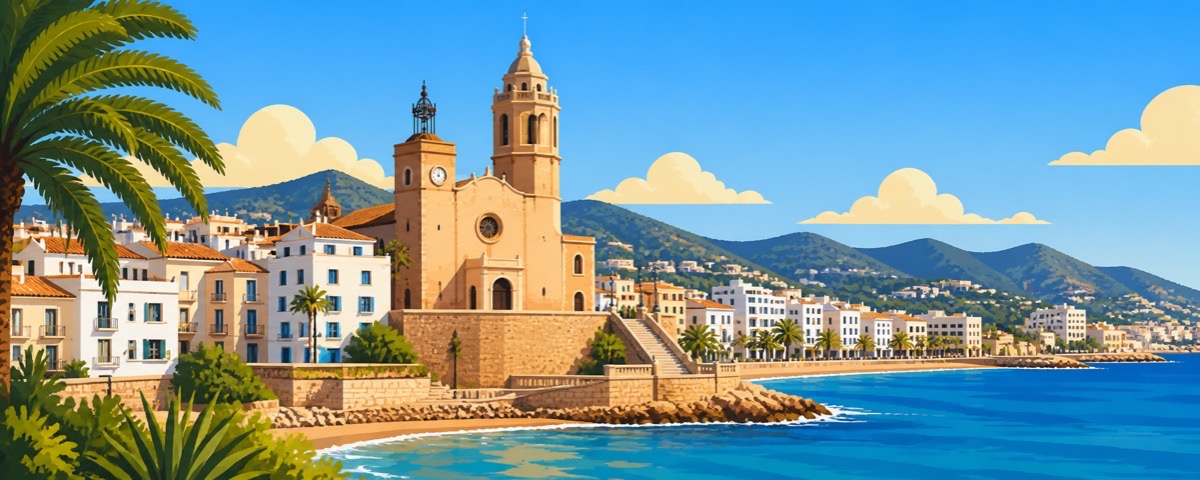
Sitges is located on the coast thirty-five kilometres south of Barcelona, in a bay enclosed by the Garraf massif. In the nineteenth century, it was enriched by those returning from Cuba, and at the end of that century, Santiago Rusiñol made it the place where Catalan modernism was born.
Did you know
Fishermen's houses bought by painter.
The painter Santiago Rusiñol transformed Sitges into the capital of Catalan modernism by purchasing and joining old fishermen's houses.
How they talk in Sitges
«Xató» and «xatonada» are culinary terms that appear frequently during the cold season. Catalan and Castilian coexist, with a strong international presence due to tourism and the resident foreign community.
déu-n'hi-do
Not bad; quite something; truly remarkable. Interjection or adverb to express surprise, admiration, importance, or a considerable quantity.
Everyday life in Sitges

The fantastic film festival
In October the town fills with horror and science fiction screenings, with people dressed as monsters in the streets. It is the most important genre festival in Europe and has been running since 1968.
«El festival de cine es en octubre.» — The film festival is in October.
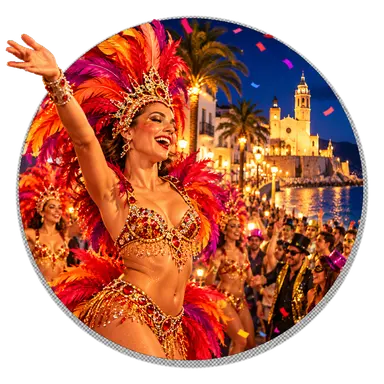
The two-week «Carnaval»
The Sitges carnival is one of the largest in Spain and one of the most liberal: night parades, elaborate costumes and venues open until morning. The town's population multiplies by ten.
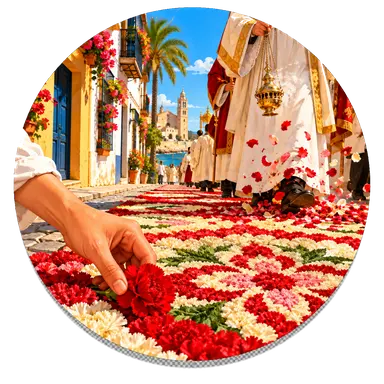
The «Corpus» of flowers on the ground
In June the streets of the centre are covered in carpets of carnations designed by hand by the neighbours, who work all night. Then the procession passes over them and destroys them.
«Las calles están cubiertas de flores.» — The streets are covered with flowers.
What to eat in Sitges
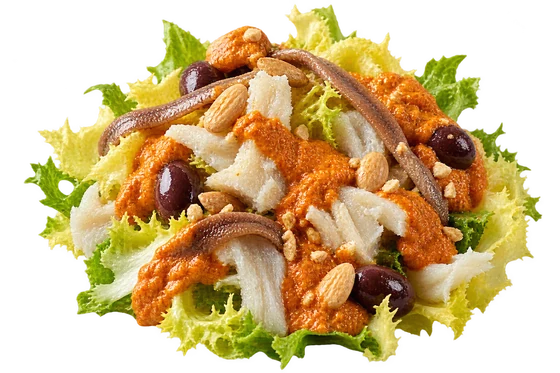
Xató
Escarole salad with salt cod, tuna and anchovies, with almond and ñora pepper sauce. Here it is a town festival.
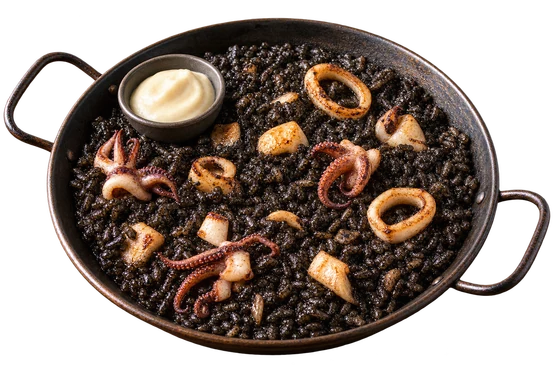
Arròs negre
Squid ink rice, dark and glossy, with alioli on the side.
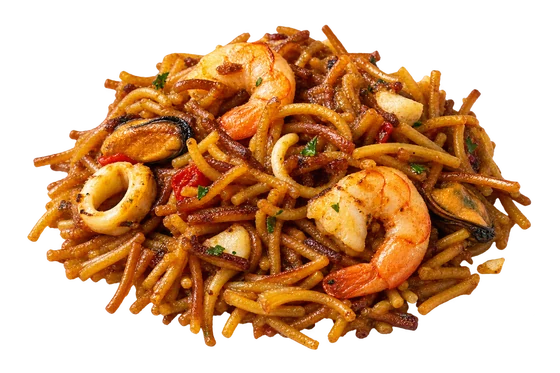
Fideus rossejats
Short toasted pasta cooked in fish stock, served dry.
Festivals in Sitges
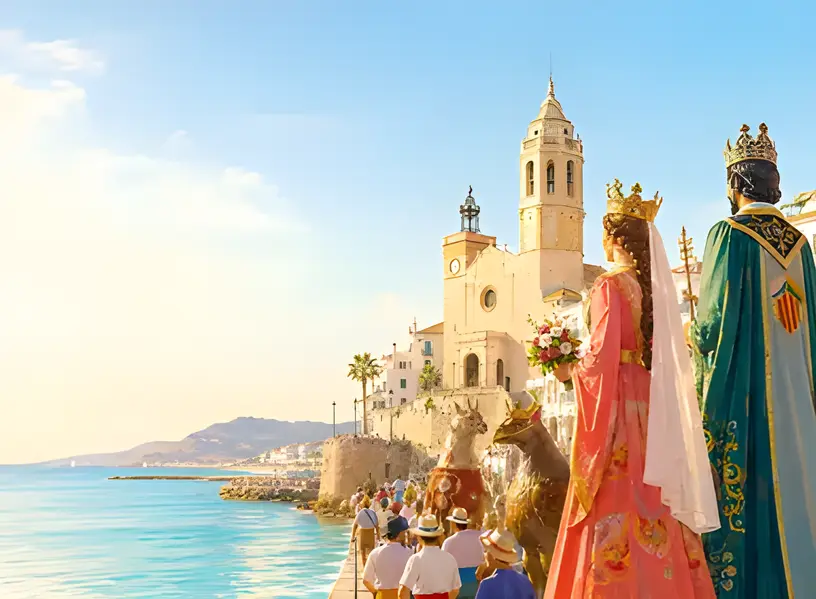
Carnaval de Sitges
between February and March
Two weeks of night parades and elaborate costumes: the town's population multiplies by ten.
What to see in Sitges
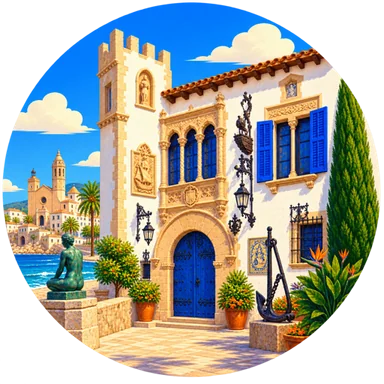
Museu Cau Ferrat
The house-studio of Santiago Rusiñol, where Catalan modernism began to exist.
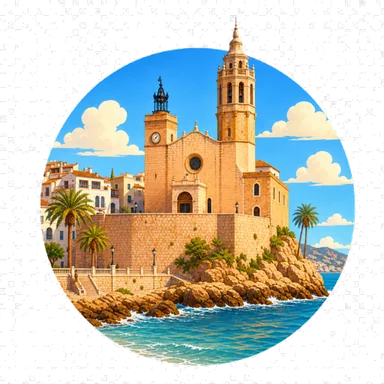
Església de Sant Bartomeu i Santa Tecla
The church on the cliff between the two beaches: it is the town's postcard.
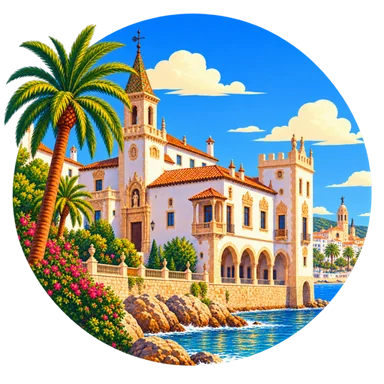
Palau Maricel
A palace overlooking the sea, built around an old medieval hospital.
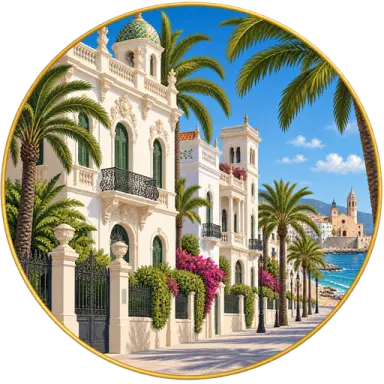
Cases dels americanos
The colonial houses of those who returned rich from Cuba, with verandas and light colours.
Where Sitges comes from
The town that invented modernism
Middle Ages
The castle
A fishing village around the fortress on the sea, below the castle.
19th century
The «americanos»
Those who return rich from Cuba build the colonial houses on the seafront.
1892
Rusiñol
Santiago Rusiñol buys two fishermen's houses and turns them into the Cau Ferrat: Catalan modernism begins.
20th century → today
The festival
The fantastic film festival and the carnival bring people here from all over Europe.
Want to learn Spanish by travelling across Spain?
In Aula every lesson is a city lighting up on the map — Sitges is one of them. Two hundred lessons from A1 to C2, free, starting from your level.
Start from Sitges →