 Aula· Spain, city by city
Cataluña
Tarragona
«Tarragona conserva importantes ruinas romanas frente al mar Mediterráneo.»Tarragona preserves important Roman ruins facing the Mediterranean Sea.
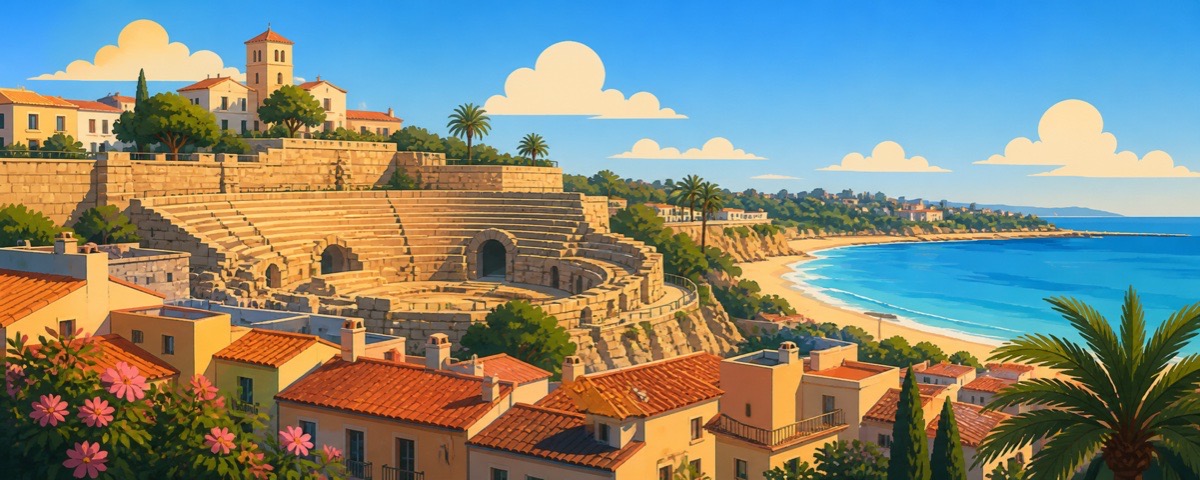
Tarragona overlooks the Mediterranean a hundred kilometres south of Barcelona, on a hill that slopes down to the sea. It was the capital of Tarraconensis, the largest Roman province of the empire in Hispania, and it preserves the amphitheatre on the beach, the circus, the walls, and an aqueduct outside the city.
Did you know
An amphitheatre by the sea.
The Roman amphitheatre is located right by the sea and was used for both gladiator fights and public executions.
How they talk in Tarragona
Catalan is very present and «Tàrraco» is the Roman name that recurs continuously in the city. «Xiquet» is used in the Tarragona area for «boy» and is also part of the lexicon of the «castells».
déu-n'hi-do
Not bad; quite something; truly remarkable. Interjection or adverb to express surprise, admiration, importance, or a considerable quantity.
Everyday life in Tarragona
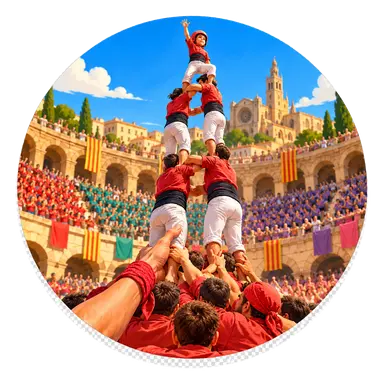
The «castells» of the competition
Every two years the city hosts the most important human tower competition in existence, inside the arena: they build for two days in front of six thousand people and the neighbourhoods are divided by shirt colour.
«El concurso es cada dos años.» — The competition is every two years.
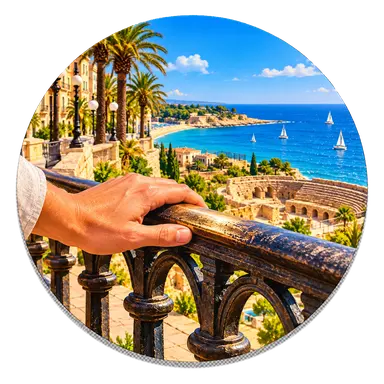
The «balcó del Mediterrani»
The iron railing overlooking the sea at the end of the Rambla is touched out of habit, for luck: «tocar ferro». The metal is worn down by hands at that precise spot.
«Hay que tocar hierro.» — You have to touch iron.
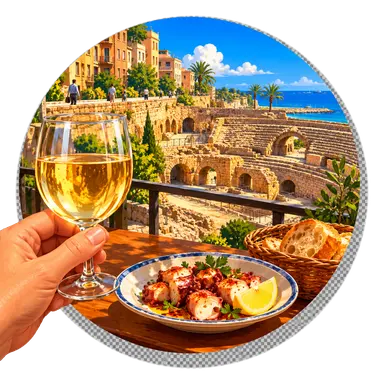
The amphitheatre under your house
Roman ruins are in the middle of the neighbourhoods: you pass by the circus on the way to work and eat on top of the vaults. You can walk along the walls like a promenade.
«El anfiteatro está junto al mar.» — The amphitheatre is by the sea.
What to eat in Tarragona
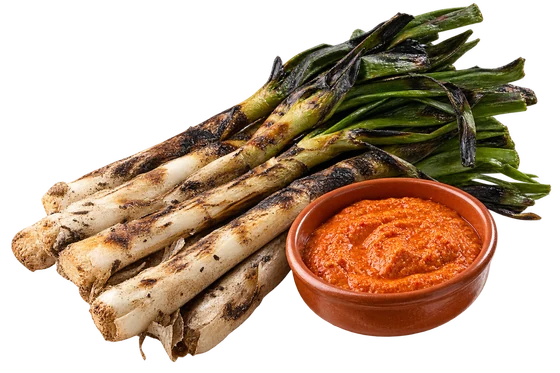
Calçots amb romesco
Long spring onions roasted over embers, peeled with the hands and dipped in romesco sauce.
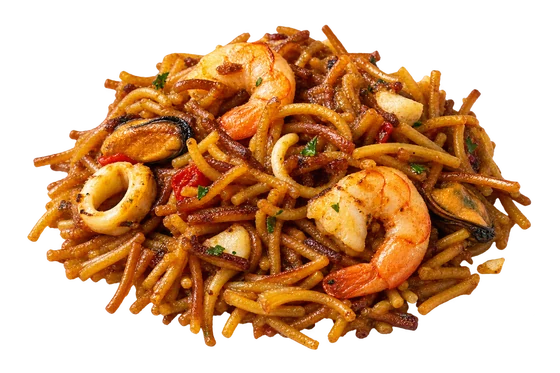
Fideus rossejats
Short pasta toasted dry and then cooked in fish stock: dry, like a fideuà.
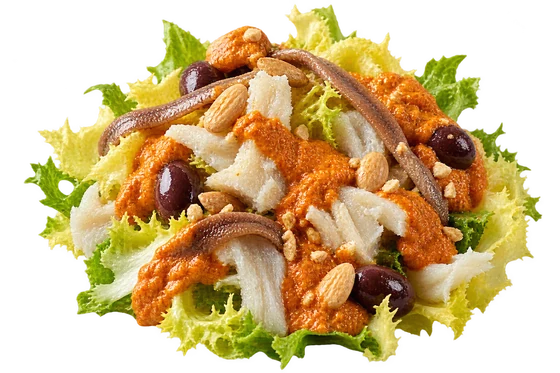
Xató
Escarole salad with salt cod, tuna and anchovies, dressed with almond and ñora pepper sauce.
Festivals in Tarragona
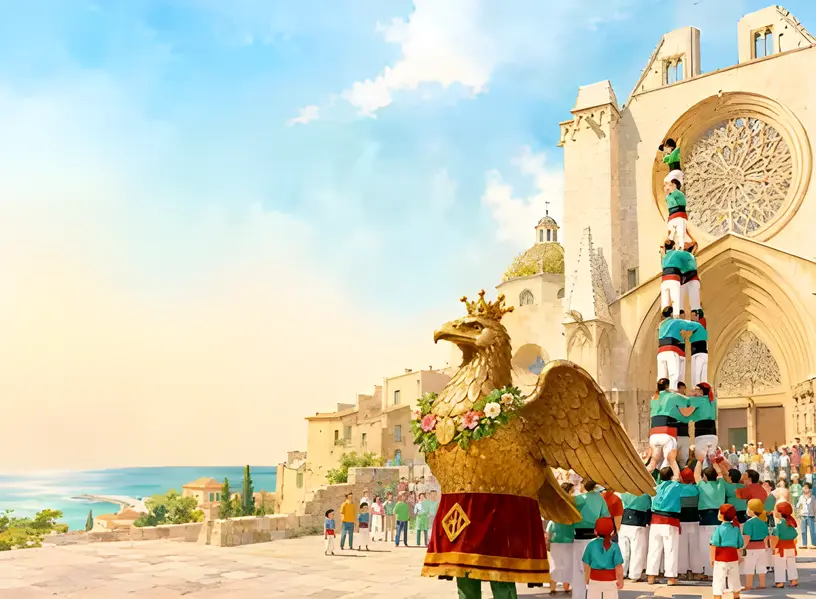
Santa Tecla
from 15 to 24 September
The «seguici» brings dragons, eagles and wooden beasts into the street, and the castellers raise the towers in front of the cathedral.
What to see in Tarragona
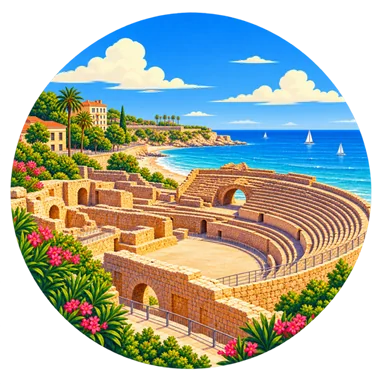
Amfiteatre romà
The only Roman amphitheatre facing directly onto the sea: behind the stands is the water.
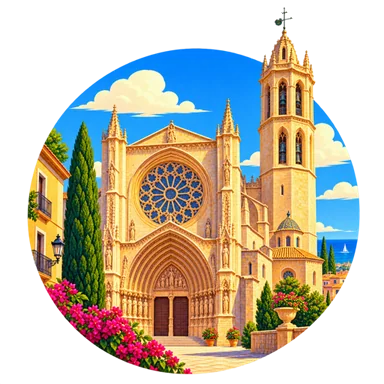
Catedral de Tarragona
Built over the temple of Augustus, with the facade half Romanesque and half Gothic, never finished.
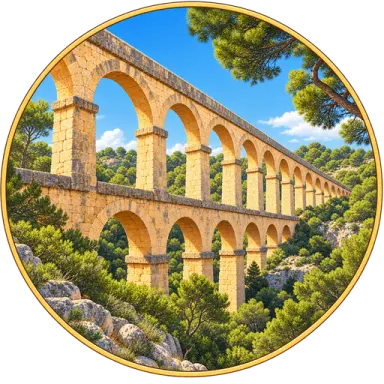
Aqüeducte de les Ferreres
Two hundred and seventeen metres of arches on two levels, twenty-seven metres high, hidden in a forest.
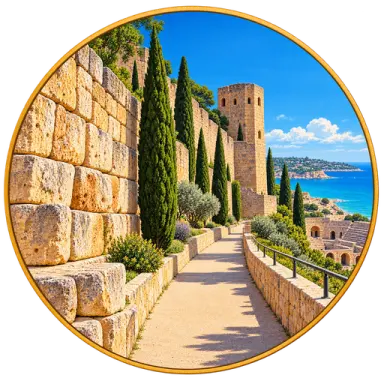
Passeig Arqueològic
The walkway between the two city walls, with cyclopean blocks older than the Romans.
Where Tarragona comes from
From here half of Hispania was governed
218 BC
Tarraco
Scipio lands and makes it the Roman base in Hispania.
1st–3rd century
The capital
Amphitheatre, circus, forum and aqueduct: the largest province of the empire is governed from here.
12th century
The reconquest
Repopulated by the Catalans; the cathedral is built over the temple of Augustus.
19th century → today
The port
The port and then the chemical industry make it grow outside the walls.
Want to learn Spanish by travelling across Spain?
In Aula every lesson is a city lighting up on the map — Tarragona is one of them. Two hundred lessons from A1 to C2, free, starting from your level.
Start from Tarragona →