 Aula· Spain, city by city
Extremadura
Badajoz
«Badajoz está en la frontera con Portugal y tiene una gran alcazaba.»Badajoz is on the border with Portugal and has a large alcazaba.
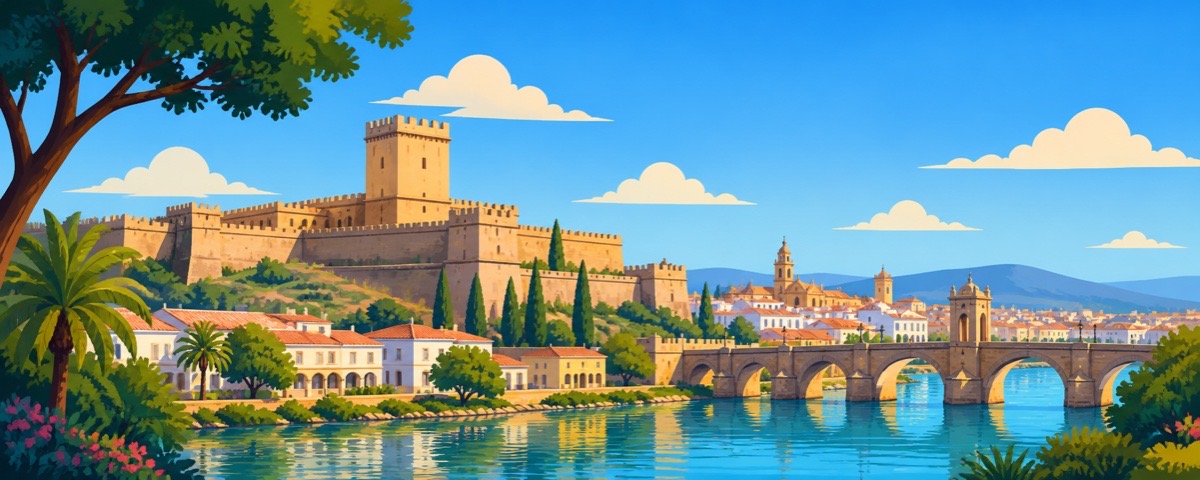
Badajoz is the most populous city in Extremadura and sits on the left bank of the Guadiana, a few kilometres from the Portuguese border. Born as a Muslim fortress in the 9th century, it was a frontier stronghold for centuries and preserves one of the most extensive alcazabas in Europe, along with fortifications from the wars with Portugal.
Did you know
One hundred thousand masked people.
During Carnival, Badajoz comes to a complete standstill for five days, and over one hundred thousand people parade through the streets wearing handmade costumes.
How they talk in Badajoz
«Pacense» is the correct demonym for inhabitants and the province. In the speech of western Extremadura, one often hears the aspiration of the final «s» and vocabulary shared with the nearby Portuguese countryside.
acho
Hey; friend; boy, as a call or interjection. In informal speech it calls the interlocutor or introduces surprise, protest, complicity, and other reactions according to the intonation.
Everyday life in Badajoz
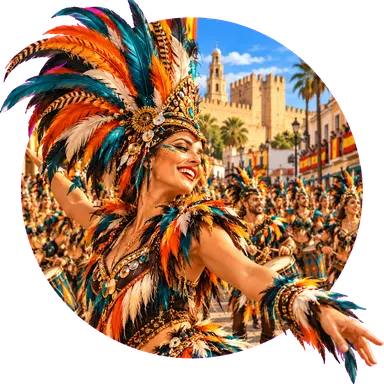
The carnival of the «comparsas»
Thousands of people in costumed groups parade for three days and the city stops working: the comparsas rehearse from September and the costumes are sewn at home. It is of international tourist interest.
«Mi comparsa ensaya desde septiembre.» — My comparsa has been rehearsing since September.
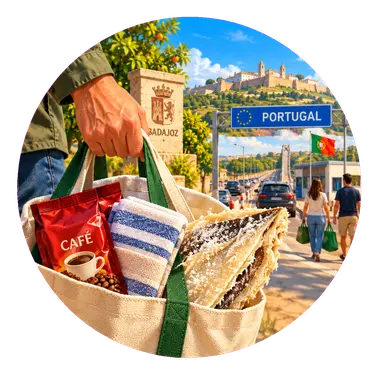
Portugal six kilometers away
People go to Elvas to shop as they would go to another neighborhood: coffee, towels, and salt cod are bought over there, and in many homes, people understand Portuguese without having studied it.
«Nos vamos a Elvas a hacer la compra.» — We are going to Elvas to do the shopping.
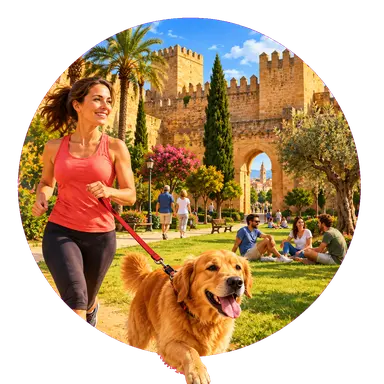
The «Alcazaba» as a park
The Arab citadel, one of the largest in Europe, is not visited with a ticket: people go in to run, to walk the dog, to sit on the grass inside the walls.
What to eat in Badajoz
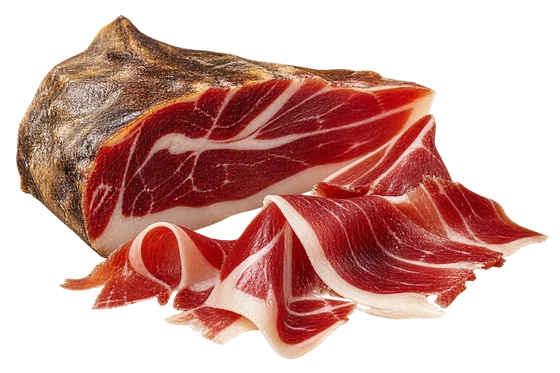
Jamón ibérico de bellota
Ham from Iberian pigs raised free in the dehesa, hand-carved.
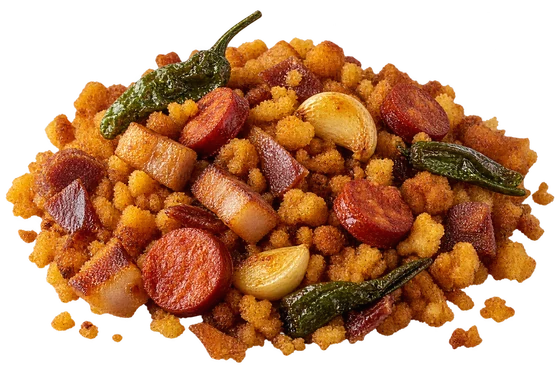
Migas extremeñas
Bread soaked and sautéed with garlic, bacon, and peppers, served with grapes.
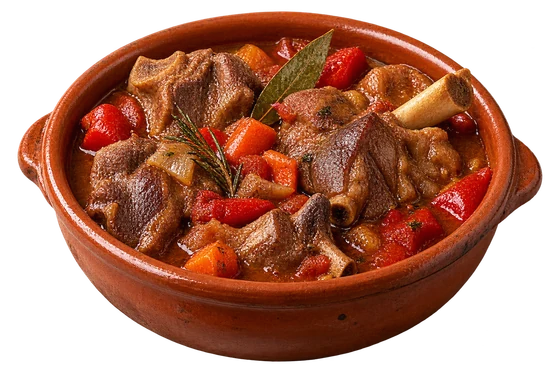
Caldereta de cordero
Lamb stewed slowly with dried peppers and wine.
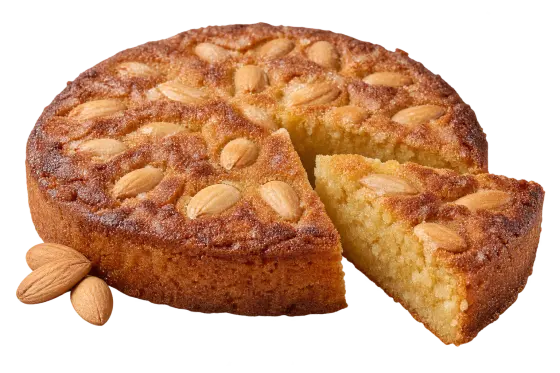
Técula mécula
Almond, egg yolk, and lard cake from nearby Olivenza, dense and very sweet.
Festivals in Badajoz
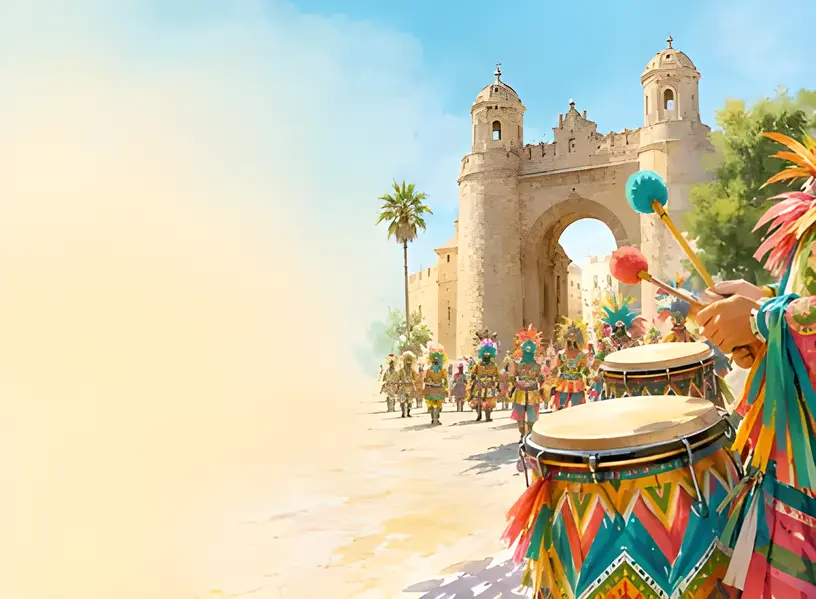
Carnaval de Badajoz
between February and March
The comparsas rehearse from September and parade for three days: costumes sewn at home and drums that do not stop.
What to see in Badajoz
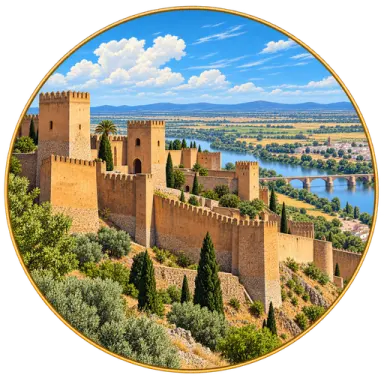
Alcazaba
12th-century Almohad fortress, among the most extensive preserved in Europe, with a Renaissance palace inside.
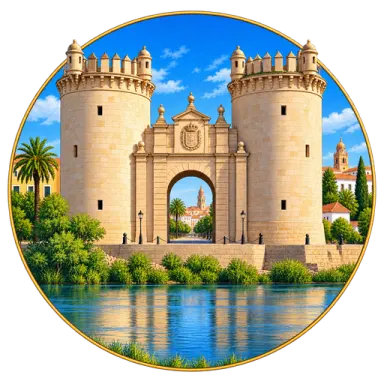
Puerta de Palmas
Monumental gate from 1551 with two cylindrical towers, at the entrance to the bridge over the Guadiana.
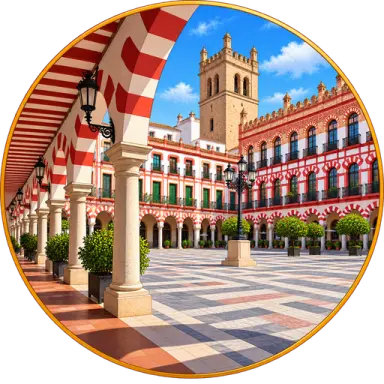
Plaza Alta
The arcaded square below the Alcazaba, with facades painted in red and white diamonds.
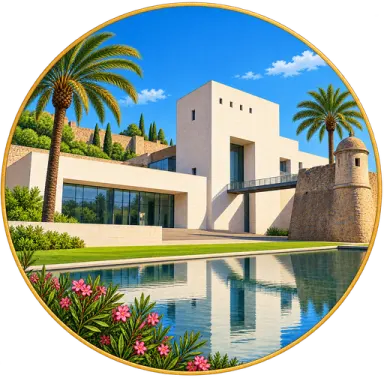
MEIAC
The contemporary art museum housed inside an old prison, with cells turned into rooms.
Where Badajoz comes from
Born as a fortress on the river
Roman era
The territory
The area depends on Mérida: a real city does not exist here yet.
875
Batalyaws
Ibn Marwan founds it as a fortress on the Guadiana; it will become the capital of a taifa kingdom.
1230
The conquest
Alfonso IX of León takes it: the history of a border city with Portugal begins.
17th–18th century
The stronghold
The wars with Portugal fill it with bastions: it becomes the most fortified city in Spain.
Want to learn Spanish by travelling across Spain?
In Aula every lesson is a city lighting up on the map — Badajoz is one of them. Two hundred lessons from A1 to C2, free, starting from your level.
Start from Badajoz →