 Aula· Spain, city by city
Extremadura
Cáceres
«El casco histórico de Cáceres tiene murallas y torres medievales.»The historic centre of Cáceres has medieval walls and towers.
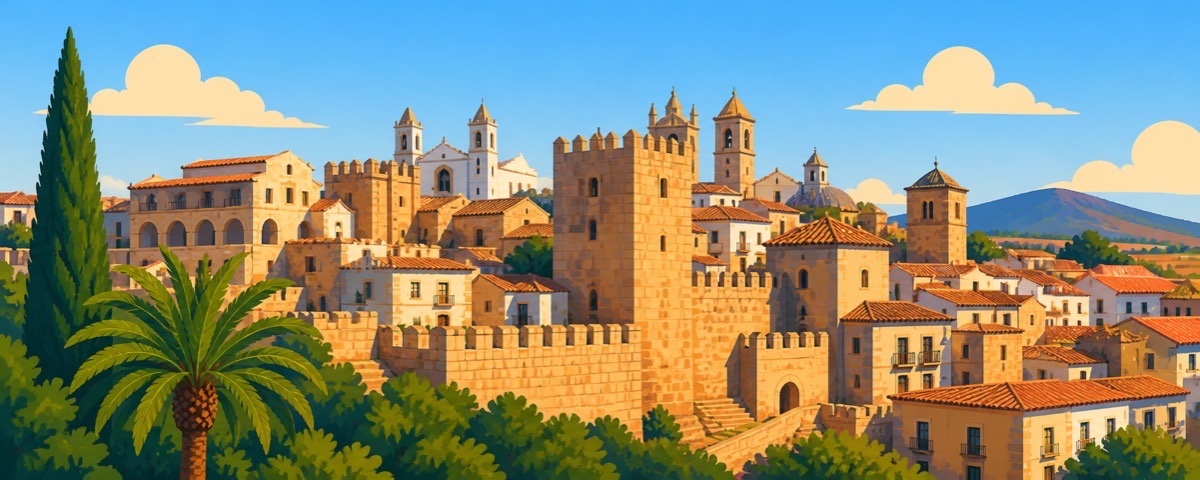
Cáceres rises on a granite hill in the centre of Extremadura, in the middle of the dehesa. Its old town has remained almost intact since the 16th century—walls, towers, and palaces built by families who made their fortunes in America, with no cables or modern signs—while the modern city has developed all around it.
Did you know
No cables, no night lights.
In the historic centre, there are no visible electrical cables and streetlights are turned off at night to keep the original medieval atmosphere intact.
How they talk in Cáceres
«Cacereño» is the demonym and «dehesa» recurs continuously when talking about landscape, livestock, and Iberian products. In local Castilian, the aspiration of the final «s» is frequent in informal speech.
acho
Hey; friend; boy, as a call or interjection. In informal speech it calls the interlocutor or introduces surprise, protest, complicity, and other reactions according to the intonation.
Everyday life in Cáceres
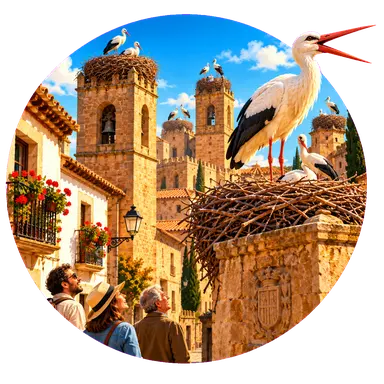
The «cigüeñas» above the towers
Storks nest on the bell towers and on the towers of the historic center, dozens of nests side by side, and the sound of the beak clicking can be heard from below. They return every year to the same stones.
«¿Oyes las cigüeñas?» — Do you hear the storks?
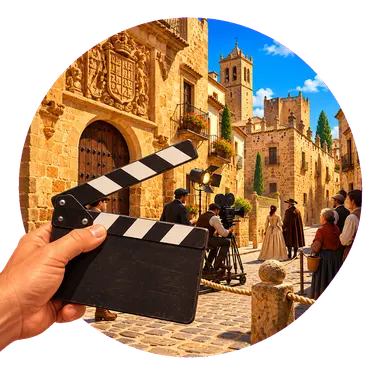
The «ciudad monumental» without cables
In the old city there are no antennas, wires, or modern signs: that is why films and series are constantly shot there. Those who live there get used to finding the streets closed for filming.
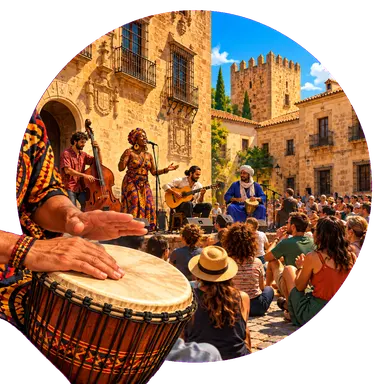
The «Womad» in May
For thirty years, the world music festival has been held for free in the squares of the monumental center: you listen sitting on the ground among the 16th-century palaces, and the city doubles for three days.
«El Womad es gratis.» — The Womad is free.
What to eat in Cáceres
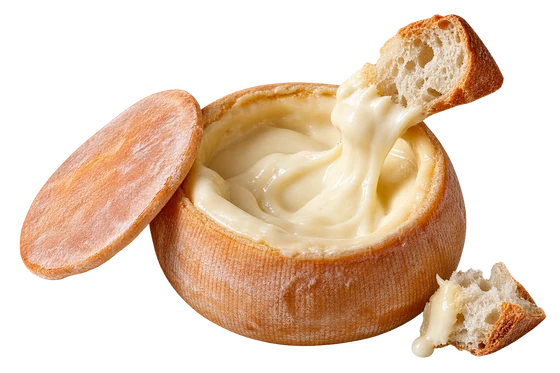
Torta del Casar
Sheep's milk cheese so creamy that it opens like a box and is eaten with a spoon.

Migas extremeñas
Stale bread sautéed with garlic, bacon, and peppers, with grapes or melon on the side.
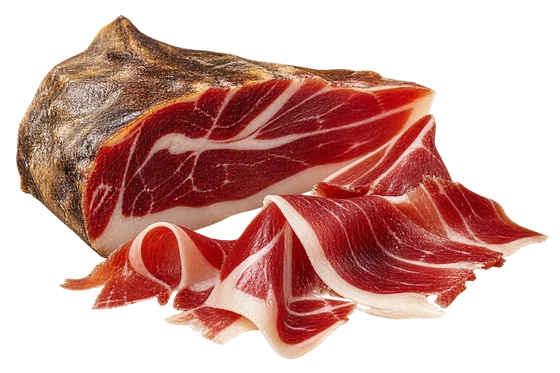
Jamón ibérico de bellota
The ham of the dehesa, hand-carved and served at room temperature.
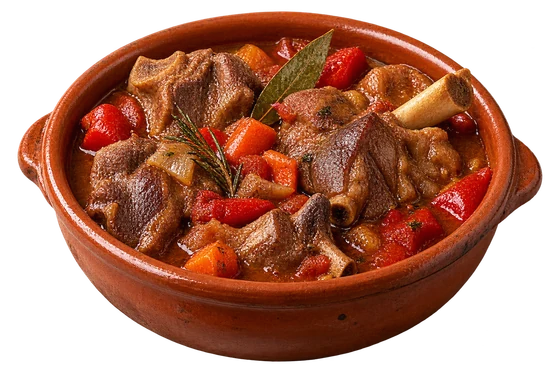
Caldereta de cordero
Lamb stewed with dried peppers, garlic, and a glass of wine.
Festivals in Cáceres
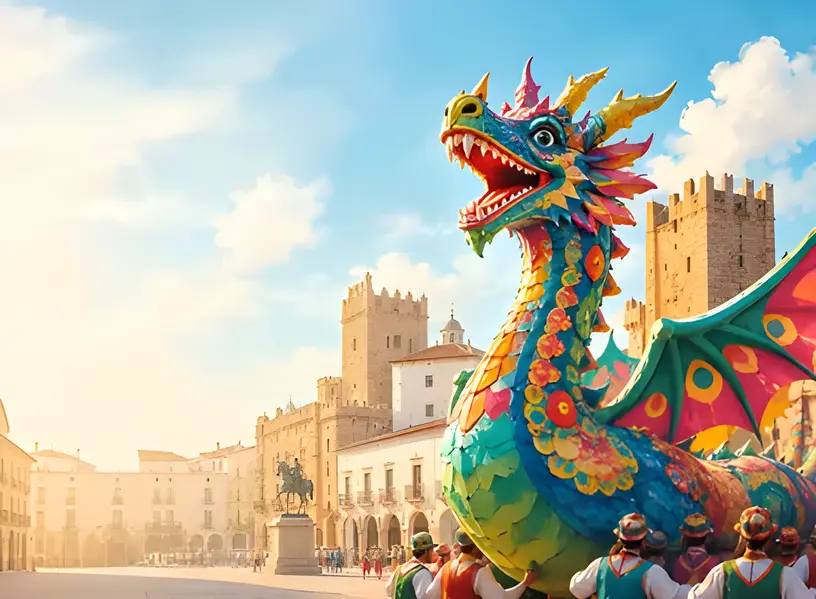
San Jorge
on April 22nd and 23rd
A papier-mâché dragon is burned in front of the old city, and Moors and Christians face each other under the walls.
What to see in Cáceres
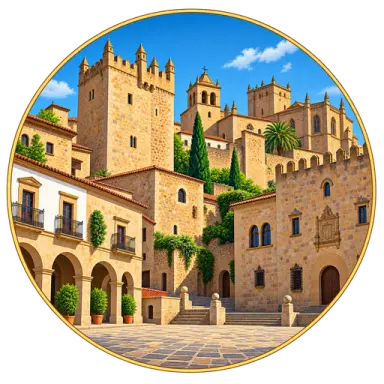
Ciudad Monumental
The walled city, with about thirty towers remaining and not a single cable or modern sign.
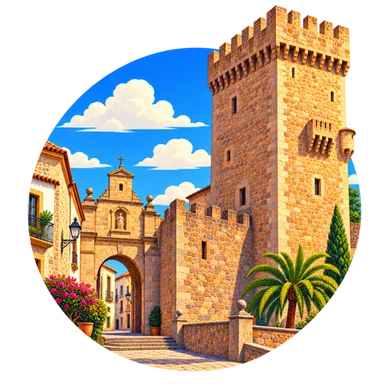
Torre de Bujaco
12th-century Almohad tower on the Plaza Mayor, built with the stones of the Roman city.
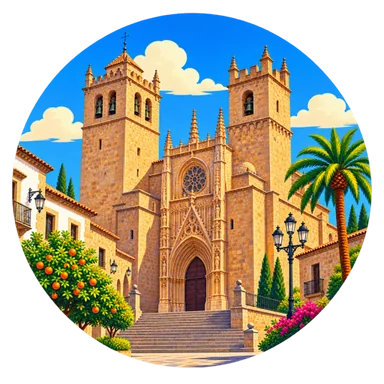
Concatedral de Santa María
The main church of the old city, Gothic, with the cedar altarpiece without gilding.
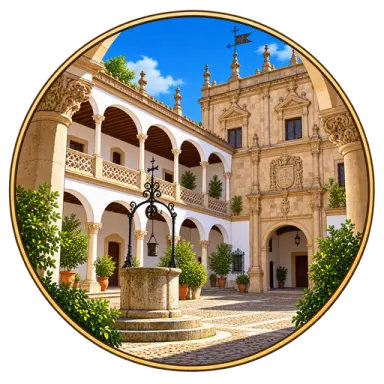
Palacio de las Veletas
The museum of Cáceres, inside a palace built over an Arab cistern still full of water.
Where Cáceres comes from
A walled city that remained whole
25 B.C.
Norba Caesarina
Roman colony founded by Cornelius Balbus on the granite hill.
9th–12th century
Hizn Qazris
Almohad fortress: the towers and cisterns that are seen today are from that time.
1229
The conquest
Alfonso IX of León takes it definitively.
15th–16th century
The tower-houses
Families who got rich in America build the palaces that fill the old city.
Want to learn Spanish by travelling across Spain?
In Aula every lesson is a city lighting up on the map — Cáceres is one of them. Two hundred lessons from A1 to C2, free, starting from your level.
Start from Cáceres →