 Aula· Spain, city by city
Extremadura
Mérida
«Mérida tiene importantes ruinas romanas muy bien conservadas.»Mérida has important, well-preserved Roman ruins.
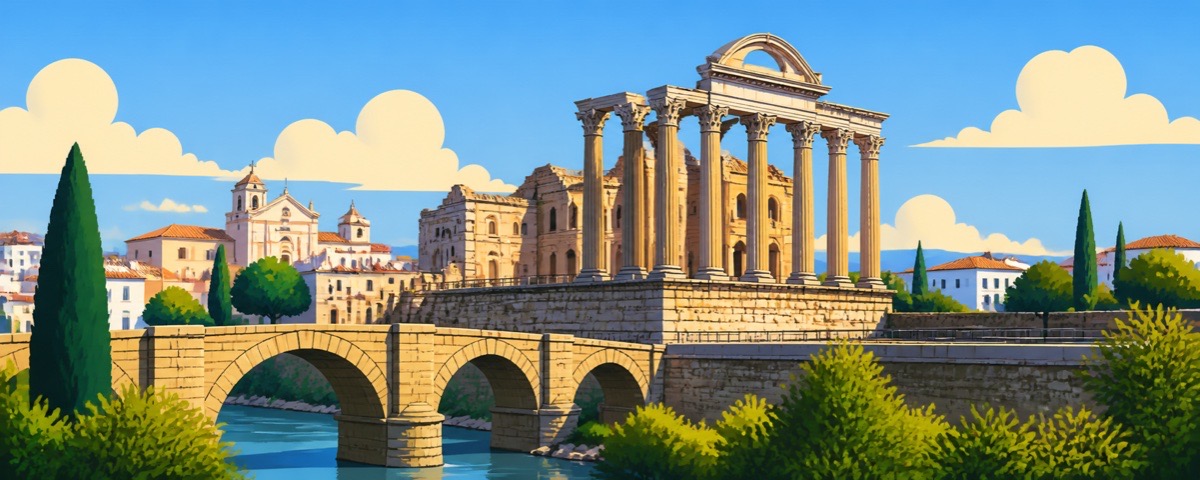
Mérida is the capital of Extremadura and was founded by Augustus in 25 BC for legion veterans on the banks of the Guadiana. It preserves the most extensive complex of Roman monuments in Spain—a theatre, amphitheatre, circus, two aqueducts, and an eight-hundred-metre bridge—scattered inside and around the modern city.
Did you know
Performances still held in theatre.
Every summer, the Roman Theatre hosts a famous classical theatre festival where performances are still held on the same tiers used two thousand years ago.
How they talk in Mérida
«Emeritense» is the demonym derived from Augusta Emerita, the Roman name of the city. «Dehesa» is a key word in Extremadura: it indicates the landscape of oaks and pastures linked to livestock farming and the Iberian pig.
acho
Hey; friend; boy, as a call or interjection. In informal speech it calls the interlocutor or introduces surprise, protest, complicity, and other reactions according to the intonation.
Everyday life in Mérida
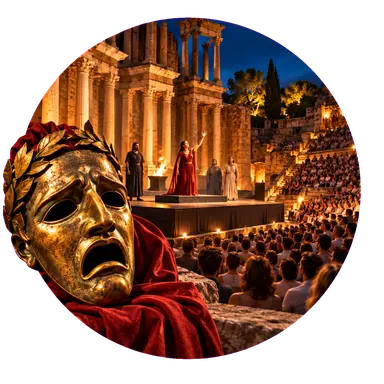
The «Festival de Mérida» in July
Every summer, for almost a hundred years, the Roman theatre has hosted Greek and Latin tragedies: you go to see Medea sitting on the same stone tiers from two thousand years ago, and tickets sell out in May.
«Este verano hacen Medea en el teatro.» — This summer they are doing Medea at the theatre.
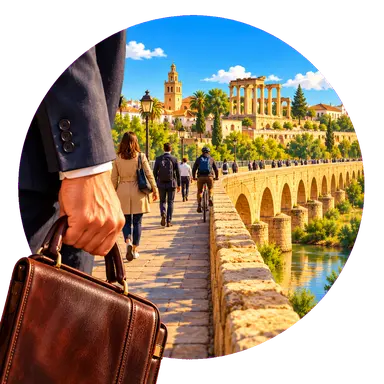
The «Puente Romano» is crossed on foot
Eight hundred metres of Augustan bridge over the Guadiana, with sixty arches, and it is not a closed monument: it is the pedestrian crossing that connects the two banks, used every day to go to work.
«Cruzo el puente para ir al trabajo.» — I cross the bridge to go to work.
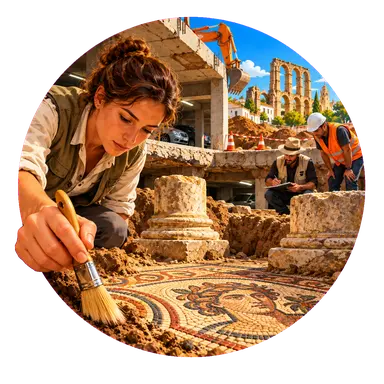
Rome emerges from the excavations
Every time a building site is opened something comes out: columns inside garages, mosaics under buildings, an aqueduct in the middle of a roundabout. Here archaeology is a line item in the municipal budget.
What to eat in Mérida
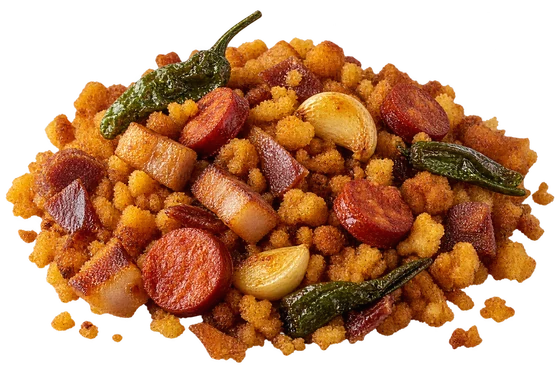
Migas extremeñas
Stale bread soaked and sautéed with garlic, pancetta and peppers, served with grapes or melon.
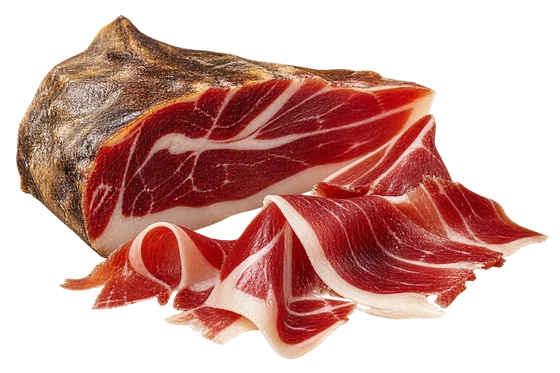
Jamón ibérico de bellota
Ham from Iberian pigs raised free-range in the dehesa, hand-carved.
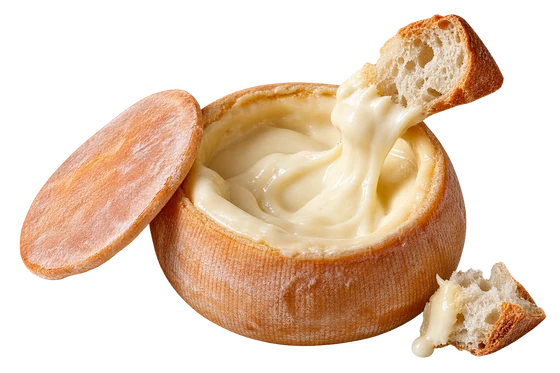
Torta del Casar
Sheep's cheese so creamy that the crust on top is cut like a lid and eaten with a spoon.
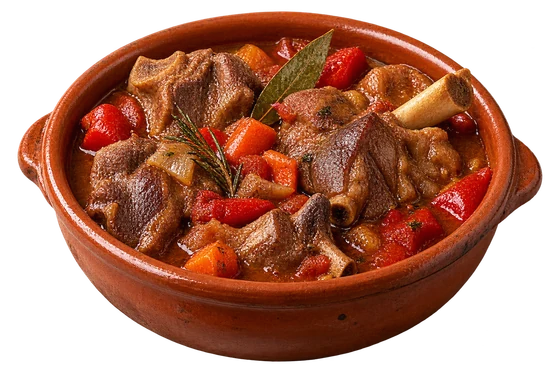
Caldereta de cordero
Lamb stewed with dried peppers, garlic and wine, cooked slowly in a cauldron.
Festivals in Mérida
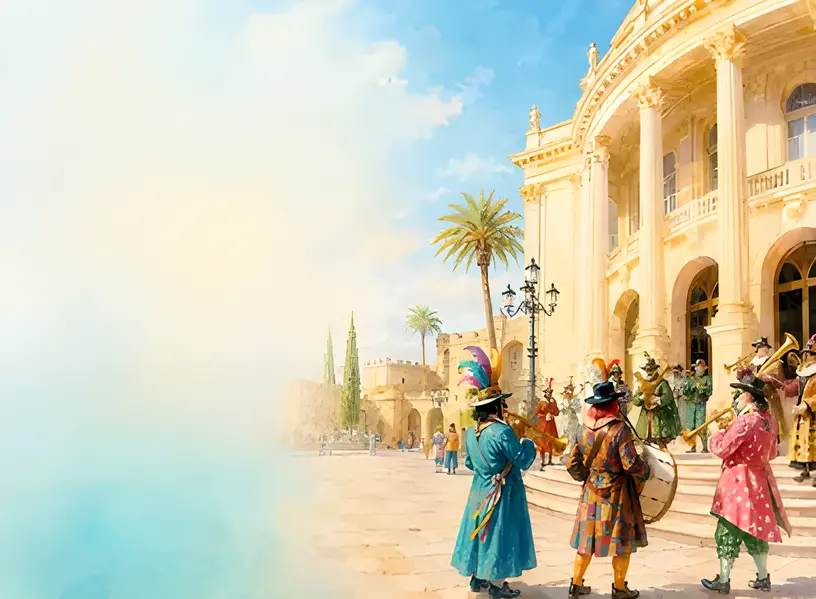
Carnaval Romano
between February and March
The carnival of a Roman city dresses up as Roman: tunics, centurions and parades in the ancient theatre.
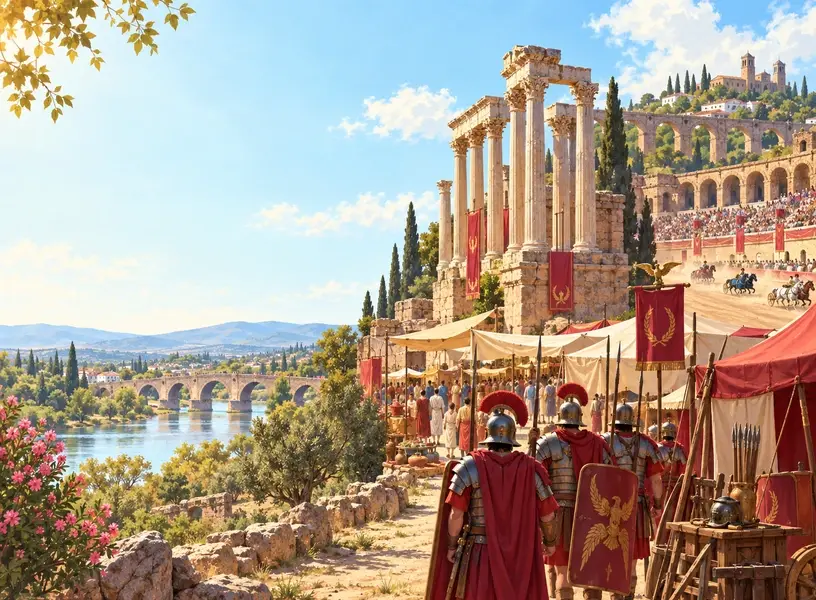
Emerita Lvdica
between the end of May and June
The city returns to being Roman for a week: legionaries in camps, a market in the forum and games in the circus.
What to see in Mérida
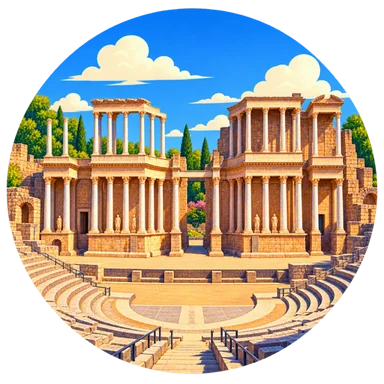
Teatro Romano
Theatre from 15 BC for six thousand spectators, with the stage featuring two tiers of columns put back up.
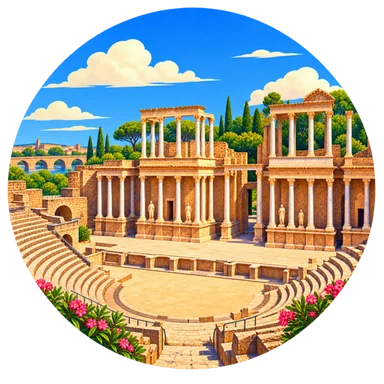
Anfiteatro
Arena from 8 BC, attached to the theatre, with the pits under the sand.
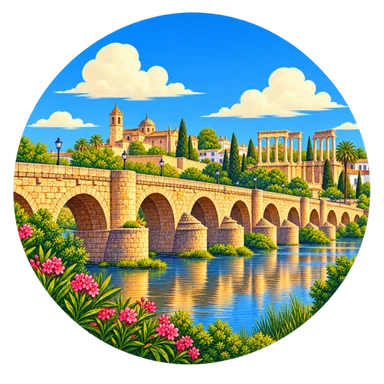
Puente Romano
Eight hundred metres and sixty arches over the Guadiana: it is the longest Roman bridge still standing.
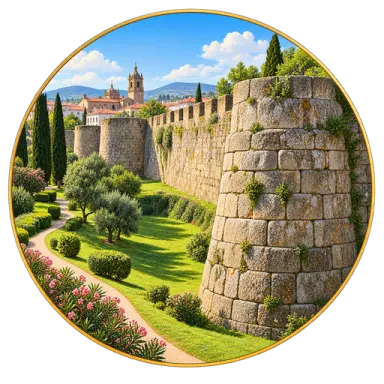
Museo Nacional de Arte Romano
Rafael Moneo's 1986 building, a high brick nave full of arches.
Where Mérida comes from
Founded for soldiers on leave
25 BC
Emerita Augusta
Augustus founds it for the veterans of the V and X legions: «emeriti» actually means discharged.
1st–4th century
Capital of Lusitania
One of the largest cities in Hispania, with a theatre, amphitheatre, circus and two aqueducts.
6th–8th century
Visigothic seat
Religious and administrative capital, then a city under Muslim rule.
1230 → today
Mérida
Reconquered; since 1983 it has been the capital of the autonomous community of Extremadura.
Want to learn Spanish by travelling across Spain?
In Aula every lesson is a city lighting up on the map — Mérida is one of them. Two hundred lessons from A1 to C2, free, starting from your level.
Start from Mérida →