 Aula· Spain, city by city
Extremadura
Trujillo
«Trujillo es la ciudad natal de muchos conquistadores españoles.»Trujillo is the birthplace of many Spanish conquistadors.
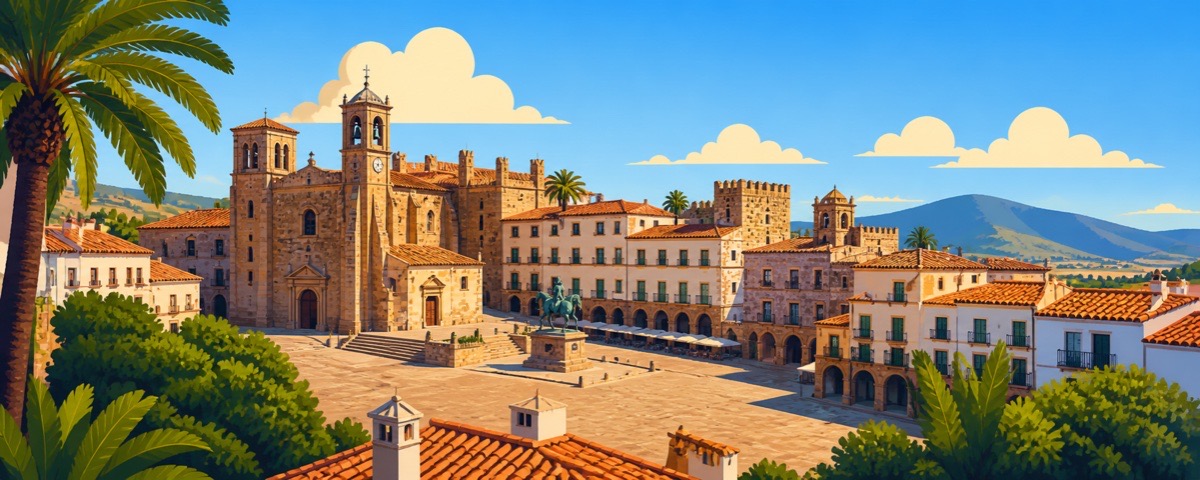
Trujillo rises on a granite spur in the middle of the Extremaduran dehesa, with the castle at the top and the city descending towards the plain. In the sixteenth century, the conquistadors who had left for America returned wealthy—Pizarro above all—and with that money, they built the palaces that surround the square.
Did you know
Pizarro departed from this square.
Francisco Pizarro, the conquistador who conquered the Inca Empire in Peru in the sixteenth century, departed from the main square.
How they talk in Trujillo
«Trujillano» is the demonym and «conquistador» recurs continuously in local memory due to the link with Pizarro and other explorers. In informal speech, one hears the aspiration of the final «s» typical of part of the region.
acho
Hey; friend; boy, as a call or interjection. In informal speech it calls the interlocutor or introduces surprise, protest, complicity, and other reactions according to the intonation.
Everyday life in Trujillo
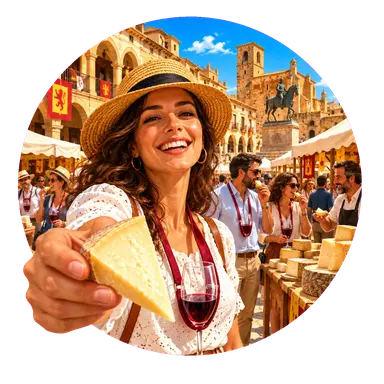
The «Feria del Queso» in May
For four days the Plaza Mayor fills with cheese stalls from all over Spain and abroad: you taste as you walk, with a glass of wine hanging around your neck.
«Se prueba andando, con el vaso al cuello.» — You taste as you walk, with the glass around your neck.
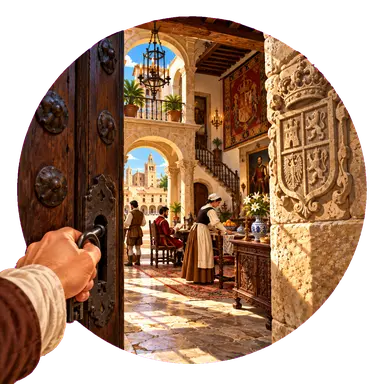
The palaces of those who returned from America
The noble houses around the square were built by the conquistadores with money from Peru, and on the portals you can still see the coats of arms. They are inhabited, not turned into museums.
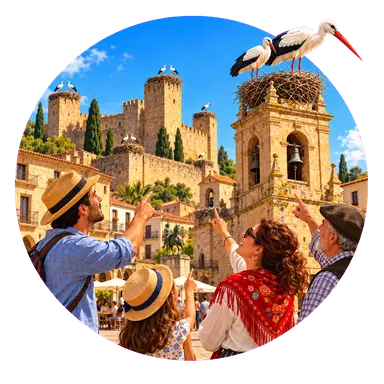
The «cigüeñas» counted one by one
Dozens of pairs of storks nest on the castle and the bell towers, and in town people know which towers are occupied and which are not. It is talked about like the weather.
What to eat in Trujillo
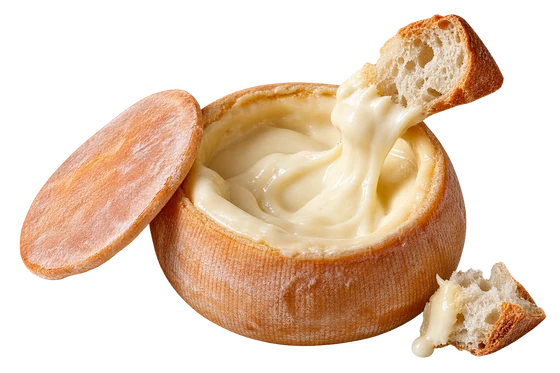
Torta del Casar
The creamy pecorino of Extremadura, which is opened at the top and eaten with a spoon.
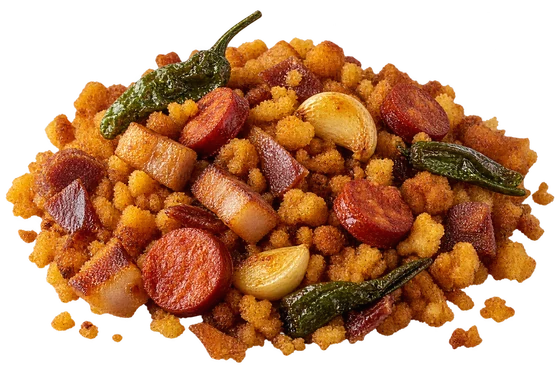
Migas extremeñas
Stale bread sautéed with garlic, pancetta and peppers.
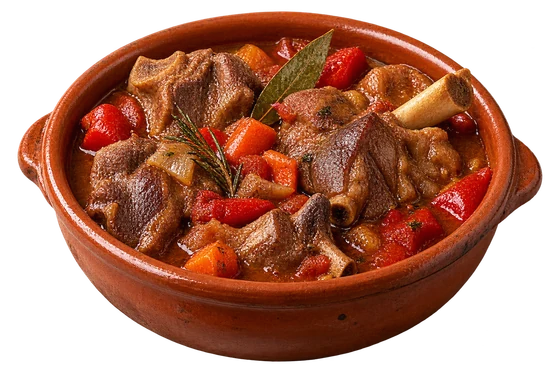
Caldereta de cordero
Lamb stewed slowly with dried peppers and wine, in a cauldron.
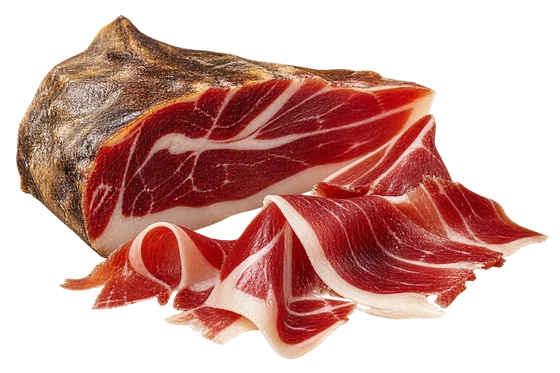
Jamón ibérico de bellota
The ham from pigs raised free-range in the dehesa around here.
Festivals in Trujillo
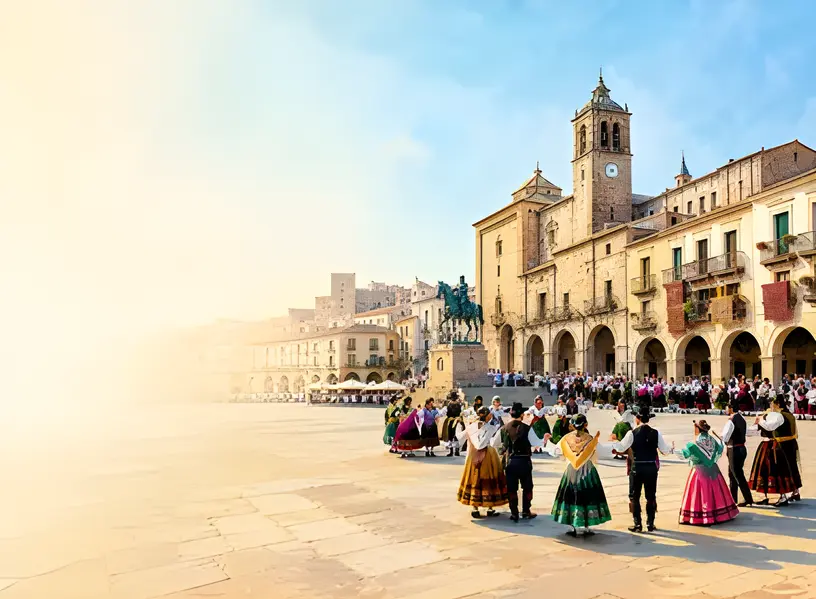
El Chíviri
Easter Sunday
The Plaza Mayor fills with people in traditional costume who dance the same song from morning until night.
What to see in Trujillo
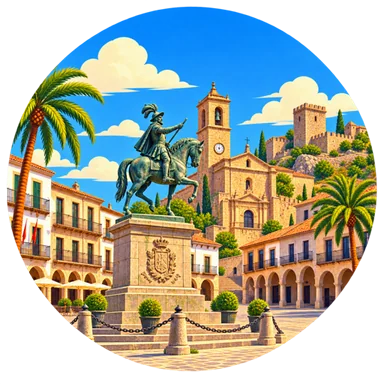
Plaza Mayor
Sloping square, with no two sides the same, with the equestrian statue of Pizarro in the middle.
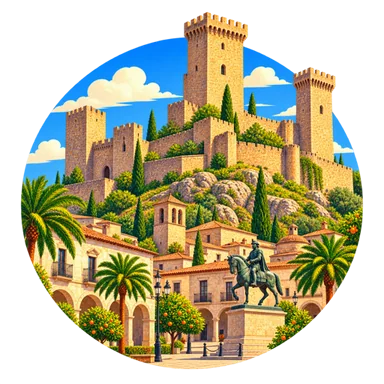
Castillo de Trujillo
Muslim fortress on the summit, with Arab cisterns that still collect rainwater.
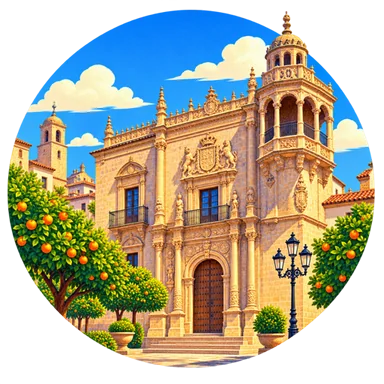
Palacio de la Conquista
Renaissance palace with a corner balcony and the busts of the Pizarros carved on the facade.
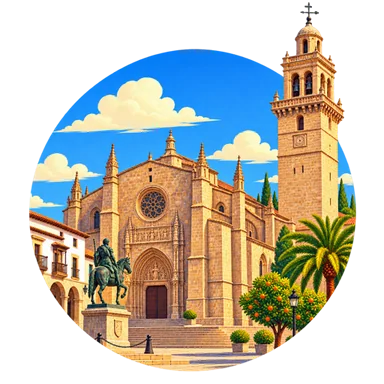
Iglesia de Santa María la Mayor
Romanesque and Gothic church high in the old city, with the altarpiece by Fernando Gallego.
Where Trujillo comes from
The city of the conquerors
Roman era
Turgalium
Roman settlement on the granite hill that dominates the plain.
9th–13th century
Turyalu
Muslim fortress: the castle and the cisterns that collect rain are from that time.
1232
The conquest
It passes to Castile after a century of changing hands.
16th century
The conquistadores
Pizarro, Orellana and the others return from America and build the palaces of the square.
Born here: Francisco Pizarro, conquistador.
Want to learn Spanish by travelling across Spain?
In Aula every lesson is a city lighting up on the map — Trujillo is one of them. Two hundred lessons from A1 to C2, free, starting from your level.
Start from Trujillo →