 Aula· Spain, city by city
Extremadura
Zafra
«Zafra tiene bonitas plazas porticadas y un castillo medieval.»Zafra has beautiful arcaded squares and a medieval castle.
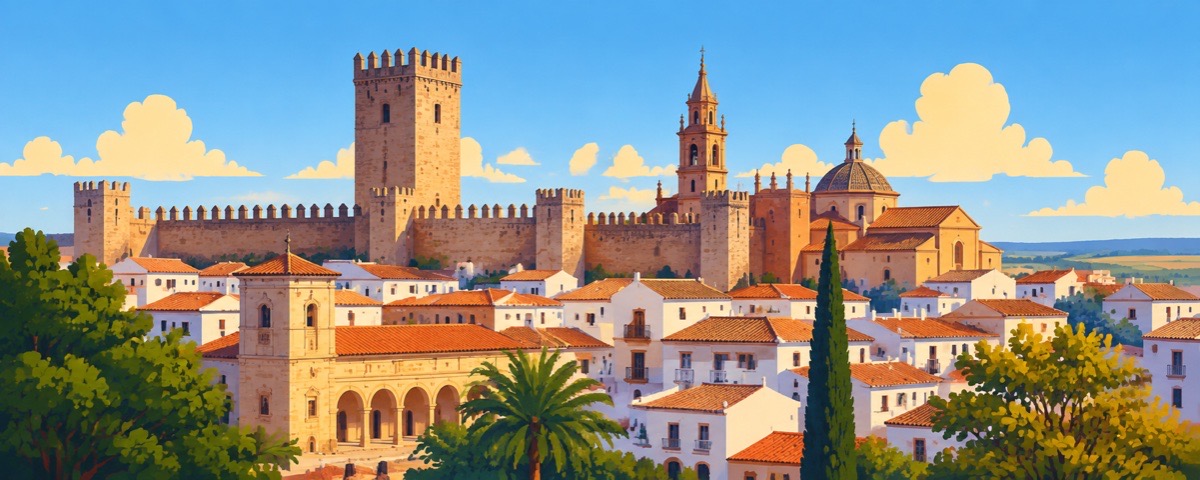
Zafra is in the south of the province of Badajoz, on the road that descends towards Andalusia. It was the capital of the Dukes of Feria, who built an alcázar there with nine towers that has now become a hotel, and its centre is organised around two attached arcaded squares, the Grande and the Chica.
Did you know
A castle turned into hotel.
The local castle, now transformed into a luxurious tourist Parador, hosted the writer and poet Jorge Manrique in the 15th century.
How they talk in Zafra
«Segedano» is the traditional demonym linked to ancient Segeda and still used locally. «Dehesa» is the keyword for understanding livestock farming, landscape and gastronomy of southern Extremadura.
acho
Hey; friend; boy, as a call or interjection. In informal speech it calls the interlocutor or introduces surprise, protest, complicity, and other reactions according to the intonation.
Everyday life in Zafra
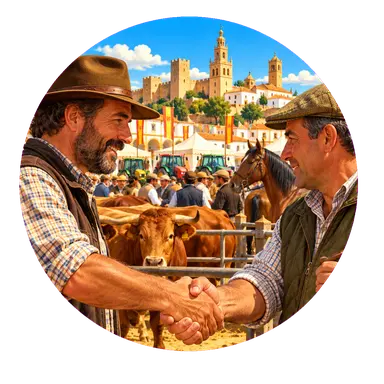
The «Feria de San Miguel» since 1453
The livestock fair has been held in early October for more than five centuries and fills the town with breeders, horses and verbal negotiations. It is the event that divides the year in two.
«La feria del ganado es en octubre.» — The livestock fair is in October.
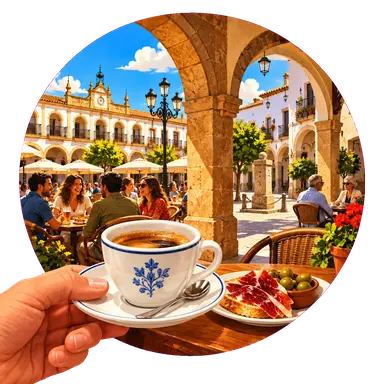
Two squares one after the other
The Plaza Grande and Plaza Chica are adjoining and arcaded, and are used differently: in the large one you eat outside, in the small one you have coffee. On the Chica, the stone measure for fabric is still there.
«Quedamos en la Plaza Chica.» — Let's meet in the Plaza Chica.
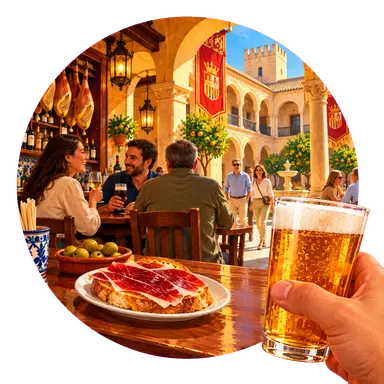
Sleeping in the castle
The alcázar of the Dukes of Feria has become a parador, but the Renaissance courtyard and the bar can be visited even without staying there: many locals go there for a drink.
What to eat in Zafra
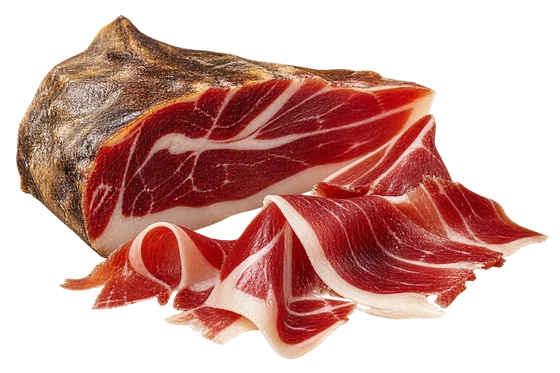
Jamón ibérico de bellota
The ham of the dehesa, hand-carved and served at room temperature.
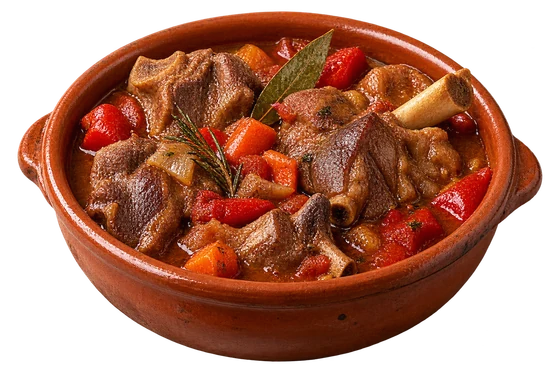
Caldereta de cordero
Lamb stewed slowly with dried peppers, garlic and wine.
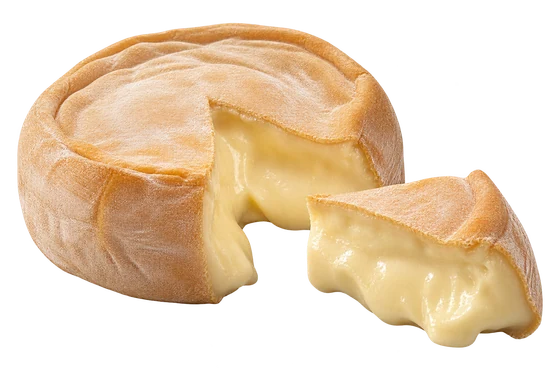
Torta de la Serena
Creamy sheep's milk cheese curdled with cardoon, which is opened at the top and eaten with a spoon.
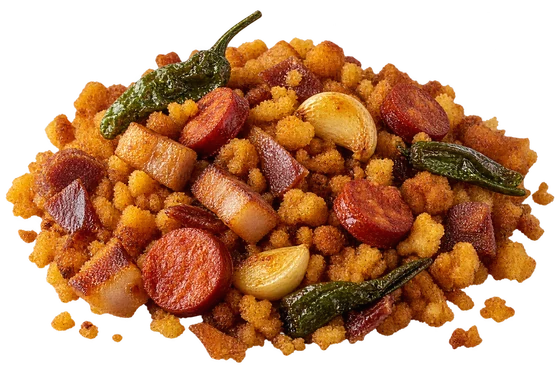
Migas extremeñas
Stale bread sautéed with garlic and bacon, with grapes on the side.
Festivals in Zafra
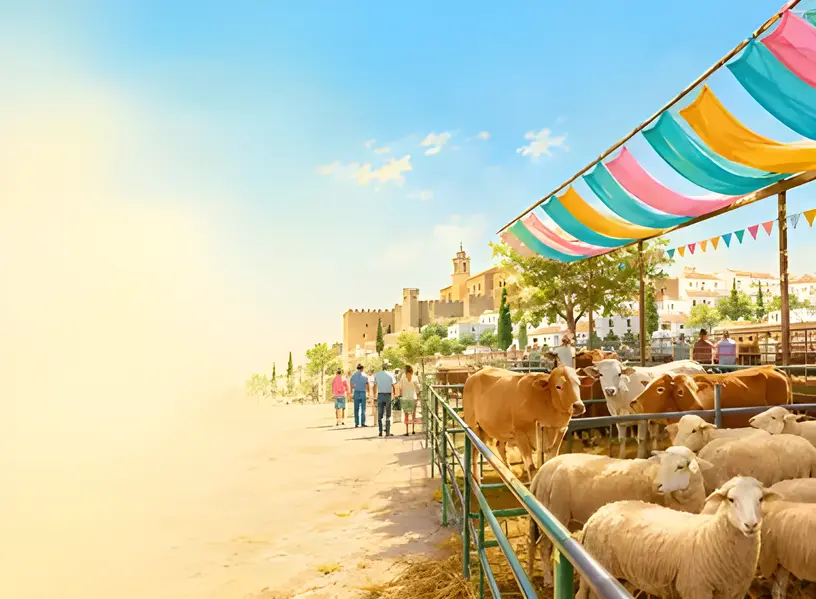
Feria de San Miguel
between late September and early October
The oldest livestock fair in Spain, since 1453: breeders, horses and verbal negotiations.
What to see in Zafra
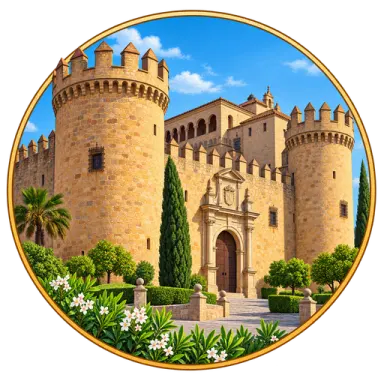
Alcázar de los Duques de Feria
The 15th-century palace-fortress with nine round towers, now a hotel.
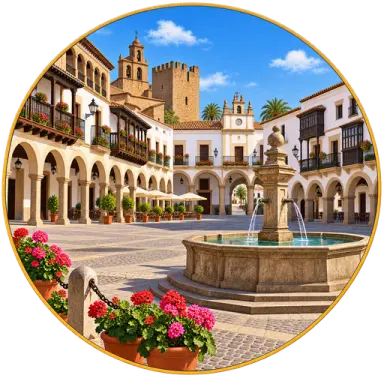
Plaza Grande and Plaza Chica
Two adjoining arcaded squares, connected by an arch, from two different eras.
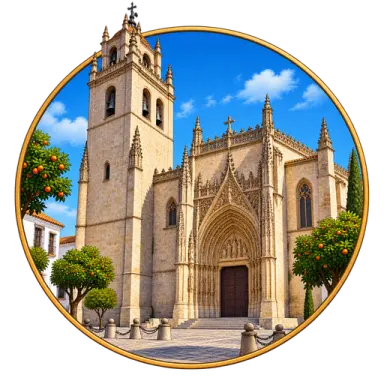
Iglesia de la Candelaria
Gothic-Renaissance church with nine panels by Zurbarán in the altarpiece.
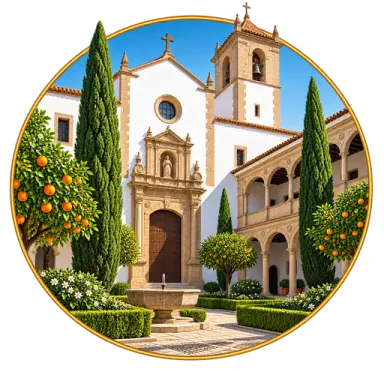
Convento de Santa Clara
15th-century convent with the tombs of the Dukes of Feria and a museum of sacred art.
Where Zafra comes from
The city of the dukes and the fair
Roman era
Segeda
Roman settlement on the road that led to Mérida.
15th century
The Dukes of Feria
The Suárez de Figueroa family made it their capital and built the alcázar with the nine towers.
16th century
The two squares
The Plaza Grande and Plaza Chica were built, adjoining and connected by an arch.
16th century → today
The fair
The San Miguel livestock fair made it the market for the whole of southern Extremadura.
Want to learn Spanish by travelling across Spain?
In Aula every lesson is a city lighting up on the map — Zafra is one of them. Two hundred lessons from A1 to C2, free, starting from your level.
Start from Zafra →