 Aula· Spain, city by city
Galicia
Lugo
«Lugo conserva una muralla romana completa alrededor de su centro.»Lugo preserves a complete Roman wall around its centre.
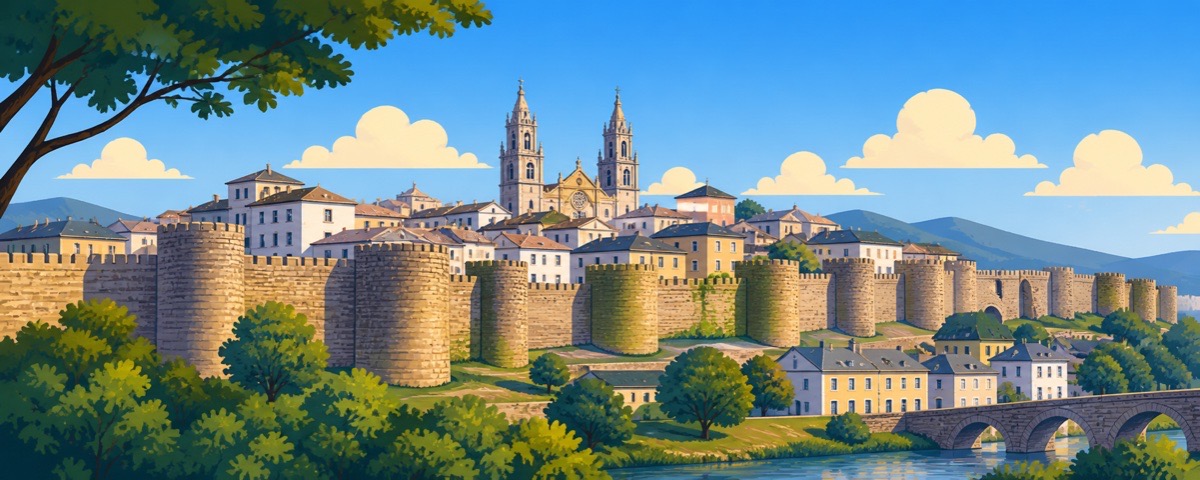
Lugo is located in the interior of Galicia, on the banks of the Miño, and was founded by Rome in 25 BC under the name Lucus Augusti. It is the only city in the world surrounded by a Roman wall preserved along its entire perimeter: two kilometres of walls with seventy-one towers, which can be walked along the top.
Did you know
The only intact Roman wall.
The Roman wall of Lugo is the only one in the world that remains completely intact along its more than two-kilometre perimeter.
How they talk in Lugo
Galician and Castilian coexist and «muralla» is the absolute urban reference. «Feira» means fair or market and appears in «pulpo á feira» because the dish was linked to rural fairs.
morriña
Melancholic nostalgia, particularly for one's own land. Used to describe the feeling of distance and melancholy towards the land of origin or, more generally, a nostalgic state.
Everyday life in Lugo
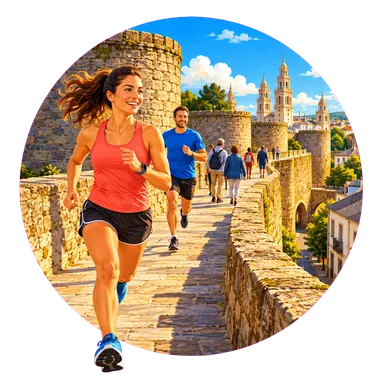
Walking on the «muralla»
The Roman wall is intact, two kilometres of patrol path at a height of ten metres: you can go up for free from various ramps and people use it to go from one neighbourhood to another or to run.
«Se puede dar la vuelta entera.» — You can do the whole circuit.
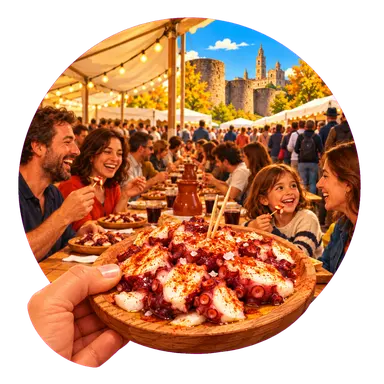
The «San Froilán» in October
For a week you eat octopus under marquees in the park, at very long tables, served on wooden plates. It is the festival where the city doubles in size and you don't book: you queue.
«Comemos pulpo en las carpas.» — We eat octopus under the marquees.
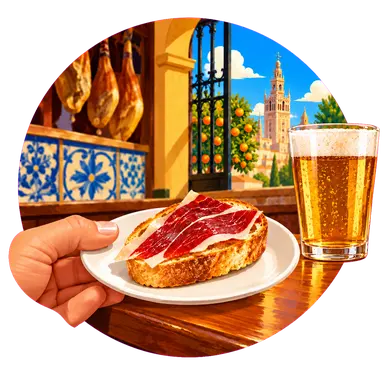
The «tapa» arrives without asking
In Lugo, with your drink, the tapa arrives without asking and without paying for it, and it changes from bar to bar: you choose the place based on what it gives, and it is something that Galicians know.
«Con la caña viene la tapa.» — With the beer comes the tapa.
What to eat in Lugo
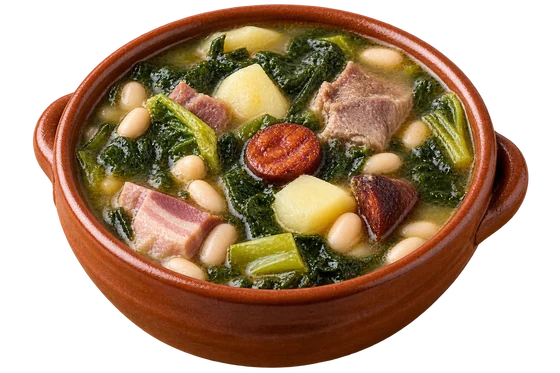
Caldo gallego
Thick soup of turnip greens, potatoes, beans and lard.

Lacón con grelos
Salted pork shoulder boiled with turnip greens, potatoes and chorizo.

Filloas
Thin crepes made of milk, eggs and flour, cooked one at a time and rolled up with sugar.
Festivals in Lugo
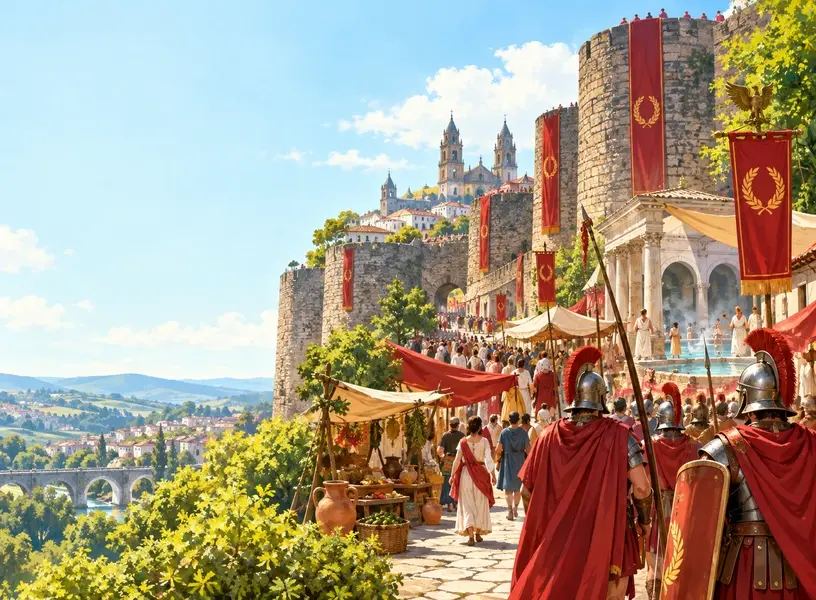
Arde Lucus
in June
The city returns to being Roman: legionaries, baths and a market inside the 3rd-century walls, which here circle the entire centre.
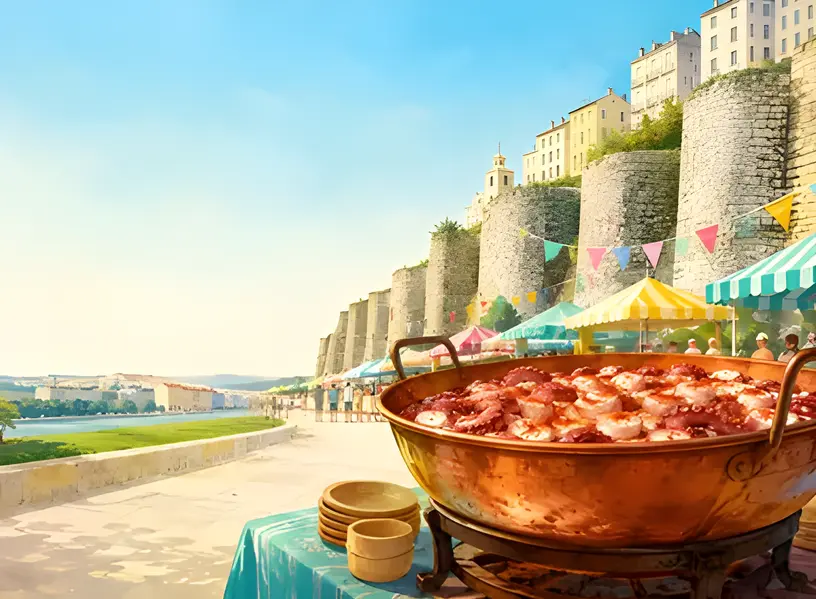
San Froilán
the days around 5 October
The «pulpeiras» cook the octopus in copper cauldrons under marquees, and half of Galicia comes to eat it.
What to see in Lugo
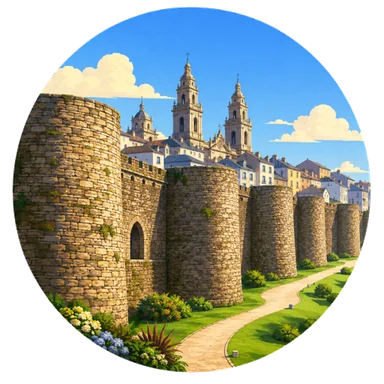
Muralla romana
The only Roman city wall in the world preserved along its entire perimeter: two kilometres and seventy-one towers.
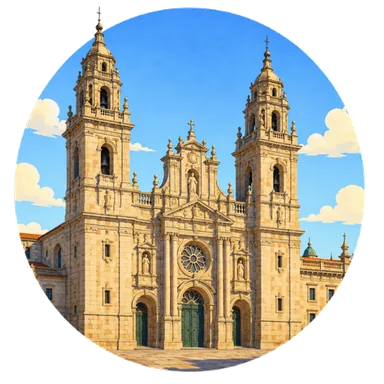
Catedral de Santa María
The cathedral where the Sacrament has been exposed day and night for five centuries, without ever an interruption.
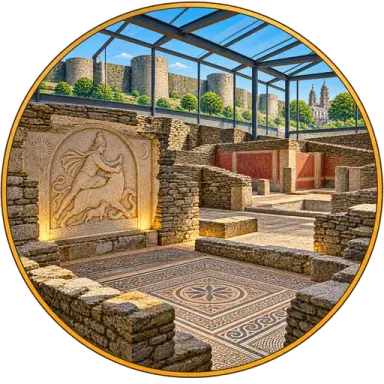
Domus do Mitreo
A Roman house with the remains of a temple to Mithras, under a building in the centre.
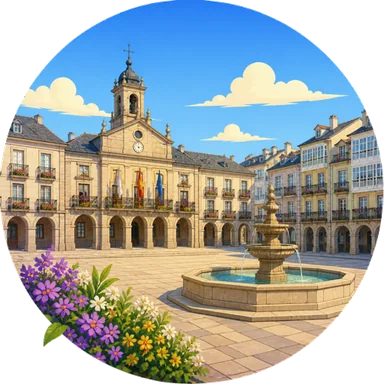
Praza Maior
The arcaded square of the centre, with the Baroque town hall and the gardens.
Where Lugo comes from
The only Roman wall left intact
25 BC
Lucus Augusti
Paulus Fabius Maximus founds the city on behalf of Augustus.
3rd century
The walls
The wall is built, which will be the only one in the world to remain complete.
12th century
The cathedral
Santa María is begun, with the privilege of perpetual exposition of the Sacrament.
1971 → today
The walls
They are opened for walking: today the circuit on top of the walls is the city's promenade.
Want to learn Spanish by travelling across Spain?
In Aula every lesson is a city lighting up on the map — Lugo is one of them. Two hundred lessons from A1 to C2, free, starting from your level.
Start from Lugo →