 Aula· Spain, city by city
Galicia
Ourense
«Ourense es muy conocida por sus aguas termales al aire libre.»Ourense is well known for its open-air thermal waters.
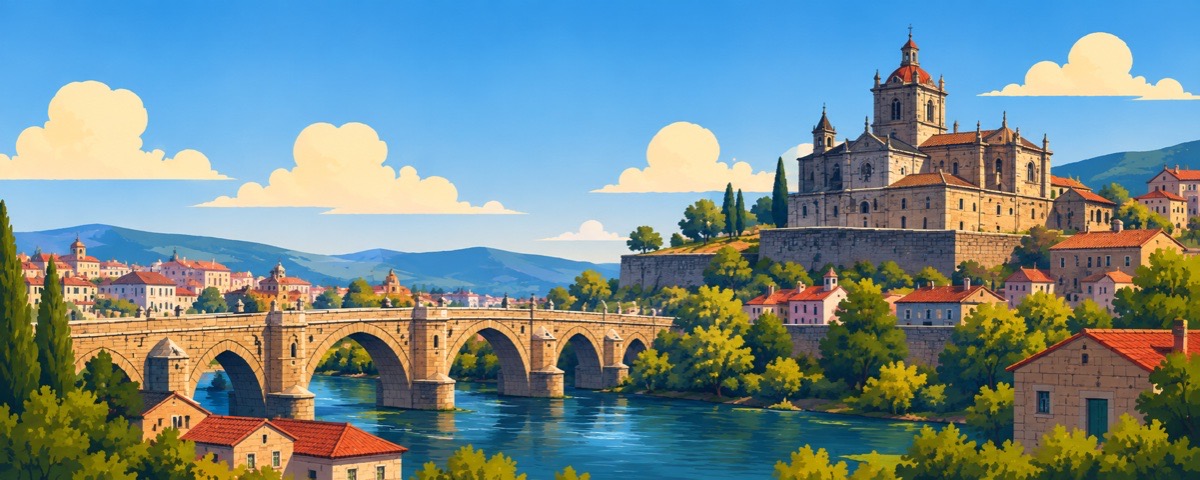
Ourense is in the interior of Galicia, on the banks of the Miño, in a basin where it is hotter in summer than in the rest of the region. It was born around the thermal springs that gush out in the middle of the city at sixty-seven degrees, and it preserves a bridge of Roman origin over the river.
Did you know
Sixty-degree water in the city.
In Ourense, thermal water gushes out in the middle of the city at temperatures exceeding sixty degrees, allowing for free public baths all year round.
How they talk in Ourense
«Ourense» officially replaces the old Castilian form Orense. «Burgas» is the local word for the thermal springs that define the city.
morriña
Melancholic nostalgia, particularly for one's own land. Used to describe the feeling of distance and melancholy towards the land of origin or, more generally, a nostalgic state.
Everyday life in Ourense
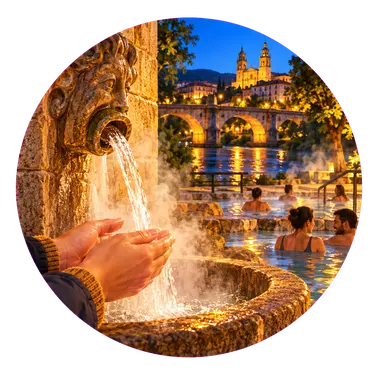
The «Burgas» that boil in the centre
Water at sixty-six degrees comes out from the subsoil in the middle of the city: there is the fountain where people warm their hands in winter and the thermal pools on the river, open and free, where one stays in the evening.
«El agua sale a sesenta grados.» — The water comes out at sixty degrees.

The «Miño» with the thermal baths on the bank
Along the river there are natural hot water pools that are used all year round, even in the rain: you can get there by a tourist train or on foot along the embankment.
«Las pozas son gratis.» — The pools are free.
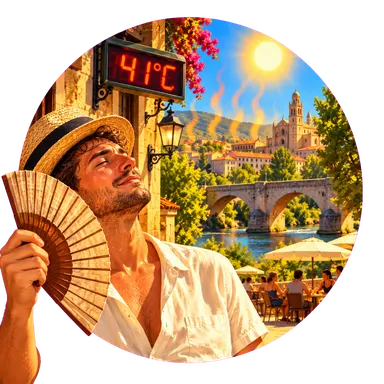
The heat that is not Galician
In summer Ourense regularly exceeds forty degrees, something that does not happen in the rest of Galicia: the closed basin traps the air, and the city changes its schedule in July.
What to eat in Ourense
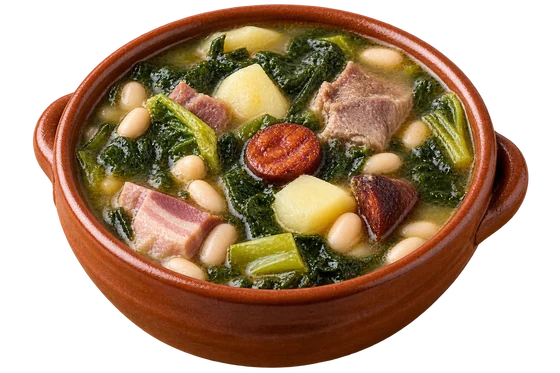
Caldo gallego
Soup of turnip greens, potatoes, beans and lard, thick and hot: the dish for the damp winter.
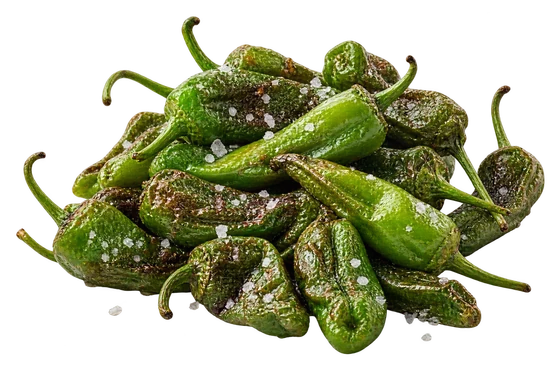
Pimientos de Padrón
Small green peppers fried in oil with coarse salt: one in ten is spicy.

Lacón con grelos
Salted pork shoulder boiled with turnip greens, potatoes and chorizo.
Festivals in Ourense
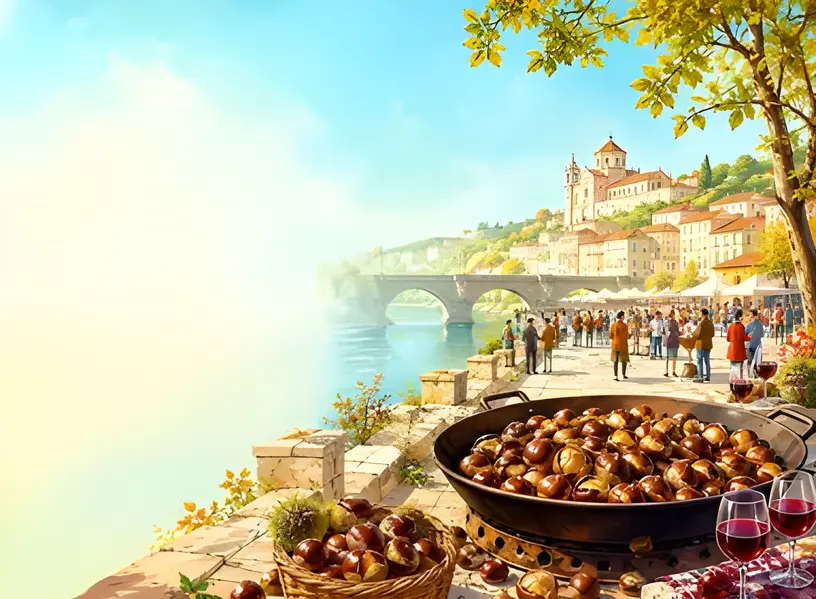
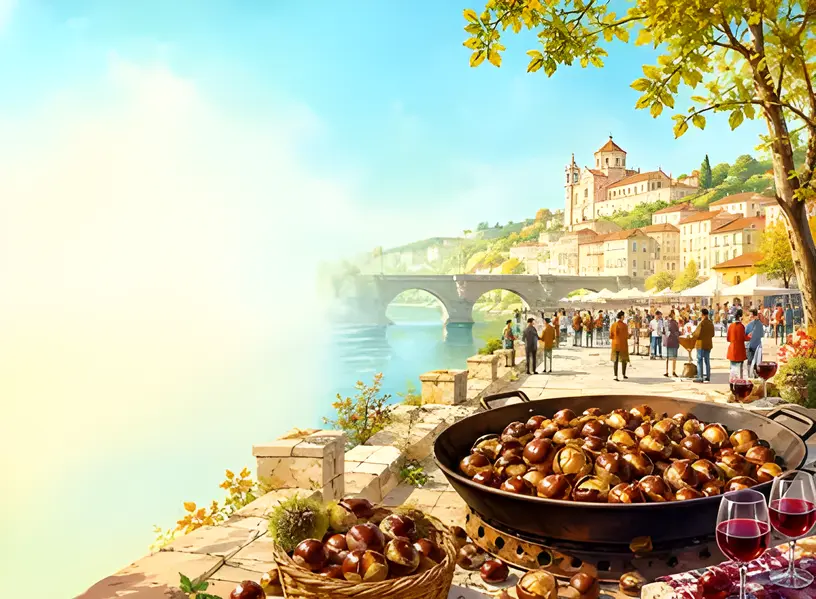
Magosto
11 November
Roasted chestnuts in braziers in the streets, new wine, and faces dirty with ash: those who don't let themselves get dirty have bad luck.
Festa dos Maios
early May
They build «maios», towers of branches, moss and flowers, and children sing verses around them that sting the powerful.
What to see in Ourense
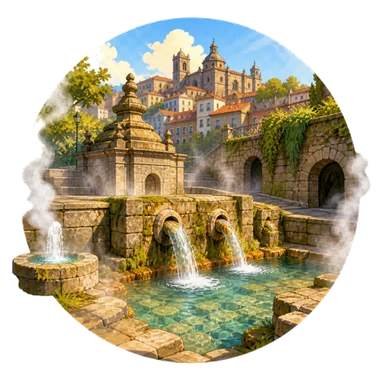
As Burgas
The thermal springs in the middle of the city, where water comes out of the ground at sixty-seven degrees.
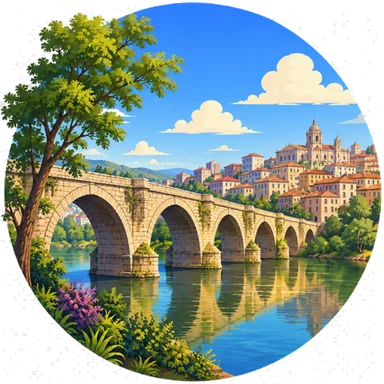
Ponte Romana
The bridge over the Miño of Roman origin, rebuilt in the Middle Ages, with a very high central arch.
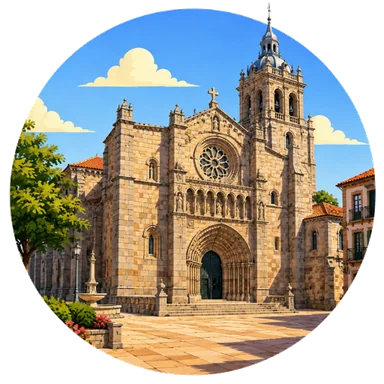
Catedral de San Martiño
The Romanesque cathedral with the Pórtico do Paraíso, which repeats that of Santiago and preserves its colours.

Termas do Miño
The hot water pools along the river, in the open air, where the people of the city go to bathe.
Where Ourense comes from
The water comes out at sixty-seven degrees
Roman era
Aquae Auriae
The Romans stop for the hot springs and build the bridge over the Miño.
6th century
The Suebi
It becomes the episcopal seat of the Suebi kingdom of Galicia.
12th–13th century
The cathedral
San Martiño is built, with the portico that imitates that of Santiago.
20th century → today
The thermal baths
The pools along the Miño become a meeting place for the city.
Want to learn Spanish by travelling across Spain?
In Aula every lesson is a city lighting up on the map — Ourense is one of them. Two hundred lessons from A1 to C2, free, starting from your level.
Start from Ourense →