 Aula· Spain, city by city
Galicia
Santiago
«Santiago de Compostela es famosa por su gran catedral y el Camino.»Santiago de Compostela is famous for its great cathedral and the Camino.
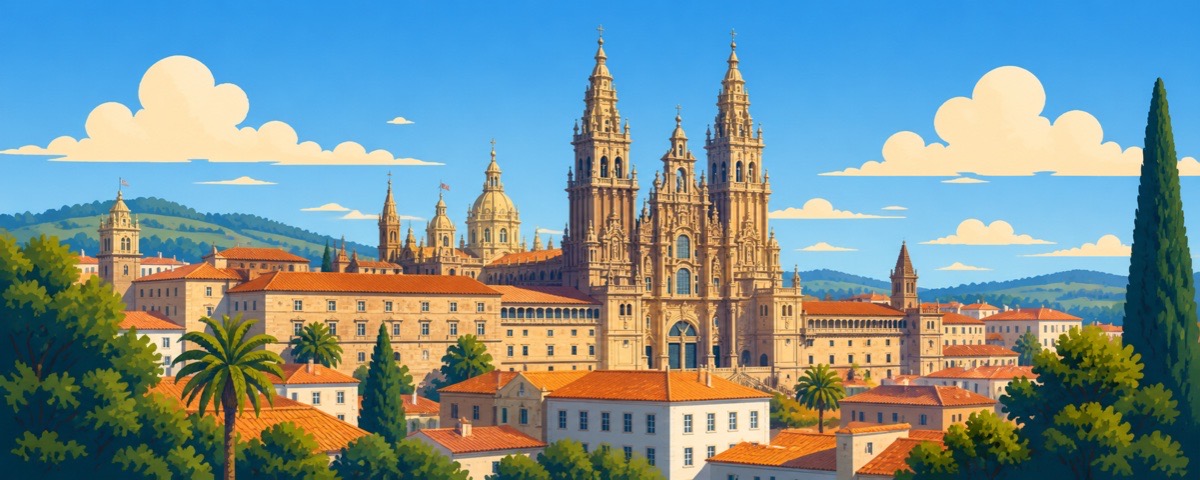
Santiago de Compostela is the capital of Galicia and was born around a tomb attributed to the Apostle James, a pilgrimage destination for a thousand years. The historic centre is entirely made of granite, with porticoes, squares and a cathedral that keeps the Romanesque style below and the Baroque on the façade; the modern city has grown around the university.
Did you know
Eighty kilos of flying censer.
Inside the cathedral swings the Botafumeiro, a huge censer weighing over eighty kilos, operated by eight men known as tiraboleiros.
How they talk in Santiago
Galician and Castilian coexist; «bo día», «grazas» and «rúa» are heard and read everywhere. «Morriña» indicates a deep nostalgia for one's land and has no perfect translation in English.
morriña
Melancholic nostalgia, particularly for one's own land. Used to describe the feeling of distance and melancholy towards the land of origin or, more generally, a nostalgic state.
Everyday life in Santiago
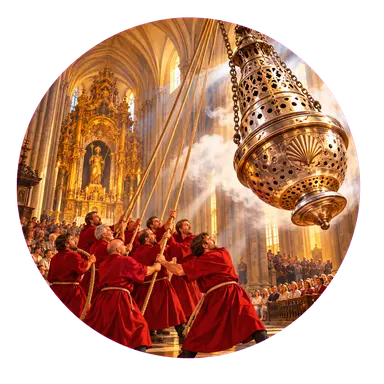
The «botafumeiro» that flies
Eight men in red robes, the tiraboleiros, make an eighty-kilo censer swing until it brushes the vaults of the cathedral. It is not done at every mass: it is announced, and the church fills up.
«Hoy sale el botafumeiro.» — Today the botafumeiro comes out.
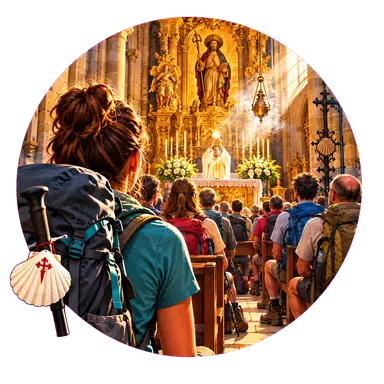
The «Misa do Peregrino» at noon
The pilgrim's mass at noon fills the cathedral with people with backpacks and hiking boots. Those who live here cross paths with them every day, recognisable by the gait of those who have walked for weeks.
«La misa del peregrino es a las doce.» — The pilgrim's mass is at twelve.
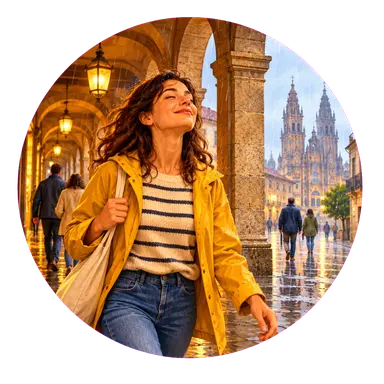
The rain is called «orballo»
It rains here more than one hundred and fifty days a year, often a fine rain that does not really soak you: people go out anyway, without an umbrella, and the arcades of rúa do Vilar are for this.
«Está orballando.» — It is drizzling.
What to eat in Santiago
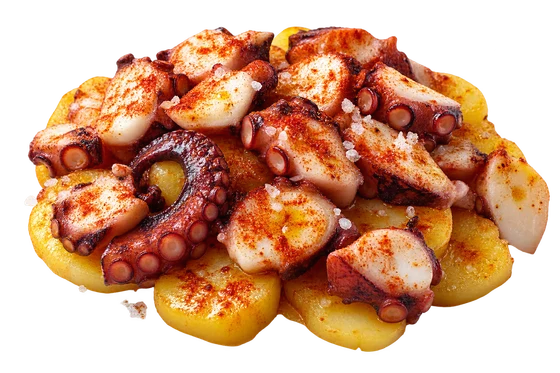
Pulpo á feira
Boiled octopus, cut with scissors, with oil, coarse salt and paprika, served on a wooden plate.
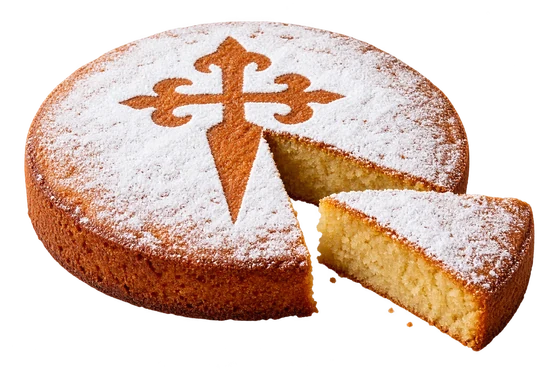
Tarta de Santiago
Almond cake without flour, with the cross of the Order of Santiago drawn on top with icing sugar.
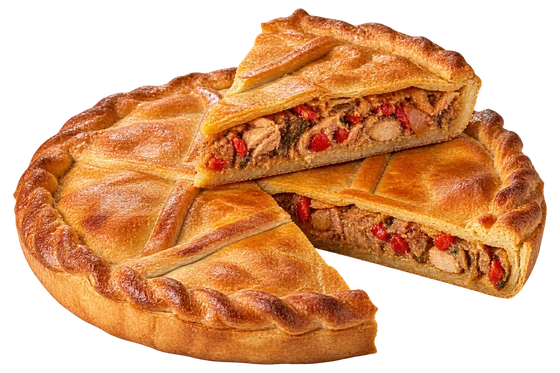
Empanada gallega
A low and wide savoury pie, filled with tuna, meat or mussels, cut into squares.
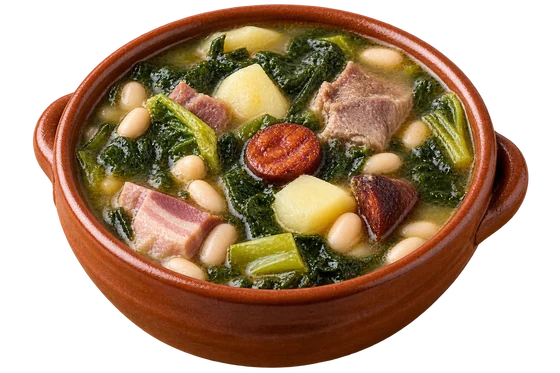
Caldo galego
Soup of turnip greens, potatoes, beans and lard, thick and hot, the dish of the humid winter.
Festivals in Santiago
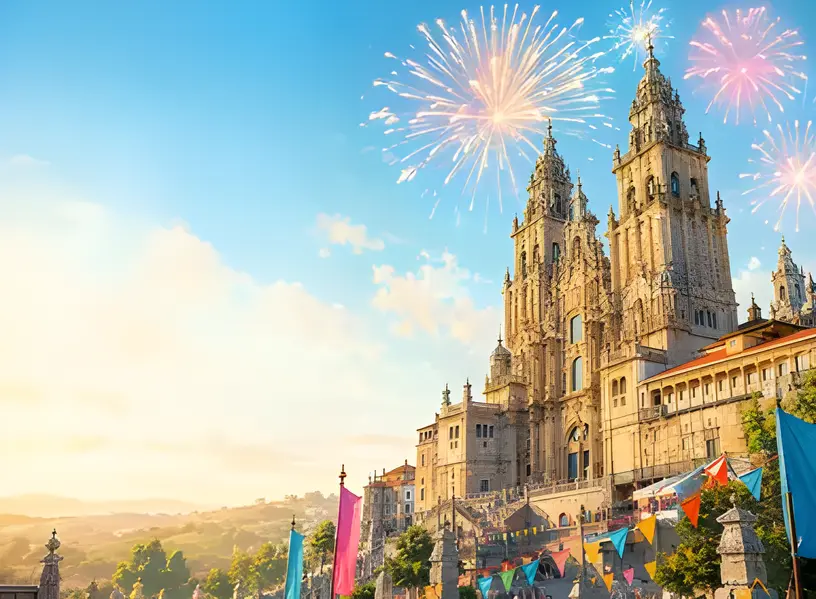
Fiestas del Apóstol
around 25 July
On the evening of the 24th, a wooden facade is «burned» in front of the cathedral: fireworks instead of the mosque of Córdoba, as in the legend.
What to see in Santiago
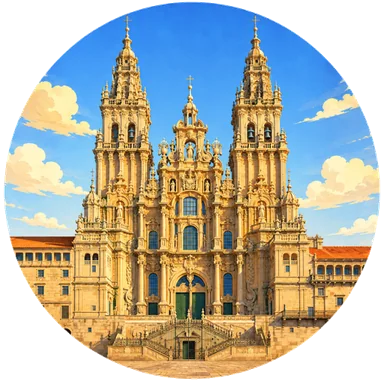
Catedral de Santiago
The goal of the pilgrimage: Romanesque underneath, Baroque on the facade, with the Pórtico da Gloria behind the towers.
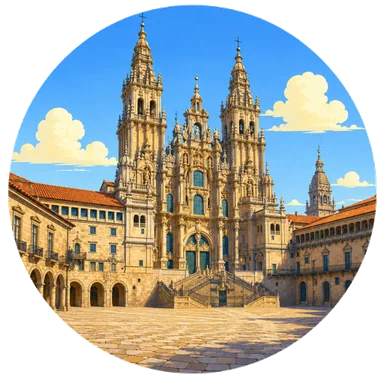
Praza do Obradoiro
The square in front of the cathedral, with four buildings from four eras on four sides.
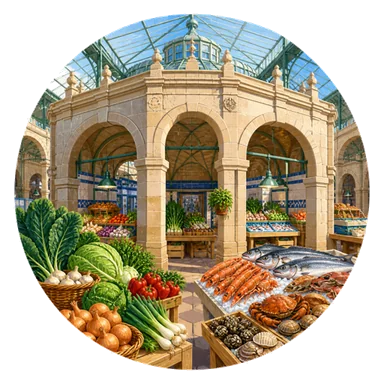
Mercado de Abastos
Eight granite naves where people shop: it is the second most visited place in the city.
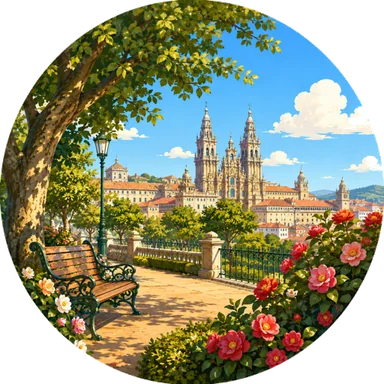
Parque da Alameda
The park from which the photograph of the cathedral is taken, with the avenue of centuries-old oaks.
Where Santiago comes from
Born around a tomb
9th century
The tomb
A tomb attributed to the apostle James is discovered: the village is born around it.
10th–12th century
The pilgrimage
Pilgrims arrive from all over Europe; the Romanesque cathedral begins in 1075.
16th–18th century
The Baroque granite
Squares and facades are redone in Baroque granite: the Obradoiro facade is from 1750.
1981 → today
The capital
It becomes the capital of Galicia; since 1985 the centre is a World Heritage Site.
Born here: Rosalía de Castro, poet, was born in the municipality of Santiago de Compostela.
Want to learn Spanish by travelling across Spain?
In Aula every lesson is a city lighting up on the map — Santiago is one of them. Two hundred lessons from A1 to C2, free, starting from your level.
Start from Santiago →