 Aula· Spain, city by city
Galicia
Vilagarcía
«Vilagarcía de Arousa destaca por la producción de marisco gallego.»Vilagarcía de Arousa stands out for the production of Galician seafood.
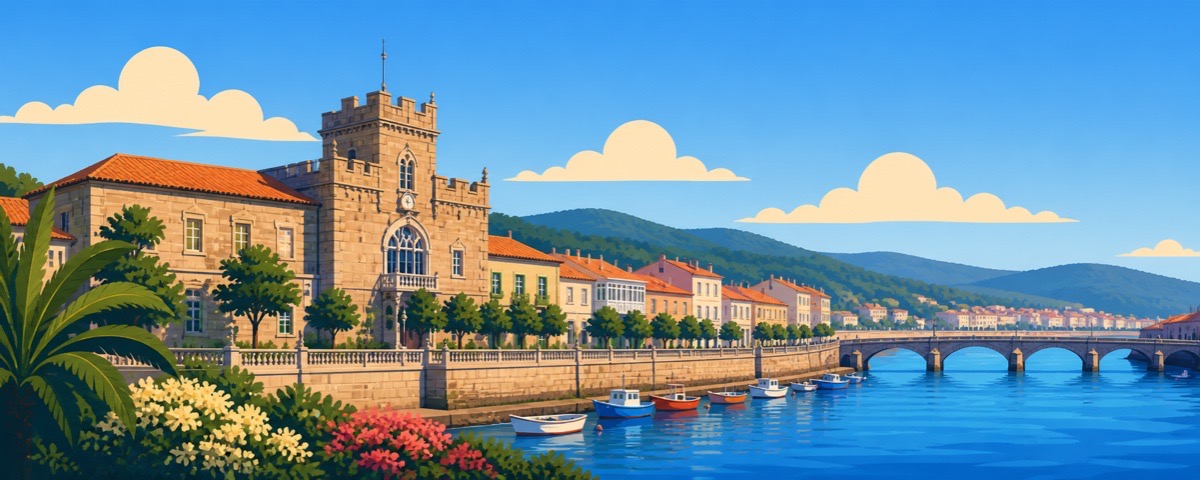
Vilagarcía de Arousa is located at the head of the Arousa estuary, the largest in Galicia, on the west coast. Its economy is the sea: a good portion of Europe's mussels come from the rafts anchored in the estuary, and around the city are the pazos with their centuries-old camellias.
Did you know
Homemade carts ending in fountains.
During the San Roque festival, the famous 'Combati dos Carranos' takes place, a race of homemade carts that ends in a fountain.
How they talk in Vilagarcía
«Batea» indicates the floating platforms used to farm mussels and is a daily word in the ría. Galician is very present in public and family life.
morriña
Melancholic nostalgia, particularly for one's own land. Used to describe the feeling of distance and melancholy towards the land of origin or, more generally, a nostalgic state.
Everyday life in Vilagarcía
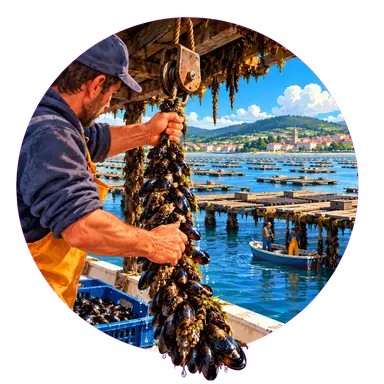
The «bateas» in the middle of the ría
Wooden rafts for farming mussels cover the ría by the hundreds, like a floating village: people work on boats beneath them, and the mussels are harvested by hand with a winch.
«Los mejillones crecen en las bateas.» — Mussels grow on the bateas.
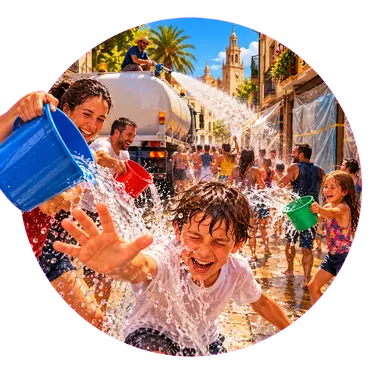
The «Festa da Auga» on 16 August
Tanker trucks and neighbours with buckets soak everyone in the street for hours: you leave the house knowing you will return soaked, and shops cover their windows.
«Vas a acabar empapado.» — You will end up soaked.
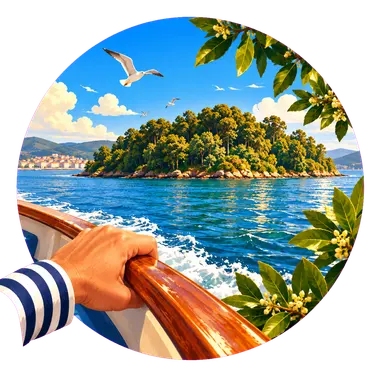
The island of Cortegada in front
The laurel island is in the ría and you go there by boat: it was gifted to the king and was never built upon, so it has remained a forest in the middle of the water.
What to eat in Vilagarcía
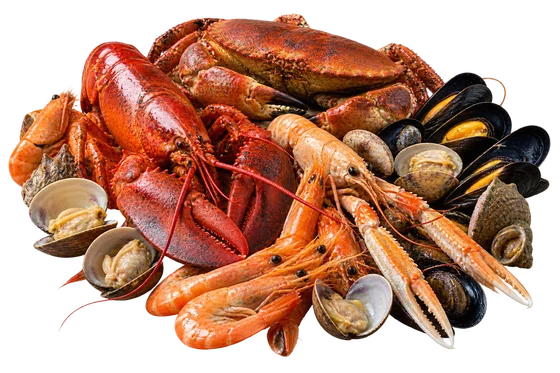
Mariscada
Platter of shellfish from the ría, boiled and served all together.
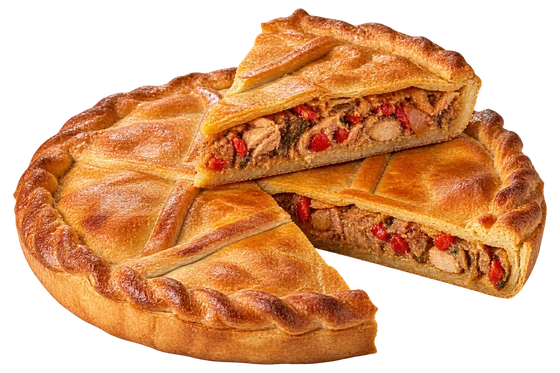
Empanada gallega
Low savoury pie filled with tuna, meat or mussels, cut into squares.
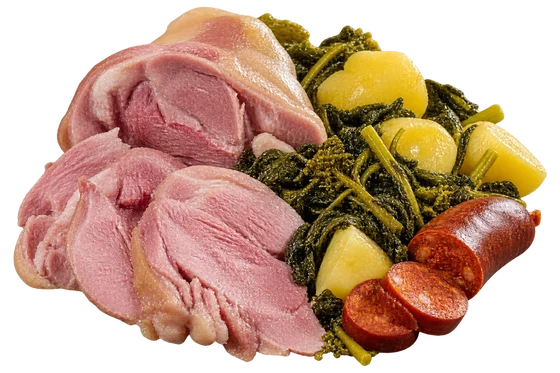
Lacón con grelos
Salted pork shoulder boiled with turnip tops, potatoes and chorizo.
Festivals in Vilagarcía
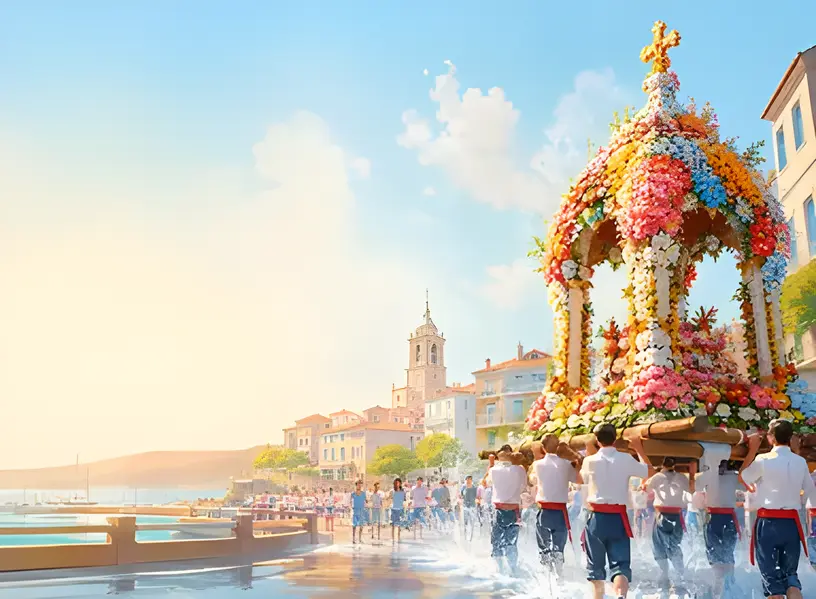
Festa da Auga
16 August
After the procession of San Roque the town waters itself: buckets, hoses and fire trucks, and anyone who leaves the house gets wet.
What to see in Vilagarcía
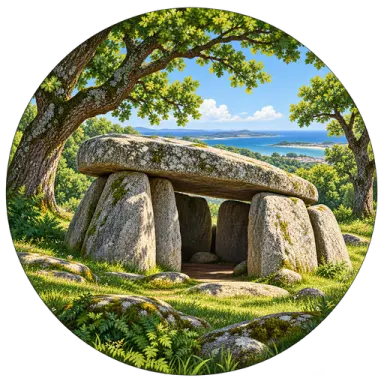
Las bateas
Wooden rafts anchored in the ría, from which the mussel ropes hang: in the ría of Arousa there are thousands of them.
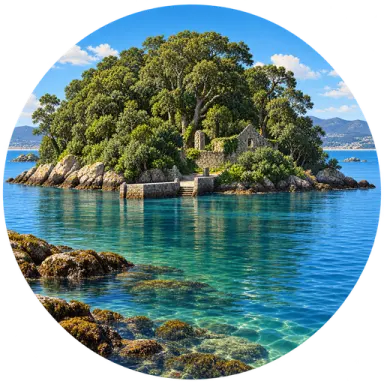
Illa de Cortegada
An island in the ría with the largest laurel forest in Europe, which was gifted to the king and then returned.
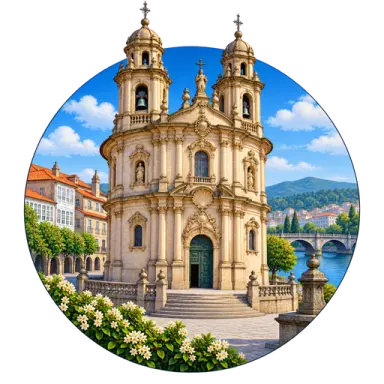
Pazo de Rubianes
A 15th-century Galician pazo with centuries-old camellias and vineyards around it.
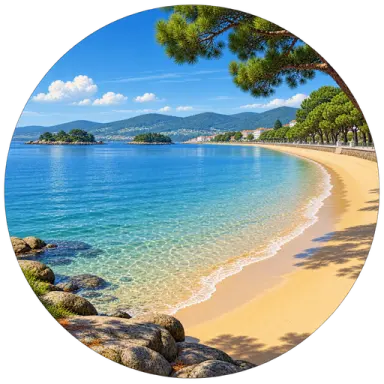
Praia de Compostela
The beach inside the ría, long and sheltered, with a promenade and pine trees.
Where Vilagarcía comes from
The ría of the rafts
Roman era
The ría
The ría of Arousa has always been inhabited: people live off fishing and salt.
1614
The town
Three parishes are united into a single town around the port.
19th century
The port
Trade with America and the railway make the city grow.
1946 → today
The bateas
Mussel farming begins on the rafts: the ría fills with platforms.
Want to learn Spanish by travelling across Spain?
In Aula every lesson is a city lighting up on the map — Vilagarcía is one of them. Two hundred lessons from A1 to C2, free, starting from your level.
Start from Vilagarcía →