 Aula· Spain, city by city
La Rioja
Calahorra
«Calahorra produce muchas verduras y hortalizas de calidad.»Calahorra produces many quality vegetables and greens.
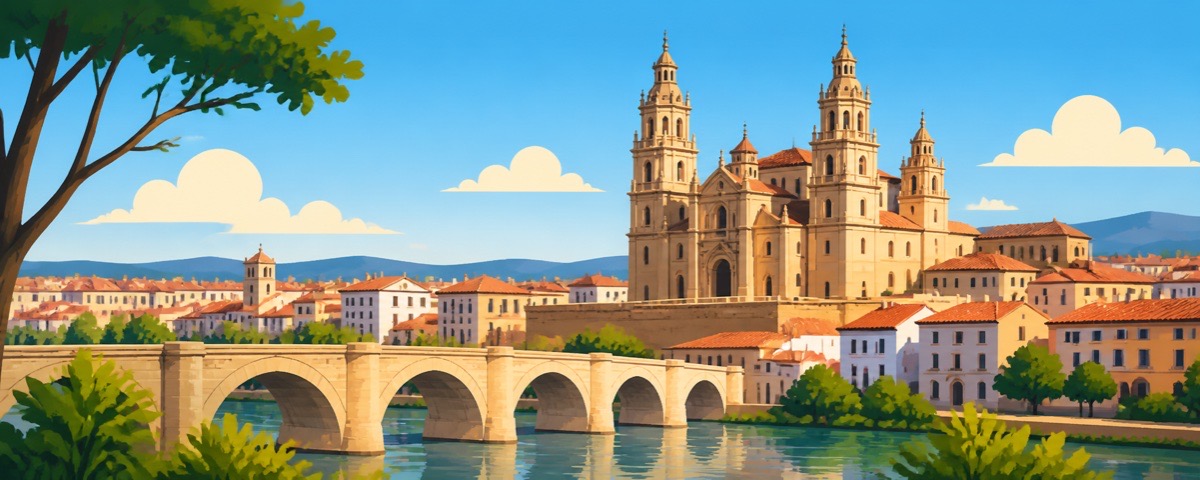
Calahorra is located at the eastern end of La Rioja, where the Cidacos flows into the Ebro, in the middle of a plain of vegetable gardens. It was a Roman municipality under the name of Calagurris and was the birthplace of Quintilian; today it lives off its vegetables and the canning industry that processes and ships them throughout Spain.
Did you know
It minted coins and birthed Quintilian.
In Roman times, the city was so important that it minted its own coins and was the birthplace of the famous rhetorician Marcus Fabius Quintilian.
How they talk in Calahorra
«Calagurritano» derives from the ancient Calagurris and is the cultured demonym still in use. «Menestra» here indicates a dish of seasonal vegetables cooked separately and then combined, not a generic soup.
golmajería
Confectionery, sweets, or a collection of treats. Used to talk about sweets and pastry preparations from the Riojan tradition.
Everyday life in Calahorra
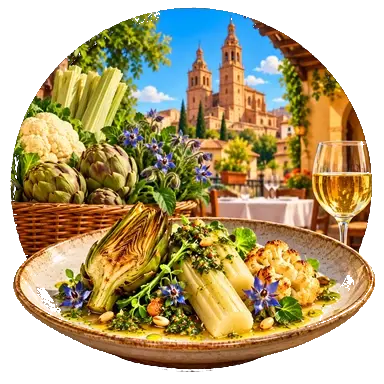
The «Jornadas de la Verdura» in April
For one week, restaurants only put garden vegetables on the menu: artichokes, cardoon, borage and cauliflower, cooked as main dishes. It is the gastronomic event of the year.
«Hoy solo hay verdura en la carta.» — Today there is only vegetable on the menu.
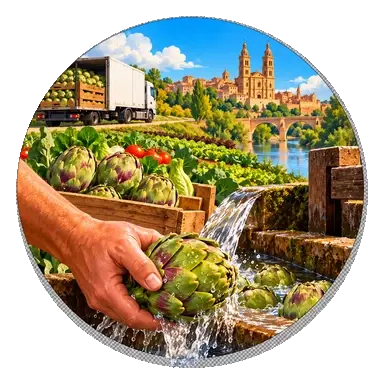
The vegetable garden irrigated by the Cidacos
Calahorra's vegetables have had centuries of fame and the canning factories process what is harvested just a few kilometres away: in season, trucks of artichokes pass by all morning.
«Estas alcachofas son de aquí.» — These artichokes are from here.
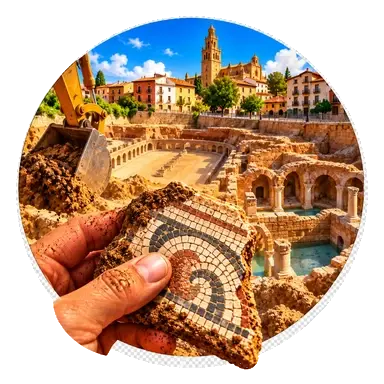
The Roman «Calagurris» underfoot
Calagurris was an important Roman city and under the houses there are remains of the circus and the baths: when digging for a foundation, something often comes out.
What to eat in Calahorra
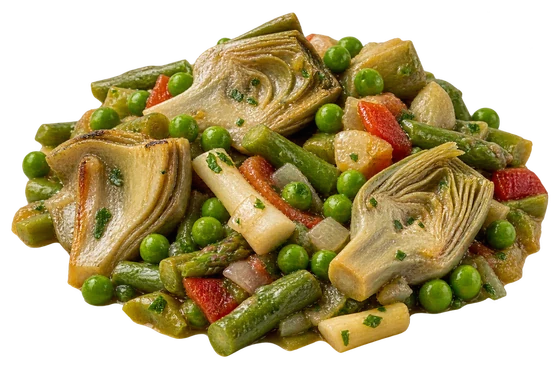
Menestra riojana
Garden vegetables stewed one by one and then combined, with ham and hard-boiled egg.
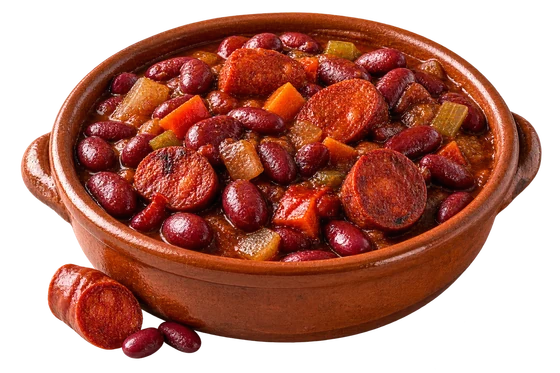
Caparrones
Small red beans cooked slowly with chorizo, morcilla and bacon, thick and dark.
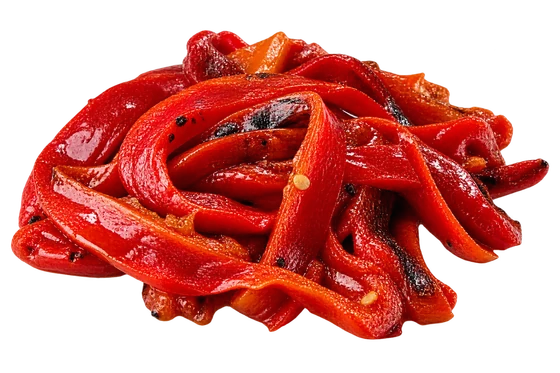
Pimientos del cristal
Thin peppers roasted and peeled by hand, seasoned with oil and garlic.
Festivals in Calahorra
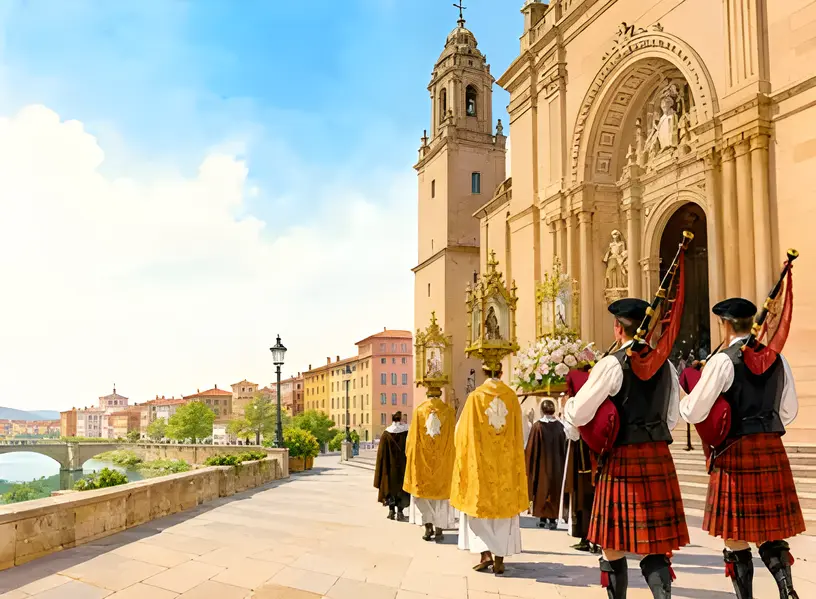
San Emeterio y San Celedonio
the days around 31 August
The peñas with their neckerchiefs fill the centre, and the two patron saints, Roman soldiers martyred here, go out in procession.
What to see in Calahorra
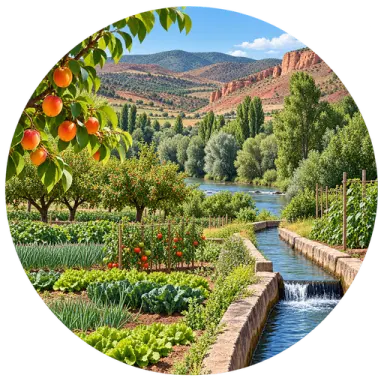
Catedral de Santa María
One of the few cathedrals in Spain built on low ground and outside the walls, near the river.
Museo de la Romanización
The mosaics, sculptures and coins of Calagurris, with the room dedicated to Quintilian.
Iglesia de San Andrés
The Baroque church of the upper city, with the tower that can be seen from the huerta.
Where Calahorra comes from
The city that resisted until starvation
Celtiberian era
Kalakorikos
City of the Berones with its own mint: it resisted Pompey until they were reduced to eating their own belts.
1st century BC
Calagurris
Roman municipality: Quintilian, the master of rhetoric of Rome, was born here.
8th–11th century
Qalahurra
Muslim frontier city, captured in 1045.
20th century → today
Vegetables
The huerta of the Ebro and the canning industry support the city's economy.
Want to learn Spanish by travelling across Spain?
In Aula every lesson is a city lighting up on the map — Calahorra is one of them. Two hundred lessons from A1 to C2, free, starting from your level.
Start from Calahorra →