 Aula· Spain, city by city
La Rioja
Haro
«Haro tiene bodegas históricas y el famoso vino de Rioja.»Haro has historic wineries and the famous Rioja wine.
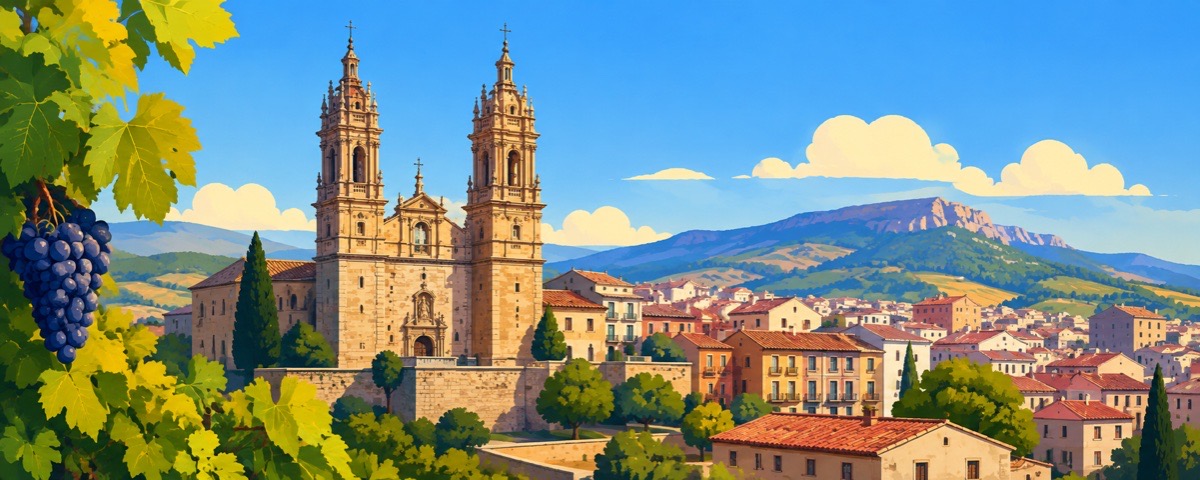
Haro is located in the far north-west of La Rioja, where the Ebro receives the Tirón, and is the wine capital of the region. Around its railway station is the densest cluster of centenary wineries in the world, which began at the end of the nineteenth century when phylloxera drove producers out of France.
Did you know
First Spanish city with electric light.
Haro was the first city in Spain to install electric street lighting in 1890, thanks to the proceeds from the wine industry.
How they talk in Haro
«Jarrero» is the traditional nickname for the inhabitants of Haro. «Sarmiento» refers to the dry vine shoots used as fuel for roasting «chuletillas».
golmajería
Confectionery, sweets, or a collection of treats. Used to talk about sweets and pastry preparations from the Riojan tradition.
Everyday life in Haro

The «Batalla del Vino» on 29 June
At dawn, thousands of people dressed in white climb a mountain and drench each other in red wine with buckets, wineskins and water pistols: you come down purple, and the clothes are thrown away.
«Ponte algo blanco que se va a manchar.» — Put on something white, it's going to get stained.
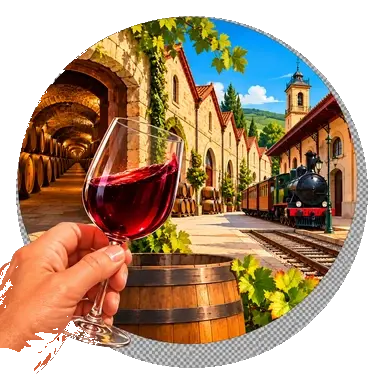
The «Barrio de la Estación» of the wineries
Around the station there are seven or eight of the historic wineries of La Rioja, one attached to the other: you can visit them on foot in one morning, and there are underground tunnels full of barrels.
«Las bodegas están todas juntas.» — The wineries are all together.
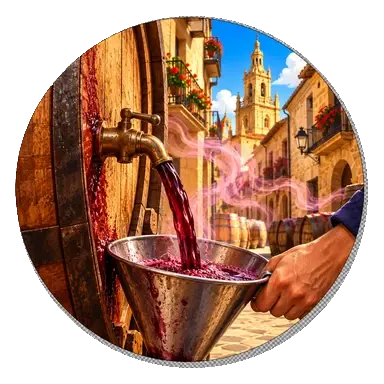
The smell of barrels in the centre
On bottling days, the smell of wine can be felt in the streets: it is something that those from Haro recognise and no longer even notice.
«Hoy huele a vino por la calle.» — Today it smells of wine in the street.
What to eat in Haro
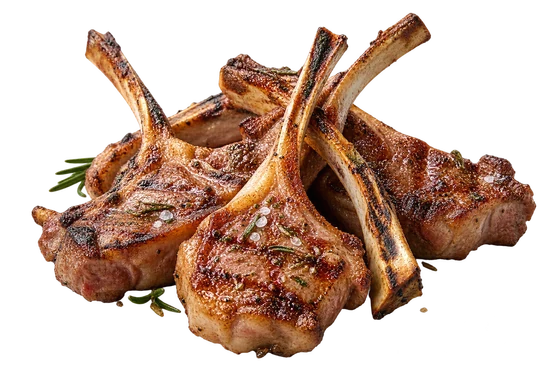
Chuletillas al sarmiento
Lamb chops grilled over dry vine shoots, which burn quickly and provide the aroma.
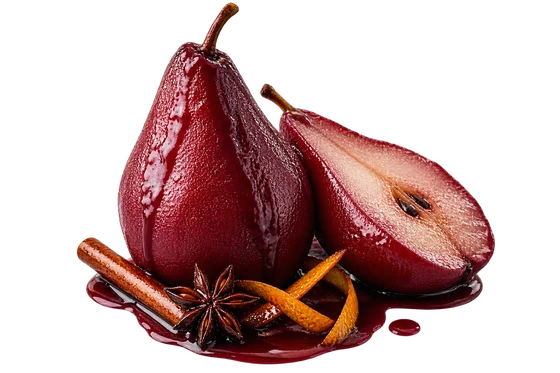
Peras al vino de Rioja
Pears cooked slowly in red wine with sugar and cinnamon, until they become dark and glossy.
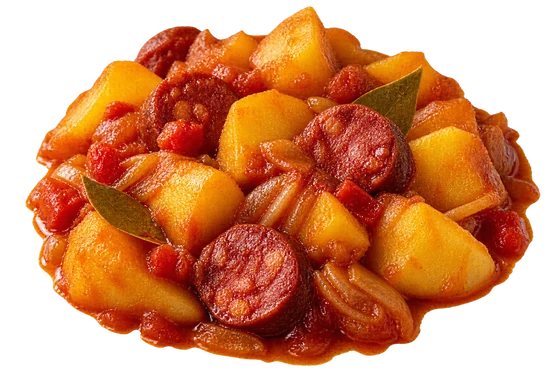
Patatas a la riojana
Potatoes broken by hand with chorizo and dried pepper, dense and red.
Festivals in Haro
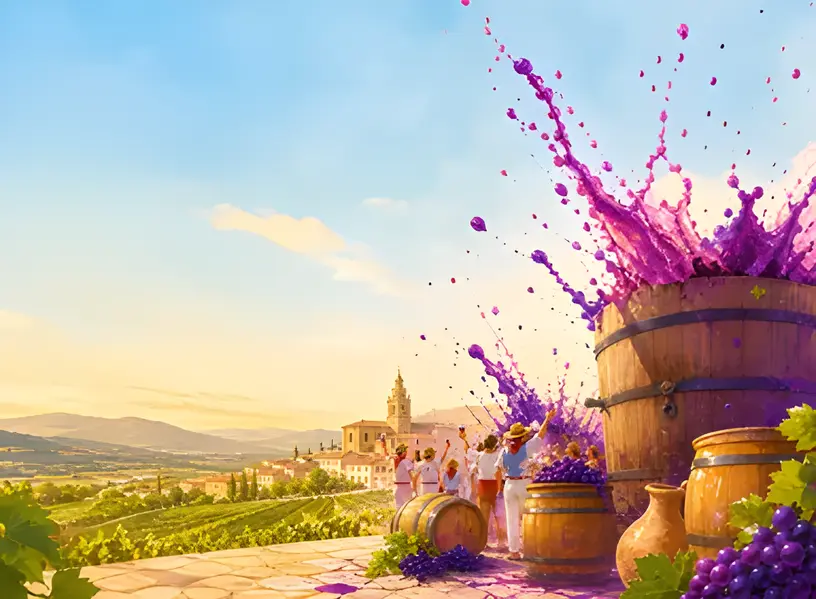
Batalla del Vino
29 June
At dawn, you climb to the Riscos de Bilibio dressed in white and drench each other in red wine with buckets and wineskins: you come down purple.
What to see in Haro
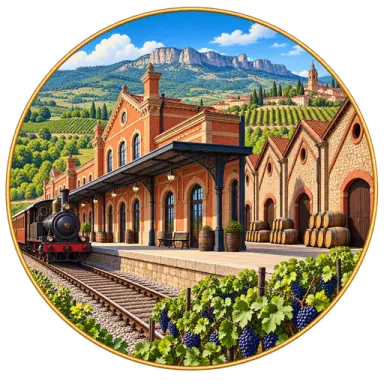
Barrio de la Estación
Within a few blocks are some of the oldest wineries in La Rioja: no other place in the world has so many so close together.
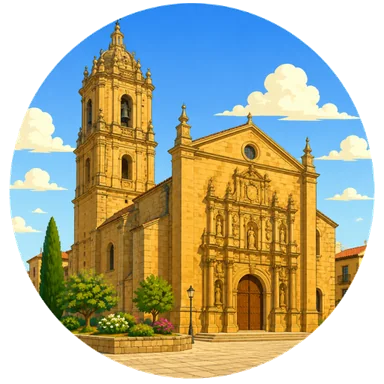
Iglesia de Santo Tomás
The Plateresque portal is a stone altarpiece as tall as the facade.
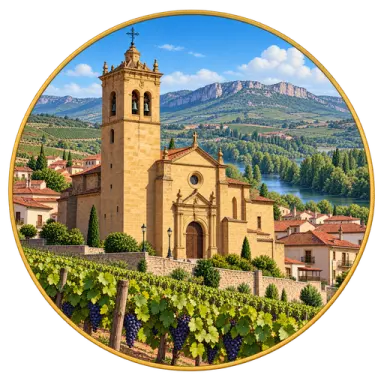
Riscos de Bilibio
The cliff above the Ebro where every 29 June people climb at dawn for the wine battle.
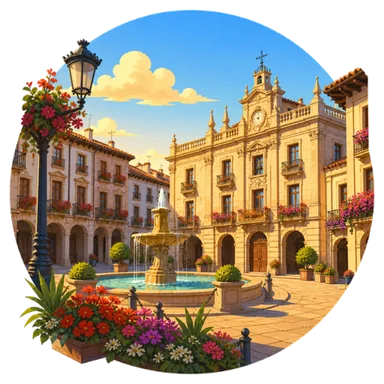
Plaza de la Paz
The arcaded square in the centre, with the bandstand and the Neoclassical town hall.
Where Haro comes from
The district with the most centenary wineries in the world
11th century
The village
It was born on the banks of the Ebro, where the river can be forded.
1890
The light
It was among the first cities in Spain to have electric light: hence the saying «we are in Haro, you can see the lights».
1891 → today
The Barrio de la Estación
Phylloxera drove away the French producers, who arrived here: the great wineries were born around the station.
Every 29 June
The wine battle
You climb to the Riscos de Bilibio at dawn and drench each other in wine.
Want to learn Spanish by travelling across Spain?
In Aula every lesson is a city lighting up on the map — Haro is one of them. Two hundred lessons from A1 to C2, free, starting from your level.
Start from Haro →