 Aula· Spain, city by city
Madrid
Alcalá de Henares
«Alcalá de Henares es la ciudad natal del escritor Miguel de Cervantes.»Alcalá de Henares is the birthplace of the writer Miguel de Cervantes.
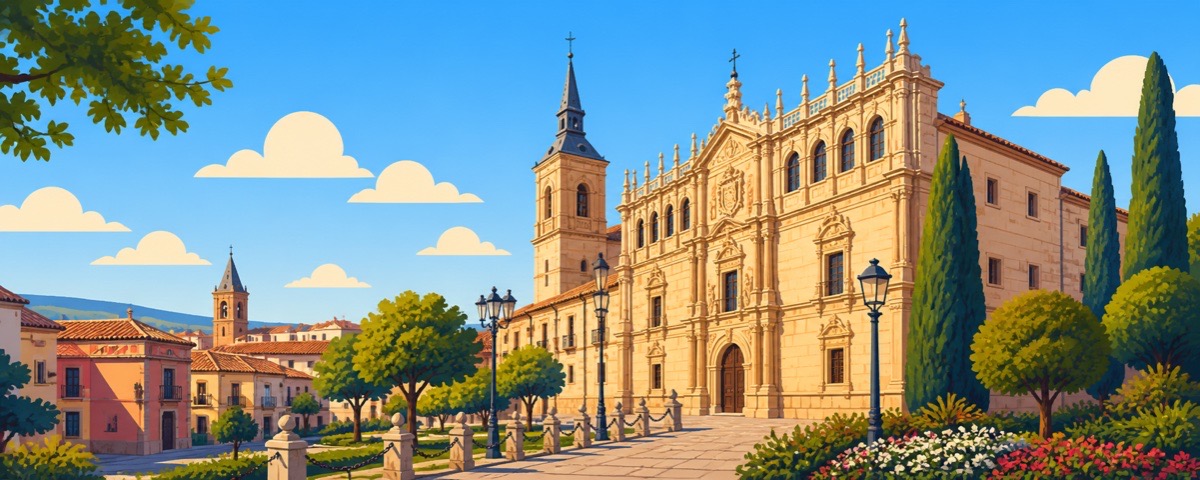
Alcalá de Henares is thirty kilometres east of Madrid, on the Henares plain. It was a Roman city named Complutum, and in 1499 a university was founded there that determined its shape: the historic centre, with its colleges, convents, and arcaded street, is considered the model for Spanish university cities.
Did you know
The Cervantes Prize is awarded here.
The ancient university courtyards of Alcalá host the annual award ceremony for the prestigious Cervantes Prize for literature.
How they talk in Alcalá de Henares
The university lexicon carries a lot of weight: «Cisneriana» and «Complutense» refer to the history of the city before the name Complutense passed to the Madrid university. The Castilian spoken is essentially that of the Madrid area.
mazo
Very; a lot; a large quantity. Colloquial adverb or quantifier: «me gusta mazo», «hay mazo de gente».
Everyday life in Alcalá de Henares
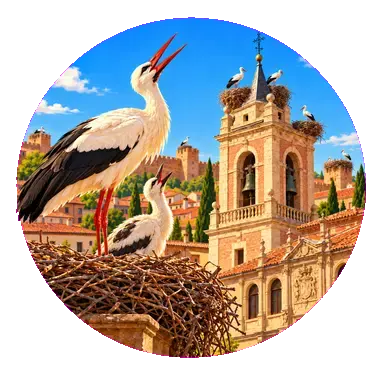
The «cigüeñas» on every tower
Alcalá has one of the largest urban stork colonies in Europe: nests on the bell towers, on the walls and on the university roofs. The clattering of their beaks can be heard from all the streets of the centre.
«Mira, tienen nido en la torre.» — Look, they have a nest on the tower.
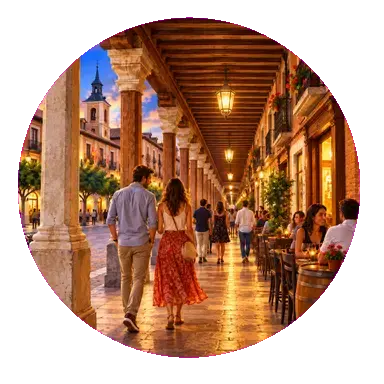
The «Calle Mayor» under the arcades
It is the longest arcaded street in Spain, almost five hundred metres of wood and stone columns: you walk in the shade in summer and in the dry in winter, and it is where people stroll in the evening.
«Damos una vuelta por la Calle Mayor.» — Let's take a walk along the Calle Mayor.
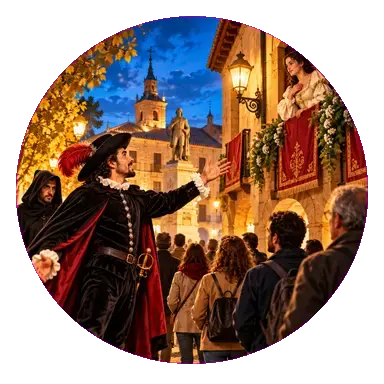
The «Don Juan Tenorio» in November
Every late October Zorrilla's play is performed in the streets and squares of the centre, with the audience moving from one scene to the next. It has been done for over thirty years.
What to eat in Alcalá de Henares
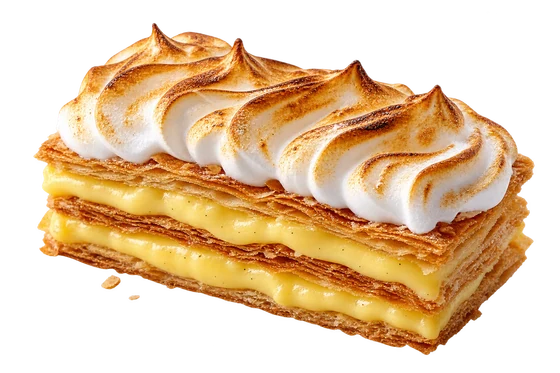
Costrada de Alcalá
A layered dessert of puff pastry, cream and meringue, with a golden and crunchy surface.
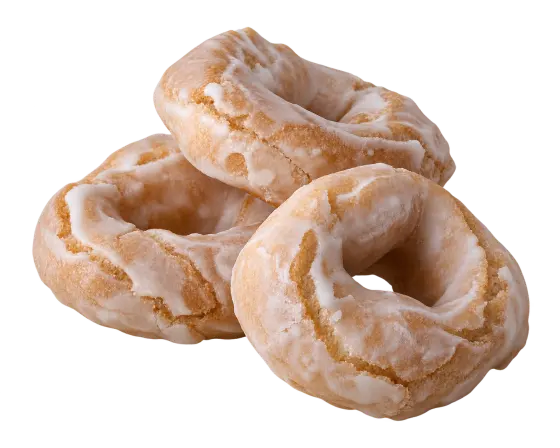
Rosquillas de Alcalá
Hard sugar-glazed ring doughnuts, which have been made here since the 16th century.
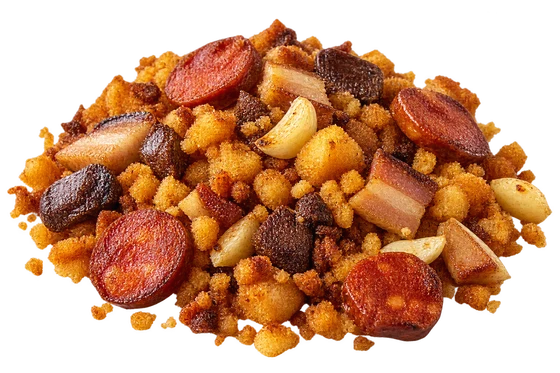
Migas del pastor
Stale bread sautéed with garlic, bacon and grapes, the lunch of those who were out all day.
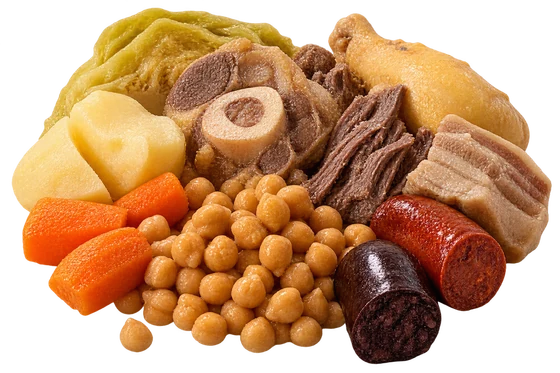
Cocido madrileño
Chickpeas, meat and vegetables in three courses: first the broth, then the chickpeas, then the meats.
Festivals in Alcalá de Henares
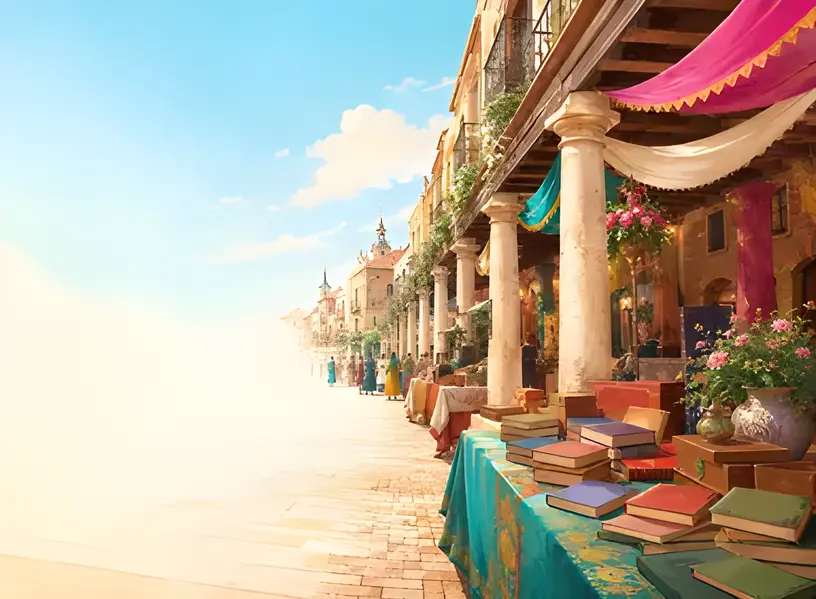
Semana Cervantina
around 9 October
The centre becomes a 17th-century market and Cervantes is performed in the street, in the city where he was born.
What to see in Alcalá de Henares
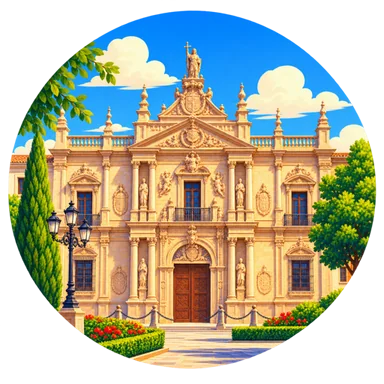
Universidad Cisneriana
The 1499 university, with its Plateresque façade and the Paraninfo where the Cervantes prize is awarded.
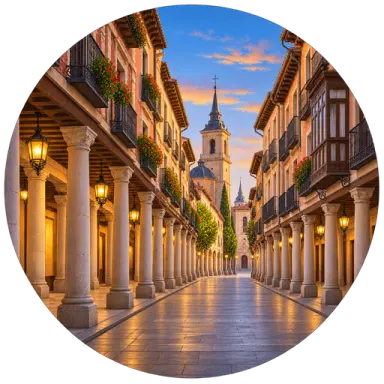
Calle Mayor
The longest arcaded street in Spain, almost five hundred metres long, which was the street of the Jewish quarter.
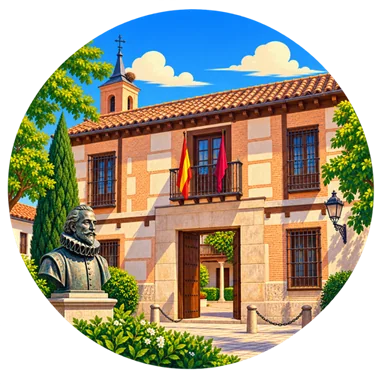
Casa Natal de Cervantes
The house where the author of Don Quixote was born in 1547, reassembled room by room as it was.
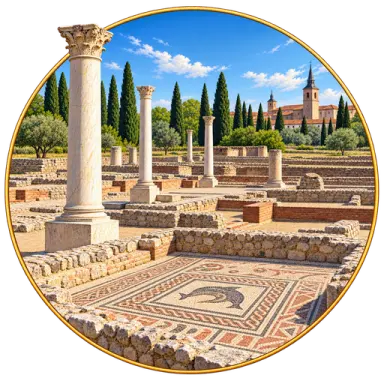
Complutum
The Roman city, with the Casa de los Grifos and its frescoes still on the walls.
Where Alcalá de Henares comes from
The city of the university and Cervantes
1st century BC
Complutum
Roman city in the Henares plain, with villas, baths and a forum.
9th century
Al-Qal'a
The Muslims build the fortress on the river: «al-qal'a» means «the castle», and hence the name.
1499
The university
Cardinal Cisneros founds the Studio: the first Bible in four side-by-side languages will be born here.
1547
Cervantes
Miguel de Cervantes is born. The university will leave for Madrid in 1836 and will only return in 1977.
Born here: Miguel de Cervantes, writer.
Want to learn Spanish by travelling across Spain?
In Aula every lesson is a city lighting up on the map — Alcalá de Henares is one of them. Two hundred lessons from A1 to C2, free, starting from your level.
Start from Alcalá de Henares →