 Aula· Spain, city by city
Madrid
Aranjuez
«Aranjuez es famoso por su Palacio Real y sus grandes jardines.»Aranjuez is famous for its Royal Palace and its large gardens.
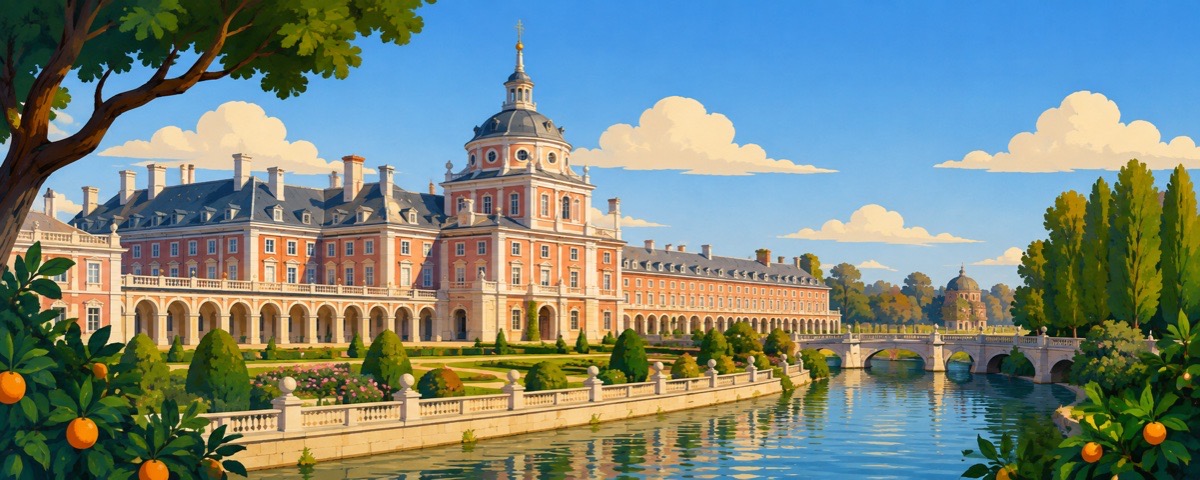
Aranjuez is located forty-five kilometres south of Madrid, where the Tagus meets the Jarama, in an area of irrigated vegetable gardens. It was one of the Royal Sites of the Spanish crown from the sixteenth century, and the city was built in a grid pattern around the palace to house the court, which moved there every spring.
Did you know
Strawberries for three centuries now
The famous Aranjuez strawberries have been grown here since the eighteenth century thanks to the favourable microclimate of the Tagus valley.
How they talk in Aranjuez
«Real Sitio» is a term that recurs constantly because it defines the urban and administrative history of Aranjuez. «Fresón» and «espárrago» are words linked to crops that have built a part of the local identity.
mazo
Very; a lot; a large quantity. Colloquial adverb or quantifier: «me gusta mazo», «hay mazo de gente».
Everyday life in Aranjuez

The «fresón» on street stalls
Aranjuez strawberries are sold along the roads in wooden crates, from April to June, and are eaten with cream. They are larger and less sweet than supermarket ones.
«Un kilo de fresón, por favor.» — A kilo of strawberries, please.

The «Tren de la Fresa» from Madrid
A vintage train with wooden carriages brings Madrilenians here on spring weekends, and hostesses in costume distribute strawberries on board. It follows the same route as the second Spanish railway, from 1851.
«El Tren de la Fresa sale de Madrid.» — The Strawberry Train leaves from Madrid.
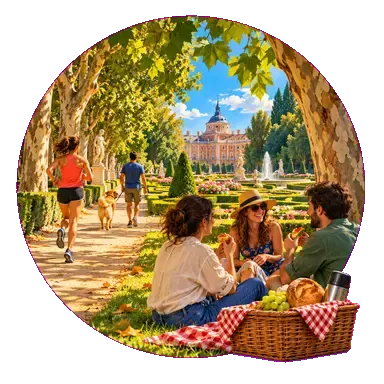
The gardens are used as a park
The Jardín del Príncipe and the Parterre are not a museum: the people of Aranjuez jog there, take their dogs there and have snacks under the centuries-old plane trees.
What to eat in Aranjuez

Fresón de Aranjuez
The strawberry grown in the vegetable gardens irrigated between the two rivers, large and sweet, from April to June.
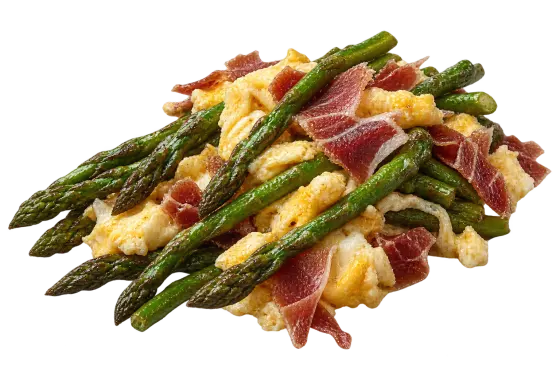
Espárragos de Aranjuez
Asparagus from the royal vegetable gardens, thin and green, sautéed with egg or ham.
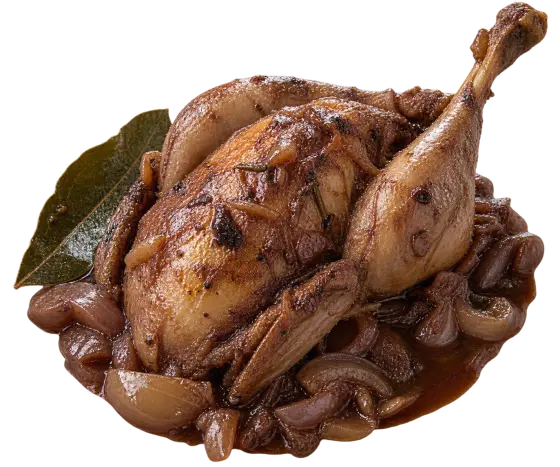
Perdiz estofada
Partridge stewed slowly with wine, bay leaf and onion: it is the dish of the royal hunt.
Festivals in Aranjuez
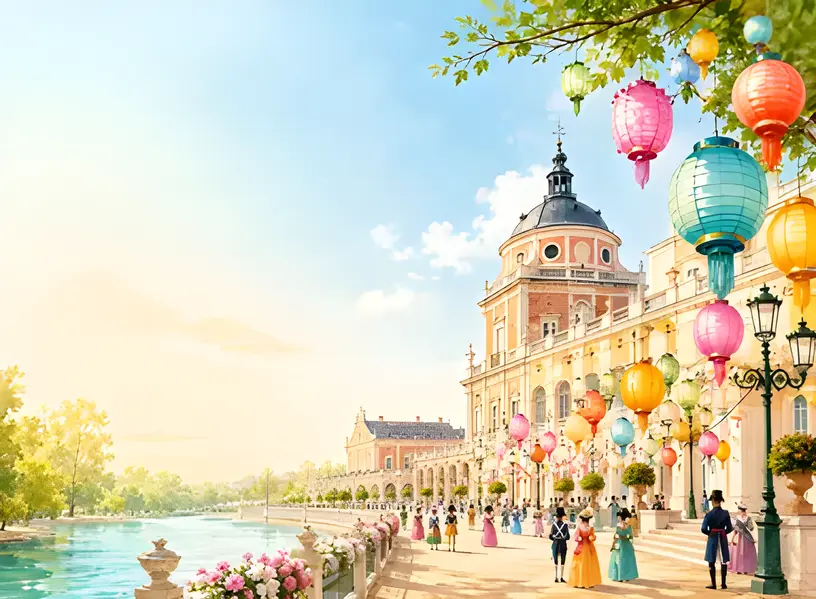
Fiestas del Motín
the first weekend of September
The assault on Godoy's palace of 1808 is reenacted, with people in costume and blank-firing rifles.
What to see in Aranjuez
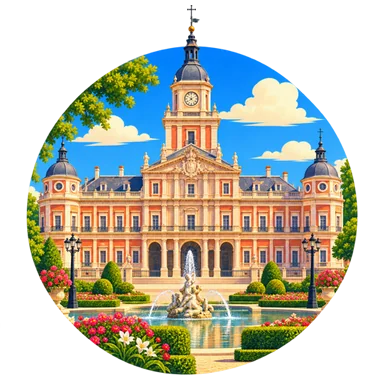
Palacio Real de Aranjuez
The spring palace of the kings of Spain, long and low on the banks of the Tagus.

Jardín del Príncipe
One hundred and fifty hectares of garden along the Tagus, with trees brought from half the world by ship.
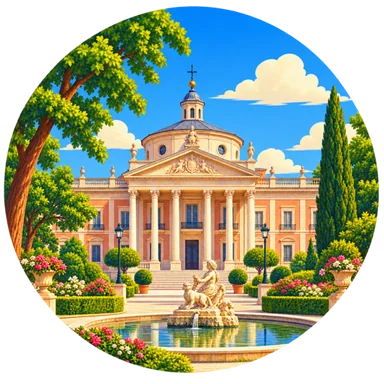
Casa del Labrador
It is called the «farmer's house» and is one of the most richly decorated buildings in Spain.

Jardín de la Isla
A real island between the Tagus and an artificial canal, with mythological fountains in a row.
Where Aranjuez comes from
The spring palace
14th century
The hunt
The master of the Order of Santiago has a hunting residence here, between the Tagus and the Jarama.
1560
Philip II
He makes it one of the Royal Sites and entrusts Juan Bautista de Toledo with the palace and gardens.
18th century
The city
Ferdinand VI and Charles III build a grid-plan city around it for the court and servants.
1808
The tumult
The Aranjuez revolt brings down Godoy and forces Charles IV to abdicate.
Want to learn Spanish by travelling across Spain?
In Aula every lesson is a city lighting up on the map — Aranjuez is one of them. Two hundred lessons from A1 to C2, free, starting from your level.
Start from Aranjuez →