 Aula· Spain, city by city
Madrid
El Escorial
«El Escorial es famoso por su enorme monasterio histórico.»El Escorial is famous for its huge historic monastery.
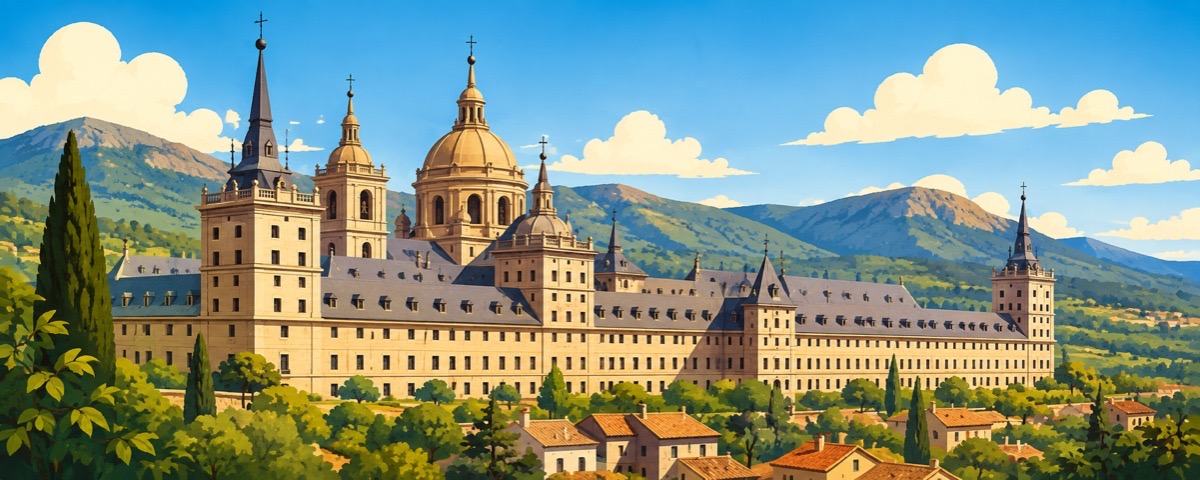
San Lorenzo de El Escorial is fifty kilometres north-west of Madrid, at the foot of Mount Abantos, at an altitude of more than a thousand metres. The town was born around the monastery that Philip II had built between 1563 and 1584, and its layout is still that of the houses of the courtiers and servants of the court.
Did you know
A floor plan shaped like a grid
The floor plan of the great monastery of El Escorial was designed in the shape of a grid to commemorate the martyrdom of Saint Lawrence.
How they talk in El Escorial
«Monasterio» and «Real Sitio» are everyday terms in the local lexicon because the entire area lives around the Filipino complex. A distinction is often made between El Escorial and San Lorenzo de El Escorial, two different municipalities that visitors tend to confuse.
mazo
Very; a lot; a large quantity. Colloquial adverb or quantifier: «me gusta mazo», «hay mazo de gente».
Everyday life in El Escorial
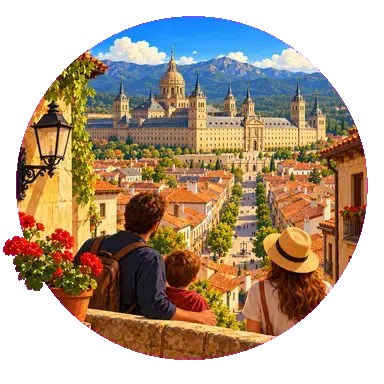
The monastery measures everything
Philip II's building is so large that the town has grown around it: the streets, the squares and even the horizon seen from the houses are organised in relation to its bulk.
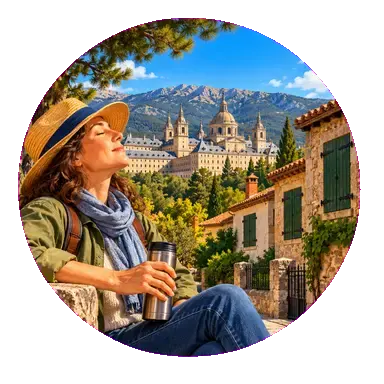
One thousand metres, ten degrees less
At one thousand metres, it is ten degrees cooler here than in the city, and those who can have always come up to spend August: the holidaymakers' houses can be recognised because they are closed nine months of the year.
«Aquí se está fresco en agosto.» — It is cool here in August.
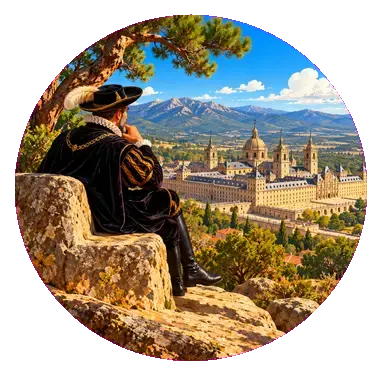
The «Silla de Felipe II»
A seat carved into the rock on the hill, from where according to tradition the king watched the work: it is the classic walk, half an hour on foot from the town, and from there you can see the entire monastery.
«Vamos a la Silla de Felipe II.» — Let's go to the Silla de Felipe II.
What to eat in El Escorial
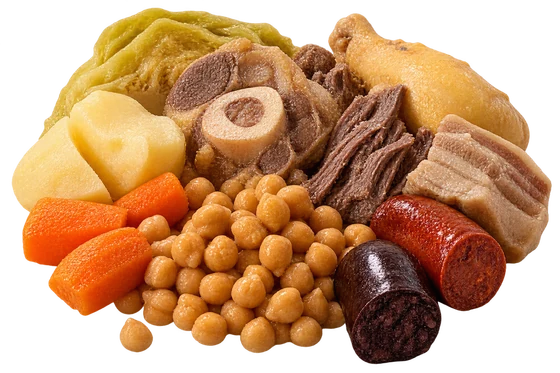
Cocido madrileño
Chickpeas, meat and vegetables served in three courses: broth, chickpeas, meats.
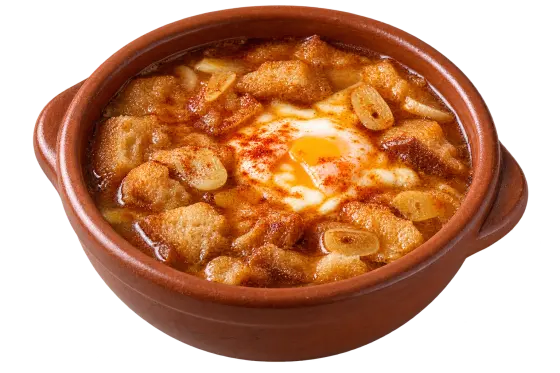
Sopa castellana
Bread, garlic, paprika and broth, with an egg broken into it at the end.
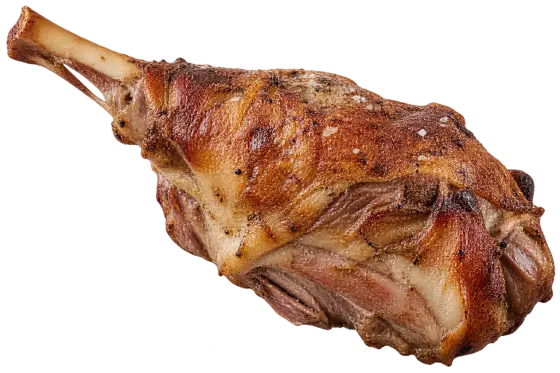
Cordero asado
Sierra lamb roasted in the oven, with little more than salt, lard and white wine.
Festivals in El Escorial
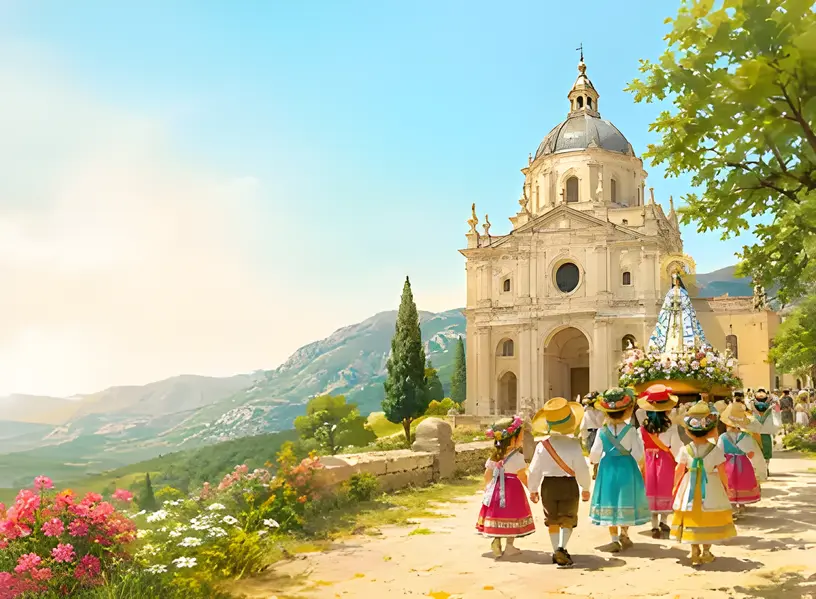
Romería de la Virgen de la Herrería
the first Sunday of September
People go up to the Herrería forest with decorated carts and sierra clothing, and eat under the holm oaks.
What to see in El Escorial
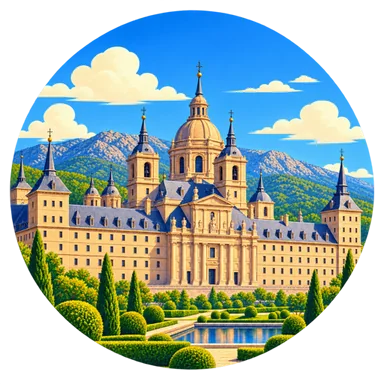
Monasterio de El Escorial
Monastery, palace, basilica and library in a single building, with a floor plan in the shape of a gridiron.
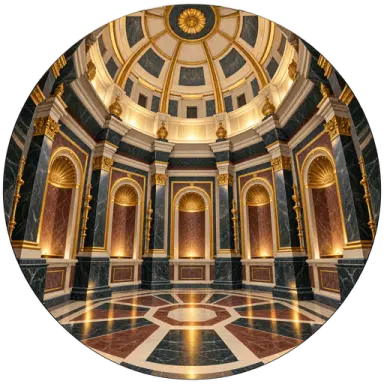
Panteón de los Reyes
The octagonal room of marble and bronze where the kings of Spain are buried, twenty-six identical urns.
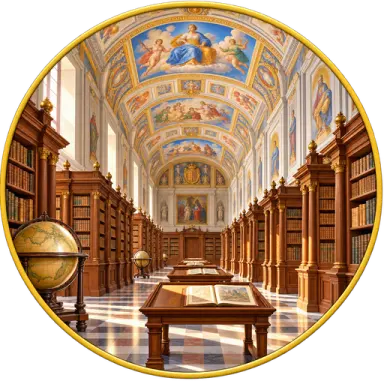
Biblioteca
Forty thousand volumes under a frescoed vault, with the books placed backwards.
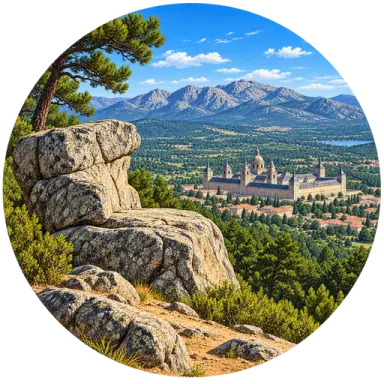
Silla de Felipe II
Seats carved into the granite on a hill, from which you can see the entire monastery.
Where El Escorial comes from
A monastery in the shape of a gridiron
1557
The promise
Philip II wins at Saint-Quentin on Saint Lawrence's day and promises the saint a monastery.
1563–1584
The construction site
Twenty-one years of work: Juan Bautista de Toledo begins, Juan de Herrera finishes.
16th–20th century
The pantheon
It becomes the tomb of the kings of Spain: almost all of them, from Charles V onwards, are buried here.
18th century → today
The town
Around the monastery the town grows, with the houses of courtiers and servants.
Want to learn Spanish by travelling across Spain?
In Aula every lesson is a city lighting up on the map — El Escorial is one of them. Two hundred lessons from A1 to C2, free, starting from your level.
Start from El Escorial →