
Madrid
Madrid
«Madrid es la capital y tiene el famoso Museo del Prado.»Madrid is the capital and has the famous Prado Museum.
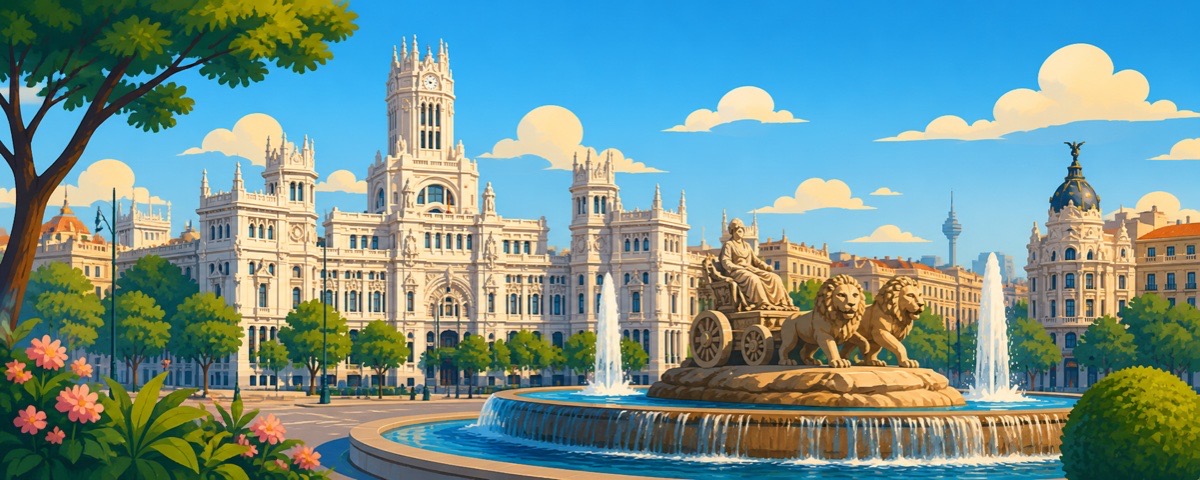
Madrid is the capital of Spain and its most populous city, situated in the middle of the Meseta at an altitude of over six hundred metres. It became the capital in 1561, when Philip II moved the court there, and the centre preserves the layout of that growth: the Palacio Real and the Plaza Mayor on one side, and the great museums along the Paseo del Prado on the other.
Did you know
A river flows under Gran Vía.
An underground river called the Rio Abroñigal flows beneath the Gran Vía; it is now channelled and integrated into the city's sewage system.
How they talk in Madrid
Local words
«Mazo» means «a lot», «currar» is to work and «garito» indicates a venue; these are words very much associated with colloquial Madrilenian Castilian. The personal «leísmo» is frequent and accepted in standard Spanish in cases like «le vi» referring to a man.
mazo
sounds like “matho”
Very; a lot; a large quantity. Colloquial adverb or quantifier: «me gusta mazo», «hay mazo de gente».
Everyday life in Madrid
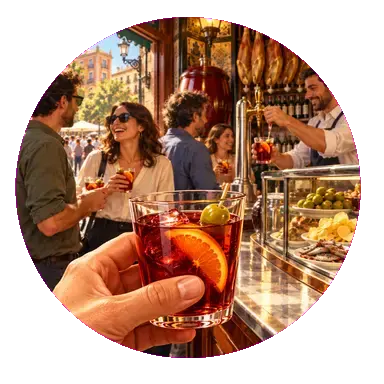
The hour of the «vermut»
On Sunday before lunch, people go out to drink a red vermouth on tap, with a slice of orange and an olive, standing at the counter. It is a precise and social hour: you drink one, talk for half an hour and go to eat.
«¿Nos tomamos el vermut?» — Shall we have a vermouth?
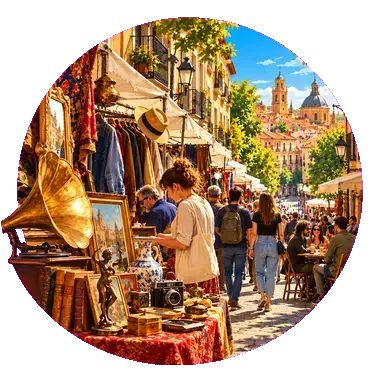
The «Rastro» on Sunday morning
From nine o'clock, the streets around Ribera de Curtidores fill with stalls of second-hand goods, and people go even without buying anything: you walk down the slope and end up drinking something in La Latina.
«El domingo bajamos al Rastro.» — On Sunday we go down to the Rastro.
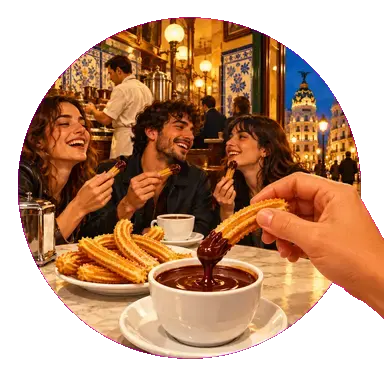
Chocolate and churros at six in the morning
After a night out, you end up in a chocolate shop dipping churros in thick chocolate. It is not breakfast and it is for those who have not yet gone to sleep: some venues have been open for more than a century.
«Unos churros con chocolate.» — Churros with chocolate.
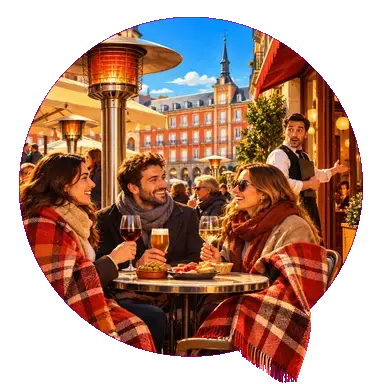
The «terrazas» all year round
People sit at outdoor tables even in January, with heaters and blankets: in Madrid, life is lived in the street, and asking for a table inside almost always surprises the waiter.
«¿Nos sentamos fuera?» — Shall we sit outside?
What to eat in Madrid
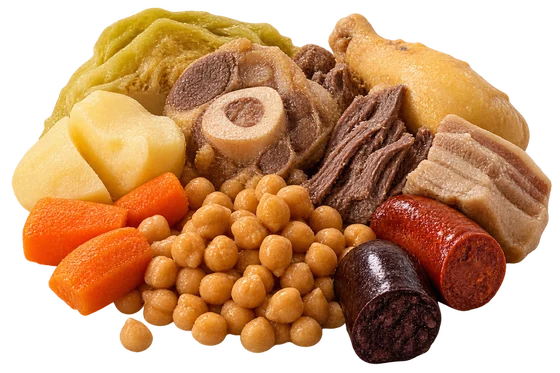
Cocido madrileño
Chickpeas, meat, vegetables and chorizo cooked together and served in three courses: first the broth with vermicelli, then the chickpeas and vegetables, then the meats.
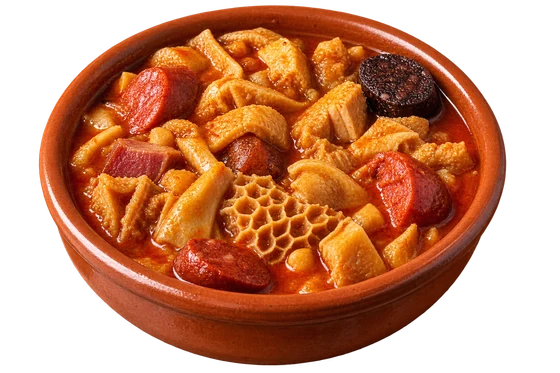
Callos a la madrileña
Tripe stewed for a long time with chorizo, morcilla, paprika and chickpeas, served piping hot in an earthenware pot.
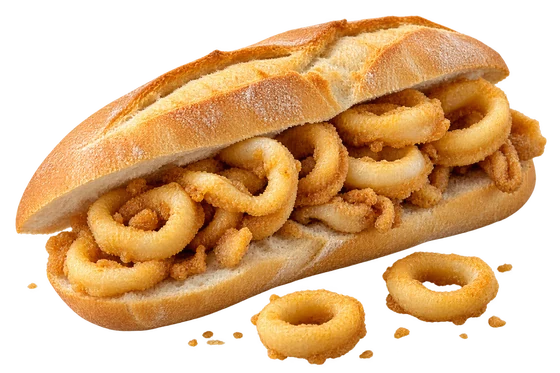
Bocadillo de calamares
Sandwich with fried squid rings inside, without sauce. It is eaten standing up, around Plaza Mayor.
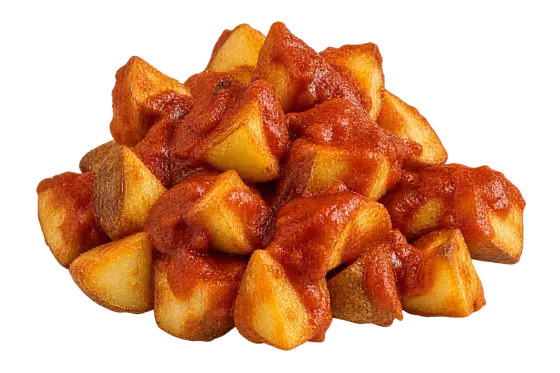
Patatas bravas
Fried potatoes in irregular pieces with spicy paprika sauce. In Madrid, the brava is red and spicy, without alioli.
Festivals in Madrid
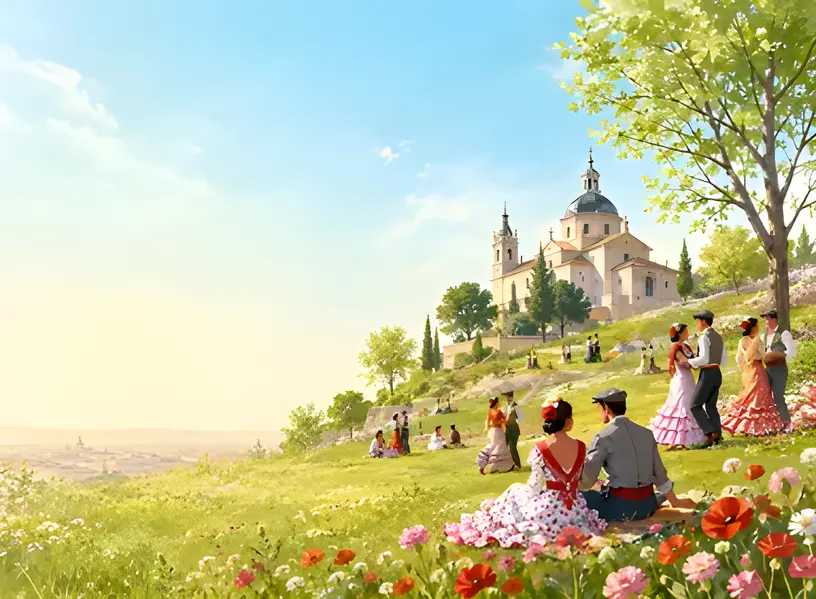
Fiestas de San Isidro
around 15 May
People go to the pradera dressed as «chulapos», drink water from the saint's fountain and eat rosquillas, listas or tontas.
What to see in Madrid
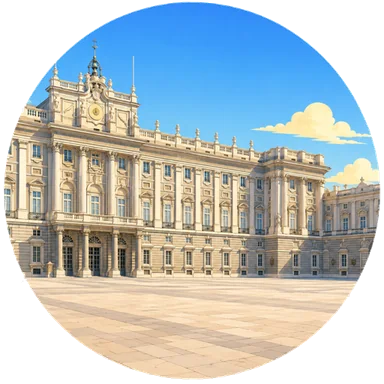
Palacio Real
The largest royal palace in Western Europe, built between 1738 and 1755 where the burnt alcázar stood.
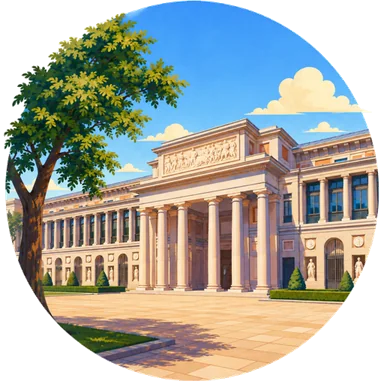
Museo del Prado
The art gallery of the kings of Spain, opened to the public in 1819.
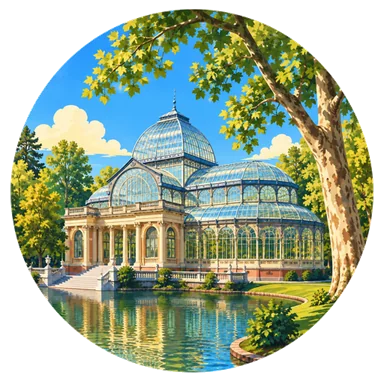
Parque del Retiro
The private garden of the kings, opened to the public in 1868, with the Palacio de Cristal in the middle of the trees.
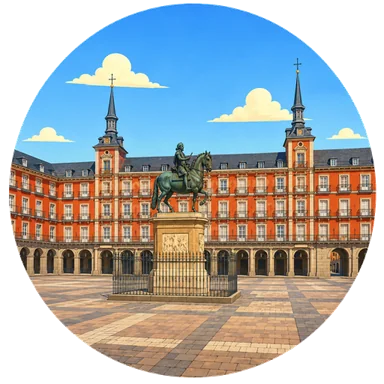
Plaza Mayor
The 17th-century arcaded square, closed on four sides, with nine arches to enter it.
Where Madrid comes from
From water channels to the capital
9th century
Mayrit
The emir Muhammad I builds a fortress on the Manzanares to defend Toledo: the name comes from the underground water channels.
1085
The conquest
Alfonso VI takes it together with Toledo, but for centuries it remains an unimportant border village.
1561
The capital
Philip II brings the court here: from a town of twelve thousand inhabitants, it becomes the centre of the monarchy.
18th–19th century
The Bourbon city
The Palacio Real, the Prado and the great avenues arrive; in 1868 the Retiro opens to the public.
Born here: Lope de Vega, playwright.
Want to learn Spanish by travelling across Spain?
In Aula every lesson is a city lighting up on the map — Madrid is one of them. Two hundred lessons from A1 to C2, free, starting from your level.
Start from Madrid →