 Aula· Spain, city by city
Madrid
Móstoles
«Móstoles es una gran ciudad industrial muy cerca de Madrid.»Móstoles is a large industrial city very close to Madrid.
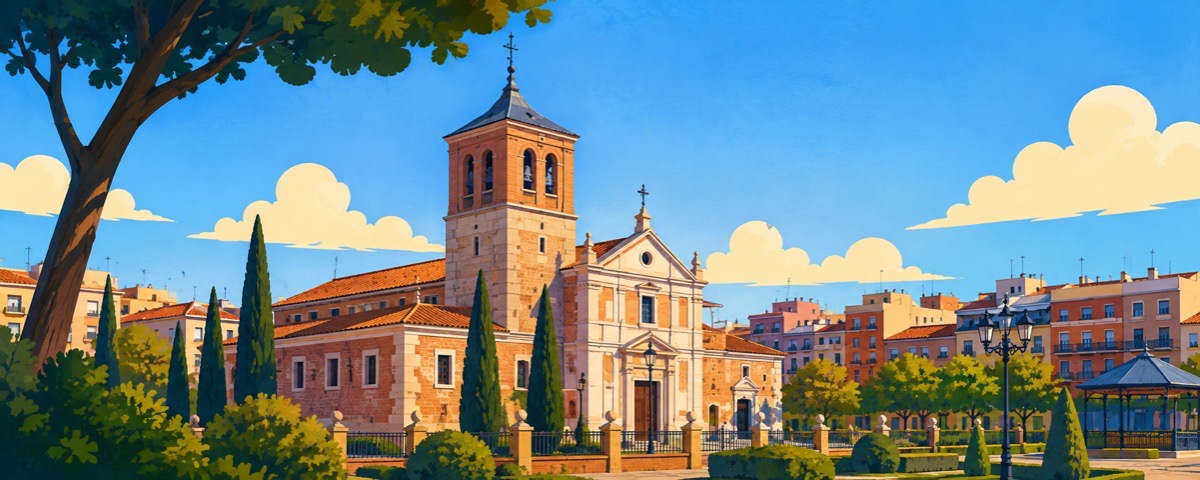
Móstoles is the second municipality of the Community of Madrid by population, eleven kilometres south-west of the capital. It was an agricultural village of a few thousand people until the sixties, when the industrial expansion of Madrid transformed it in twenty years into a city of over one hundred and fifty thousand inhabitants.
Did you know
The decree that called for revolt.
In 1808, the mayor of Móstoles signed a famous decree inciting the Spanish people to rebel against the Napoleonic troops.
How they talk in Móstoles
The speech is essentially contemporary Madrilenian, with «mazo», «currar» and «pillar» very common among young people. «Móstoles Central» is a daily reference point because it concentrates MetroSur and Cercanías.
mazo
Very; a lot; a large quantity. Colloquial adverb or quantifier: «me gusta mazo», «hay mazo de gente».
Everyday life in Móstoles
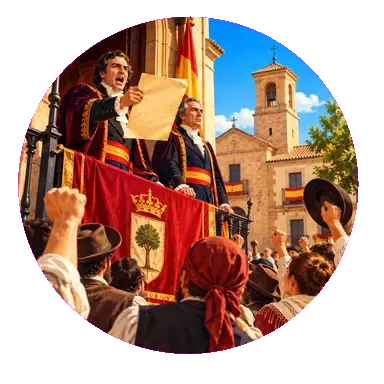
The «Bando de los Alcaldes» of 2 May
The revolt against Napoleon started from here, with a proclamation signed by the two mayors of the town, and every 2 May the city re-reads it in the square in costume. It is the date that the mostoleños feel is their own.
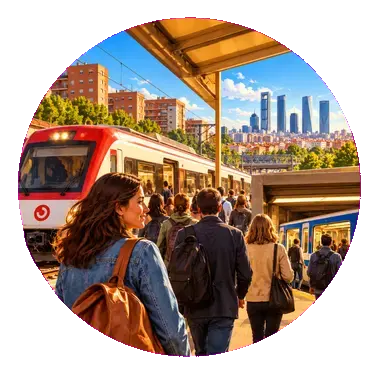
Thirty minutes of «Cercanías»
The surface train and the underground take you to Madrid in half an hour, and tens of thousands of people take them every day. Móstoles has grown from twenty thousand to two hundred thousand inhabitants in fifty years.
«Cojo el Cercanías todos los días.» — I take the train every day.

A young city
The average age is among the lowest in the region: the neighbourhoods are full of parks, football pitches and schools, and street life is led by families with children.
What to eat in Móstoles
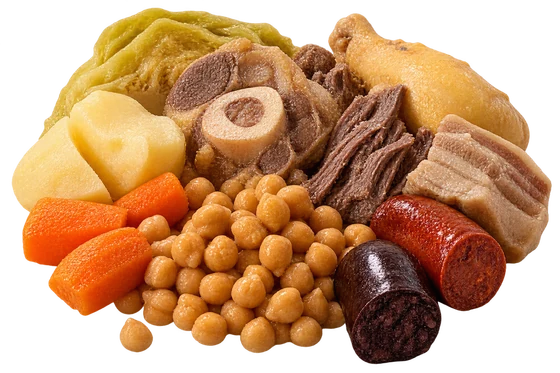
Cocido madrileño
Chickpeas, meat and vegetables in three courses: broth, chickpeas, meats.
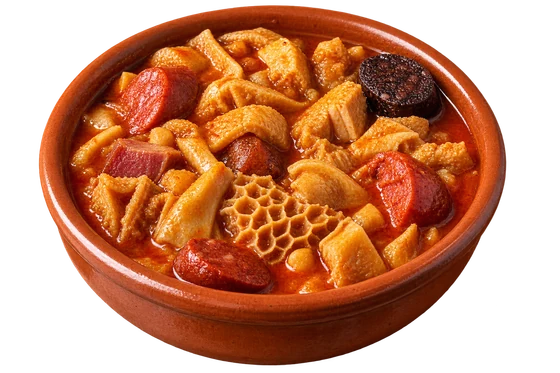
Callos a la madrileña
Tripe stewed with chorizo, morcilla and paprika, served piping hot in an earthenware pot.

Rosquillas
Glazed doughnuts, «tontas» without glaze and «listas» with lemon glaze.
Festivals in Móstoles
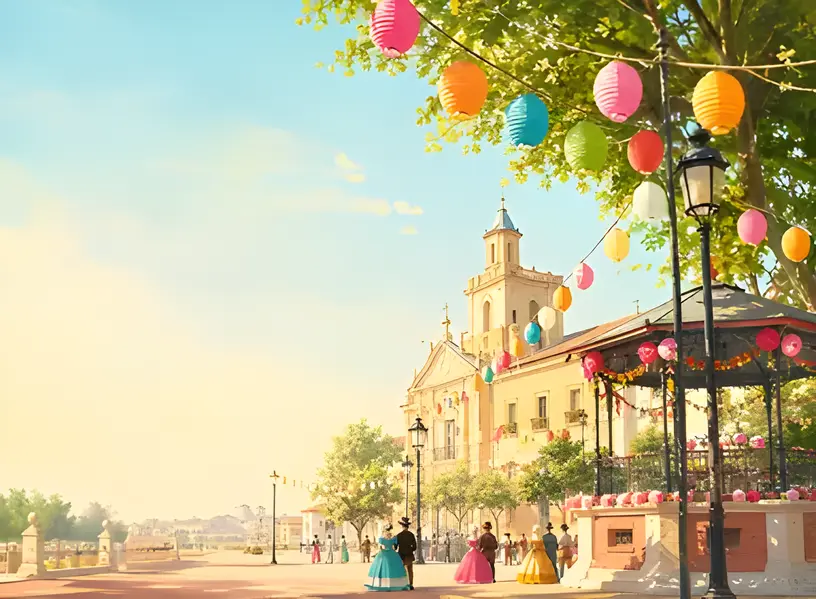
Fiestas del 2 de Mayo
from the end of April to 2 May
The proclamation with which the two mayors called Spain to revolt against Napoleon is re-read in the square.
What to see in Móstoles
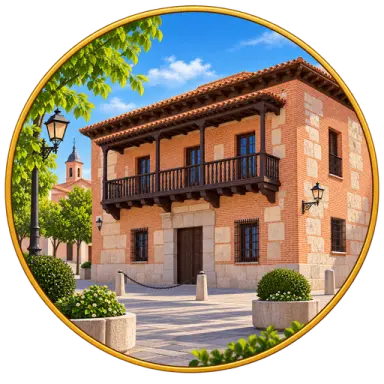
Museo de la Ciudad
The house of mayor Torrejón, from where the proclamation against Napoleon set off in 1808.
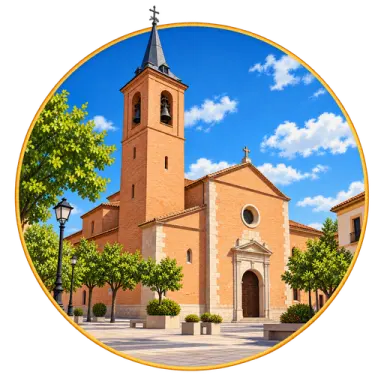
Iglesia de la Asunción
The church of the old town, baroque on a mudéjar base, with a brick tower.

Parque El Soto
The woodland along the stream, with wetlands and paths, on the edge of the city.
Where Móstoles comes from
From three thousand to one hundred and fifty thousand in twenty years
12th century
The village
Agricultural town on the road that descends from Madrid towards Extremadura.
2 May 1808
The proclamation
Mayor Andrés Torrejón signs the proclamation that calls Spain to arms against Napoleon.
1960–1980
The growth
In twenty years it goes from three thousand to one hundred and fifty thousand inhabitants.
Today
The second city
It is the second municipality in the region by population, after the capital.
Want to learn Spanish by travelling across Spain?
In Aula every lesson is a city lighting up on the map — Móstoles is one of them. Two hundred lessons from A1 to C2, free, starting from your level.
Start from Móstoles →