 Aula· Spain, city by city
Murcia
Cartagena
«Cartagena tiene un importante teatro romano muy antiguo.»Cartagena has an important, very ancient Roman theatre.
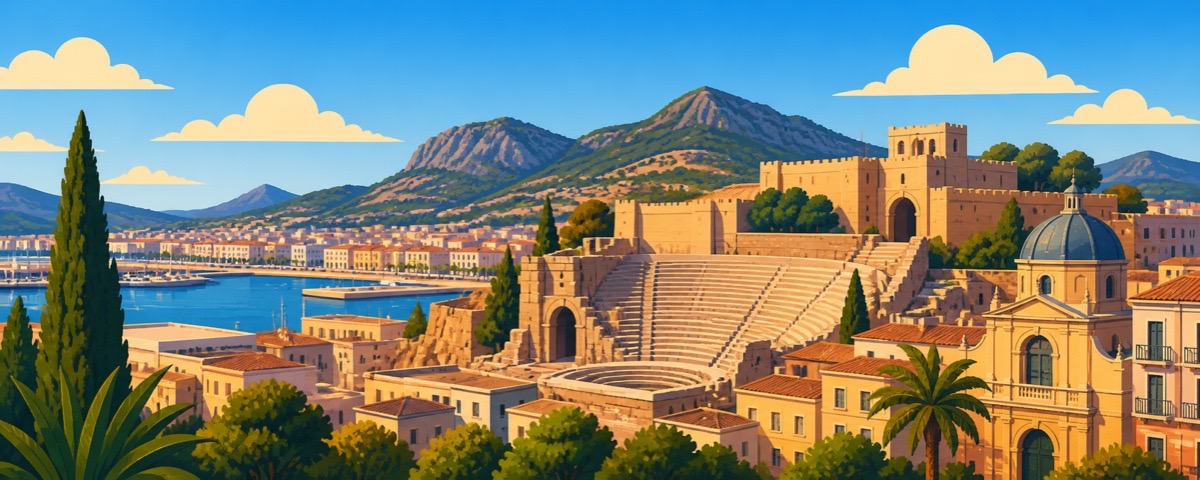
Cartagena is a deep natural port on the Murcian coast, enclosed between fortified hills, and was a naval base first for the Carthaginians and Romans, and later for the Spanish. The centre preserves the Roman theatre rediscovered in the 1980s under the urban fabric, together with the modernist buildings constructed when mining activity in the sierra brought wealth to the city.
Did you know
A Roman theatre found in 1988.
The Roman Theatre remained hidden under various urban layers and buildings until its accidental discovery in 1988.
How they talk in Cartagena
The accent often aspirates the final «s» and shares much with the coastal Murcian dialect. «Asiático» here does not indicate a geographical origin: in the local lexicon, it is immediately the typical coffee of Cartagena.
acho
Hey; friend; boy, as a call or interjection. In informal speech it calls the interlocutor or introduces surprise, protest, complicity, and other reactions according to the intonation.
Everyday life in Cartagena
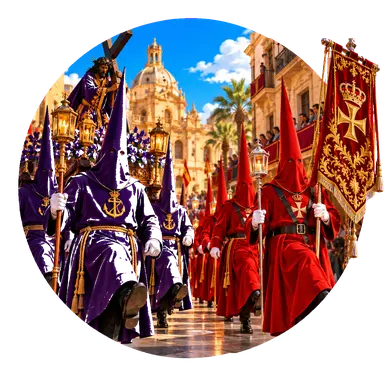
The two brotherhoods of the Semana Santa
Marrajos and californios have been parading for four centuries and have been competing for four centuries: different colours, different routes, and a way of walking at a military pace that is not seen elsewhere.
«¿Eres marrajo o californio?» — Are you a marrajo or a californio?
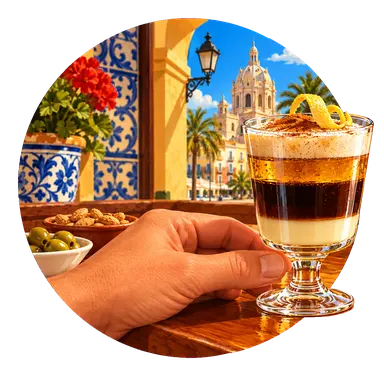
The «asiático» after lunch
Coffee, condensed milk, brandy, Licor 43, cinnamon and lemon, in a glass designed specifically and made only here. It is drunk after eating, and in bars you don't even need to order it in full.
«Un asiático, por favor.» — An asiático, please.
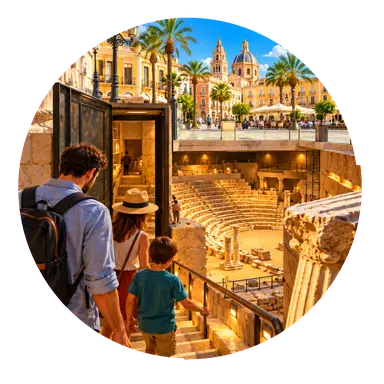
The «Teatro Romano» under the square
Under the streets there are a Roman theatre, a Punic wall and the air-raid shelters from the civil war. You go down through doors in the middle of the square, and those who live here grew up knowing what is underneath.
«El teatro estaba debajo de todo esto.» — The theatre was underneath all of this.
What to eat in Cartagena
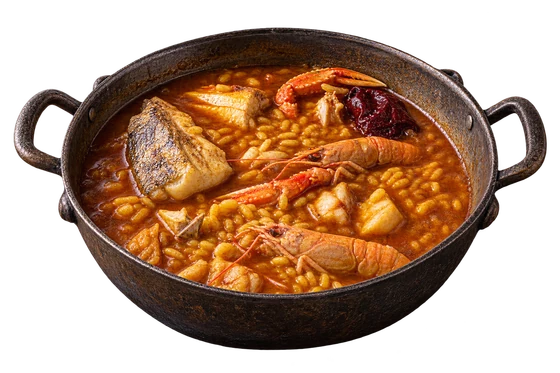
Caldero del Mar Menor
Rice cooked in rockfish broth, orange and dry, served with alioli on the side.

Marinera
A crunchy bread ring filled with Russian salad and an anchovy on top. If there is a boquerón instead of the anchovy, it is called a «bicicleta».
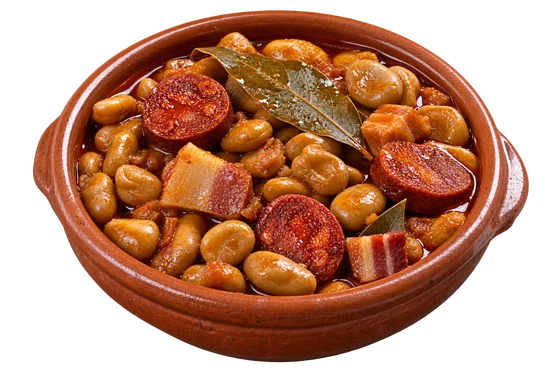
Michirones
Dried broad beans stewed with ham, chorizo and chilli, served in a clay pot.

Asiático
Coffee with condensed milk, brandy, Licor 43, cinnamon and lemon zest, served in a specially made glass.
Festivals in Cartagena
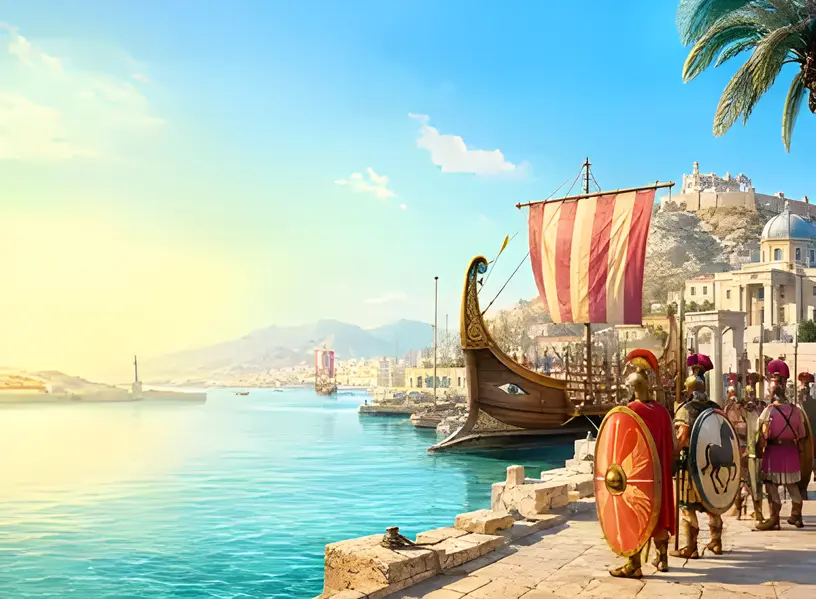
Carthagineses y Romanos
the second half of September
Two armies actually camp outside the city for ten days, and the battle is reenacted on the beach where the Romans landed.
What to see in Cartagena
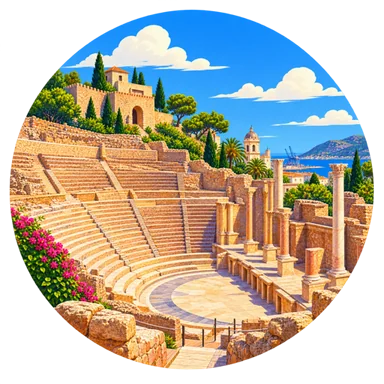
Teatro Romano
A 1st-century BC theatre for six thousand spectators, buried under half a neighbourhood and rediscovered in 1988.
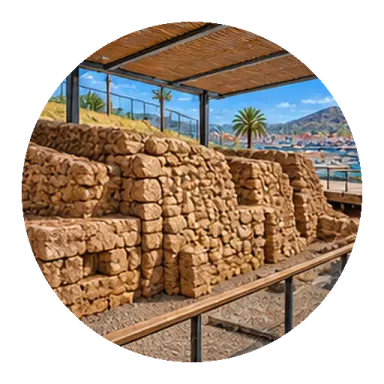
Muralla Púnica
A section of the Carthaginian wall from the 3rd century BC, the only Punic remnant visible in Spain.
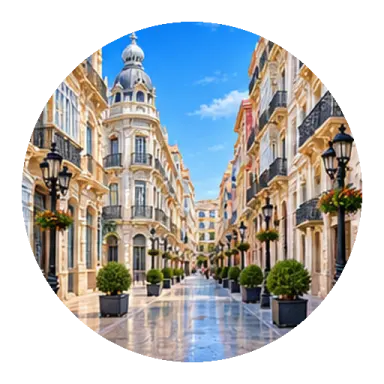
Calle Mayor
The promenade street, with Modernist facades built by the mine owners.
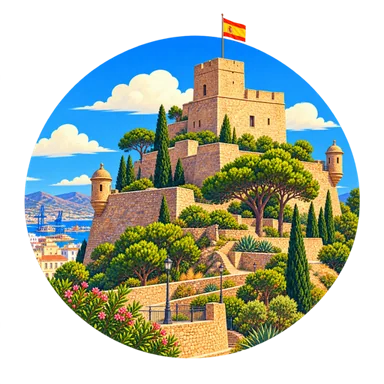
Castillo de la Concepción
The castle on the highest hill, with the park of ruins and the lift that goes up from the centre.
Where Cartagena comes from
Founded by Hasdrubal, taken by Scipio
227 BC
Qart Hadasht
Hasdrubal founds it as the Carthaginian capital in Hispania: the name means «new city».
209 BC
Carthago Nova
Scipio takes it in a single day, crossing the lagoon on foot at low tide.
16th century
The arsenal
Philip II makes it a naval base: the walls and shipyards are built.
19th century
The mines
The silver and lead from the sierra fill the city with Modernist palaces.
Born here: Isaac Peral, inventor and naval officer.
Want to learn Spanish by travelling across Spain?
In Aula every lesson is a city lighting up on the map — Cartagena is one of them. Two hundred lessons from A1 to C2, free, starting from your level.
Start from Cartagena →