 Aula· Spain, city by city
Murcia
Lorca
«Lorca destaca por su impresionante castillo medieval en la colina.»Lorca stands out for its impressive medieval castle on the hill.
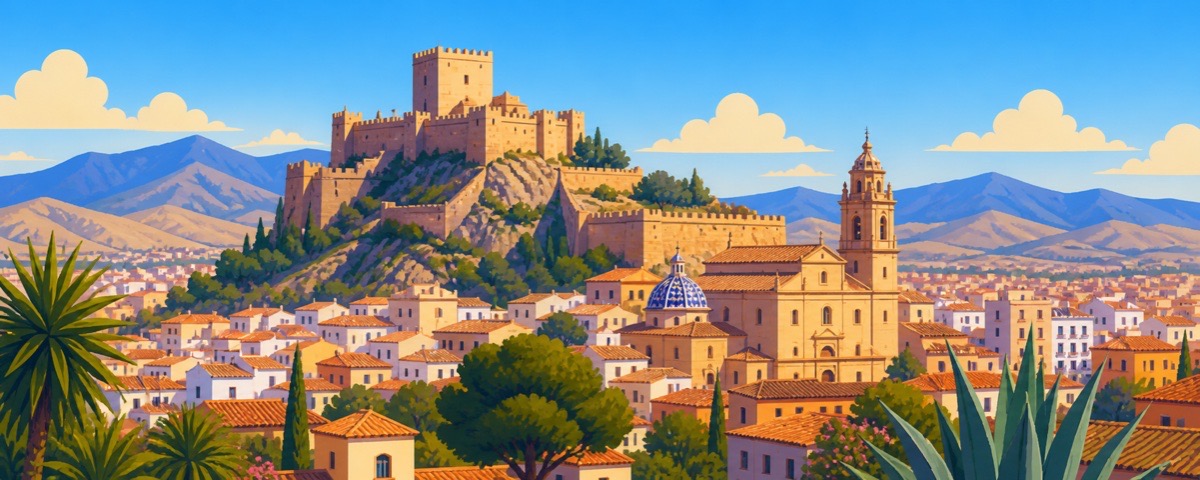
Lorca is located in the south-western interior of the Murcia region, in a valley crossed by the Guadalentín and dominated by a long ridge castle. The historic centre, largely Baroque, was severely damaged by the 2011 earthquake and later rebuilt; around it extends one of the largest municipal territories in all of Spain.
Did you know
Cloaks embroidered in silk and gold.
During Holy Week, the parades of Lorca are famous for their sumptuous costumes embroidered by hand in silk and gold.
How they talk in Lorca
The Lorca dialect shares the aspiration of the final «s» found in the Murcia region and uses «acho» as a colloquial vocative. In the countryside, vocabulary related to the «campo» and the Guadalentín river remains part of everyday speech.
acho
Hey; friend; boy, as a call or interjection. In informal speech it calls the interlocutor or introduces surprise, protest, complicity, and other reactions according to the intonation.
Everyday life in Lorca
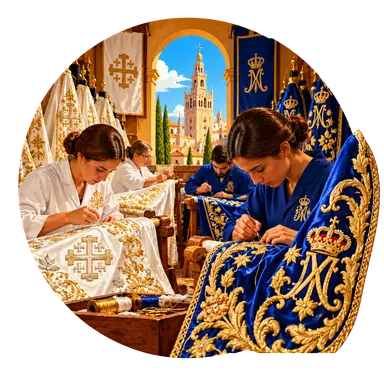
Whites against Blues
The two brotherhoods have been challenging each other for two centuries with their embroidery: every year they prepare new cloaks, hand-embroidered in silk on silk, and the city is divided between Paso Blanco and Paso Azul.
«¿Blanco o azul?» — White or blue?
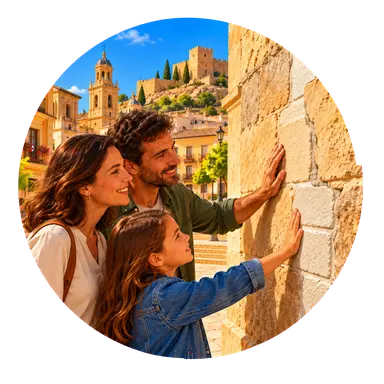
The reassembled city
After the 2011 earthquake, the centre was rebuilt piece by piece, and it shows: the new stones are a different colour, and the joints tell the story of where it had cracked.
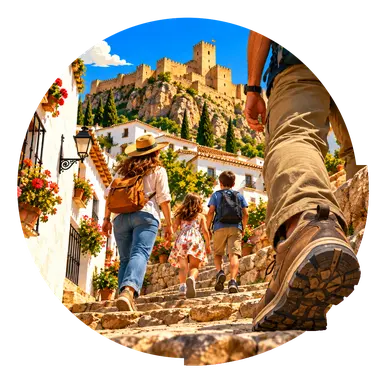
The «Fortaleza del Sol» above the houses
The fortress runs for six hundred metres along the ridge above the houses, and you can see one of its towers from almost every street in the centre. You can walk up there on Sundays.
«Se sube al castillo andando.» — You go up to the castle on foot.
What to eat in Lorca
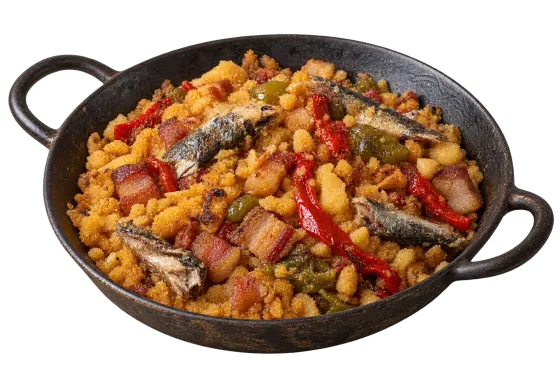
Migas ruleras
Semolina moistened and sautéed in a pan until it becomes crumbly, served with bacon, peppers and salted sardines.
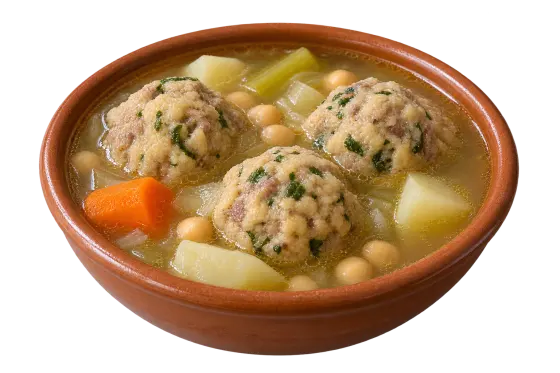
Cocido con pelotas
Boiled stew with large meatballs made of bread, meat and parsley cooked in the broth.
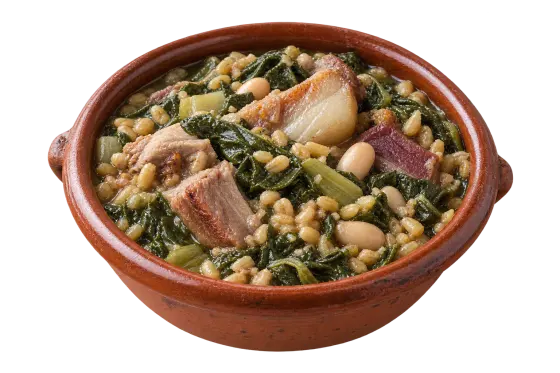
Trigo con acelgas
Cracked wheat cooked for a long time with chard, beans and the cheaper cuts of pork. It is a country dish.
Festivals in Lorca
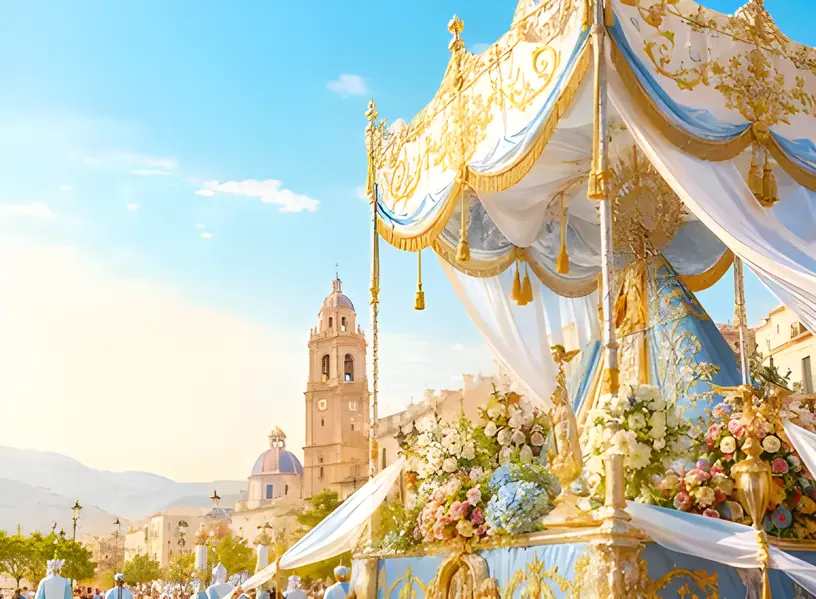
Semana Santa de Lorca
Easter week
It is not a slow procession: the horses enter at a gallop dragging the floats, and the brotherhoods compete with their hand-embroidered cloaks.
What to see in Lorca
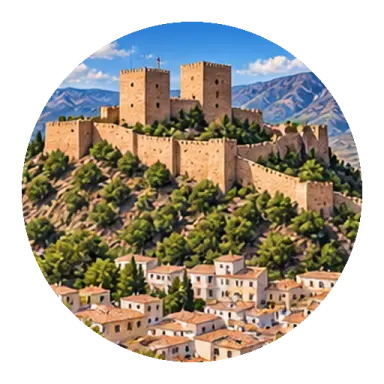
Castillo de Lorca
Almost six hundred metres of fortified ridge, with two towers at the ends and a Jewish quarter inside the walls.
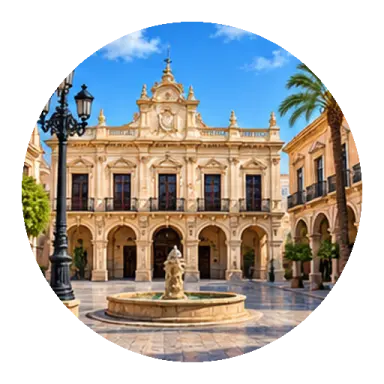
Plaza de España
The Baroque square with the collegiate church, the town hall and the old courthouse, rebuilt after the 2011 earthquake.
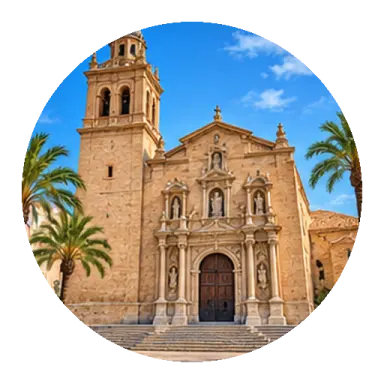
Colegiata de San Patricio
The only collegiate church in Spain dedicated to Saint Patrick, Renaissance inside and Baroque on the façade.
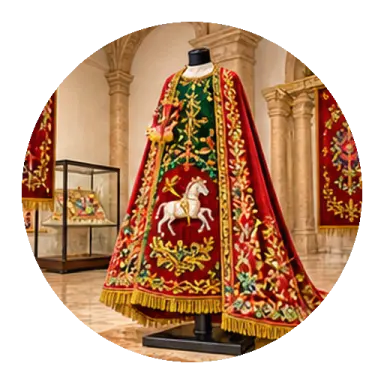
Museos de Bordados
The embroidered cloaks of the two brotherhoods, in silk and gold, each the result of years of handiwork.
Where Lorca comes from
The city on the ridge
Roman era
Eliocroca
A settlement on the road that connected Cartagena to the interior.
8th–13th century
Lurqa
A Muslim fortress on the ridge, with the Jewish quarter inside the walls.
1244
The conquest
Alfonso X takes it: it remains a border city with Granada for two and a half centuries.
2011
The earthquake
An earthquake severely damages the historic centre, which is then reassembled piece by piece.
Want to learn Spanish by travelling across Spain?
In Aula every lesson is a city lighting up on the map — Lorca is one of them. Two hundred lessons from A1 to C2, free, starting from your level.
Start from Lorca →