
Murcia
Murcia
«Murcia es famosa por su gran catedral en el centro.»Murcia is famous for its large cathedral in the centre.
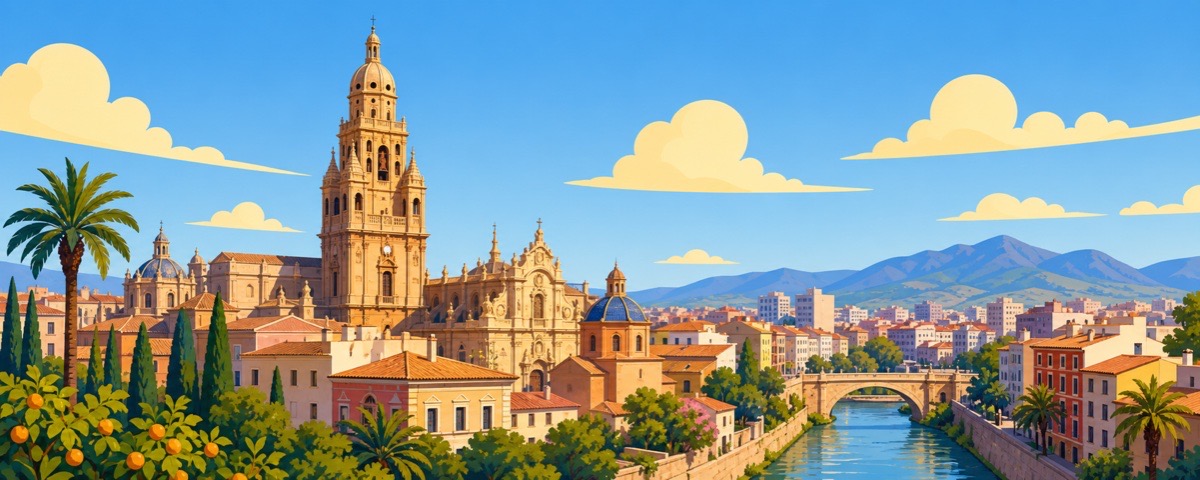
Murcia is the capital of its region and rises in the Segura valley, in an irrigated plain called the huerta that has determined its agriculture for centuries. The historic centre gathers around the cathedral, with its Baroque facade overlooking a closed square, while the modern city has extended along the river and towards the university.
Did you know
A bell tower rebuilt against earthquakes.
The cathedral tower has an asymmetrical bell tower because the second section was modified over the centuries to withstand earthquakes.
How they talk in Murcia
The final «s» is often aspirated and «acho», from «muchacho», works as a colloquial way to get someone's attention. In popular speech, features of the «panocho», a traditional variety of the Murcian huerta, appear.
acho
Hey; friend; boy, as a call or interjection. In informal speech it calls the interlocutor or introduces surprise, protest, complicity, and other reactions according to the intonation.
Everyday life in Murcia
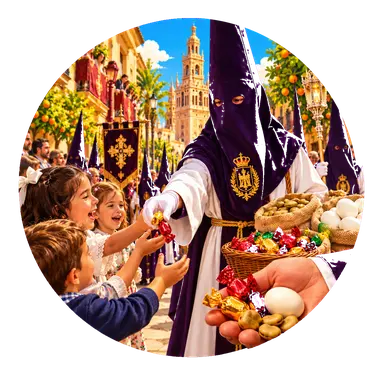
The «nazarenos» who give away sweets
During the Murcian Holy Week, those who march do not ask for silence: they distribute sweets, broad beans and hard-boiled eggs to children along the entire route. It is a cheerful procession, and the bags are prepared for weeks.
«¿Me das un caramelo?» — Can I have a sweet?
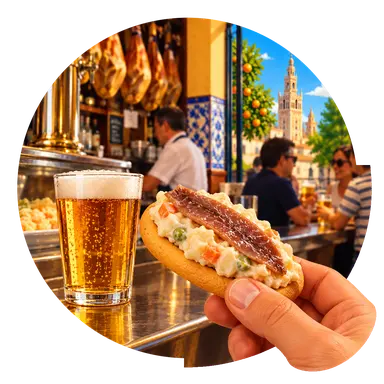
The «marinera» at the bar
A ring of crispy bread with Russian salad and an anchovy on top: it is eaten in one bite, standing up, with a beer. If there is a boquerón instead of an anchovy, it changes its name and becomes a «bicicleta».
«Una marinera y una caña, por favor.» — A marinera and a beer, please.
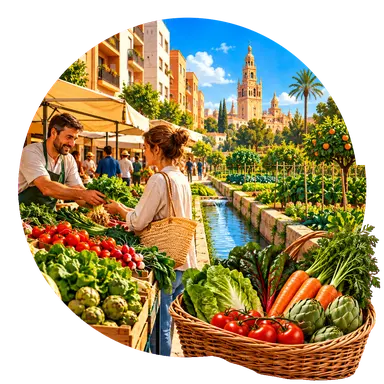
The huerta begins where the road ends
The vegetable gardens irrigated by the Segura reach the edges of the city, and the canals pass under the new neighbourhoods. Vegetables and fruit from the market come from there, often harvested that morning.
«Esto es de la huerta.» — This is from the vegetable garden.
What to eat in Murcia
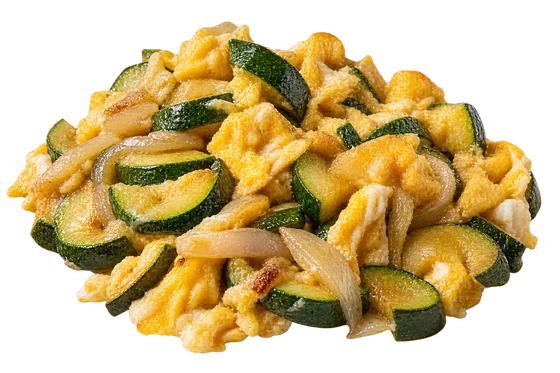
Zarangollo
Courgettes and onions stewed slowly in oil and bound with egg, without frying them. It is eaten warm.
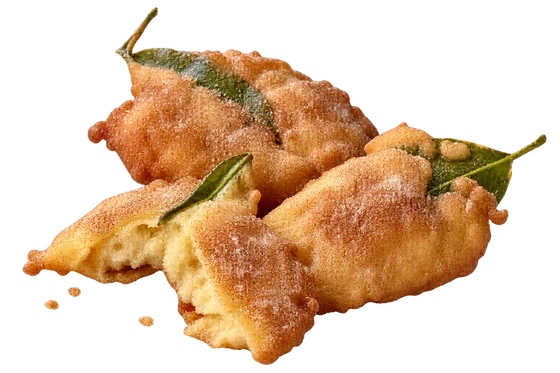
Paparajotes
Lemon leaves dipped in batter and fried, with sugar and cinnamon. The leaf is not eaten: you hold it by the stem and bite around it.

Pastel de carne
A puff pastry pie with minced meat, hard-boiled egg and chorizo, round and tall. It is eaten with your hands, hot.
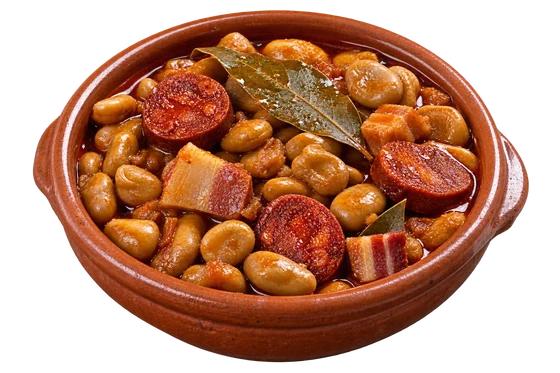
Michirones
Dried broad beans stewed for a long time with a ham bone, chorizo, bay leaf and chilli. They arrive in an earthenware pot, piping hot.
Festivals in Murcia
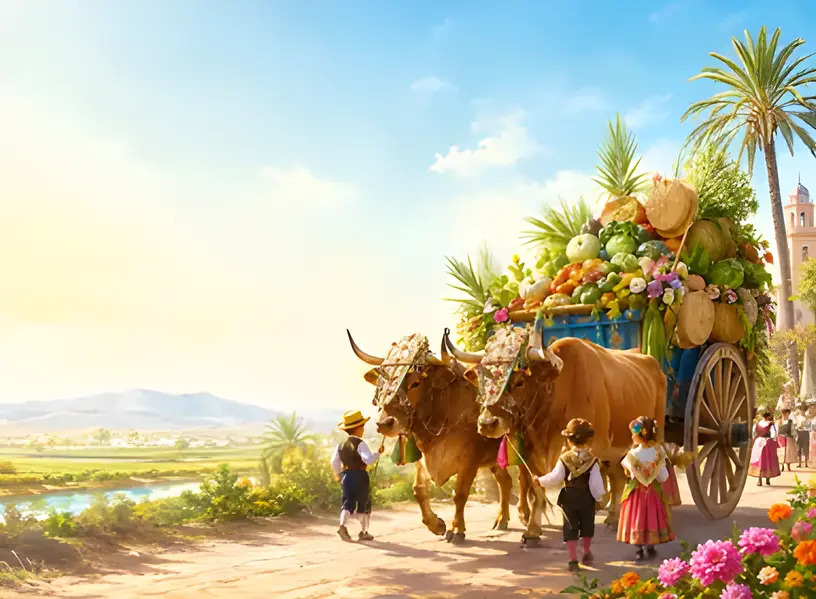
Bando de la Huerta
the Tuesday after Easter
The whole city dresses up as a garden farmer — waistcoat, handkerchief, floral skirt — and eats in the street from barracas set up for the occasion.
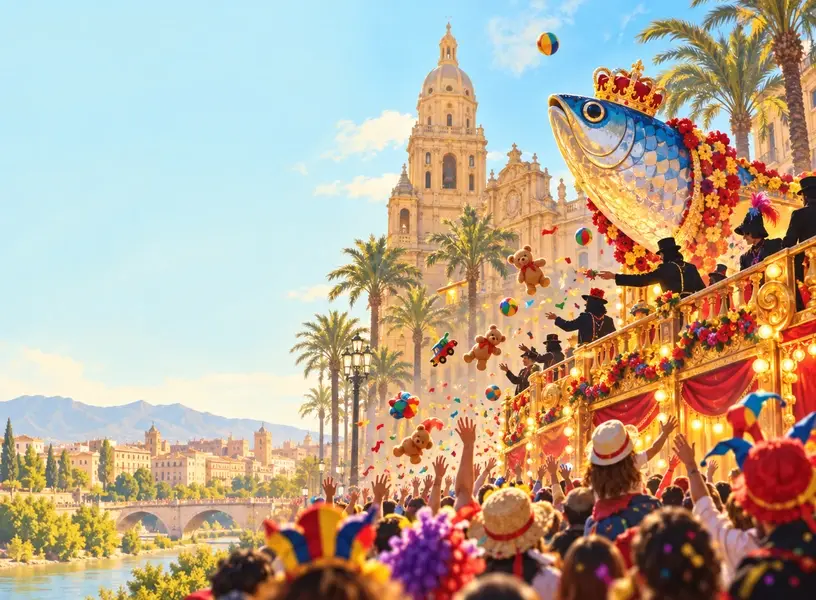
Entierro de la Sardina
the Saturday after Easter
People parade at night with illuminated floats that throw toys to the crowd, and at the end, a giant sardine is burned.
What to see in Murcia
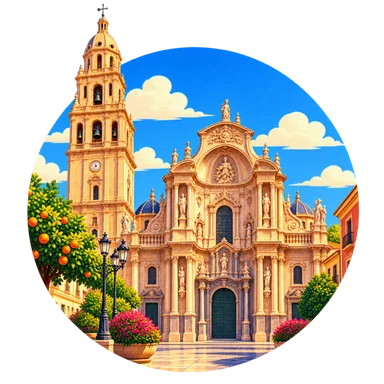
Catedral de Murcia
Gothic inside and Baroque outside: the 1754 facade is as tall as the church and curves towards the square. The bell tower is the second tallest in Spain.
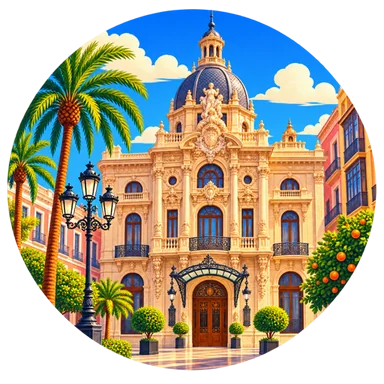
Real Casino de Murcia
A 19th-century club that can be visited: five different styles, one room after another.
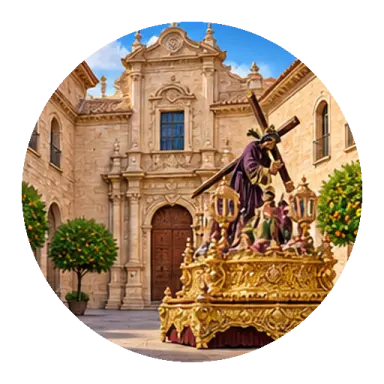
Museo Salzillo
The processional sculptures by Francisco Salzillo, in painted wood, and a nativity scene with more than five hundred figures.
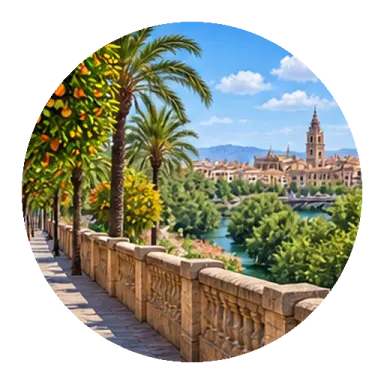
El Malecón
The embankment that held back the floods of the Segura, which has become a promenade a kilometre and a half long.
Where Murcia comes from
Founded by an emir on the river
825
Mursiya
The emir Abd al-Rahman II founded it on the Segura, in the middle of the already irrigated huerta.
11th–13th century
The taifa
Capital of a taifa kingdom rich in silk and citrus fruits.
1266
The conquest
James I takes it on behalf of Castile: the mosque becomes a cathedral.
18th century
Silk
The silk trade makes it rich: the cathedral facade and the Baroque palaces date from this time.
Born here: Francisco Salzillo, sculptor.
Want to learn Spanish by travelling across Spain?
In Aula every lesson is a city lighting up on the map — Murcia is one of them. Two hundred lessons from A1 to C2, free, starting from your level.
Start from Murcia →