 Aula· Spain, city by city
Navarra
Estella
«Estella es una parada histórica muy importante en el Camino de Santiago.»Estella is a very important historic stop on the Camino de Santiago.
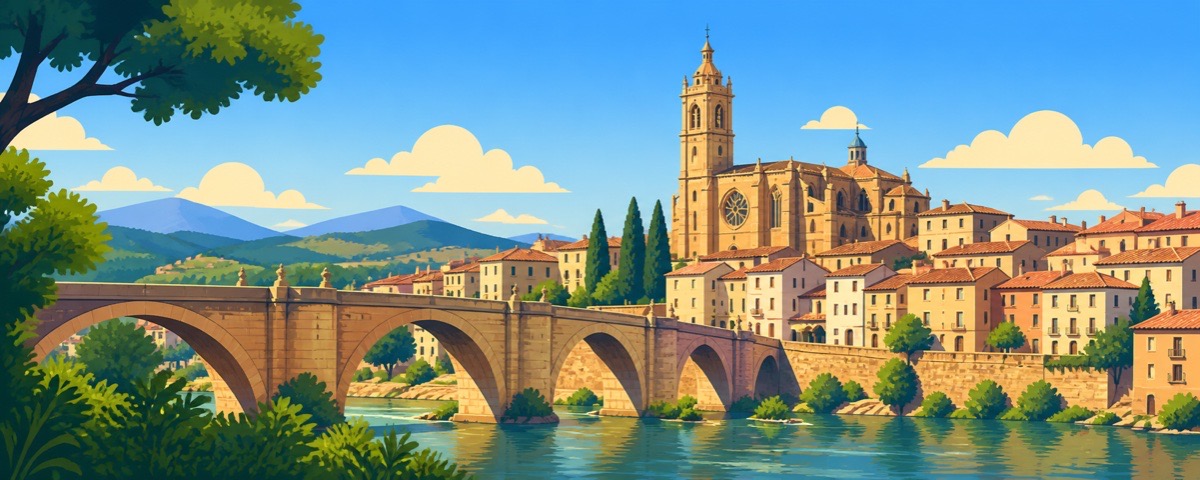
Estella-Lizarra is located in the Ega valley, in the centre-west of Navarre, and is one of the oldest stops on the Camino de Santiago. It was founded in 1090 specifically to serve pilgrims, with a privilege that attracted Frankish merchants from beyond the Pyrenees, and it preserves the only remaining Romanesque civil building in the entire region.
Did you know
They called it 'Estella the Beautiful'.
In the Middle Ages, it was known as 'Estella the Beautiful' and was a commercial stronghold populated by many Frankish merchants.
How they talk in Estella
«Lizarra» is the Basque name of the city and appears together with Estella in many contexts. «Peregrino», «albergue» and «credencial» are daily words because the Camino passes through the centre.
auzolan
Community or neighborhood work done together. Basque term for a practical collaboration in which the inhabitants contribute to the good of the neighborhood or the town.
Everyday life in Estella
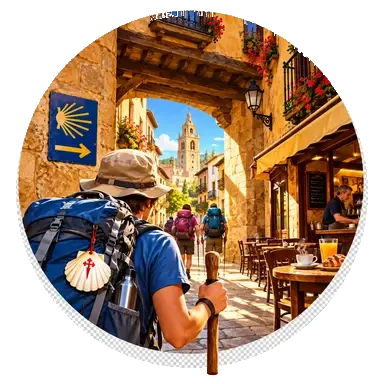
The «Camino» enters the town
The way of Santiago passes through the centre and the pilgrims pass under the houses: the bars open early for them, and the scene at seven in the morning with backpacks is part of normality.
«Por aquí pasan los peregrinos.» — Pilgrims pass through here.
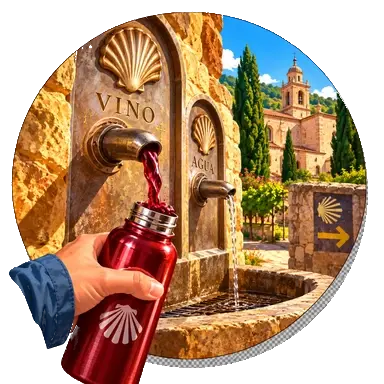
The «wine fountain» at Irache
Two kilometres away, the monastery winery has a public fountain from which wine flows: pilgrims fill their water bottles and people go to see it just out of curiosity.
«En la fuente sale vino.» — Wine comes out of the fountain.
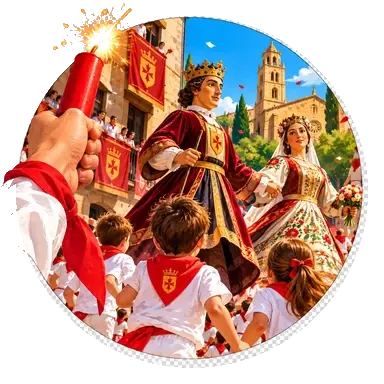
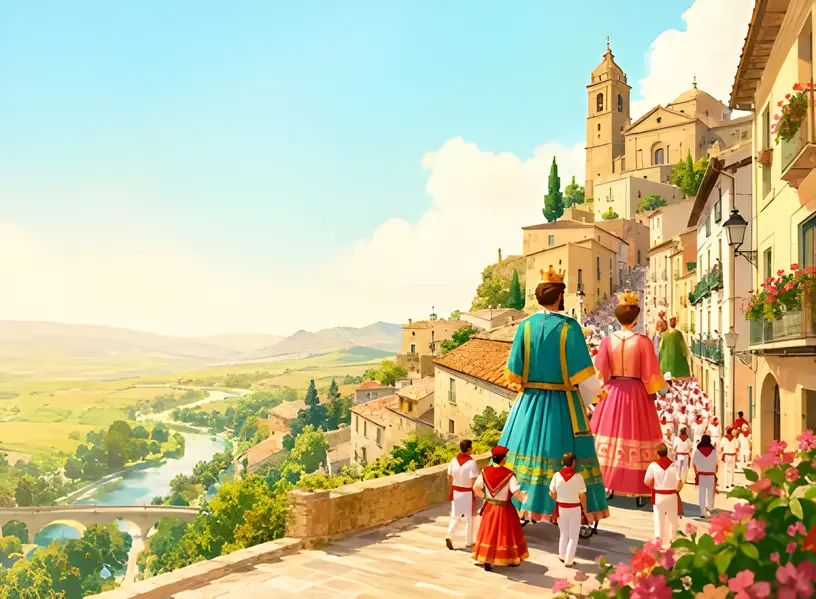
The August festivals with the «Gigantes»
The big week begins with the cohete and the «baile de la Era»: the giants dance through the streets and the little ones follow them along the whole route.
What to eat in Estella
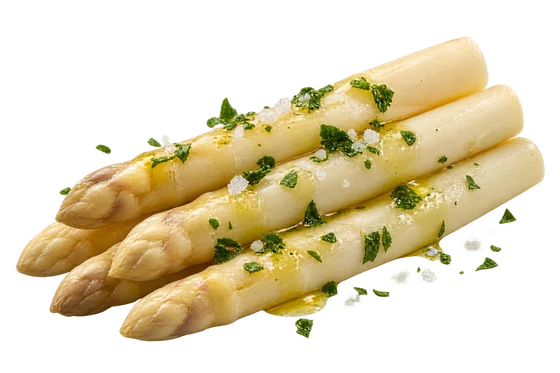
Espárragos de Navarra
White asparagus grown underground, thick and tender, with mayonnaise or oil.
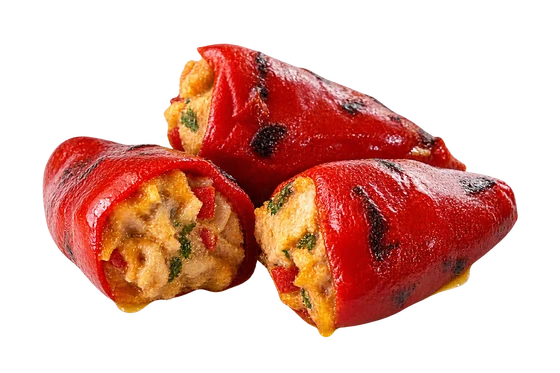
Pimientos del piquillo
Peppers roasted on the grill and peeled by hand, stuffed with meat or salt cod.
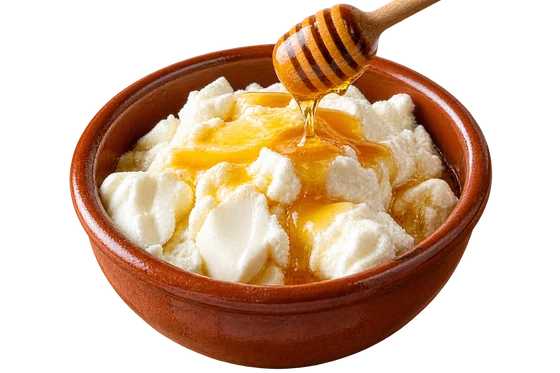
Cuajada
Sheep's milk curdled with rennet, served in a clay pot with honey and walnuts.
Festivals in Estella
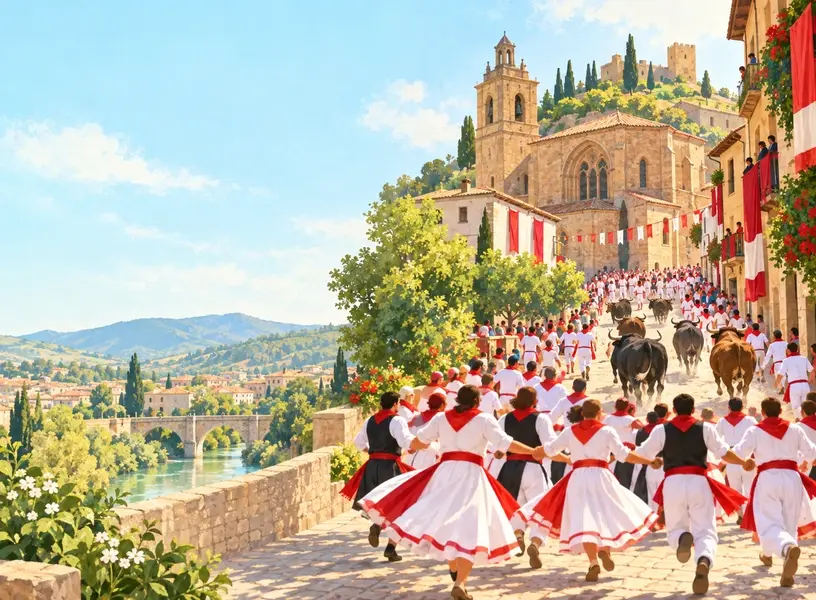
Fiestas Patronales
from the first Friday of August
Everyone dances the «Baile de la Era» together, and the bulls run through the streets of the city they used to call «the Beautiful».
Virgen del Puy
in May
The patron saint descends from the sanctuary on the hill, and the procession crosses the medieval centre.
What to see in Estella
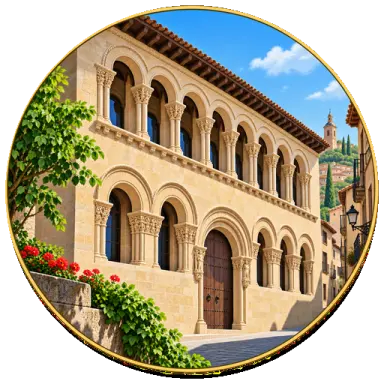
Palacio de los Reyes de Navarra
The only remaining Romanesque civil building in all of Navarra.
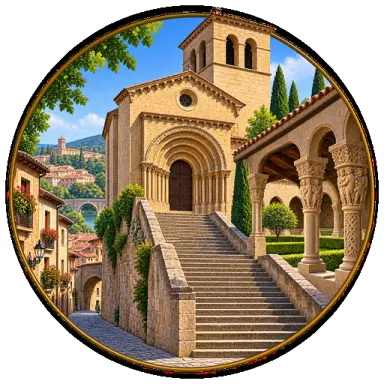
San Pedro de la Rúa
The church at the top of the staircase, with the cloister with carved capitals.
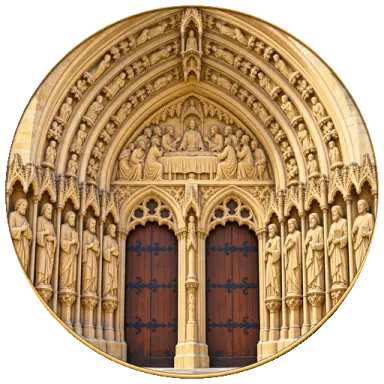
Iglesia del Santo Sepulcro
The Gothic portal with twelve apostles in a row and the Last Supper carved above.
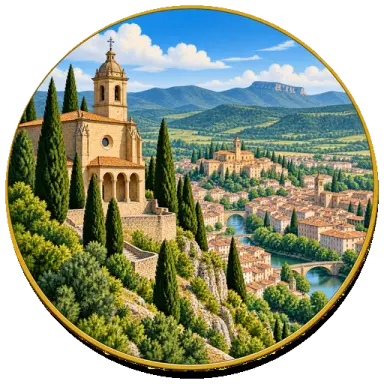
Basílica del Puy
The sanctuary on the hill, with the view over the whole city and the three boroughs.
Where Estella comes from
A city founded for pilgrims
1090
The foundation
Sancho Ramírez founds it on purpose on the path, with a charter that attracts Frankish merchants.
12th century
The palace
The palace of the kings of Navarra is built: the only Romanesque civil building remaining in the region.
14th century
The three boroughs
The city grows in three separate nuclei — Franks, Navarrese and Jews — which unite late.
19th century
The Carlist wars
It becomes the Carlist capital: the city is at the centre of two civil wars.
Want to learn Spanish by travelling across Spain?
In Aula every lesson is a city lighting up on the map — Estella is one of them. Two hundred lessons from A1 to C2, free, starting from your level.
Start from Estella →